The freight logistics industry is changing rapidly as businesses face rising customer expectations, digital transformation, and increasing global supply chain complexity. Updating the latest trends in the logistics industry can help businesses improve efficiency, strengthen supply chain resilience, and remain competitive in an increasingly fast-moving global market.
1. What Is the Freight Logistics Industry?
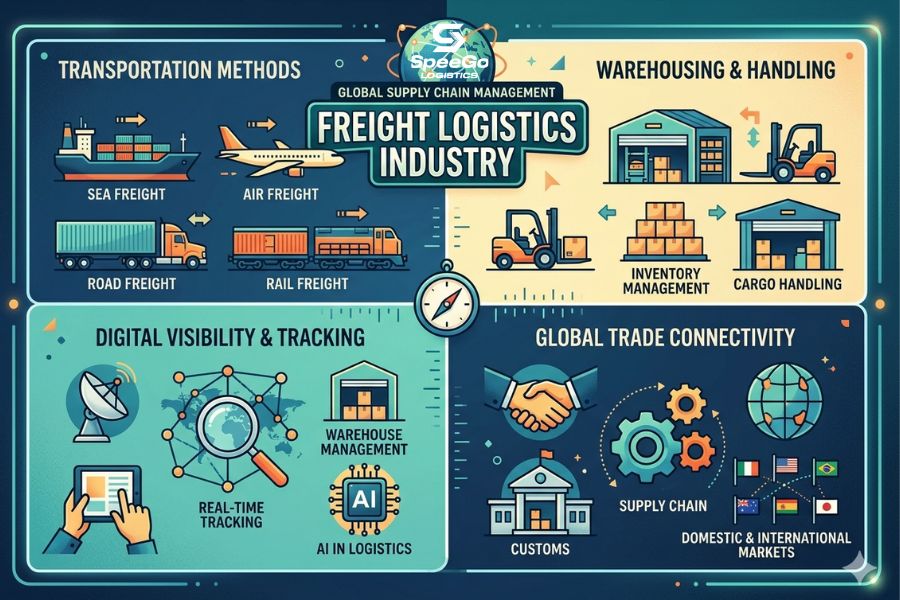
The freight logistics industry is responsible for managing the movement, storage, and delivery of goods across domestic and international markets. It connects manufacturers, suppliers, distributors, retailers, and customers through transportation and supply chain networks.
The industry includes various services such as freight transportation, warehousing, inventory management, customs clearance, cargo handling, and final delivery. Businesses across manufacturing, retail, and e-commerce sectors rely on logistics providers to move products safely, efficiently, and on schedule.
The freight logistics industry uses multiple transportation methods, including air freight, sea freight, road freight, and rail freight, depending on shipment requirements and delivery timelines. As global trade continues to expand, logistics companies are increasingly adopting technologies such as real-time tracking, warehouse management systems, and AI in logistics tools to improve operational efficiency and supply chain visibility.
2. Compare Freight vs. Logistics
Although the terms freight and logistics are often used together, they do not have the same meaning. Freight mainly refers to the physical transportation of goods from one location to another. While logistics covers the broader process of planning, managing, storing, and delivering products throughout the supply chain.
| Criteria | Freight | Logistics |
| Main Focus | Transportation of goods | End-to-end supply chain management |
| Scope | Narrower operational activity | Broader strategic process |
| Includes | Cargo movement and shipping | Transportation, warehousing, inventory, fulfillment |
| Common Services | Air freight, sea freight, trucking | Supply chain coordination and inventory management |
| Typical Users | Freight carriers and shippers | Manufacturers, retailers, e-commerce businesses |
SpeeGo Logistics provides international shipping solutions tailored for businesses of all sizes, including air freight, sea freight, customs clearance, warehousing, and cross-border logistics support. With flexible transportation options and experienced logistics coordination, SpeeGo helps businesses simplify global shipping and optimize supply chain operations more effectively.
3. Top 7 Logistic Industry Trends
The freight logistics industry is evolving faster than ever under the influence of digital transformation, changing consumer behaviour, and increasing global trade complexity. Update the latest logistic industry trends is essential for businesses that want to stay competitive and resilient.
3.1. AI in Logistics
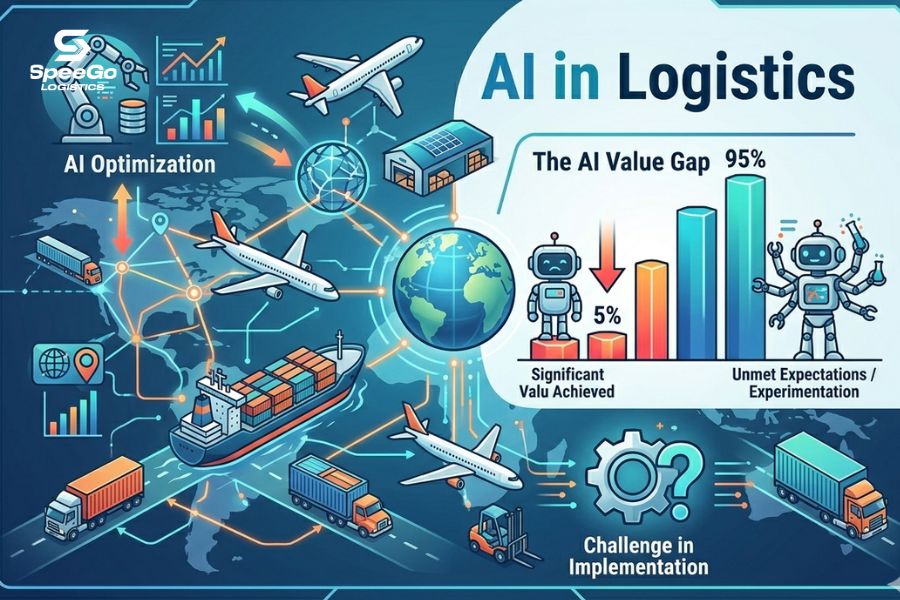
Artificial intelligence is increasingly being tested and applied across logistics operations. These applications show strong potential to improve efficiency, reduce operational costs, and enhance decision-making in complex supply chain environments.
However, despite rapid experimentation, only a small proportion of organisations have achieved significant measurable value from their AI investments. According to the Boston Consulting Group, roughly 5% of companies report that their AI initiatives have delivered substantial business impact. This gap highlights a common challenge in implementation rather than technology capability itself.
3.2. The role of the consumer in the supply chain is expanding
Rather than simply receiving products at the final stage, customers are now becoming more actively involved in various logistics-related processes. This shift is largely driven by the growth of direct-to-consumer (D2C) models. Many goods such as healthcare products, subscription items, and even prescription-based treatments are shipped directly to end users without traditional intermediaries.
This transformation is placing greater pressure on logistics providers and supply chain operators. Businesses are now required to deliver consumer-grade visibility and responsiveness not only in retail but also in B2B, healthcare, and other regulated industries.
3.3. Return Fraud Prevention and Supply Chain Security
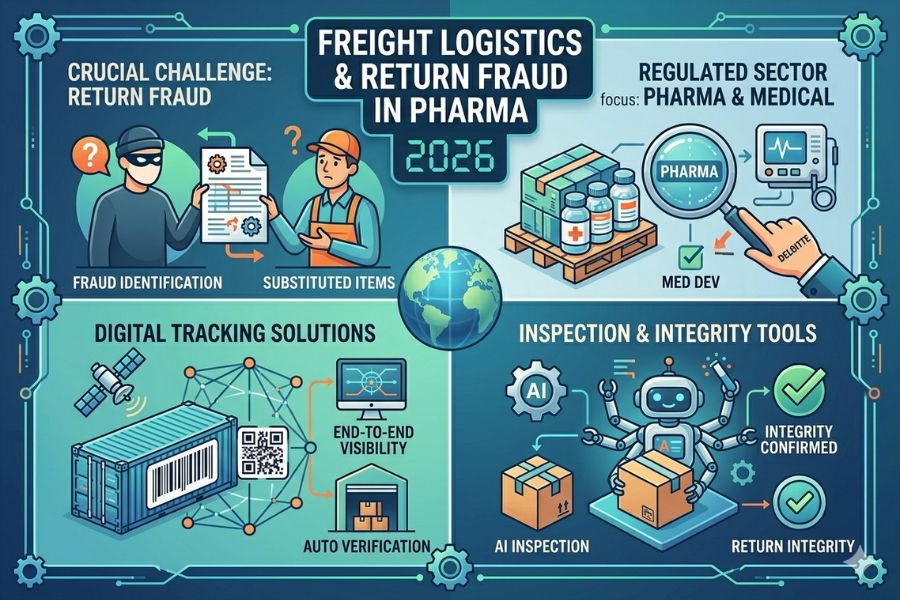
Return fraud continues to be a major concern for logistics and supply chain operators as the industry moves toward 2026, particularly in highly regulated sectors such as pharmaceuticals and medical devices. The methods used to commit return fraud are becoming more sophisticated and harder to detect. In some cases, individuals may deliberately provide false return information, send back incorrect or substituted items, or even return empty packaging while attempting to claim refunds.
Industry experts from Deloitte note that improving data accuracy, end-to-end tracking, and automated verification systems is essential for reducing fraud risks in modern supply chains. As return volumes continue to grow, businesses are increasingly investing in digital tracking technologies and AI-powered inspection tools to enhance transparency and protect supply chain integrity.
3.4. Green and Sustainable Logistics
The focus is no longer only on cost and speed, but also on reducing environmental impact across the entire logistics network. One of the main developments is the shift toward green transportation.
Many logistics providers are gradually adopting electric vehicles, hybrid fleets, and alternative fuels such as biofuel and hydrogen to reduce greenhouse gas emissions. In urban areas, electric delivery vans and cargo bikes are increasingly used for last-mile delivery to lower pollution levels and improve air quality.
Businesses are moving toward recyclable, reusable, and lightweight packaging materials to reduce waste and improve transport efficiency. At the same time, warehouses are being designed with energy-efficient systems, including LED lighting, solar power integration, and automated energy management tools to reduce overall energy consumption.
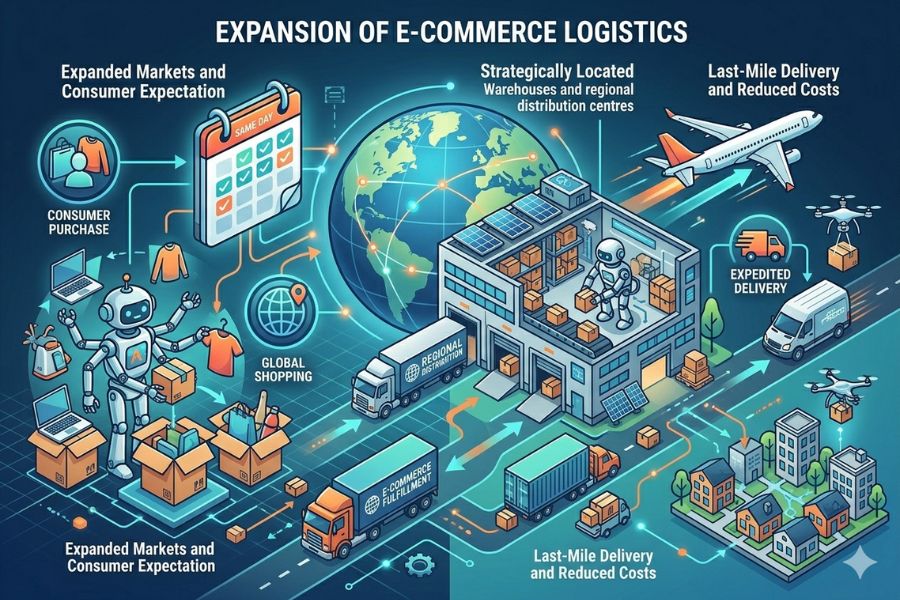
3.5. Expansion of E-commerce Logistics
As online shopping continues to expand across global markets, logistics networks are under increasing pressure to deliver faster, more reliable, and more flexible fulfillment services. This shift is not only changing how goods are transported but also how supply chains are designed and managed.
Consumers now expect same-day or next-day delivery as a standard service, especially in competitive retail markets. This has pushed logistics providers to build stronger fulfillment networks, including strategically located warehouses and regional distribution centres that can shorten delivery times and reduce last-mile shipping costs.
3.6. Labor Shortages
As supply chains become more complex and shipping volumes continue to rise, many companies are struggling to maintain productivity with limited workforce capacity. Lean staffing models often increase pressure on logistics teams, while manual processes can create delays, operational bottlenecks, and slower response times across transportation and warehouse operations.
As a result, one of the most important trends in the logistics industry is the accelerated adoption of automation technologies. According to the Cleo 2025 Global Supply Chain Executive Report, 93% of executives either already use automation or plan to implement it within the next two years to improve supply chain operations and customer service performance.
3.7. Less Than Truckload (LTL) Demand
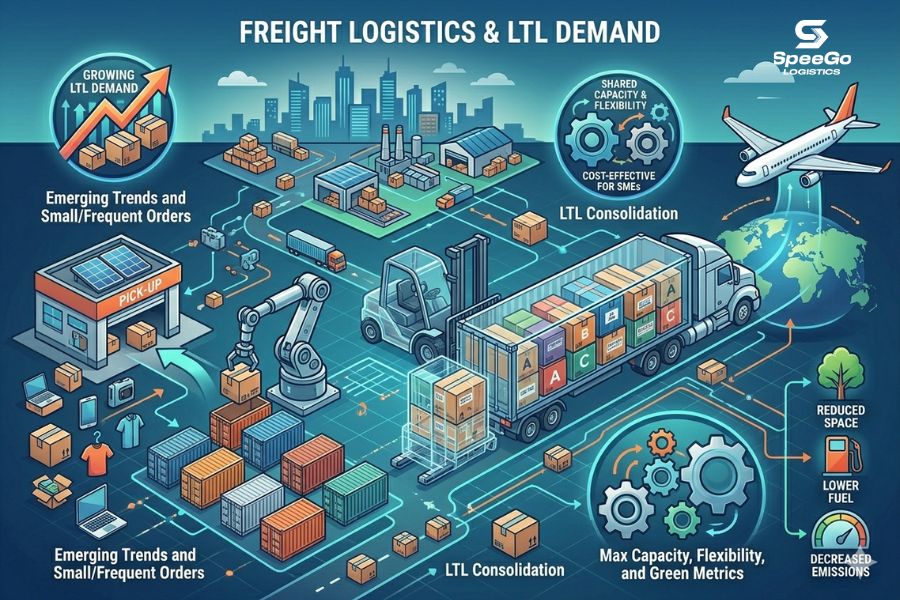
One of the emerging logistic industry trends is the growing demand for Less Than Truckload (LTL) shipping services. As e-commerce continues to expand and customers expect faster delivery times, businesses are increasingly shipping smaller orders more frequently instead of waiting to accumulate enough goods for a full truckload shipment.
LTL allows multiple companies to share space within the same vehicle, helping logistics providers maximise capacity while offering more flexible shipping solutions. Businesses only pay for the space they use, making it a cost-effective option, especially for small and medium-sized enterprises.
In addition, consolidating multiple shipments into fewer vehicles helps reduce unused cargo space, lower fuel consumption, and decrease carbon emissions
4. Major Challenges For Current Trends In Logistics Industry
The freight logistics industry is becoming more complex, customer-driven, and technology-dependent. To stay competitive, businesses need more than operational efficiency, they must also focus on data quality, customer expectations, workforce capability, and supply chain flexibility.
4.1. Understand Customer Expectations
Modern logistics performance is increasingly shaped by customer behaviour. Businesses should actively collect feedback and analyse customer data to understand what matters most, such as real-time shipment tracking, flexible delivery options, and environmentally responsible shipping methods.
These expectations should be integrated directly into logistics design rather than treated as optional features. Regularly reviewing customer needs also helps businesses adjust their logistics strategies as market expectations evolve over time.
4.2. Improve Data Quality and System Connectivity
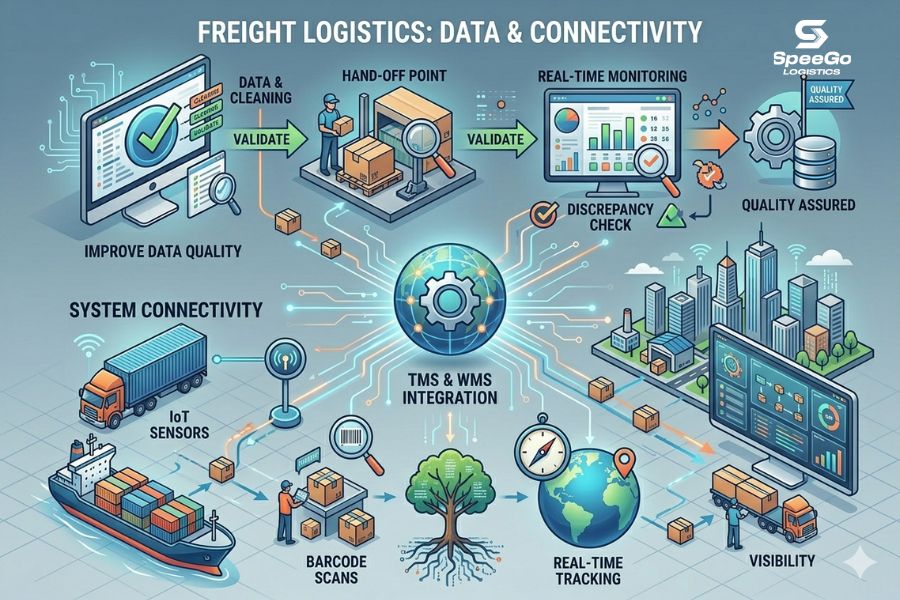
Strong logistics performance depends on accurate and connected data. Businesses should build routine data validation processes, such as checking scanning records at each handover point or monitoring inventory discrepancies in real time.
Integrating digital systems like Transportation Management Systems (TMS) with warehouse data, barcode scans, and IoT sensors improves visibility across the entire supply chain.
4.3. Rethink Supply Chain Design
A resilient supply chain requires proactive planning. Businesses should diversify suppliers, build contingency plans for shipment rerouting, and establish regional backup warehouses where possible to reduce dependency on single routes or hubs.
4.4. Equip Teams with the Right Digital Tools
User-friendly logistics technology plays a key role in improving operational speed and coordination. Tools that integrate inventory data, transportation updates, and warehouse operations allow teams to collaborate more effectively.
Adapting to logistics industry changes requires a balanced approach that combines customer understanding, high-quality data, skilled teams, flexible supply chains, and effective digital tools. Businesses that invest in these areas are better positioned to improve efficiency, reduce risk, and remain competitive in a rapidly evolving global logistics environment.
5. Conclusion
The freight logistics industry is evolving rapidly as businesses adapt to digital transformation, changing consumer expectations, and growing sustainability demands. Companies are now expected to deliver faster, more transparent, and more flexible logistics services while maintaining operational efficiency.