


Many businesses use SKU codes every day, but not everyone fully understands what is a SKU number and why it matters. A well-structured SKU system helps companies organise products more efficiently, improve stock visibility, and reduce fulfillment errors. Whether a business operates online, offline, or across multiple sales channels, SKU numbers play an important role in inventory accuracy and operational efficiency.
1. What Is a SKU Number?
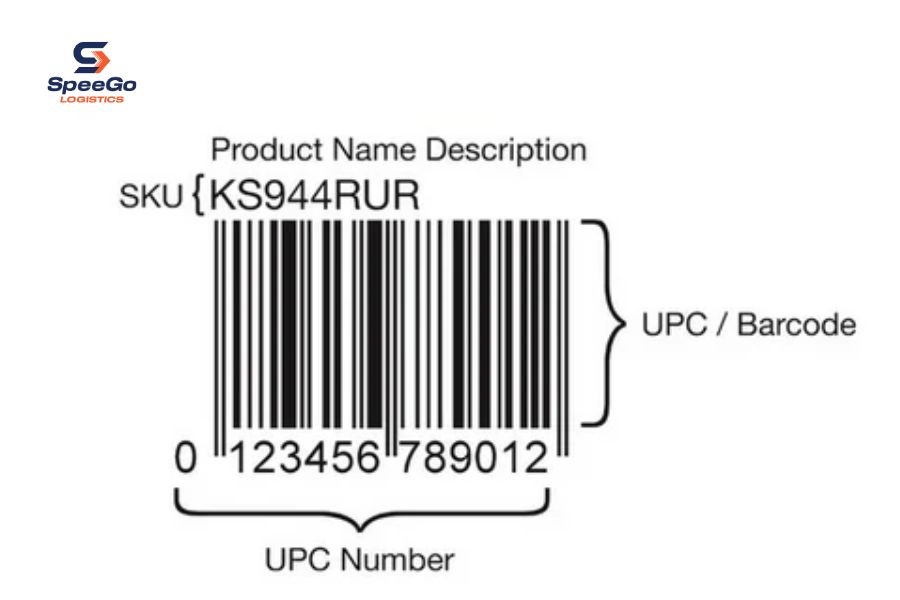
A SKU, short for Stock Keeping Unit, is a unique code used by companies to identify and track individual products within their inventory system. Unlike barcodes or universal product codes (UPCs), SKU numbers are usually created internally by businesses. They help companies organise products more efficiently and simplify inventory management across warehouses, retail stores, and e-commerce platforms.
The sku number meaning refers to a custom product identifier assigned to a specific item or product variation. Each SKU is unique and may contain letters, numbers, or a combination of both.
2. How to Create an SKU Number?
Creating an effective SKU system is an important step in improving inventory accuracy and product management. Depending on the size of the business and the complexity of its operations, companies may choose between automated SKU generation or manually created SKU codes.
2.1. Automated SKUs
Automated SKUs are created using inventory management platforms, warehouse software, or point-of-sale systems. These systems generate SKU codes based on predefined rules, helping businesses maintain consistent and scalable product identification across large inventories.
Because the process is automated, businesses can reduce manual input errors and improve data accuracy. Automated SKU systems are especially useful for companies managing extensive product catalogs or operating across multiple sales channels.
2.2. Manual SKUs
Manual SKUs are created directly by businesses without automated software support. This method is more common among smaller companies or businesses with a limited number of products.
Manually created SKU codes can be highly customised and easier for staff to recognise. However, as product catalogs expand, manual systems may become harder to manage and increase the risk of duplicate or inconsistent SKU structures.
3. The Structure of an SKU number
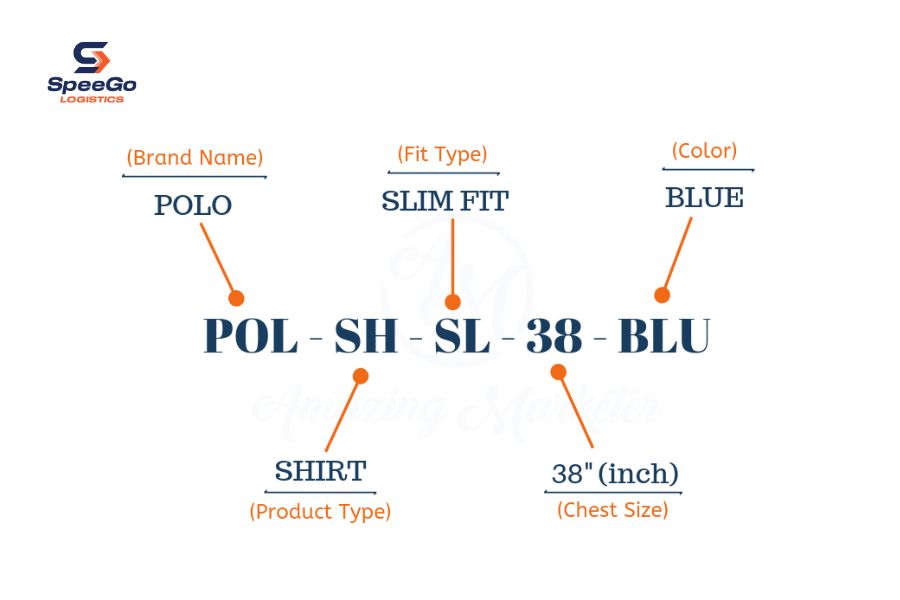
The structure of an SKU is designed to help businesses identify products quickly and manage inventory more efficiently. A well-organised SKU structure usually combines letters, numbers, or symbols that represent specific product details such as category, size, colour, brand, or model.
- Product Category: Identifies the product type
- Brand or Supplier: Indicates the manufacturer or supplier
- Colour: Specifies colour variations
- Size or Dimensions: Distinguishes product sizes
- Product Model: Identifies the exact version
4. Benefits of Using SKU Number
Using SKU numbers helps businesses manage products more efficiently across inventory, warehousing, retail, and e-commerce operations. As product catalogs grow, SKU systems become increasingly important for maintaining organisation and improving operational accuracy.
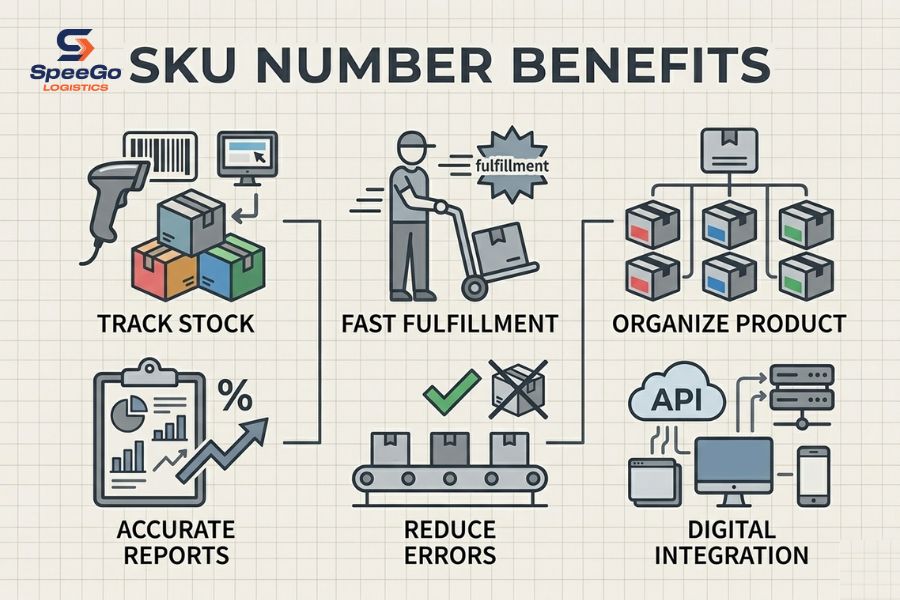
- Improved Inventory Management: SKU numbers help businesses track stock levels more accurately and identify products quickly across warehouses or sales channels.
- Faster Order Fulfillment: Warehouse teams can locate and process products more efficiently using SKU codes instead of long product names.
- Better Product Organisation: A structured SKU system makes it easier to categorise products by type, size, colour, or brand.
- More Accurate Sales and Inventory Reporting: SKU-based tracking allows businesses to monitor product performance and analyse sales trends more effectively.
- Reduced Operational Errors: SKU numbers help minimise inventory confusion, duplicate listings, and shipping mistakes by providing a consistent product identification system.
- Easier Integration with Digital Systems: Modern inventory and warehouse management software often relies on SKU codes for automation.
The benefits of using SKU numbers go beyond simple product identification. SKU systems help businesses improve inventory accuracy, streamline warehouse operations, reduce fulfillment errors, and gain better control over inventory performance.
5. SKU Number vs Other Retail Code
While SKU numbers are widely used for internal inventory control, they are different from other retail codes such as UPCs, barcodes, EANs, and item numbers.
| Code Type | Main Purpose | Uniqueness | Used For | Example |
| SKU Number | Internal inventory management | Unique within one business | Inventory tracking and warehouse management | SHIRT-BLK-M |
| UPC (Universal Product Code) | Standard retail product identification | Same across retailers | Retail checkout and scanning | 012345678905 |
| GTIN Code | Global product identification | Globally unique | International retail and e-commerce systems | 09506000134352 |
| Barcode | Scannable product data display | Depends on encoded information | Product scanning and logistics operations | Visual barcode image |
| Serial Number | Individual product identification | Unique for every individual item | Warranty tracking and product authentication | SN-4589217 |
5. How do SKU Numbers Support eCommerce Logistics?
A well-organised SKU system can improve inventory accuracy and warehouse efficiency. However, poor SKU management often creates operational problems that affect inventory tracking, fulfillment speed, and logistics performance.
- Creating SKU Codes That Are Too Long: Overly detailed SKU codes can make inventory systems harder to manage and increase manual entry mistakes.
- Using Inconsistent Naming Structures: Different naming styles or abbreviations for similar products can create confusion across inventory systems.
- Creating Duplicate SKU Codes: Duplicate SKU numbers may lead to incorrect stock counts and fulfillment errors. Businesses should regularly review their inventory systems to maintain unique product identifiers.
- Including Too Much Product Information: Adding excessive details to SKU codes can make them difficult to read and manage. A simple and scalable SKU structure is often more effective for long-term inventory operations.
- Frequently Changing SKU Structures: Constantly modifying SKU systems can create confusion in warehouses and affect inventory reporting accuracy. Businesses should create flexible SKU structures that can support future growth.
- Ignoring Warehouse and Logistics Operations: SKU systems should support practical warehouse workflows, not just inventory databases. Poor SKU design can slow down picking, packing, and shipping operations.
- Failing to Integrate SKU Systems with Software Platforms: SKU structures that are not properly integrated with inventory or warehouse software may cause data inconsistencies and tracking problems.
Poor SKU management can create inventory confusion, warehouse inefficiencies, and fulfillment errors. Businesses that build clear, consistent, and scalable SKU systems are better prepared to manage inventory.
Learning what is a SKU number is an important step for businesses looking to improve inventory management and logistics performance. Clear and consistent SKU structures help companies organise products, reduce warehouse confusion, and create smoother fulfillment operations across multiple sales channels.