

As international trade continues to grow, understanding what is import duty becomes increasingly important for importers, e-commerce sellers, and global sourcing businesses. Import duties are more than just customs charges, they affect profitability, shipping timelines, and market competitiveness.
1. What Is Import Duty?
When goods move across borders, governments often apply taxes and customs charges before products can enter the destination country. These charges are commonly known as import duties.
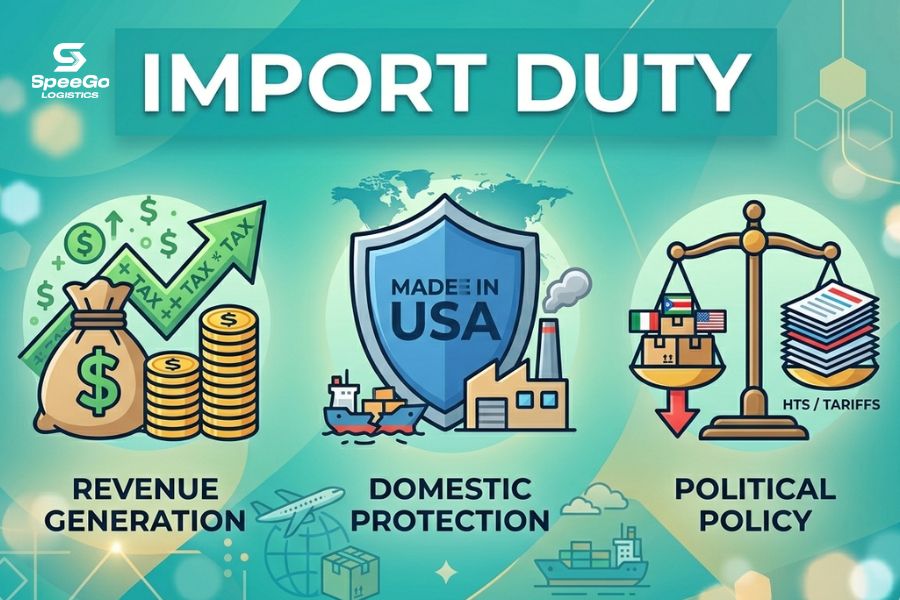
Import duties generally serve multiple economic and trade-related purposes. One primary function is to generate revenue for governments through taxes collected on imported goods. Another important objective is to protect domestic industries by making foreign products more expensive. In some situations, governments may also impose higher import duties on products from specific countries as part of trade restrictions or economic policies.
In the United States, import duty rates are regulated by Congress and listed in the Harmonized Tariff Schedule (HTS), published by the United States International Trade Commission. Duty rates vary depending on the trade relationship between the United States and the exporting country.
2. Import Duties vs Taxes vs Tariffs
Although import duties, tariffs, and taxes are closely related, they serve different purposes in international trade. The differences between these charges is important for businesses involved in importing, exporting, and global logistics because each cost can affect pricing, customs clearance, and overall shipping expenses.
| Criteria | Import Duties | Tariffs | Import Taxes |
| Definition | Charges applied to goods entering a country | Government-imposed trade charges on imported or exported goods | General taxes collected on imported products |
| Main Purpose | Protect domestic industries and regulate imports | Influence trade policy and international | Apply domestic taxation rules to imported goods |
| How They Are Calculated | Based on HS code, customs value, and country of origin | Fixed amount, percentage, or mixed tariff structure | Based on product value or local tax regulations |
| Common Examples | Duty on electronics, textiles, machinery | Trade tariffs on steel or agricultural products | VAT, GST, sales tax |
3. Factors That Affect Import Duty Rates
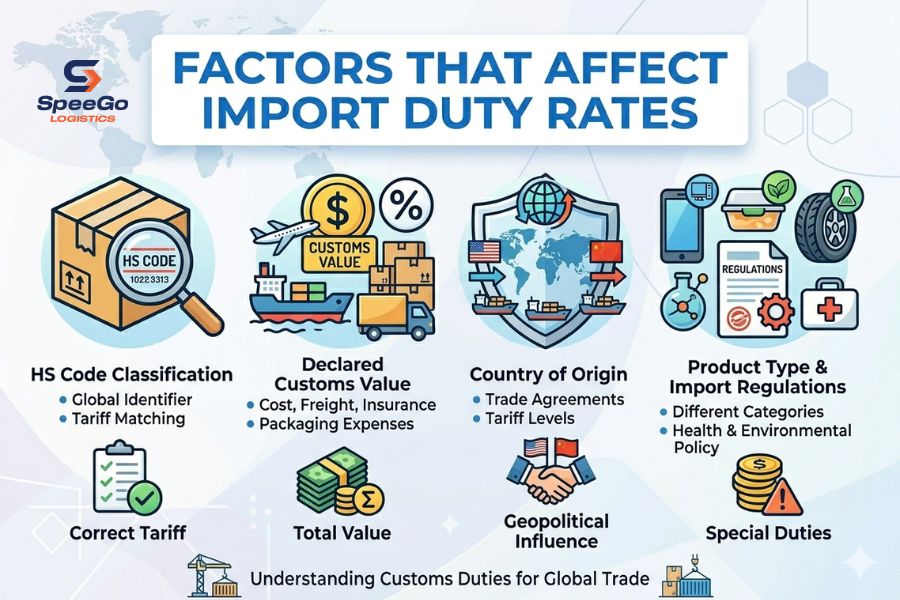
One of the most common questions in international trade is how much is import duty. The answer depends on several variables, including the type of product, shipment value, country of origin, and local customs regulations.
- Product Classification (HS Code): This international product classification system helps customs authorities identify goods and assign the correct tariff rates.
- Declared Customs Value: Import duties are often calculated based on the declared customs value of the goods. This value may include product cost, freight charges, insurance costs and packaging expenses.
- Country of Origin: Many governments apply different tariff levels depending on trade agreements or political and economic relationships.
- Product Type and Import Regulations: Different categories of products are subject to different customs regulations. Some goods may face higher duties due to health, environmental, or economic policies.
So, how much is import duty? The answer depends on product classification, shipment value, country of origin, and local customs regulations. Businesses that understand import duty calculations are better prepared to manage international shipping costs, maintain compliance, and improve supply chain planning.
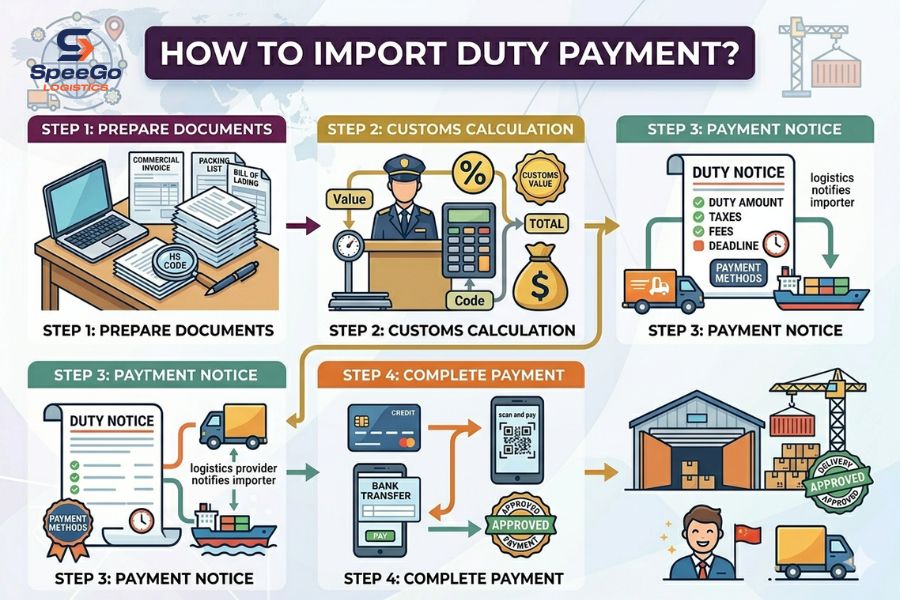
4. How to Handle Import Duty Payments?
Import duties must usually be paid before goods are released by customs authorities, and the exact payment process can vary depending on the country, shipping method, and logistics provider.
4.1. Step 1: Prepare Import Documents
Before customs authorities calculate import duties, importers must provide the required shipping and customs documents. These documents help verify the shipment value, product category, and country of origin.
Common documents include:
- Commercial invoice
- Packing list
- Bill of lading or airway bill
- Import permits (if required)
- HS code classification documents
4.2. Step 2: Customs Calculates Duty and Taxes
Once the shipment arrives, customs authorities review the documents and determine the applicable import charges.
The calculation usually depends on:
- Product HS code
- Declared customs value
- Freight and insurance costs
- Country of origin
- Local tariff regulations
4.3. Step 3: Receive Duty Payment Notice
After customs completes the assessment, the importer or logistics provider receives a notification showing:
- Import duty amount
- Taxes and additional fees
- Payment deadline
- Approved payment methods
In some cases, freight forwarders or courier companies handle the customs process and notify the importer directly.
4.4. Step 4: Complete Import Duty Payment
Businesses can usually pay customs duties through several methods, depending on local customs systems.
4.5. Step 5: Customs Releases the Shipment
After payment is confirmed, customs authorities approve cargo release and allow the shipment to continue to final delivery
Managing import duty payments and customs procedures can be complicated, especially when shipping across multiple countries with different regulations.
SpeeGo Logistics helps businesses simplify international shipping with reliable freight solutions, customs support, and efficient delivery coordination. Partner with SpeeGo Logistics to reduce shipping delays, improve customs clearance efficiency, and move your cargo globally with greater confidence.
5. Who Is Responsible for Paying Import Duties and Taxes?
Understanding who pays import duties and taxes is essential for businesses involved in international shipping. Responsibility for these charges depends on the shipping agreement between the seller and the buyer, which is typically defined under internationally recognised Incoterms rules.
5.1. The Carrier
The carrier is the company responsible for transporting goods across international borders, such as express couriers or freight providers. Besides handling transportation, carriers often act as customs brokers by managing shipping documents and supporting customs clearance procedures.
In many cases, the carrier also collects import duties, taxes, and related customs fees before delivering the shipment to the final recipient.
5.2. The Exporter and the Importer
The seller is generally considered the exporter, while the customer or receiving party becomes the importer. Responsibility for import duty payment depends on the agreed Incoterms.
- DDP (Delivered Duty Paid): Under DDP terms, the seller takes responsibility for transportation costs, customs clearance, and import duties. The buyer receives the goods without paying additional fees upon delivery.
- DDU (Delivered Duty Unpaid): With DDU arrangements, the seller handles shipping costs, but the buyer is responsible for paying import duties and taxes once the shipment arrives.
Import duties are often seen as just another shipping expense, but they can have a major impact on overall business performance. By understanding what is import duty, businesses can improve cost control, reduce customs-related issues, and manage international shipments with greater confidence.