

US tariffs on Vietnam have become increasingly important for businesses involved in international sourcing, importing, and cross-border trade. Tariff rates can directly affect product costs, profit margins, customs clearance, and long-term supply chain decisions. However, many businesses still struggle to determine which products are subject to tariffs and how to check the correct import duty rates.
1. What Are US Tariffs on Vietnam?
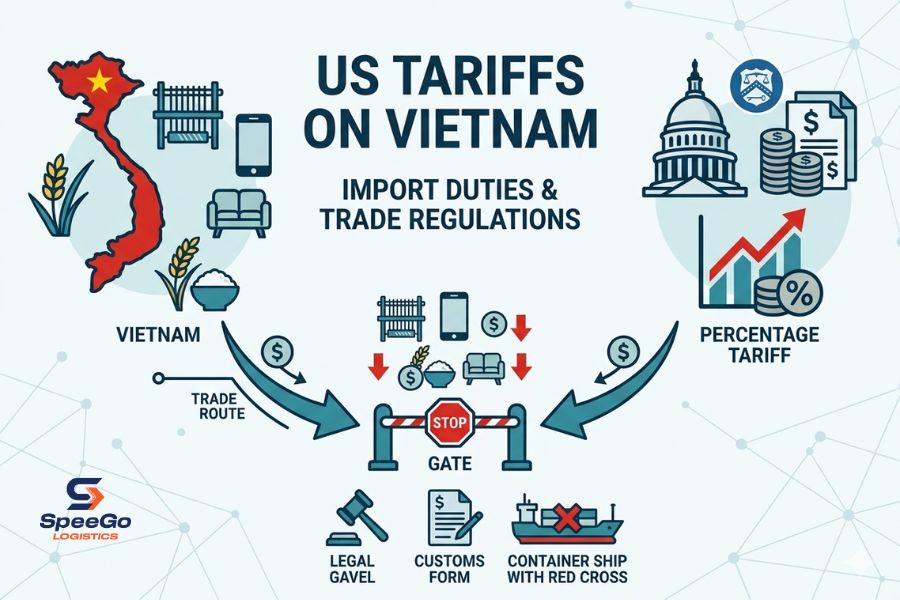
US tariffs on Vietnam are import duties imposed by the United States on goods exported from Vietnam. These tariffs are used to regulate trade, protect domestic industries, and address issues such as unfair pricing, subsidies, or trade imbalances.
The tariff rate applied to Vietnamese products depends on several factors, including the product category, HS code classification, and current US trade policies. Some products may also face additional duties through anti-dumping or countervailing investigations.
2. Why Has the US Imposed Tariffs on Some Vietnamese Products?
The United States has imposed tariffs on certain Vietnamese products for several trade and regulatory reasons. These tariffs are often linked to concerns about unfair competition, trade imbalances, and supply chain transparency.
- Trade imbalance concerns: The rapid growth of Vietnamese exports to the US has increased trade deficits in some sectors, leading to greater regulatory attention from American trade authorities.
- Anti-dumping investigations: The US may apply anti-dumping duties when imported goods are believed to be sold below fair market value, potentially harming domestic manufacturers.
- Countervailing duties (CVD): Additional tariffs can be imposed if foreign producers are considered to receive unfair government subsidies that create pricing advantages in global markets.
- Transshipment concerns: Some investigations focus on whether products from other countries are routed through Vietnam to avoid higher tariffs imposed elsewhere.
- Protection of domestic industries: Tariffs are sometimes introduced to support local US industries facing strong competition from imported goods.
- Customs compliance and origin verification: US authorities closely examine product origin documentation and supply chain records to ensure compliance with international trade regulations.
3. What Products Are Affected by US Tariffs?
Several major Vietnamese export categories have been affected by US tariffs or trade investigations in recent years. Since tariff regulations can change over time, businesses importing from Vietnam should regularly monitor customs updates and trade compliance requirements.
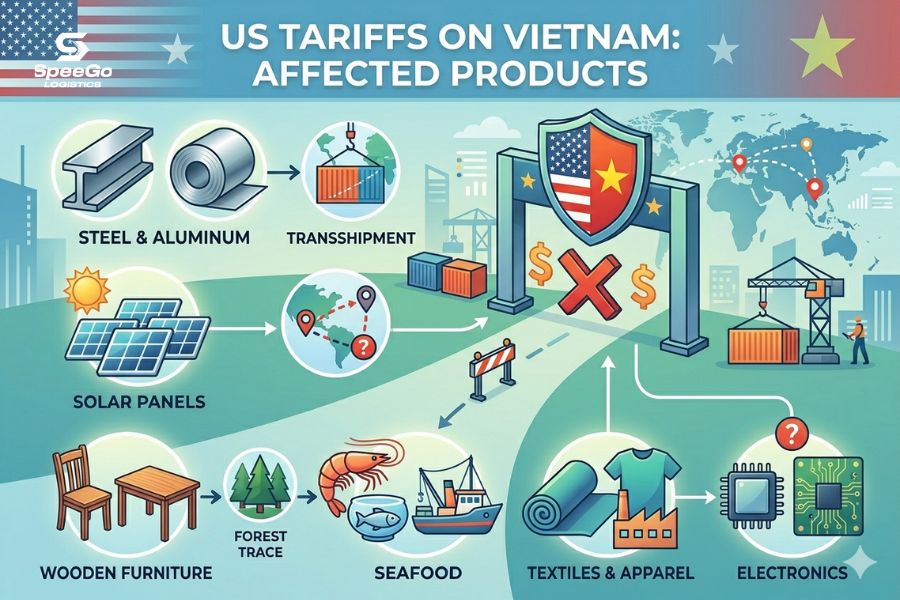
- Steel and aluminum products: Steel-related goods are among the most closely monitored imports due to anti-dumping and transshipment investigations. Certain metal products may face additional duties depending on product origin and manufacturing processes.
- Solar panels and renewable energy equipment: Some Vietnamese solar products have been investigated under US trade enforcement actions related to circumvention and supply chain sourcing concerns.
- Wooden furniture and wood products: Vietnam is one of the largest furniture exporters to the US market. However, some wooden products may face stricter customs reviews related to product origin, raw material sourcing, and anti-dumping regulations.
- Seafood products: Vietnamese seafood exports, including shrimp and fish products, have previously been subject to anti-dumping investigations and tariff reviews in the US market.
- Textiles and apparel: Although many textile products remain competitive in the US, tariff rates may vary depending on product classification, sourcing structure, and trade policy changes.
- Electronics and industrial goods: Electronics, machinery components, and industrial products may also face increased customs scrutiny, particularly when supply chains involve multiple countries.
Finding reliable suppliers in Vietnam while managing changing tariff regulations and customs requirements can be challenging for international businesses.
SpeeGo Logistics provides professional sourcing support to help businesses identify verified manufacturers, compare supplier options, monitor product compliance, and optimize import costs when sourcing from Vietnam.
4. What Is the Current US Tariff Rate on Vietnamese Goods?
The answer to what is the current US tariff rate on Vietnamese goods depends on several factors. There is no single tariff rate applied to all Vietnamese exports because each product is assessed differently under the US Harmonized Tariff Schedule (HTS).
Factors That Affect Vietnam Tariff Rates
- HS code classification: Every imported product is assigned a Harmonized System (HS) code, which determines the applicable tariff rate and customs requirements.
- Product category: Different industries face different tariff structures. For example, consumer goods, electronics, agricultural products, and industrial materials may all have separate duty rates.
- Trade remedy measures: Some Vietnamese products may face extra duties under anti-dumping or countervailing investigations conducted by US trade authorities.
- Country of origin rules: US Customs may review where products are manufactured and whether they qualify as Vietnamese-origin goods under trade regulations.
- Customs valuation: Import duties are often calculated based on the declared customs value of the shipment, including product cost, freight charges, and insurance in some cases.
Because tariff regulations can change due to trade policy updates, businesses importing from Vietnam should regularly review customs regulations and verify tariff classifications before shipping goods internationally.
5. How Do US Tariffs Affect Businesses Importing from Vietnam?
US tariffs can have a significant impact on businesses importing goods from Vietnam, especially as global trade regulations continue to evolve. Tariffs directly influence import costs, pricing strategies, supplier selection, and long-term supply chain planning.
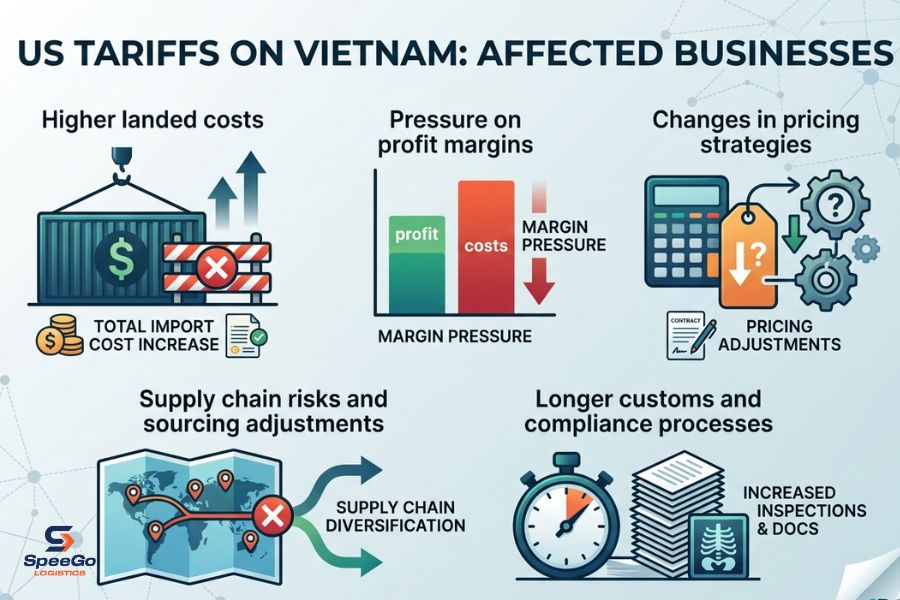
- Higher landed costs: Import duties increase the total cost of bringing products into the US market, including customs fees, transportation expenses, and compliance costs.
- Pressure on profit margins: Businesses that cannot easily raise retail prices may experience lower profitability due to higher import expenses.
- Changes in pricing strategies: Companies may need to adjust product pricing, renegotiate supplier contracts, or redesign packaging and sourcing structures to manage costs more effectively.
- Supply chain risks and sourcing adjustments: Some importers diversify suppliers or shift production to reduce dependency on tariff-sensitive product categories or regions.
- Longer customs and compliance processes: Increased trade scrutiny may result in additional documentation checks, origin verification, and customs inspections.
As a result, many companies importing from Vietnam are now investing more heavily in supply chain visibility, customs compliance planning, and diversified sourcing strategies to reduce long-term trade risks and improve operational flexibility.
6. How To Check US Tariffs On Vietnam?
Checking US tariffs on Vietnam is an important step for businesses involved in international sourcing and cross-border trade. Since tariff rates vary depending on the product type, HS code classification, and current US trade policies, importers should verify tariff information carefully before shipping goods to the United States.
- Use the US Harmonized Tariff Schedule (HTS): Businesses can search products by HS code, product description, or category to identify current duty rates and additional trade measures.
- Verify the Product HS Code: Accurate HS code classification is essential because tariff rates are assigned based on the product’s classification. Incorrect HS codes may lead to customs delays, penalties, or unexpected import costs.
- Check Anti-Dumping and Countervailing Duty Measures: Some Vietnamese products may face additional tariffs due to anti-dumping or countervailing investigations. Importers should review whether their products are subject to special trade remedy measures before shipping.
- Review Country of Origin Requirements: US Customs may examine where products are manufactured and whether they qualify as Vietnamese-origin goods under customs regulations.
- Consult Customs Brokers or Logistics Experts: Many businesses work with customs brokers, freight forwarders, or logistics providers to confirm tariff rates, customs requirements, and import documentation before arranging shipments.
US tariffs on Vietnam are essential for businesses involved in international sourcing and cross-border trade. SpeeGo Logistics provides international freight forwarding, customs clearance, and cross-border shipping solutions to help businesses import goods from Vietnam.