

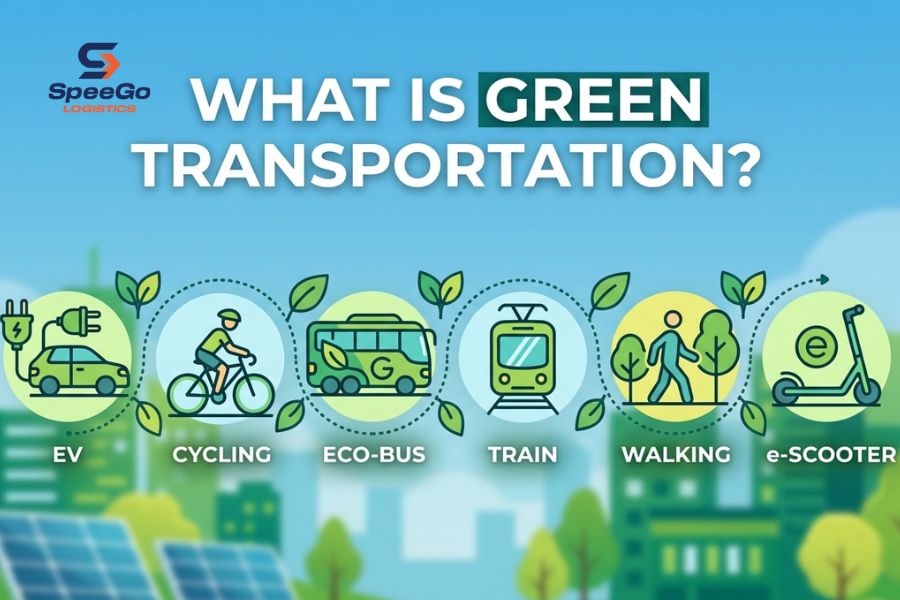
With increasing pressure to reduce emissions and improve efficiency, businesses are asking a critical question “What is green transportation?”. This concept represents a shift toward cleaner, smarter, and more efficient logistics systems that support both environmental and business goals. It is becoming a key driver of competitiveness in global supply chains.
1. What Is Green Transportation?
In today’s logistics landscape, sustainability is no longer optional, it has become a strategic priority. This is why many businesses are asking: what is green transportation and how it applies to real-world operations.
At its core, green transportation refers to transport methods designed to reduce environmental impact, particularly carbon emissions, air pollution, and energy consumption. It includes the use of cleaner fuels, energy-efficient vehicles, and optimized logistics processes that minimize waste and resource use. In simple terms, it is about moving goods or people in a way that is more environmentally responsible.
2. Why Green Transportation Matters in Modern Business?
The importance of green transportation is closely tied to the growing environmental pressure on businesses. The environmental impact of transportation remains significant, particularly in freight and logistics, where carbon emissions continue to rise.
Governments are introducing stricter regulations, while investors and customers are paying closer attention to sustainability practices. According to the International Energy Agency, the transport sector is a major contributor to global CO₂ emissions, which explains why businesses are increasingly expected to adopt greener solutions and align with climate goals.
3. Benefits of Green Transportation
The benefits of green transportation are becoming increasingly important as companies seek ways to balance profitability with sustainability. Beyond environmental responsibility, green logistics also delivers measurable operational and financial advantages, making it a practical choice for modern businesses.
3.1. Reduced Carbon Footprint
One of the most important advantages of green transportation is its ability to significantly reduce environmental impact. The use of low-emission vehicles, combined with modal shifts such as rail or sea freight, helps lower greenhouse gas emissions per shipment.
3.2. Improve Brand Reputation
Adopting sustainable transport practices can also improve how a business is perceived in the market. Companies that invest in eco-friendly operations are often seen as more responsible and forward-thinking, which strengthens customer trust and brand value. In addition, sustainability initiatives are increasingly considered in ESG reporting and investor decisions.
3.3. Saving Cost
Green transportation helps businesses reduce long-term operational costs by improving efficiency across the supply chain. In addition, better load management ensures transport capacity is used more effectively, which helps reduce wasted trips and stabilise overall logistics spending over time.
3.4. Competitive Business Advantage
Green transportation provides a clear competitive edge in today’s global market. It helps businesses comply with tightening environmental regulations while also differentiating them from competitors who have not yet adopted sustainable practices. Over time, companies that invest in green logistics are better prepared for future trade policies that prioritise carbon reduction and environmental responsibility.
4. How Businesses Can Adopt Green Transportation Strategies?
Businesses need to evaluate their current logistics model, identify inefficiencies, and gradually integrate more sustainable practices into their supply chain.
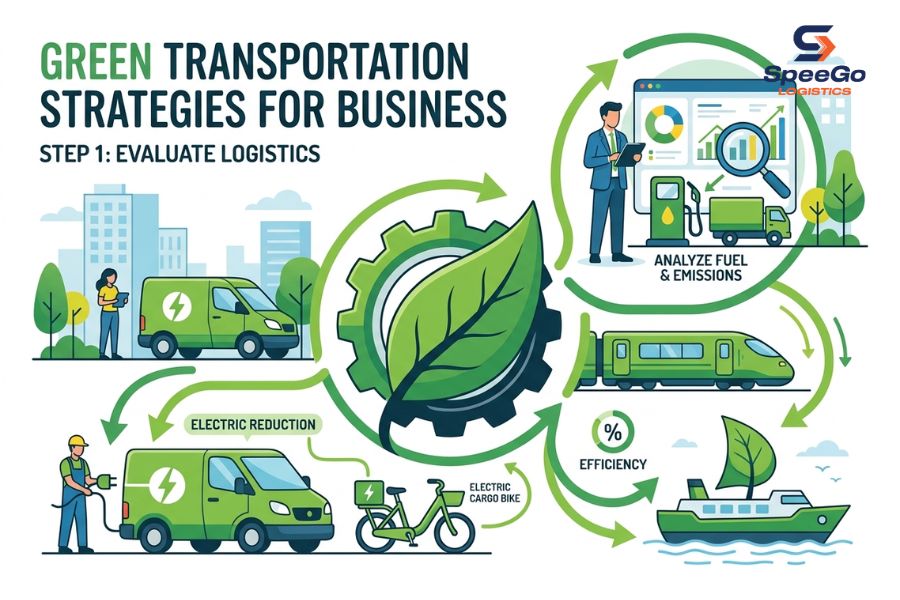
Step 1: Evaluate current logistics system
Analyse fuel usage, delivery routes, and emissions to identify inefficiencies and areas that need improvement.
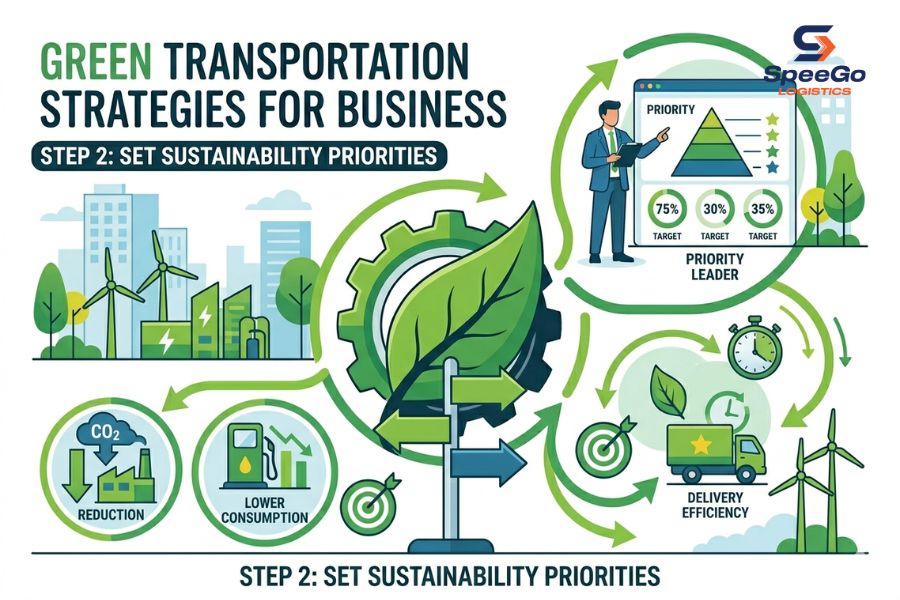
Step 2: Set sustainability priorities
Define clear goals such as reducing carbon emissions, lowering fuel consumption, or improving delivery efficiency.
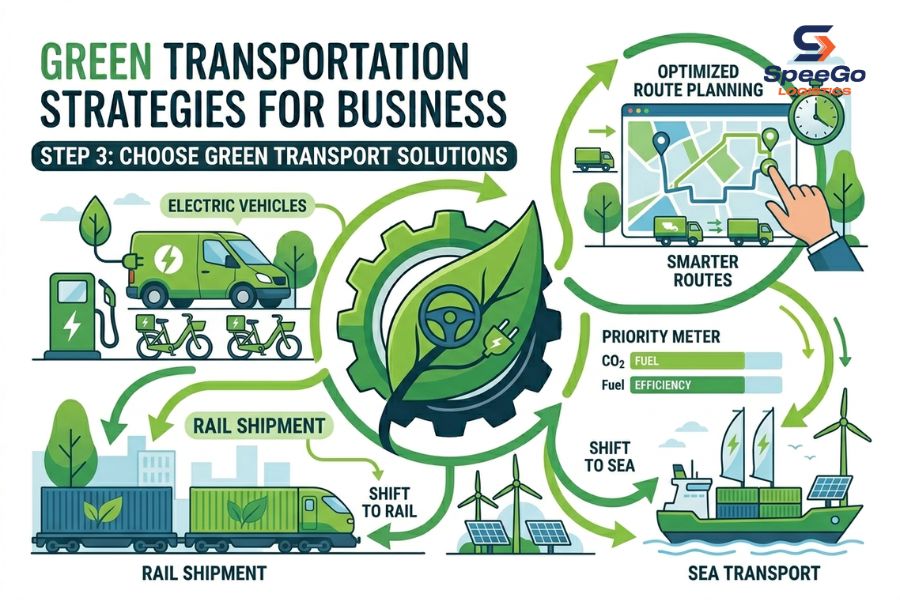
Step 3: Choose green transport solutions
Adopt options like electric vehicles, optimized route planning, or shifting part of shipments to rail or sea transport.
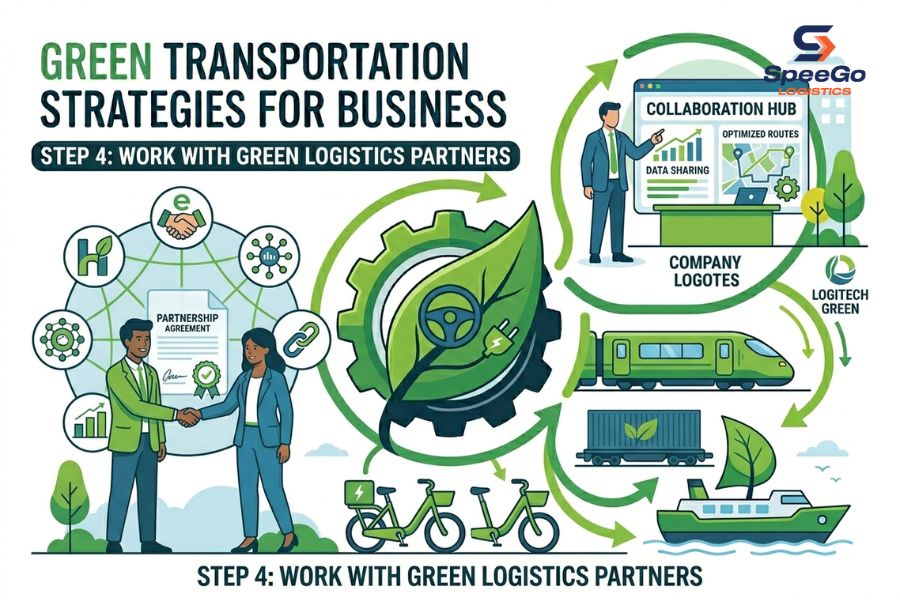
Step 4: Work with green logistics partners
Collaborate with logistics providers that offer eco-friendly shipping methods and technology-driven route optimization.
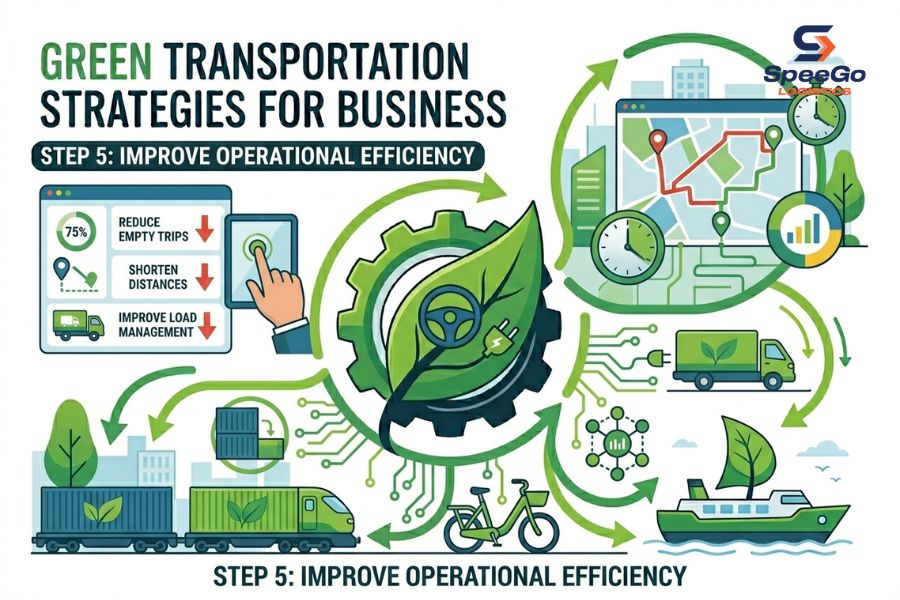
Step 5: Improve operational efficiency
Use data and tracking tools to reduce empty trips, shorten delivery distances, and improve load management.
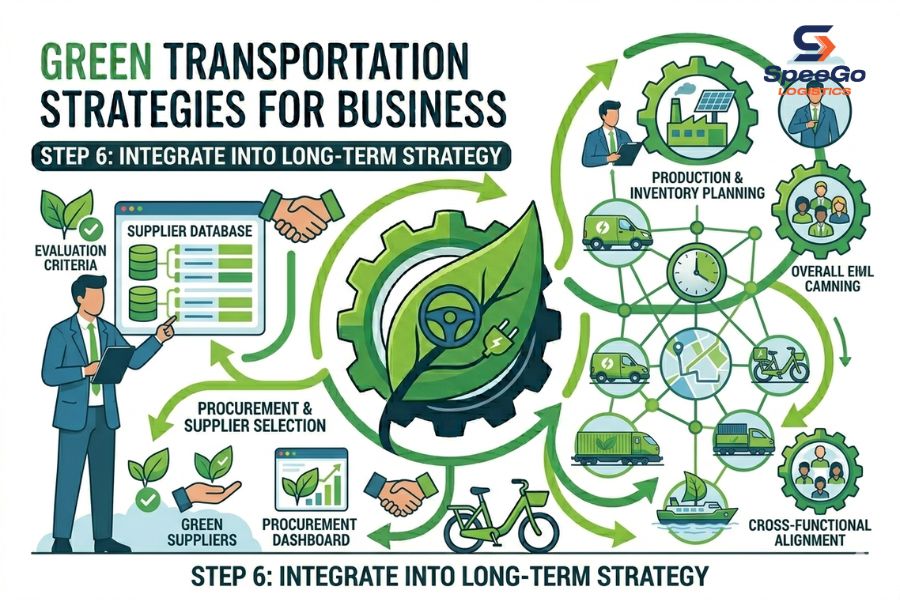
Step 6: Integrate into long-term strategy
Embed sustainability into procurement, supplier selection, and overall supply chain planning.
SpeeGo Logistics supports companies with efficient transport solutions designed to optimise routes, reduce unnecessary emissions, and improve overall delivery performance.
Partner with SpeeGo Logistics today to streamline your shipping process and build a more efficient, future-ready logistics strategy.
5. Green Transportation Solutions in Practice
Today, green transport is not limited to electric vehicles but it also includes digital optimisation, shared infrastructure, and smarter delivery systems designed to reduce emissions and improve efficiency.
5.1. Electric and low-emission vehicles
One of the most visible changes in logistics is the adoption of electric and alternative-fuel vehicles. These solutions help reduce direct carbon emissions, especially in urban delivery networks where short-distance trips are frequent.
5.2. Green shipping methods and modal shift
Many companies are also moving away from high-emission transport options by shifting cargo to rail and sea freight where possible. These green shipping methods produce fewer emissions per unit of cargo and are widely used for long-distance and bulk shipments, helping reduce overall environmental impact across supply chains.
5.3. Load pooling and shared logistics networks
A more advanced approach in modern supply chains is load pooling, where different companies, sometimes even competitors, share warehouse space and transportation resources. This collaborative model helps maximise vehicle utilisation and reduce empty trips. With help of AI in logistics systems, businesses can coordinate shipments with greater transparency and control, improving both cost efficiency and sustainability.
5.4. Smart optimisation and automated load planning
Technology now plays a central role in reducing emissions. Automated load optimisation systems group deliveries based on destination and delivery time, ensuring vehicles operate at full capacity. Instead of manual planning, AI-driven logistics tools help eliminate half-empty trucks and reduce unnecessary fuel consumption.
5.5. Emerging automation technologies
Although still developing, drones and autonomous delivery vehicles are being tested as part of future green logistics systems. While full-scale adoption is not yet widespread, these technologies represent the next stage of innovation in reducing emissions and improving delivery efficiency.
6. Common Green Transportation Examples
Green transportation is not limited to a single type of vehicle. Instead, it includes a wide range of transport options and supporting systems designed to reduce emissions, improve energy efficiency, and support sustainable logistics operations.
6.1. Electric vehicles (EVs)
Electric vehicles are one of the most widely used solutions in green transportation. These vehicles run on electricity instead of fossil fuels, which helps reduce direct carbon emissions during delivery. They are especially effective for urban logistics and last-mile delivery, where short distances and frequent stops make EVs highly efficient.
6.2. Hybrid vehicles
Hybrid vehicles combine a traditional internal combustion engine with an electric motor. This dual system allows fuel consumption to be reduced while still maintaining flexibility for longer routes. Many logistics companies use hybrids as a transitional solution toward fully electric fleets.
6.3. Drones and autonomous delivery systems
Although still in the early stages of adoption, drones and automated delivery vehicles are emerging technologies in green logistics. They are designed to reduce road congestion and optimize delivery routes, especially for short-distance or urgent shipments.
6.4. Cargo bikes and electric scooters
In urban areas, micro-mobility vehicles such as cargo bikes and electric scooters are increasingly used for last-mile delivery. These options are highly efficient in reducing traffic congestion and emissions while improving delivery speed in dense city environments.
In simple terms, what is green transportation shows us how logistics can be done in a cleaner and more efficient way. It is not just about reducing pollution but also about improving how goods are moved in everyday business operations. As more companies adopt it, green transportation is becoming a practical standard rather than a future concept.