In international trade, shipping terms play a critical role in defining responsibilities and costs between buyers and sellers. One term that often causes confusion is what is delivery duty unpaid (DDU). Although widely used in practice, many businesses still misunderstand how it works and when to apply it. This guide will break down the concept clearly, helping you make better decisions in cross-border logistics.
1. What Does Delivery Duty Unpaid Mean?
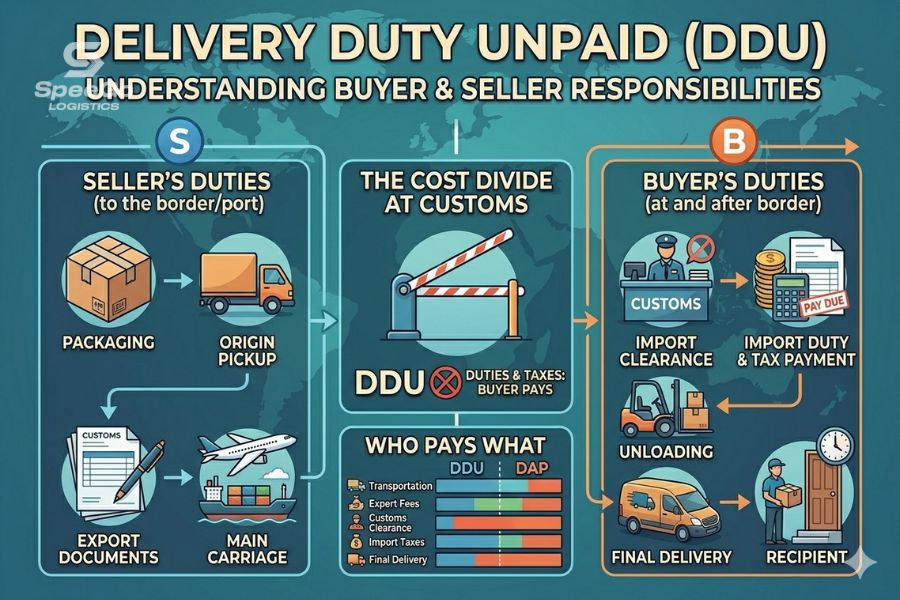
Delivery Duty Unpaid (DDU) is an international shipping term that defines how responsibilities and costs are shared between the seller and the buyer. In simple terms, under DDU, the seller is responsible for delivering the goods to the destination country. However, it is the buyer’s obligation to cover any import duties, taxes, and customs clearance charges.
This means the shipment is transported to the agreed destination, yet it is not fully cleared for import. The buyer must handle local customs procedures and settle any applicable charges before receiving the goods.
2. Is DDU Still an Official Incoterm?
It is important to note that DDU is no longer part of the latest Incoterms rules. It was replaced by DAP (Delivered at Place) in Incoterms 2010 and continues in Incoterms 2020.
However, the term “delivery duty unpaid” is still widely used in practice, especially in eCommerce and informal logistics discussions. In most cases today, when businesses ask “what does delivery duty unpaid mean”, they are referring to a shipping arrangement similar to DAP, where the buyer pays import duties upon arrival.
In summary, shipping under Delivery Duty Unpaid (DDU) means the seller handles transportation, while the buyer takes responsibility for import duties and customs clearance. Despite its removal from formal trade regulations, the term continues to hold significant importance in practical logistics operations.
3. When Should Businesses Use Delivery Duty Unpaid (DDU)?
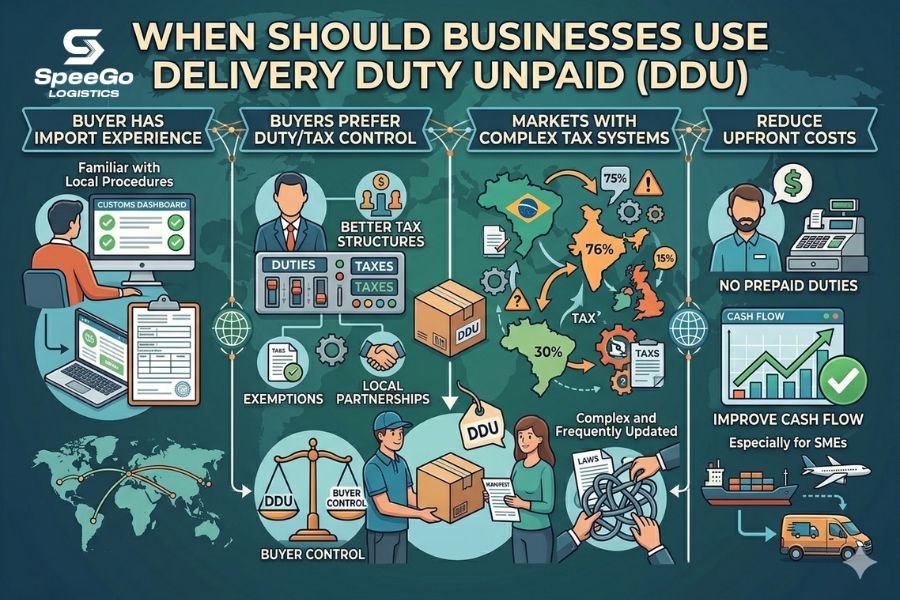
Choosing when to use DDU depends on how responsibilities are shared between the seller and the buyer. While Delivery Duty Unpaid can reduce the seller’s obligations, it is not suitable for every transaction. Businesses should apply this model only when the buyer is prepared to manage import procedures and associated costs.
- Buyer Has Import Experience: DDU works best when the buyer is familiar with customs procedures in their country.
- Buyers Prefer Control Over Duties and Taxes: Some buyers prefer to control how duties and taxes are handled, especially if they have access to better tax structures, exemptions, or local partnerships.
- Shipping to Markets with Complex Tax Systems: In certain countries, import duties and tax regulations can be complicated or frequently updated. For sellers unfamiliar with these systems, taking full responsibility (as in DDP) can increase risk.
- Businesses Want to Reduce Upfront Costs: Under DDU, sellers are not required to prepay import duties or taxes. This can improve cash flow, particularly for small and medium-sized enterprises.
Using Delivery Duty Unpaid (DDU) is most effective when buyers are capable of handling import responsibilities and prefer control over duties and taxes. For businesses, it offers a way to reduce costs and simplify operations but only when supported by clear communication and the right customer profile.
4. How Delivery Duty Unpaid (DDU) Works in International Shipping?
Under Delivery Duty Unpaid, the seller manages most of the logistics journey, but the buyer is responsible for import duties and customs clearance once the shipment arrives in the destination country.
- Step 1: Seller Prepares and Ships the Goods
- Step 2: Transportation
- Step 3: Arrival at Destination and Customs Inspection
- Step 4: Buyer Pays Import Duties and Clears Customs
- Step 5: Delivery to the Buyer
Managing Delivery Duty Unpaid (DDU) shipments requires clear coordination between seller, buyer, and customs authorities, any gap can lead to delays or unexpected costs. SpeeGo Logistics provides structured support for DDU shipping, helping businesses handle international transportation, documentation, and shipment tracking more efficiently while ensuring a smooth handover at the destination.
5. Roles of Seller and Buyer under Delivery Duty Unpaid (DDU)
In addition, under Delivery Duty Unpaid (DDU) terms, the division of responsibilities between the seller and the buyer is clearly defined but requires careful coordination to avoid disruptions.
5.1. The seller
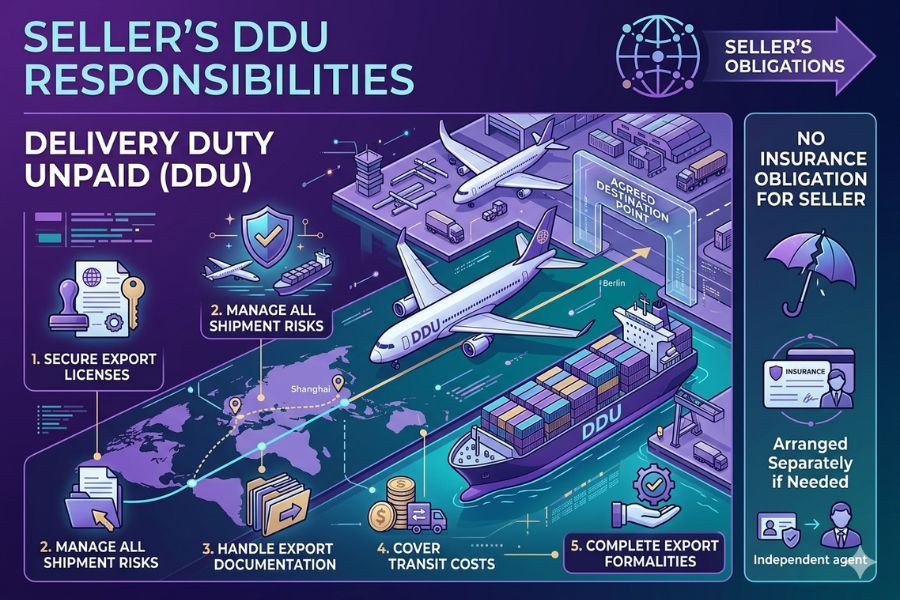
It secures export licenses, all risks associated with the shipment until it reaches the agreed destination point and completes all required formalities. This includes handling documentation, covering transportation costs through transit countries, and issuing the commercial invoice. However, there is no obligation for the seller to purchase insurance, which means coverage must be arranged separately if needed.
5.2. The Buyer
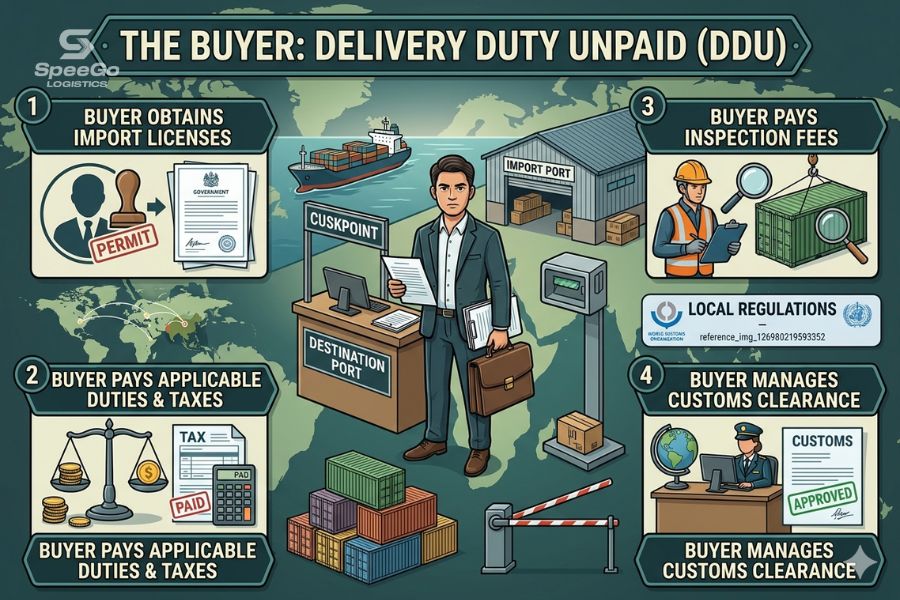
On the buyer’s side, responsibility begins once the goods arrive in the destination country. The buyer must obtain all necessary import licenses, pay applicable duties, taxes, and inspection fees, and manage customs clearance. According to the World Customs Organization, import compliance requirements vary by country, making it essential for buyers to understand local regulations in advance.
This means businesses using DDU shipping terms should ensure clear communication between both parties. Without proper alignment, shipments can be delayed, incur additional charges, or even be refused at delivery.
6. Common Mistakes When Using DDU
While Delivery Duty Unpaid (DDU) can simplify cost allocation for sellers, it often leads to operational issues if not managed carefully. Many businesses underestimate the importance of communication, documentation, and local compliance when using this shipping term.
- Not informing buyers about duties and taxes
- Inadequate or incorrect documentation
- Underestimating potential delays at customs
- Insufficient communication between seller and buyer
- Overlooking the importance of customer experience in e-commerce
Using DDU effectively requires more than understanding the definition. Businesses must manage communication, documentation, and coordination carefully to avoid shipping mistakes.
7. Delivery Duty Unpaid (DDU) with SpeeGo Logistics
If your business is using Delivery Duty Unpaid (DDU), working with a reliable logistics provider is essential to avoid delays, unexpected costs, and customs issues. SpeeGo Logistics offers a complete solution tailored for businesses that need efficient and transparent international shipping.
- End-to-end logistics service: From pickup to final delivery, SpeeGo manages the entire shipping process
- Customs support: Expert assistance with documentation and compliance to reduce clearance risks
- Flexible shipping options: Air freight, sea freight, and express delivery depending on urgency and budget
- Transparent pricing: Clear cost structure with no hidden fees
- Reliable delivery performance: Optimized routes and consistent transit times
- Real-time tracking: Full visibility of your shipment at every stage
- Dedicated customer support: Fast response and proactive issue handling
SpeeGo is designed to help businesses simplify DDU shipping, ensuring smooth coordination between seller and buyer while minimizing operational risks.
At its core, understanding what is delivery duty unpaid helps you avoid confusion when shipping across borders. It simply means the buyer handles import duties but without clear communication, things can quickly become complicated.
Contact SpeeGo today to get a tailored quote and streamline your international shipping process with confidence.