


Shipping goods across borders is no longer limited to large-scale freight or container shipments. Many businesses today rely on shipping bags internationally as a flexible way to move smaller quantities, test new markets, or support cross-border operations without heavy upfront investment.
1. What is Shipping Bags Internationally?
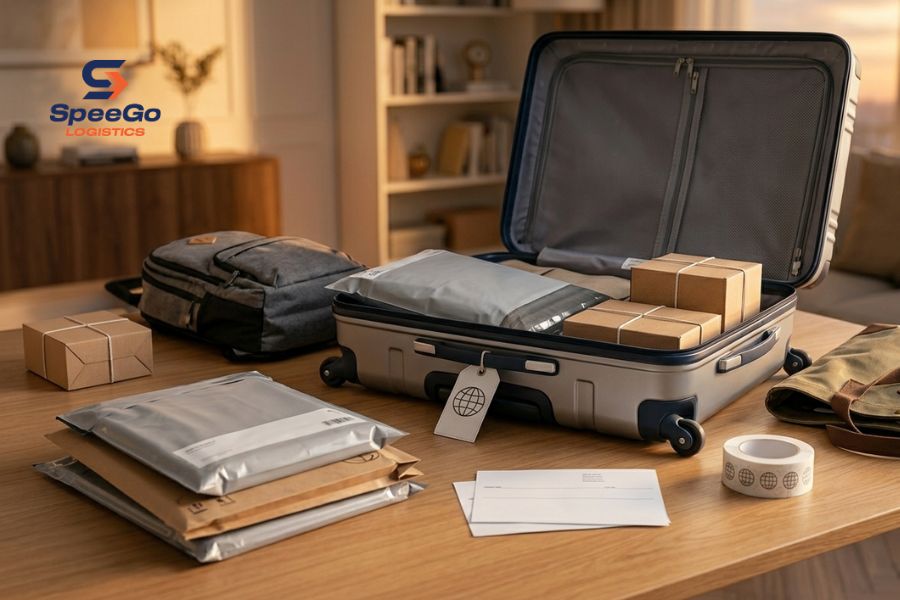
Shipping bags internationally is not just about moving personal luggage across borders. It often refers to a broader logistics activity that includes transporting packed items, samples, tools, or even small commercial goods using luggage-style packaging.
The concept overlaps with international logistics, but it operates on a smaller and more flexible scale. Unlike full container shipping or bulk cargo, bag shipping is typically faster to arrange, requires less documentation, and is more suitable for low-volume shipments. This is why many SMEs and eCommerce businesses rely on shipping bags overseas as a cost-effective entry point into global distribution.
2. Which People Use Shipping Bags Internationally?
The demand for shipping bags internationally comes from a wide range of users, not only large corporations. This solution is used by individuals and organizations that need a flexible, cost-conscious way to move belongings or small shipments across borders. Below are the main user groups and how they typically apply this method.
2.1. International Students and Expats
Students studying abroad and professionals relocating for work are among the most frequent users. Instead of paying high airline baggage fees, they often choose shipping bags overseas to send suitcases, books, or personal items ahead of time. This approach helps reduce travel stress and allows better control over luggage volume.
2.2. Businesses (SMEs)
Shipping bags internationally offers a practical alternative to traditional freight. Companies can send product samples to overseas buyers, small inventory batches for pilot sales and marketing materials for exhibitions or trade shows
This is particularly useful when order volumes are still low and do not justify full container shipping. It also supports faster turnaround compared to sea freight.
2.3. eCommerce Sellers and Online Retailers
Cross-border eCommerce businesses frequently rely on international luggage shipping services for low-volume or high-frequency deliveries. This methods works well for direct-to-customer international orders, returns and exchanges across countries and shipping bundled items that do not require palletization.
2.4. Travelers and Frequent Flyers
Frequent travelers, especially those on long trips or multi-country itineraries, use bag shipping to simplify their journey. Instead of carrying multiple suitcases, they send part of their luggage in advance.
2.5. Event Organizers and Exhibitors
Companies participating in international exhibitions or trade fairs often need to transport lightweight materials such as brochures, display items, or prototypes. Shipping bags is a convenient option when timing is tight and cargo volume is limited.
3. When Is Shipping Bags Internationally a Better Option Than Using Airline Freight?
While airline baggage is convenient for short trips, it is not always the most efficient solution, especially for businesses or long-distance travel. In many situations, shipping bags internationally offers greater flexibility, cost control, and fewer restrictions. Below are the key scenarios where shipping becomes the better choice.
- When You Exceed Airline Baggage Limits: Air freight is often the first choice when speed is critical. It is commonly used for express shipping luggage or sending high-value items that require tight delivery schedules.
- When You Want to Reduce Travel Stress: Handling multiple suitcases through airports, security checks, and transit points can be exhausting, especially for long-haul or multi-leg journeys.
- When Shipping in Advance Is More Practical: Airline baggage only arrives with you. However, in many business scenarios, items need to be delivered earlier.
- When Cost Efficiency Matters for Large or Heavy Loads: Airlines charge per bag, per kilogram, and sometimes per route segment. These costs can escalate quickly for bulky shipments.
- When You Need Door-to-Door Convenience: Airline baggage requires passengers to handle luggage at multiple points: check-in, baggage claim, customs, and final transport. This is why many businesses prefer express shipping luggage services for international operations.
Still unsure whether to carry or ship your bags? Let SpeeGo Logistics take the hassle out of the process. With expert support and end-to-end service, you can focus on your journey while your luggage is delivered safely to its destination.
4. Popular Methods for Shipping Bags Overseas
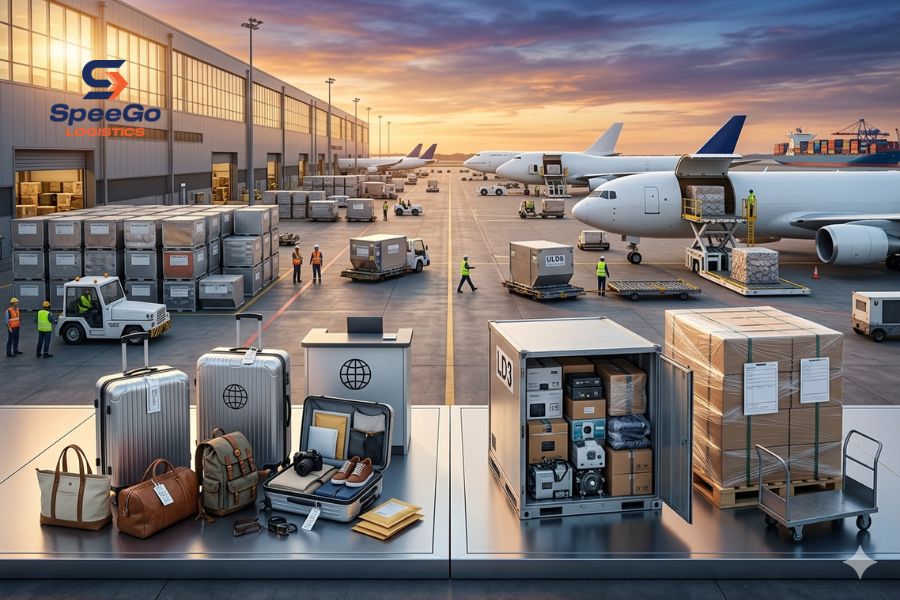
Selecting the right method for shipping bags internationally is not simply a logistical decision. It directly affects delivery timelines, cost structure, and customer satisfaction. For businesses, especially those operating across borders, understanding the strengths and limitations of each shipping option is essential for making informed decisions.
- Air Freight: It is widely used when delivery speed is a top priority. It is particularly suitable for time-sensitive shipments such as product samples, documents, or high-value goods.
- Sea Freight: Shipping luggage internationally by sea is often the most economical option. Although slower, it is highly effective for transporting larger or heavier shipments.
- Express Courier Services: Express couriers combine air transport with last-mile delivery, offering a seamless door-to-door solution. This makes them a popular choice for businesses that prioritize ease of use and operational simplicity.
There is no universal solution for shipping bags internationally. Air freight delivers speed, sea freight minimizes cost, and express services offer convenience. The most effective strategy is to align your shipping method with your business priorities.
5. How to Ship Luggage Internationally Step-by-Step?
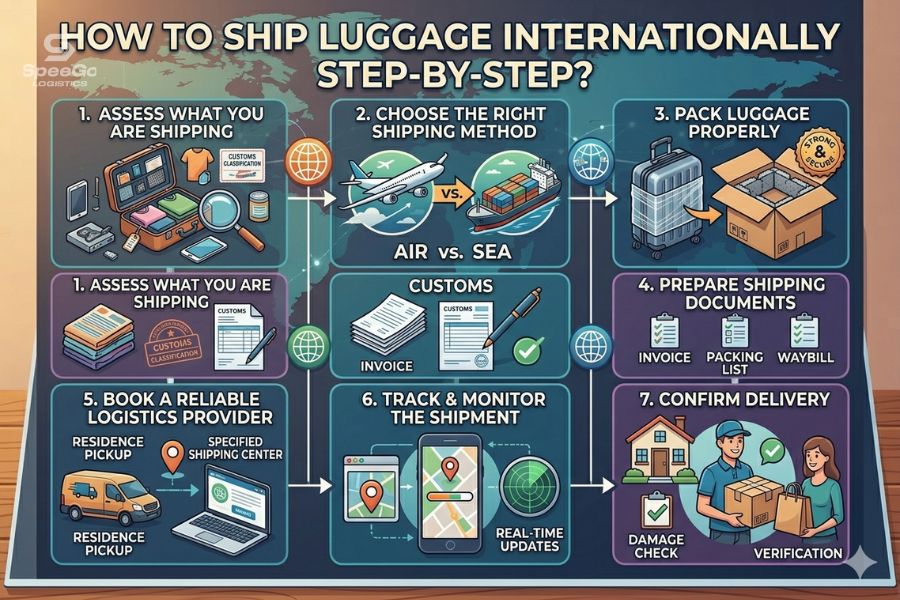
While the process may seem straightforward, each step requires careful attention, especially when shipments cross multiple borders.
- Assess What You Are Shipping: Start by identifying the type of items inside the bags. This step determines packaging requirements, shipping method, and customs classification.
- Choose the Right Shipping Method: Businesses shipping time-sensitive items often prioritize air or express services, while bulk shipments may benefit from shipping luggage internationally by sea.
- Pack Luggage Properly for International Transport: Recommends using strong, tamper-resistant packaging for any items transported through international air cargo systems.
- Prepare Shipping Documents: Documentation is one of the most important parts of the process. Missing or incorrect paperwork can lead to delays or penalties.
- Book a Reliable Logistics Provider: Schedule a pickup from your residence or drop off your luggage at a specified shipping center. Many providers offer convenient solutions to make this process easier.
- Track and Monitor the Shipment: Once the shipment is in transit, tracking becomes essential. Most logistics providers offer real-time updates through digital platforms.
- Confirm Delivery: Verify that your luggage has been delivered to the correct address. Check for any damages and promptly report any issues to the shipping company.
Shipping internationally is not just about moving luggage from one place to another. It is a structured process that involves planning, compliance, and coordination. By following these steps, businesses can optimize their shipping bags internationally strategy, reduce risks, and ensure a smoother delivery experience.
6. How Much Does it Cost to Ship Luggage Internationally?
The cost of shipping bags overseas based on distance, shipment size, delivery speed, and additional logistics services.
6.1. Cost Factors
Before estimating how much it costs to ship luggage internationally, it is important to understand what actually drives pricing.
- Distance: The destination plays a major role in pricing. The farther the shipment travels, the higher the transportation and handling costs. International routes typically involve multiple stages like export handling, line-haul transport, customs clearance, and last-mile delivery.
- Size & Weight: Shipping providers calculate charges based on either actual weight or dimensional (volumetric) weight, depending on which is higher.
- Speed (Delivery Time): The faster the delivery, the higher the cost. You should note that air cargo pricing is heavily affected by urgency, fuel costs, and available capacity.
6.2. Estimated Shipping Cost Ranges
While exact prices depend on specific routes and providers, businesses can use the following ranges as a general reference:
- Express courier (air-based): ~$5 – $12 per kg
- Standard air freight:~$3 – $8 per kg
- Sea freight (consolidated cargo): ~$100 – $300 per CBM (cubic meter)
These are indicative ranges based on industry averages and may fluctuate depending on market conditions, fuel surcharges, and seasonal demand.
The cost of shipping luggage internationally depends on a combination of distance, size, speed, and logistics complexity. While shipping may seem expensive initially, it often delivers better value than airline excess baggage, especially for businesses handling larger or more frequent shipments.
7. Choosing the Right Logistics Partner for International Shipping
If you are looking for a reliable solution for shipping bags internationally, SpeeGo Logistics provides a complete, end-to-end service designed specifically for businesses. Instead of managing multiple vendors or dealing with complex logistics, SpeeGo simplifies the entire process from pickup to final delivery with consistency and transparency.
- Transparent pricing: Clear quotations with no hidden fees
- Flexible shipping options: Air freight, sea freight, and express door-to-door delivery
- Reliable delivery performance: Optimized routes and stable transit times
- Customs support: Assistance with documentation and compliance to avoid delays
- Global coverage: Strong network for cross-border shipping
- Real-time tracking: Full visibility throughout the shipping process
- Responsive customer support: Quick assistance when issues arise
SpeeGo is built to support different business needs, whether you are sending product samples, operational materials, or bulk luggage. With a focus on efficiency and reliability, it helps streamline your logistics while reducing risks and unexpected costs.
Contact SpeeGo today to get a tailored quote and discover a smarter way to manage your international bag shipping.