

For many importers and exporters, understanding what is less than container load can help optimize shipping costs and improve logistics planning. LCL shipping is widely used when cargo volumes are too small for a full container. In this article, we explore how it works and why it is a popular choice in international trade.
1. What is Less Than Container Load (LCL)?
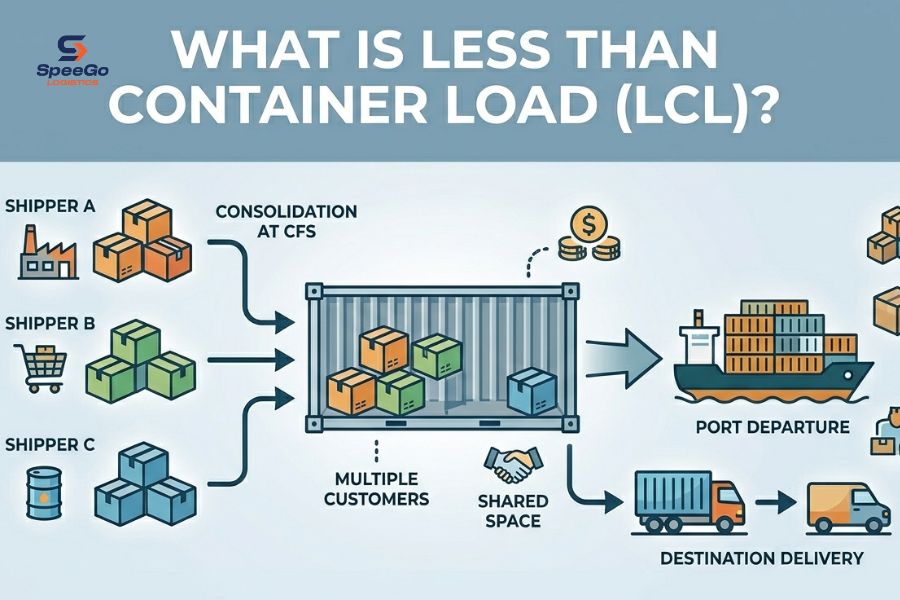
The less than container load meaning refers to a shipment that occupies only part of a container rather than the entire container capacity. Instead of paying for a full container, businesses only pay for the portion of space their cargo uses. This model is commonly used by small and medium-sized businesses, eCommerce sellers, sourcing companies, and importers shipping lower cargo volumes.
Lcl less than container load shipping works through cargo consolidation. Freight forwarders collect shipments from different customers and combine them into one shared container before export. Once the container reaches the destination port, the cargo is separated and delivered to individual consignees.
2. How Does LCL Shipping Work?
The LCL shipping process involves combining smaller cargo shipments from multiple businesses into one shared ocean freight container. This method allows companies to ship internationally without paying for an entire container.
2.1. Cargo Consolidation Process
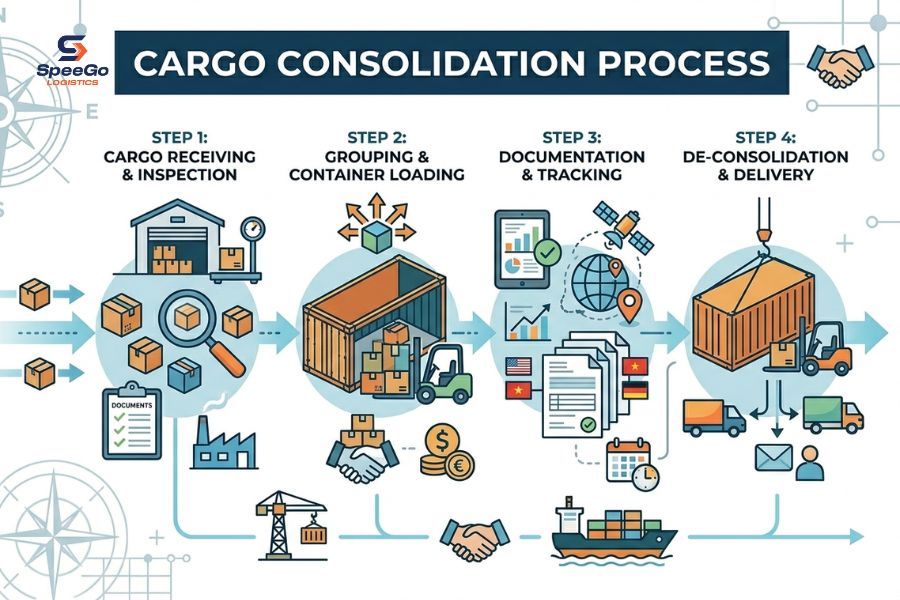
The first stage of LCL shipping begins with cargo consolidation. Freight forwarders or consolidators collect shipments from different exporters and transport them to a consolidation warehouse or Container Freight Station (CFS).
At the warehouse, logistics teams:
- Cargo receiving and inspection: CFS accepts individual shipments and reviews important details such as cargo condition, shipping documents, dimensions, and weight.
- Grouping and container loading: Shipments are organized inside the container based on cargo compatibility, safety standards, and space efficiency.
- Documentation management and shipment tracking: The CFS supports the handling of shipping paperwork and operational records for LCL cargo.
- Cargo separation at destination: Once the container reaches the destination port, the CFS unloads and separates each shipment before arranging customs clearance or final delivery to the consignee.
SpeeGo Logistics provides international LCL shipping solutions that help businesses manage consolidated cargo more efficiently across global trade routes. By supporting cargo inspection, SpeeGo helps businesses reduce logistics complexity and maintain smoother international shipping.
2.2. Freight Forwarding Operations
Freight forwarders play an important role throughout the LCL transportation process. These logistics providers coordinate shipping schedules, cargo handling, documentation, and carrier bookings between origin and destination ports.
2.3. Ocean Transportation and Transit
After consolidation, the shared container is transported to the departure port and loaded onto a cargo vessel. During ocean transit, the container travels alongside thousands of other international shipments moving through global trade routes.
2.4. Customs Clearance and Deconsolidation
When the container arrives at the destination country, customs authorities review shipping documents and inspect cargo if necessary. After customs clearance is completed, the container is moved to a destination warehouse for deconsolidation.
2.5. Final Delivery Process
The final step involves transporting cargo from the destination warehouse to the consignee’s address.
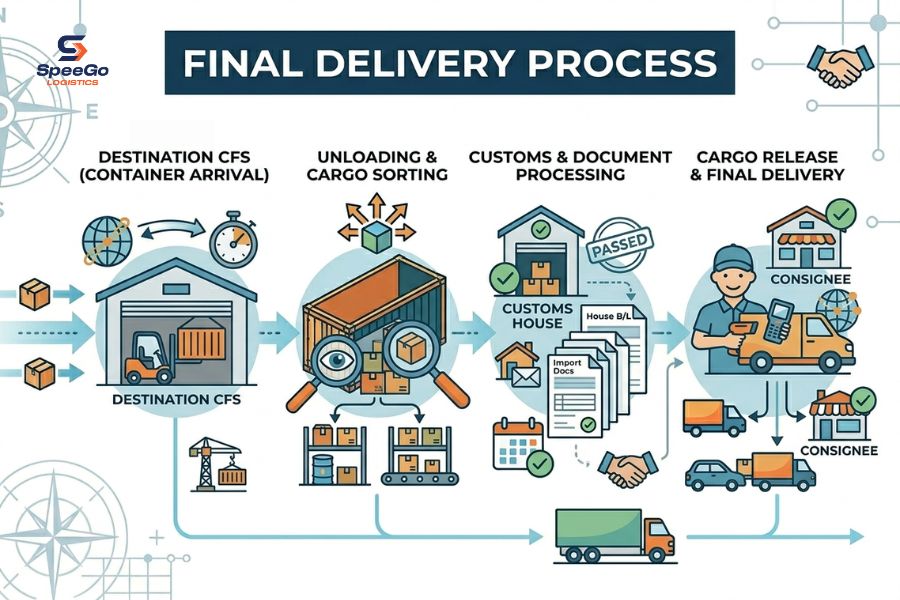
- Container transport to the destination CFS: After the vessel arrives and the container is unloaded at the port, the consolidated shipment is moved to the assigned Container Freight Station (CFS) for cargo separation and processing.
- Unloading and cargo sorting: At the destination CFS, logistics staff open the container and separate individual shipments based on their shipping records and cargo documentation. This process helps maintain accurate shipment tracking for each consignee.
- Customs and document processing: Each LCL shipment is handled separately during customs clearance procedures. Import documentation, including the House Bill of Lading, is reviewed individually so consignees can complete customs formalities for their own cargo.
- Cargo release and final delivery: After customs clearance is completed, the goods are either delivered directly to the consignee or prepared for pickup, domestic transportation, or further distribution.
3. LCL vs FCL: Which Shipping Method Is Better?
Choosing between LCL and FCL shipping depends largely on shipment size, delivery urgency, cargo sensitivity, and transportation budget. Both methods are widely used in international ocean freight, but they serve different logistics needs.
| Criteria | LCL Shipping (Less Than Container Load) | FCL Shipping (Full Container Load) |
| Shipment Size | Suitable for smaller cargo volumes that do not fill an entire container. | Best for large shipments that require a full container. |
| Shipping Cost | Businesses only pay for the container space their cargo uses, making it more affordable for low-volume shipments. | The shipper pays for the entire container regardless of whether it is completely full. |
| Transit Time | Transit may take longer because cargo must be consolidated and deconsolidated with other shipments. | Usually faster since the container moves directly from origin to destination with less handling. |
| Cargo Handling | Cargo is handled multiple times during consolidation and separation processes. | Less cargo handling because one shipper controls the entire container. |
| Customs and Documentation | Multiple shipments inside one container may create more complex documentation handling. | Documentation is generally simpler because the container belongs to a single consignee. |
| Best For | Small businesses, startups, sample shipments, and cross-border eCommerce sellers. | Manufacturers, wholesalers, and businesses shipping large commercial cargo volumes. |
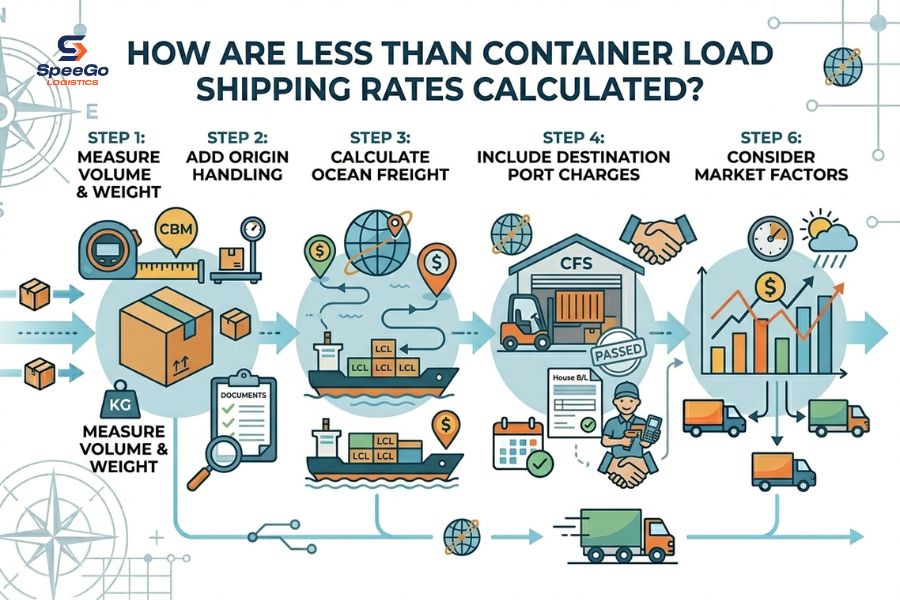
4. How Are Less Than Container Load Shipping Rates Calculated?
Several logistics and operational factors influence the final shipping cost, and businesses should understand these variables before planning international shipments.
4.1. Step 1: Measure Cargo Volume and Weight
Shipping companies first calculate the size and weight of the cargo to determine the chargeable freight amount. In LCL shipping, pricing is commonly based on cubic meters (CBM), although heavy cargo may sometimes be charged according to weight instead of volume.
4.2. Step 2: Add Origin Handling Charges
After the cargo is received, freight forwarders apply local origin costs such as warehouse handling, cargo consolidation, documentation processing, and Container Freight Station (CFS) fees before export.
4.3. Step 3: Calculate Ocean Freight Costs
The ocean freight portion depends on the shipping route, carrier pricing, fuel costs, and container space availability. Longer international routes and high-demand trade lanes usually result in higher freight charges.
4.4. Step 4: Include Destination Port Charges
When the shipment arrives, additional fees may apply for deconsolidation, customs processing, port handling, and cargo release at the destination warehouse or Container Freight Station.
4.5. Step 5: Add Customs and Delivery Costs
Businesses may also need to pay customs duties, taxes, inspection fees, and final delivery charges depending on the destination country and shipment terms.
4.6. Step 6: Consider Seasonal and Market Factors
LCL shipping rates can fluctuate throughout the year due to peak shipping seasons, port congestion, fuel prices, and global supply chain disruptions. Businesses often compare freight quotations carefully before booking international shipments.
5. FAQs About Less Than Container Load Shipping
5.1. Is LCL Suitable for Fragile Cargo?
Yes, LCL shipping can be used for fragile or sensitive products, but proper packaging is extremely important. Since multiple shipments from different businesses share the same container, cargo may be handled several times during loading, consolidation, and deconsolidation.
5.2. Can LCL Shipments Be Tracked?
Yes. Most freight forwarders and shipping companies provide shipment tracking systems for LCL cargo.
5.3. Can LCL Shipping Affect Product Packaging Requirements?
Yes. LCL cargo usually requires stronger packaging compared to FCL shipments because the goods share container space with products from multiple shippers.
5.4. Is LCL Shipping Suitable for Multi-Country Distribution?
Some companies use bonded warehouses and regional logistics hubs to separate inventory after arrival and redirect shipments to different countries or customers. This model helps businesses improve supply chain flexibility while reducing the need for large inventory storage in every destination market.
6. SpeeGo Logistics Your Logistics Partner for LCL Shipments
Managing international LCL shipments requires more than simply arranging ocean freight transportation. Businesses must coordinate many steps like cargo consolidation, customs procedures, documentation management.
SpeeGo Logistics supports businesses throughout this entire process. The company provides integrated freight forwarding and logistics coordination for different shipment sizes and trade routes.
SpeeGo also helps businesses manage shipping routes and reduce operational disruptions. This includes improving cargo visibility and maintaining smoother communication across the supply chain. These services are especially important in LCL shipping, where multiple shipments are combined in one container and require careful handling at each stage.