Selling products to customers in the European Union involves more than international shipping alone. Businesses also need to manage VAT compliance efficiently to avoid customs delays and unexpected import charges. If you are wondering What Is IOSS, this article will help you understand how the system supports smoother EU eCommerce fulfillment and simplified VAT reporting.
1. What Is IOSS In Shipping?
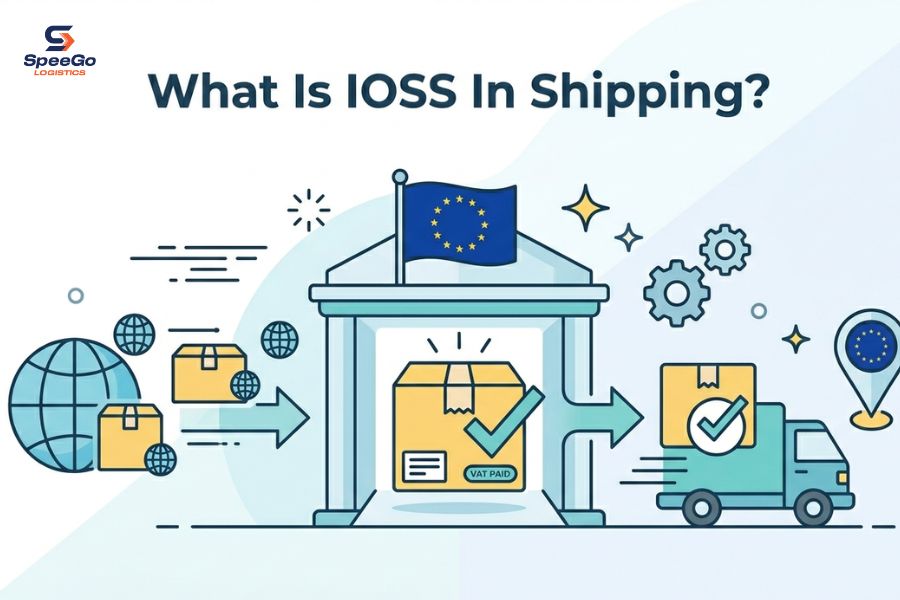
IOSS stands for Import One-Stop Shop, a VAT collection system introduced by the European Union to simplify cross-border eCommerce transactions. The system allows online sellers and marketplaces to collect, declare, and pay VAT for eligible goods sold to customers within the EU through a single registration process.
In simple terms, IOSS helps businesses manage VAT more efficiently when shipping low-value goods to EU consumers. Instead of customers paying import VAT after the package arrives, VAT is collected during checkout at the time of purchase. This process improves transparency and reduces delays during customs clearance.
2. How Does IOSS Work in Shipping?
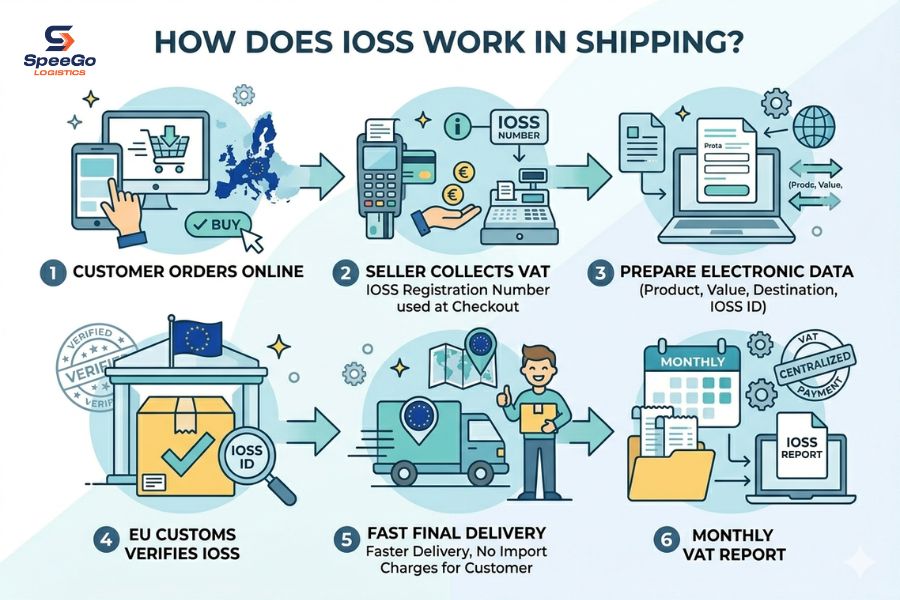
The Import One-Stop Shop (IOSS) system follows a structured process that helps businesses simplify VAT collection and customs clearance. Below is a step-by-step overview of how IOSS works in shipping operations.
2.1. Step 1: The Customer Places an Order Online
The process begins when a customer in the EU purchases products from an eCommerce website or online marketplace. During checkout, the seller calculates the VAT rate based on the customer’s destination country within the European Union.
Unlike traditional shipping methods, VAT is charged immediately at the point of sale instead of being collected during import clearance.
2.2. The Seller Collects VAT Through IOSS
After the order is confirmed, the seller collects the applicable VAT payment from the customer. The transaction is then linked to the seller’s IOSS registration number.
This step helps create a more transparent buying experience because customers can see the total cost, including VAT, before completing the purchase.
2.3. The Shipment Is Prepared With IOSS Information
Once the order is packed, the seller or logistics provider includes the IOSS information in the electronic shipping data submitted to customs authorities.
The shipment documentation typically includes:
- Product information
- Shipment value
- Destination country
- IOSS identification details
Accurate shipping information is important because missing or incorrect data may lead to customs delays or additional charges.
Managing IOSS documentation accurately is essential for smooth EU customs clearance and efficient international delivery. SpeeGo Logistics helps businesses streamline cross-border shipping operations with reliable customs support, accurate shipment processing.
2.4. EU Customs Verifies the IOSS Number
When the shipment arrives in the European Union, customs authorities review the electronic declaration and verify the IOSS number connected to the parcel.
2.5. Step 5: The Package Moves to Final Delivery
After customs clearance is completed, the shipment is transferred to local courier or delivery networks within the destination country.
Because VAT has already been paid through the IOSS system, the delivery process is usually faster and more predictable for customers. This improves the overall shipping experience and helps businesses reduce refused shipments caused by unexpected import charges.
2.6. The Seller Submits Monthly VAT Reports
Businesses registered for IOSS must submit monthly VAT reports covering all eligible EU sales processed through the system.
Instead of registering for VAT separately in multiple EU countries, sellers can manage VAT reporting centrally through one IOSS registration. This simplifies compliance for businesses handling cross-border eCommerce shipments.
3. Who Needs to Register for IOSS?
Not every business shipping products to Europe is required to register for the Import One-Stop Shop system. However, for many cross-border eCommerce sellers, IOSS registration can simplify EU VAT compliance and improve the customer delivery experience.
3.1. eCommerce Sellers Outside the EU
Non-EU eCommerce businesses are among the main users of the IOSS system. Companies selling products directly to consumers in EU countries often use IOSS to simplify VAT handling and reduce customs delays.
IOSS is particularly useful for:
- Shopify and WooCommerce stores
- Independent online retailers
- Direct-to-consumer (DTC) brands
- International eCommerce businesses shipping into Europe
Without IOSS, customers may need to pay import VAT and handling fees when the package arrives, which can negatively affect the buying experience.
3.2. Online Marketplaces and Dropshipping Businesses
Many online marketplaces and dropshipping businesses also use IOSS for EU eCommerce VAT management.
Large marketplaces may collect VAT directly from customers and handle IOSS reporting on behalf of sellers using their platforms. This commonly applies to marketplaces facilitating sales into EU member states.
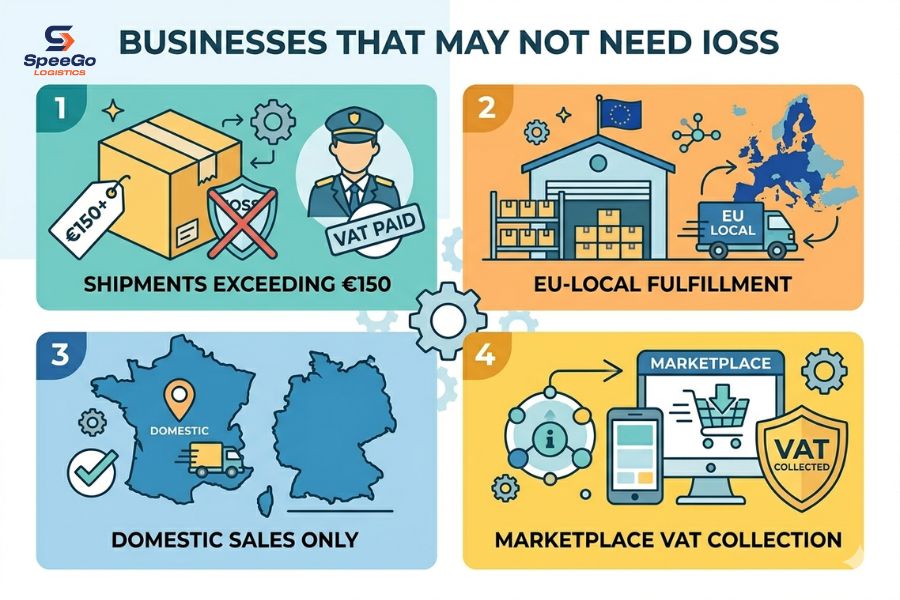
4. Businesses That May Not Need IOSS
Although IOSS offers advantages for many online sellers, some businesses may not need to register for the system.
IOSS may not be necessary when:
- Shipments exceed €150
- Products are stored and fulfilled within the EU
- Businesses only sell domestically
- Goods fall under excise regulations
- The marketplace handles VAT collection directly
Some companies may continue using traditional import VAT procedures depending on their logistics structure and shipping model.
5. Benefits of Using IOSS for Businesses
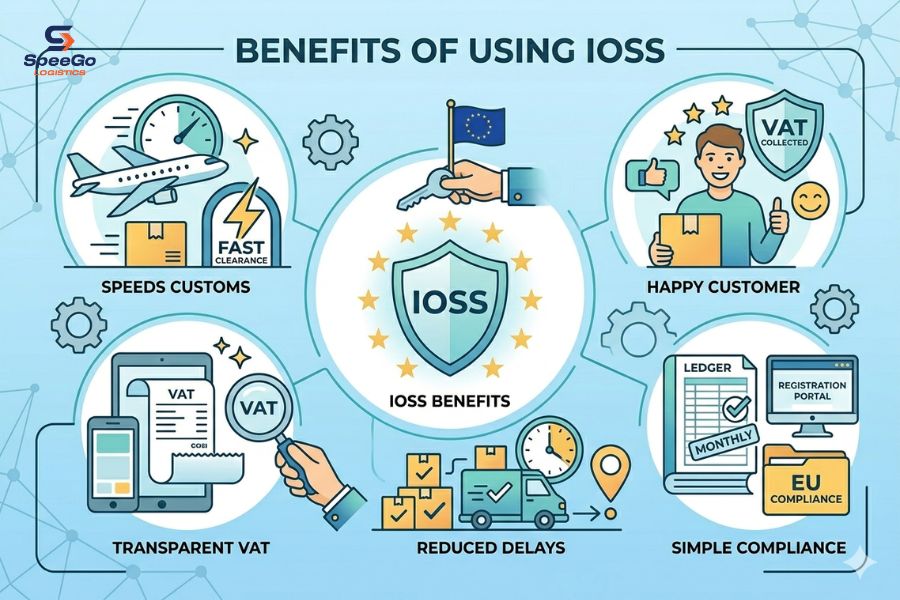
The Import One-Stop Shop system offers several practical advantages beyond VAT collection alone. IOSS helps simplify cross-border eCommerce operations, improve the customer experience, and reduce shipping complications related to EU import procedures.
5.1. Faster customs clearance
IOSS helps speed up customs processing because VAT is collected before the shipment enters the EU. This reduces customs delays and allows eligible parcels to move through international shipping networks more efficiently.
5.2. Better customer experience
By paying VAT during checkout, customers can avoid unexpected import charges when the package arrives. This creates a smoother shopping experience and helps businesses improve customer trust and satisfaction.
5.3. Transparent VAT collection
The IOSS system allows businesses to collect and report VAT through a centralized process instead of managing separate VAT payments at delivery. This improves pricing transparency and simplifies EU VAT shipping operations.
5.4. Reduced delivery delays
Since VAT information is submitted electronically before customs clearance, shipments are less likely to be held due to unpaid taxes or missing documentation. Faster processing can help businesses improve delivery reliability and reduce failed shipments.
Looking to improve international delivery performance and reduce customs-related shipping delays? SpeeGo Logistics provides reliable cross-border shipping solutions with optimized customs support.
5.5. Simplified EU VAT compliance
IOSS simplifies cross-border VAT reporting by allowing businesses to manage eligible EU sales through one registration and monthly declaration process. This reduces administrative complexity for companies shipping low-value goods into multiple EU countries.
6. IOSS vs Traditional VAT Collection Methods
Businesses selling products into the European Union often compare IOSS with traditional import VAT procedures to determine which system better supports their shipping operations.
| Criteria | IOSS (Import One-Stop Shop) | Traditional VAT Collection |
| When VAT is collected | VAT is collected during online checkout before shipment. | VAT is collected after the parcel arrives in the destination country. |
| Customer payment experience | Customers see the total cost upfront with no unexpected import charges. | Customers may need to pay additional VAT and handling fees before delivery. |
| Customs clearance | Customs authorities verify VAT electronically using the IOSS number, which often speeds up clearance. | Customs may manually process VAT collection, increasing the risk of delays. |
| Delivery speed | Faster customs processing can improve delivery efficiency and reduce shipment holds. | Delivery may take longer if customs payment or verification is delayed. |
| VAT reporting | Businesses submit centralized monthly VAT reports through one IOSS registration. | VAT procedures may vary by country and require separate handling processes. |
| Best suited for | Low-value B2C shipments into the EU valued at €150 or less. | Higher-value shipments or businesses not eligible for IOSS. |
7. How to Get Started With IOSS?
The IOSS registration process is an important step toward smoother VAT compliance and more efficient international shipping. While the system simplifies EU VAT handling, businesses still need a structured approach to implement IOSS correctly within their shipping operations.
7.1. Step 1: Check IOSS eligibility
Businesses should first confirm whether their products and shipping model qualify for IOSS. The system mainly applies to B2C shipments valued at €150 or less that are imported into the EU from outside the region.
7.2..Step 2: Register for IOSS
Eligible businesses can register for the Import One-Stop Shop system through an EU member state. Non-EU companies may also need to appoint an IOSS intermediary before receiving an official IOSS number for VAT reporting.
7.3. Step 3: Choose an IOSS intermediary
Many non-EU sellers work with an IOSS intermediary to manage VAT compliance and monthly reporting requirements. Choosing an experienced intermediary can help businesses reduce compliance risks and simplify EU shipping operations.
7.4. Step 4: Integrate IOSS into shipping systems
Businesses must update their eCommerce and shipping systems to collect VAT during checkout and include IOSS information in customs documentation. Accurate electronic shipping data helps support faster customs clearance.
7.5. Step 5: Submit monthly VAT reports
Companies using IOSS are required to file monthly VAT declarations covering eligible EU sales. Proper reporting helps businesses maintain compliance and avoid customs or tax-related issues.
7.6. Step 6: Work with logistics partners
Reliable logistics providers can help businesses manage customs procedures, improve shipment tracking, and support smoother EU delivery operations. Strong coordination between shipping and compliance processes is important for successful IOSS implementation.
Understanding what is IOSS only the first step toward smoother EU shipping and VAT compliance. With the right logistics support, businesses can simplify customs clearance, improve delivery efficiency, and manage cross-border eCommerce operations more effectively.