

The differences between flat rate dShipping vs standard shipping is important for businesses looking to improve transportation efficiency and control logistics costs. Choosing the right shipping method can help businesses optimize delivery performance, improve customer experience, and reduce unnecessary freight expenses.
1. What is Flat Rate Shipping?
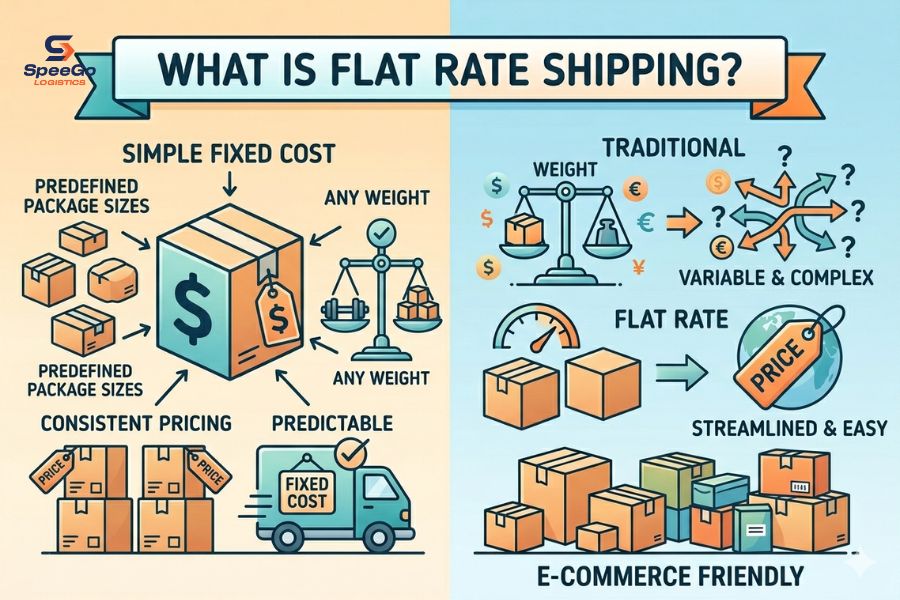
Flat rate shipping is a delivery method where carriers charge a fixed shipping fee based on predefined package sizes instead of calculating costs according to shipment weight or delivery distance. This pricing model is widely used in eCommerce and retail logistics because it simplifies shipping management and provides more predictable transportation costs. Businesses that ship products with consistent sizes or relatively heavy items often use flat rate shipping to reduce pricing complexity and improve cost visibility during checkout.
2. What is Standard Shipping?
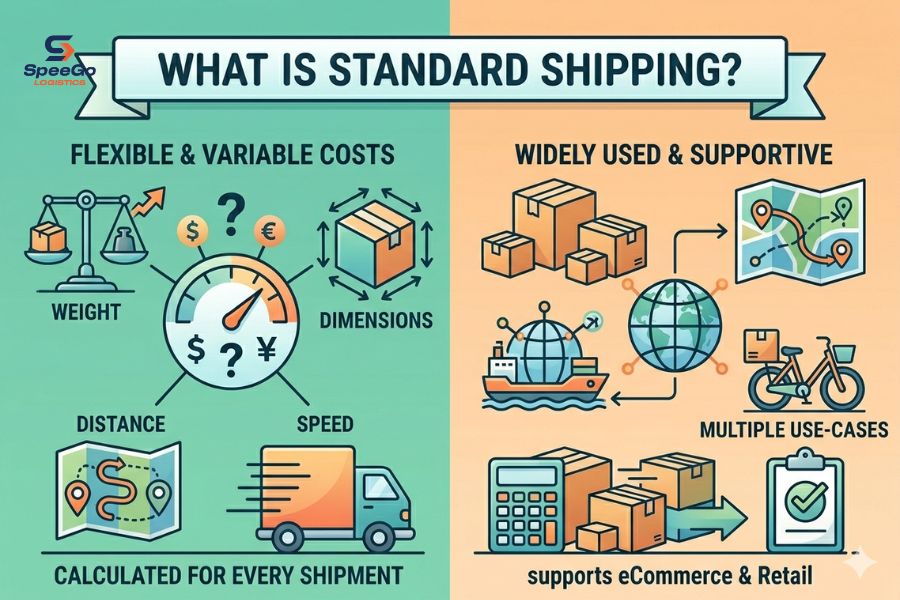
Standard shipping is a transportation method where shipping costs are calculated based on factors such as package weight, dimensions, delivery distance, and shipping speed. Unlike flat rate shipping, standard shipping uses a flexible pricing structure, meaning transportation fees vary depending on each shipment’s characteristics. This method is commonly used in eCommerce, retail distribution, and international logistics because it supports a wide range of package sizes and delivery requirements.
3. Difference Between Flat Rate And Standard Shipping
The difference between flat rate and standard shipping helps businesses choose the most suitable transportation strategy for their products, shipping volume, and customer expectations. Although both methods are widely used in logistics and eCommerce, they operate under very different pricing and delivery structure
| Criteria | Flat Rate Shipping | Standard Shipping |
| Pricing Structure | Uses a fixed shipping price based on predefined package sizes or shipping boxes. | Uses variable pricing calculated according to shipment weight, dimensions, distance, and delivery conditions. |
| Cost Predictability | Easier for businesses to estimate shipping expenses because rates remain consistent within packaging categories. | Shipping costs may fluctuate depending on shipment details, fuel surcharges, and carrier pricing policies. |
| Weight Considerations | Often more cost-effective for small but heavy products that fit within carrier limits. | Charges are usually based on actual weight or dimensional weight calculations. |
| Dimensional Weight Impact | Less affected by dimensional weight pricing because pricing focuses on package category. | Large but lightweight shipments may generate higher costs due to volumetric pricing rules. |
| Best for | eCommerce businesses shipping standardized or dense products regularly. | Businesses handling diverse shipment sizes, lightweight goods, or international freight operations. |
| Main Limitation | Restricted package sizes may reduce flexibility for oversized or irregular shipments. | Transportation costs can become less predictable due to variable pricing factors. |
4. Factors That Affect Shipping Costs in Both Methods
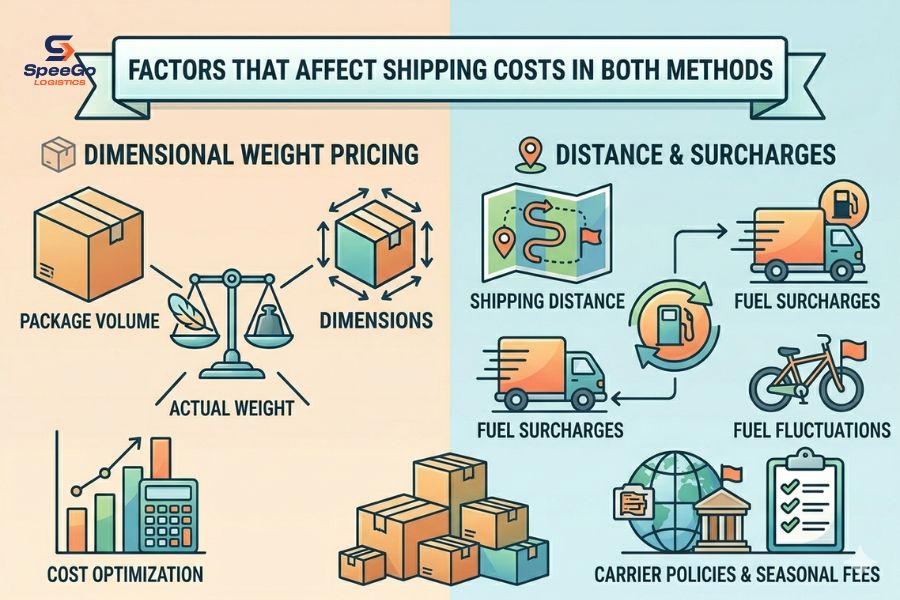
When comparing flat rate shipping vs standard shipping, businesses should understand that several operational factors influence transportation costs in both pricing models.
4.1. Dimensional weight pricing
Dimensional weight pricing is one of the main factors affecting modern shipping costs, especially in air freight and courier services where cargo space is limited. Carriers calculate shipping fees based on package volume as well as actual weight, meaning large but lightweight shipments may still generate high transportation charges. Businesses can reduce these costs by using compact packaging and optimizing shipment dimensions.
4.2. Shipping distance
Transportation distance directly affects freight pricing because longer delivery routes usually require more fuel, handling, and transit coordination. International shipments and remote delivery locations often increase shipping costs due to customs processing, warehouse transfers, and extended transportation networks. Standard shipping is generally more sensitive to distance-related pricing than flat rate services.
4.3. Fuel surcharges and carrier policies
Fuel prices and carrier-specific policies can significantly influence shipping expenses in both flat rate and standard shipping models. Carriers may apply additional charges during peak seasons, for oversized packages, or for deliveries to remote areas. These pricing adjustments can fluctuate over time, making freight cost management more complex for businesses with large shipping volumes.
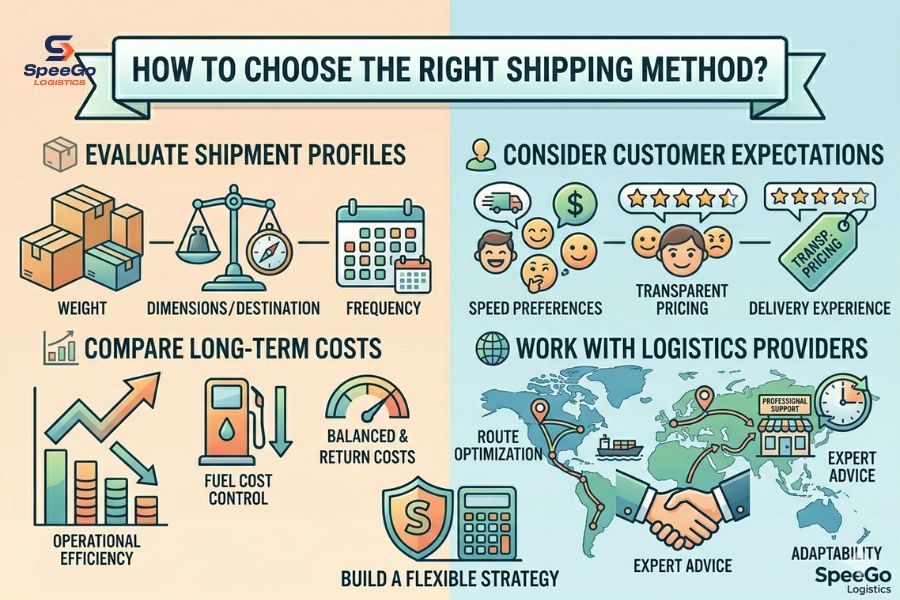
5. How to Choose the Right Shipping Method?
Choosing between flat rate shipping vs standard shipping is not simply a pricing decision. Some businesses benefit from predictable flat rate pricing, while others require the flexibility of standard shipping to manage varying shipment sizes and transportation routes.
5.1. Evaluate shipment profiles
Businesses should analyze shipment weight, package dimensions, order frequency, and delivery destinations before choosing a shipping method. Flat rate shipping may work better for standardized or dense products, while standard shipping often provides more flexibility for lightweight or irregular cargo.
5.2. Compare long-term logistics costs
Choosing a shipping method should involve evaluating long-term operational expenses rather than focusing only on initial freight rates. Businesses should consider factors such as fuel surcharges, packaging costs, return shipping, and delivery reliability to improve overall logistics efficiency and cost control.
5.3. Consider customer expectations and delivery experience
Customer preferences can strongly influence shipping strategy decisions, especially in eCommerce and international retail. Many businesses use flat rate shipping to provide transparent pricing, while standard shipping may offer more flexible delivery speeds and lower costs for certain products.
5.4. Work with experienced logistics providers
Experienced logistics partners can help businesses optimize shipping routes, reduce transportation costs, and improve packaging efficiency. Professional freight support also helps companies manage international shipping requirements and adapt transportation strategies as supply chain needs change.
Professional logistics support can help businesses adapt more easily to changing transportation demands and international shipping requirements. To support smoother global freight operations, SpeeGo Logistics provides tailored international shipping solutions for businesses across multiple industries.
5.5. Build a flexible long-term shipping strategy
Many businesses combine flat rate and standard shipping to improve operational flexibility and control freight costs more effectively. A flexible logistics strategy allows companies to adapt to changing customer demand, shipment types, and international transportation conditions over time.
6. When Should Businesses Use Flat Rate Shipping or Standard Shipping?
Both shipping methods offer different advantages, and businesses often select the option that best aligns with their logistics structure and transportation budget.
6.1. When Should Businesses Use Flat Rate Shipping?
Flat rate shipping is often the best choice for businesses shipping products with standardized packaging sizes or relatively heavy items that fit within carrier-approved boxes.
Flat rate shipping is commonly used for:
- Standardized retail products
- Subscription box deliveries
- Small but dense shipments
- High-volume eCommerce fulfillment
Businesses seeking stable shipping costs and simplified transportation planning often benefit from using flat rate shipping as part of their logistics strategy.
6.2. When Should Businesses Use Standard Shipping?
Standard shipping is generally more suitable for businesses handling lightweight products, irregular package dimensions, or diverse shipping destinations.
Standard shipping is commonly preferred for:
- Lightweight or oversized products
- Variable shipment sizes
- International freight operations
- Flexible delivery requirements
Companies with changing shipment profiles or complex transportation routes often rely on standard shipping to maintain operational flexibility and improve long-term logistics performance.
Comparing Flat Rate Shipping vs Standard Shipping allows businesses to identify the most suitable transportation strategy for their products and operational goals. Selecting the right shipping strategy can help businesses improve customer experience, optimize freight operations, and create a more scalable supply chain.