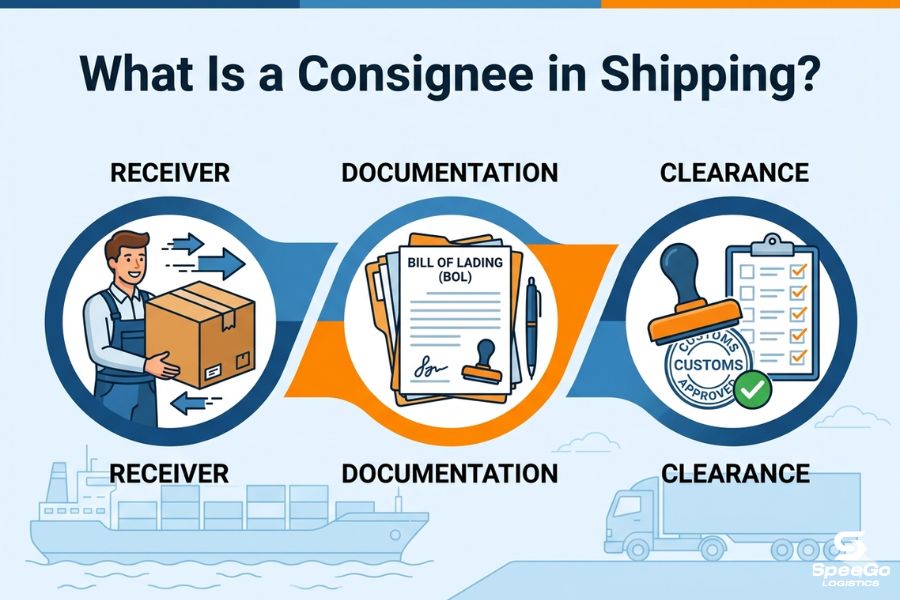
What Is a Consignee in Shipping? It is essential for businesses involved in international logistics and cross-border trade. The consignee plays a key role in receiving goods, managing import procedures, and ensuring smooth cargo delivery.
1. What Is a Consignee in Shipping?
A consignee in shipping is the person, company, or organization officially responsible for receiving goods at the final destination. The consignee’s information appears on shipping documents such as the bill of lading, airway bill, and customs declarations. Besides accepting delivery, the consignee may also handle customs clearance, import paperwork, cargo inspection, and coordination with freight carriers or logistics providers.
Accurate consignee information is essential because carriers and customs authorities rely on these details to process international shipments efficiently and ensure cargo reaches the correct destination.
2. What Is a Consignor in Shipping?
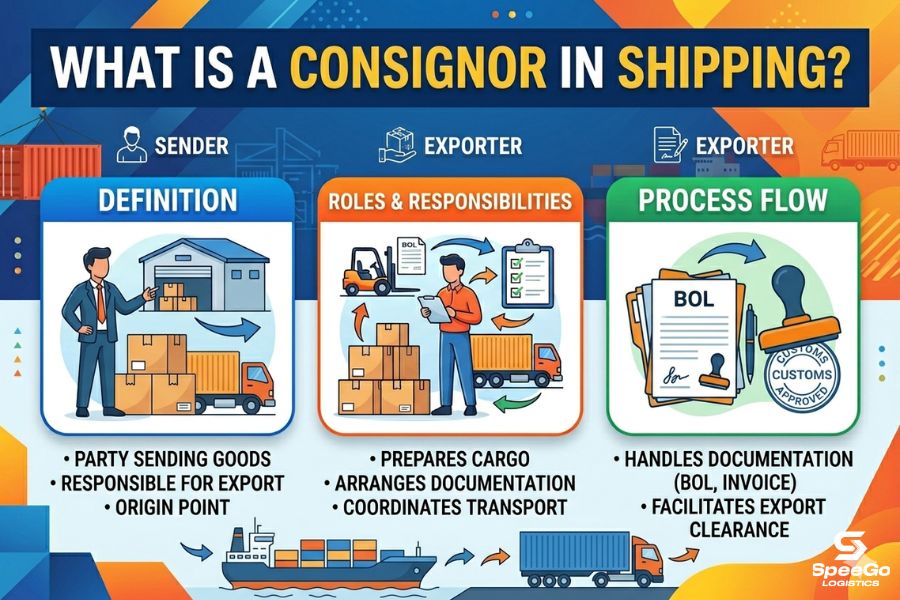
A consignor in shipping is the person, company, or organization responsible for sending goods through a carrier or logistics provider. The consignor typically prepares the cargo, arranges shipment documentation, and coordinates transportation before the goods are delivered to the consignee. In international trade, the consignor is often the exporter or seller responsible for dispatching products to another country or destination.
While the consignor sends the cargo, the consignee receives it at the final destination. Clear communication between both parties supports smoother customs clearance, more efficient logistics coordination, and better international supply chain management.
3. What Does a Consignee Do in Logistics?
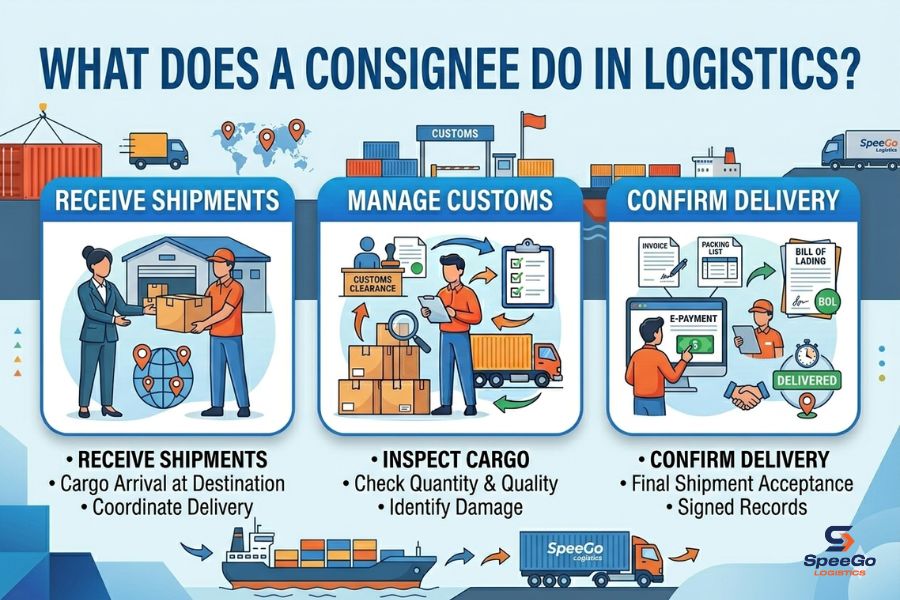
The consignee is not only responsible for receiving cargo but also plays an important role in customs coordination, shipment verification, and delivery management.
3.1. Receiving international sipments
One of the consignee’s main responsibilities is receiving cargo at the final destination and coordinating delivery arrangements. This process often involves working with carriers, freight forwarders, warehouse operators, and logistics providers to confirm shipment arrival and verify cargo quantities.
Efficient cargo receiving requires accurate coordination between carriers, warehouses, and import teams to ensure shipments are handled without delay or disruption.
SpeeGo Logistics provides reliable international shipping solutions, end-to-end freight management, and professional logistics. It supports streamline shipment receiving processes and improves overall supply chain efficiency.
3.2. Managing customs clearance responsibilities
In many international shipping operations, the consignee is responsible for handling import customs procedures before cargo can be released. This may include submitting import documents, paying duties and taxes, and coordinating customs inspections to avoid shipment delays or compliance issues.
3.3. Inspecting cargo upon arrival
After receiving the shipment, the consignee typically checks product quantities, packaging condition, and shipment accuracy. Early cargo inspection helps businesses identify transportation damage or missing items before accepting final delivery.
3.4. Handling payment and shipping documentation
Depending on the shipping agreement, the consignee may also manage freight payments and verify shipping documents such as invoices, packing lists, and bills of lading. Accurate documentation management helps reduce customs problems and delivery disputes.
3.5. Confirming final delivery
Once the shipment has been inspected and accepted, the consignee confirms final delivery completion through signed delivery records or electronic confirmation systems. This step helps finalize transportation records and improve shipment tracking visibility.
4. Different Between Consignee vs Consignor
The distinction between consignee vs consignor is essential for businesses involved in international shipping, freight forwarding, and global supply chain operations. Although both terms appear on shipping documents, they represent two completely different roles in the logistics process.
| Criteria | Consignor | Consignee |
| Definition | The party that sends or ships the goods in an international transaction. | The party that receives the goods at the final destination. |
| Role in Shipping | Responsible for exporting and dispatching cargo to the carrier. | Responsible for receiving and accepting delivered goods. |
| Function in Logistics | Prepares goods, organizes shipment, and handles export documentation. | Manages import procedures, customs clearance, and cargo receipt. |
| Responsibilities | Packaging, export compliance, booking freight, and shipment coordination. | Customs duties, cargo inspection, and final delivery confirmation. |
5. Common Problems Related to Incorrect Consignee Information
Incorrect consignee details are one of the most frequent causes of disruption in international shipping. Even small errors can affect customs processing, delivery coordination, and overall logistics efficiency.
5.1. Customs delays
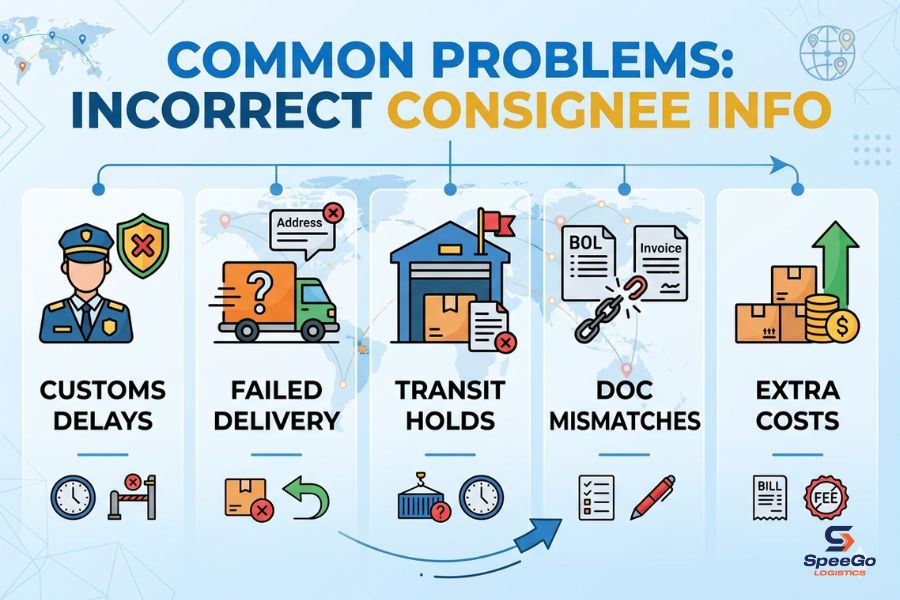
Incorrect consignee information can cause delays during customs clearance because authorities may need to verify or correct inconsistent details. This process often slows down shipment release and can disrupt planned supply chain schedules, especially in time-sensitive international deliveries.
5.2. Failed delivery attempts
When consignee names, addresses, or contact details are inaccurate, carriers may not be able to complete final delivery. This often results in missed delivery attempts, return-to-warehouse handling, or additional re-delivery arrangements, which reduce logistics efficiency and customer satisfaction.
5.3. Shipment holds at transit points
Shipments may be temporarily held at warehouses or transit hubs if consignee information does not match across shipping documents. These holds can increase storage time, extend transit duration, and require additional coordination between logistics providers and customs agents.
Delays caused by inconsistent consignee information can significantly disrupt supply chain performance and increase unnecessary storage costs at transit hubs. SpeeGo Logistics supports businesses with reliable international freight services, professional customs coordination, and end-to-end shipment management solutions.
5.4. Documentation mismatches
Even small inconsistencies in consignee details across documents such as the bill of lading, air waybill, or invoice can trigger verification checks. These mismatches often lead to administrative corrections, customs inspections, and longer processing times.
5.5. Additional logistics costs
Incorrect consignee data can generate extra expenses, including storage fees, re-delivery charges, and documentation correction costs. Over time, these avoidable charges can significantly increase overall international shipping expenses for businesses.
6. Frequently Asked Questions (FAQs)
6.1. Is it possible for one shipment to have multiple consignees?
Yes, a single shipment can be split into multiple consignees when goods are consolidated or distributed to different destinations. However, this requires clear documentation and coordination with the carrier.
6.2. What happens if the consignee refuses to accept the shipment?
If a consignee rejects a shipment, the cargo may be returned, stored at a warehouse, or held until further instructions are provided. Additional charges such as storage or return fees may also apply.
6.3. Does the consignee need to be registered with customs authorities?
In many countries, the consignee must have valid import registration or tax identification details to clear goods through customs. Requirements vary depending on local regulations.
6.4. Can the consignee change after the shipment has been dispatched?
Changing the consignee after dispatch is possible but often complicated. It usually requires amendments to shipping documents and approval from the carrier and customs authorities.
The concept of what is a consignee in shipping plays a central role in international logistics operations. It helps businesses understand how goods move from sender to receiver and how responsibilities are divided in international transport.