Sustainable Shipping has become an important strategy for companies looking to improve logistics efficiency while lowering carbon emissions. This guide explains what Sustainable Shipping means, why it matters, and how businesses can build greener and more efficient transportation operations.
1. What Is Sustainable Shipping?
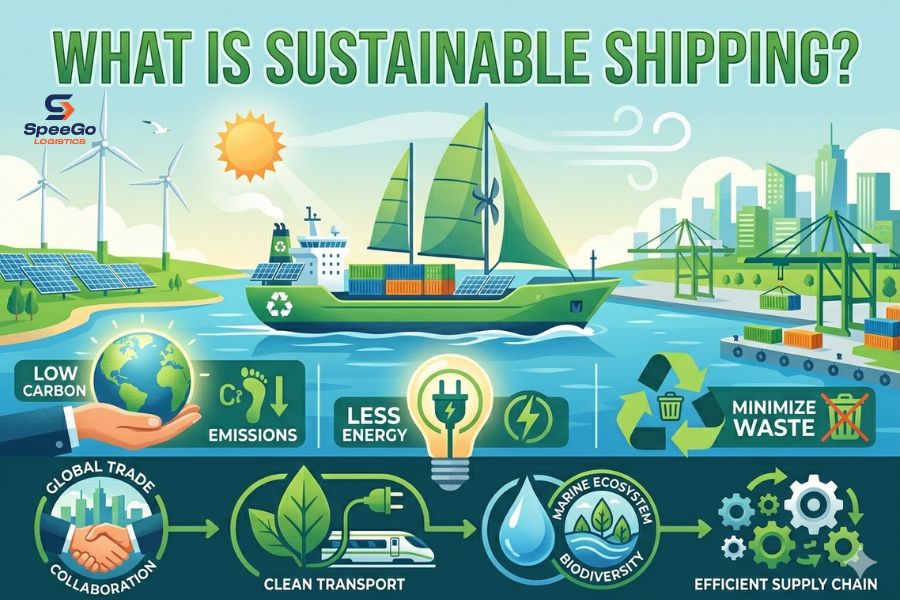
Sustainable shipping refers to transportation and logistics practices designed to reduce environmental impact while maintaining efficient supply chain operations. In simple terms, it focuses on moving goods in ways that consume less energy, lower carbon emissions, and minimize waste throughout the shipping process.
Today, sustainable shipping is no longer viewed as a niche strategy used only by large corporations. It has become an important part of modern supply chain management for companies of all sizes.
2. Common Sustainable Shipping Methods
Today, sustainable shipping solutions are being adopted across eCommerce, retail, manufacturing, and international trade.
2.1. Eco-friendly packaging solutions
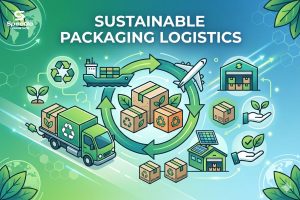
Many companies are reducing packaging waste by using recyclable, biodegradable, or lightweight materials. Sustainable packaging not only lowers environmental impact but also improves transportation efficiency by reducing shipment weight and unused space.
2.2. Consolidated shipping and load optimization
Consolidated shipping combines multiple smaller shipments into one larger load to maximize cargo space and reduce unnecessary trips. This method improves freight efficiency while lowering fuel consumption and transportation-related emissions.
Looking to improve freight efficiency while reducing transportation costs and emissions? SpeeGo Logistics provides flexible consolidated shipping solutions that help businesses optimize cargo space, streamline supply chain operations.
2.3. Route optimization to reduce fuel consumption
Businesses use route optimization software and GPS tracking to identify shorter and more efficient delivery routes. This helps reduce fuel usage, lower transportation costs, and minimize carbon emissions while improving delivery efficiency.
2.4. Using electric vehicles and energy-efficient transportation
Many logistics companies are investing in electric vehicles, hybrid trucks, and lower-emission transportation systems. These solutions help reduce greenhouse gas emissions and support cleaner last-mile delivery operations, especially in urban areas.
2.5. Shifting to rail or sea freight when possible
Compared with air freight, rail and ocean transportation generally produce lower carbon emissions for large-scale cargo movement. Businesses often choose these transportation methods for non-urgent shipments to support more sustainable logistics operations.
3. Benefits of Sustainable Shipping for Businesses
Sustainable shipping is no longer viewed solely as an environmental initiative. Today, many companies see it as a practical business strategy that improves operational performance, strengthens brand value, and supports long-term growth.
3.1. Lower fuel and long-term operating costs
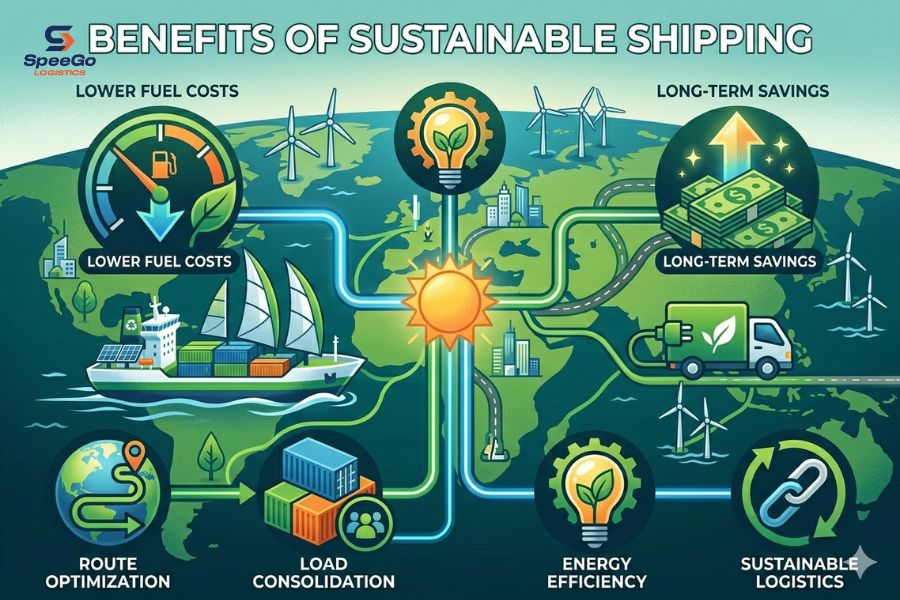
Sustainable shipping helps businesses reduce unnecessary fuel consumption through smarter route planning, shipment consolidation, and more efficient green transportation strategies. Many companies are also investing in new energy transport solutions, such as electric delivery vehicles, to improve logistics efficiency and lower long-term operating costs.
3.2. Stronger brand reputation and customer trust
Companies that adopt sustainable shipping solutions often build a more responsible and trustworthy brand image. Customers increasingly prefer businesses that support green transportation initiatives and actively reduce environmental impact across their supply chains.
3.3. Attracting eco-conscious consumers
Modern consumers are paying closer attention to how products are transported and packaged. Businesses using green transportation methods and eco-friendly logistics practices may attract environmentally aware customers and improve long-term customer loyalty.
3.4. Supporting ESG and corporate sustainability goals
Sustainable shipping allows companies to align logistics operations with ESG and sustainability objectives while reducing transportation-related emissions. Many businesses now view new generation logistics as an important part of achieving long-term environmental targets and regulatory compliance.
3.5. Improving competitiveness in eCommerce
As sustainability becomes a growing priority in eCommerce, companies using green transportation and sustainable shipping methods may gain a stronger competitive position. Businesses that invest in cleaner logistics solutions are often better prepared for future market expectations and environmental regulations.
4. How to Build a More Sustainable Shipping Strategy?
Building a sustainable shipping strategy does not always require major operational changes from the beginning. Many businesses start with small improvements that gradually reduce logistics emissions, improve transportation efficiency, and support long-term sustainability goals.
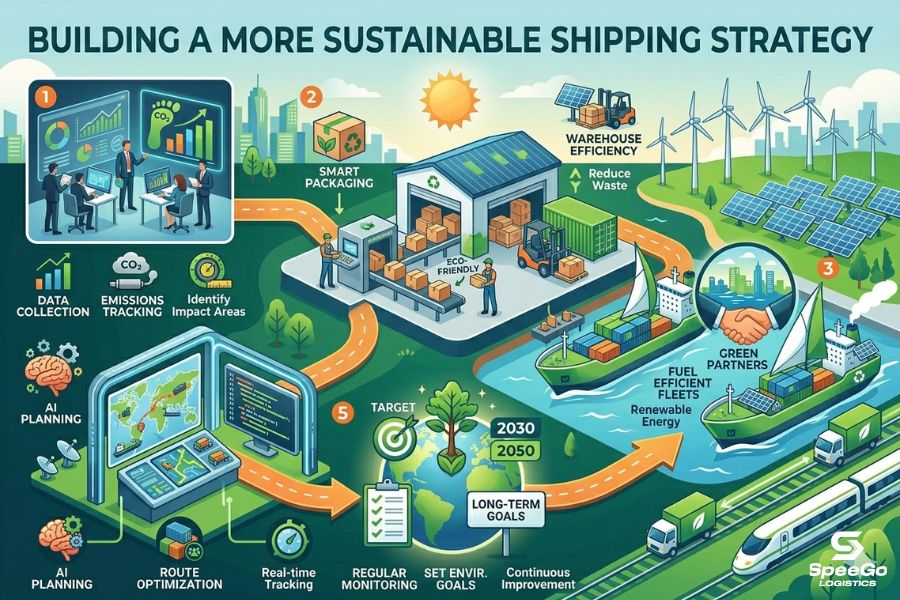
4.1. Step 1: Measure logistics emissions
Start by tracking transportation emissions, fuel consumption, and delivery efficiency to understand where the biggest environmental impacts come from. This data helps businesses identify areas that need improvement and build a more effective sustainable shipping strategy.
4.2. Step 2: Optimize packaging and warehouse operations
Reducing unnecessary packaging and improving warehouse efficiency can lower transportation weight, minimize waste, and improve order fulfillment performance. Sustainable packaging also supports greener supply chain operations and reduces shipping costs over time.
4.3. Step 3: Work with green transportation partners
Businesses can improve sustainability by partnering with logistics providers that invest in green transportation and new energy transport technologies. Choosing carriers with fuel-efficient fleets and carbon reduction programs helps reduce logistics-related emissions.
4.4. Step 4: Use technology to improve efficiency
Digital tools such as route optimization software, AI-driven planning systems, and real-time tracking help businesses reduce fuel consumption and improve transportation efficiency. Technology also increases supply chain visibility and supports smarter logistics decisions.
4.5. Step 5: Set long-term sustainability goals
Building a sustainable shipping strategy requires long-term planning and continuous improvement. Businesses should establish realistic environmental goals, regularly monitor performance, and gradually expand sustainable logistics initiatives as operations grow.
Looking to build a more efficient and sustainable logistics strategy? SpeeGo Logistics helps businesses optimize transportation operations through smarter routing, consolidated shipping, flexible warehousing, and green transportation solutions.
5. Frequently Asked Questions (FAQs)
5.1. Which shipping method is considered the most environmentally friendly?
Ocean freight and rail transportation are generally considered more environmentally sustainable than air freight because they produce lower carbon emissions per tonne-kilometre. Businesses often choose these transportation methods for non-urgent shipments to support green transportation goals.
5.2. What are sustainable shipping solutions for businesses?
Sustainable shipping solutions may include route optimization, recyclable packaging, shipment consolidation, electric delivery fleets, and new energy transport technologies. These methods help businesses reduce fuel consumption and improve logistics efficiency.
5.3. How does green transportation support sustainable logistics?
Green transportation reduces environmental impact by using cleaner and more energy-efficient transportation systems. Examples include electric trucks, hybrid vehicles, rail freight, and low-emission delivery networks designed to lower carbon emissions across supply chains.
5.4. Can sustainable shipping help reduce logistics costs?
Yes. Many sustainable shipping methods improve transportation efficiency and reduce unnecessary fuel consumption. Over time, strategies such as route optimization and load consolidation can lower operating costs while supporting environmental goals.
Reducing logistics emissions does not mean sacrificing operational efficiency. With the right strategy, businesses can use sustainable shipping practices to lower transportation costs, improve supply chain performance, and support long-term environmental goals at the same time.