Packaging is no longer only about protecting products during transportation. Businesses now recognize that Sustainable Packaging Logistics plays a critical role in improving shipping efficiency. Companies that adopt smarter packaging strategies can strengthen operational performance while meeting growing customer and regulatory expectations for sustainability.
1. What is Sustainable Packaging in Logistics?
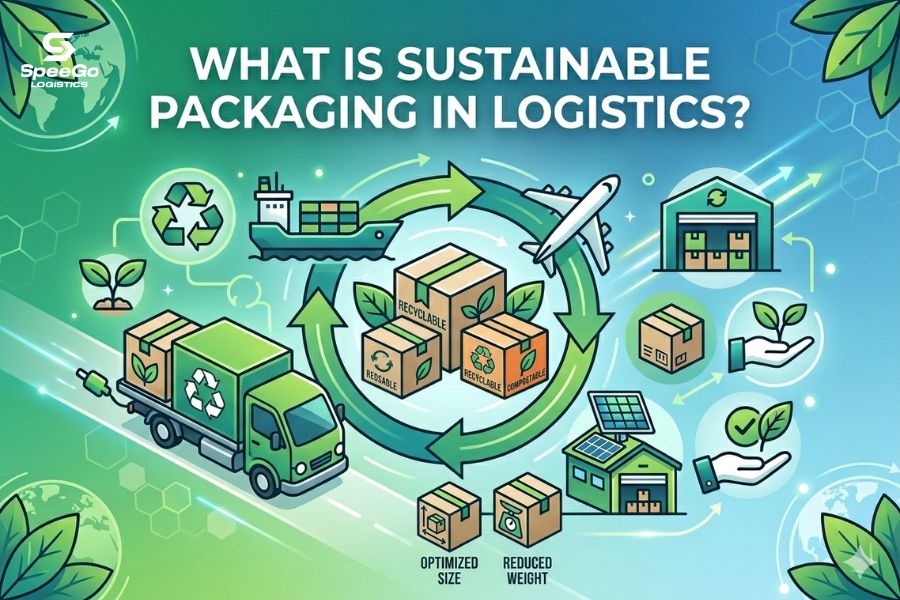
Sustainable packaging in logistics refers to packaging solutions designed to reduce environmental impact while maintaining product protection and transportation efficiency. This approach includes using recyclable or biodegradable materials, reducing unnecessary packaging waste, and optimizing package size and weight to improve cargo utilization.
Sustainable packaging is not only about eco-friendly materials but also about improving logistics performance across warehousing, transportation, and distribution operations.
2. Why is Sustainable Packaging Important?
Sustainable packaging is becoming an important competitive factor in modern supply chains. Businesses that optimize packaging strategies can improve operational efficiency while demonstrating environmental responsibility to customers, investors, and business partners.
2.1. Reducing environmental impact across logistics operations
Sustainable packaging helps businesses reduce waste and lower the environmental impact of transportation and distribution activities. By using recyclable, reusable, or biodegradable materials, companies can decrease landfill waste, reduce carbon emissions, and improve overall resource efficiency across the supply chain.
2.2. Lowering long-term logistics costs
Efficient packaging design can help businesses reduce shipping expenses over time by lowering cargo weight, improving container utilization, and minimizing wasted storage space. Sustainable packaging also helps reduce product damage during transportation, which may lower replacement and return costs.
2.3. Meeting customer and market expectations
Many consumers and international business partners now expect companies to adopt environmentally responsible packaging practices. Sustainable packaging can improve brand reputation, strengthen customer trust, and help businesses remain competitive in markets where environmental responsibility is becoming increasingly important.
2.4. Responding to ESG and regulatory requirements
Governments and international organizations are introducing stricter sustainability regulations related to packaging waste and carbon reduction. Sustainable packaging supports ESG goals by helping businesses improve recycling efforts, reduce transportation emissions, and strengthen environmental compliance across logistics operations.
2.5. Sustainable packaging as a competitive advantage
Businesses that invest in sustainable packaging logistics often gain operational and branding advantages in global markets. Eco-friendly packaging strategies can improve supply chain efficiency while demonstrating long-term commitment to sustainability, which is becoming an increasingly valuable factor in international trade and logistics.
3. Key Materials Used in Sustainable Packaging Logistics
Today, many companies are replacing traditional packaging materials with eco-friendly alternatives that support recycling, reuse, and waste reduction initiatives.
3.1. Recycled Materials
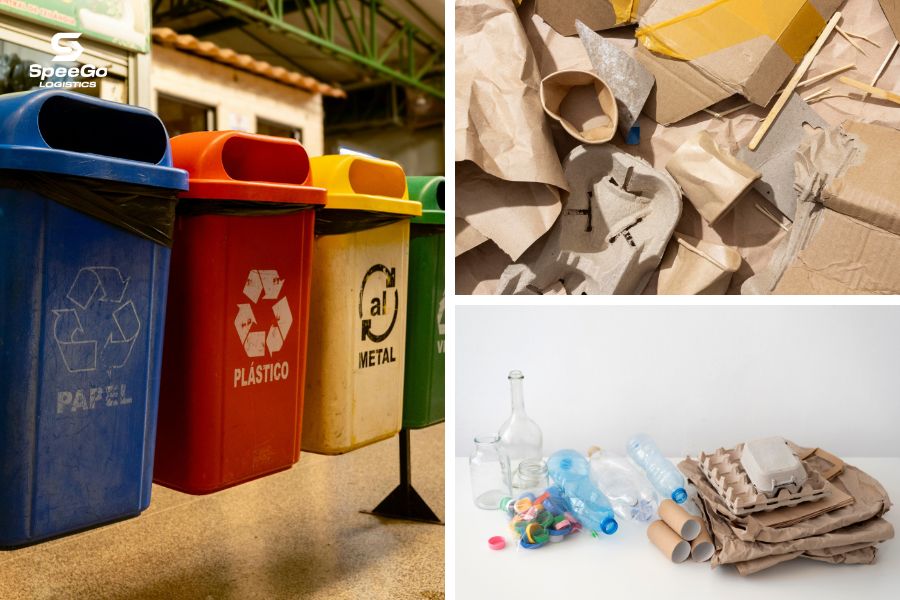
Recycled materials are among the most widely used solutions in sustainable packaging logistics. These materials are produced from previously used products that are processed and converted into new packaging components.
Common recycled packaging materials include:
- Recycled cardboard
- Recycled paper packaging
- Recycled plastic containers
- Reprocessed corrugated boxes
3.2. Biodegradable Packaging
Biodegradable packaging is designed to break down naturally over time through biological processes, reducing long-term environmental waste accumulation. Biodegradable logistics packaging helps businesses reduce dependency on traditional petroleum-based plastics while improving environmental sustainability.
Common biodegradable packaging materials include:
- Plant-based plastics
- Cornstarch packaging
- Mushroom-based packaging
- Compostable mailers
- Natural fiber materials

3.3. Reusable Packaging Systems
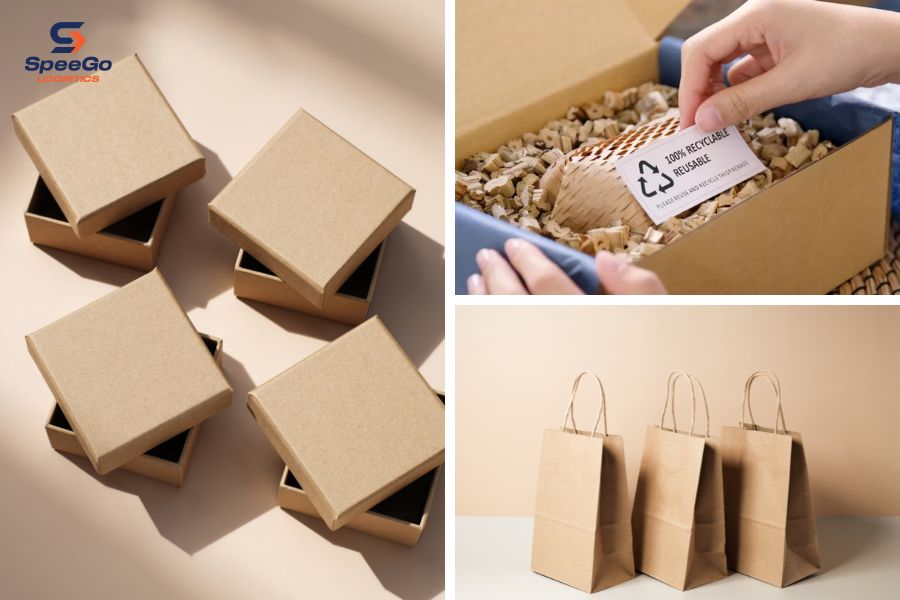
Reusable packaging systems are becoming more common in sustainable supply chain operations because they allow packaging materials to be used multiple times before disposal or recycling. Although reusable systems may require higher initial investment, they often create long-term operational savings when managed effectively.
Examples reusable packaging like:
- Reusable plastic containers
- Foldable shipping crates
- Returnable pallets
- Reusable transport boxes
- Industrial storage bins
3.4. Lightweight Packaging Materials
Reducing packaging weight is another important strategy in sustainable packaging logistics. Lightweight materials help businesses optimize transportation efficiency and reduce fuel consumption. This is especially important in air freight and international courier services, where shipping costs are heavily influenced by dimensional and volumetric weight calculations.
Common lightweight packaging solutions include:
- Thin-wall corrugated packaging
- Lightweight recycled paperboard
- Air cushion packaging
- Flexible packaging materials

4. How Businesses Can Optimize Sustainable Packaging Logistics?
Optimizing sustainable packaging logistics involves reducing environmental impact while maintaining product protection, transportation efficiency, and cost control across the supply chain.
4.1. Redesign packaging for greater efficiency
Businesses can improve sustainable packaging logistics by redesigning packaging to reduce unnecessary space and material usage. Smaller and better-structured packaging helps optimize pallet loading, improve container utilization, and reduce transportation emissions while maintaining product protection during shipping.
4.2. Use lightweight packaging materials
Lightweight packaging materials help lower freight costs and improve transportation efficiency, especially in air freight and eCommerce logistics. Using lighter recyclable materials can reduce fuel consumption, minimize shipping waste, and support long-term sustainability goals without significantly affecting packaging performance.
4.3. Improve packaging durability and product protection
Sustainable packaging must still provide strong protection throughout transportation and warehousing processes. Durable packaging helps reduce damaged goods, return shipments, and replacement costs, which improves both logistics efficiency and environmental performance across the supply chain.
4.4. Integrate packaging into supply chain planning
Packaging optimization becomes more effective when it is connected to warehouse operations, transportation planning, and inventory management. Standardized and compact packaging can improve automation efficiency, reduce handling time, and support more efficient freight operations throughout the logistics network.
4.5. Partner with logistics and packaging experts
Many businesses work with experienced logistics providers and packaging specialists to improve packaging efficiency and reduce transportation costs. Professional support helps companies choose suitable eco-friendly materials, optimize shipment dimensions, and adapt packaging strategies to international shipping requirements.
Optimizing sustainable packaging requires more than choosing eco-friendly materials, it also depends on efficient transportation planning and reliable logistics support. SpeeGo Logistics helps businesses improve shipping efficiency through customized freight solutions, packaging optimization strategies, and end-to-end international logistics services.
4.6. Sustainable packaging optimization as a long-term strategy
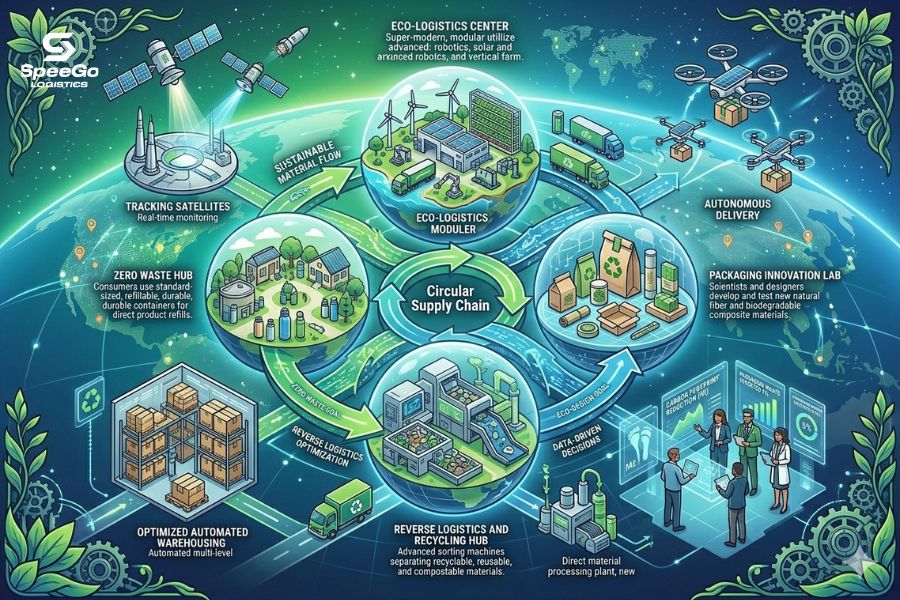
Optimizing sustainable packaging logistics is not only an environmental initiative but also a long-term operational strategy. Businesses that invest in smarter packaging systems are often better prepared to improve supply chain efficiency, reduce waste, and adapt to future sustainability regulations and market expectations.
5. How to Choose the Right Packaging Material?
Choosing the right packaging material is an important part of building an efficient and sustainable logistics strategy.
5.1. Understand product requirements
Choosing the right packaging material starts with understanding the product’s characteristics, such as weight, fragility, and sensitivity to moisture or temperature. Packaging that matches the product’s specific needs helps reduce transportation damage and improves delivery reliability across the supply chain.
5.2. Consider transportation and shipping conditions
Shipping conditions strongly influence packaging performance, especially in international logistics where cargo may experience long transit times and multiple handling stages. Businesses should select materials that can withstand transportation pressure, humidity, stacking conditions, and different shipping environments.
Businesses that align packaging strategies with real shipping conditions can improve delivery reliability and lower logistics costs. With global freight expertise, SpeeGo Logistics helps companies optimize international shipping and improve overall supply chain performance.
5.3. Evaluate sustainability and environmental impact
Many companies now prioritize eco-friendly packaging materials to reduce environmental impact and support sustainability goals. Recyclable, reusable, and biodegradable materials can help businesses lower packaging waste while improving ESG performance and meeting growing customer expectations for sustainable logistics practices.
5.4. Balance cost and packaging performance
The cheapest packaging option is not always the most efficient in the long term. Businesses should balance packaging costs with durability, transportation efficiency, and product protection to reduce damage, avoid unnecessary returns, and improve overall logistics performance.
5.5. Test packaging before large-scale implementation
Before adopting new packaging materials across the supply chain, businesses should test their performance under real shipping conditions. Packaging tests help identify weaknesses related to impact resistance, moisture protection, and transportation durability before products enter large-scale distribution networks.
5.6. Choosing packaging materials as a long-term strategy
Packaging material selection should be viewed as part of a broader logistics and sustainability strategy rather than a short-term purchasing decision. Businesses that invest in suitable packaging solutions are often better prepared to improve transportation efficiency, reduce waste, and strengthen long-term supply chain performance.
As supply chains become increasingly focused on efficiency and environmental responsibility, Sustainable Packaging Logistics offers businesses a practical way to reduce waste while improving operational performance. Sustainable packaging will remain an important factor in building more efficient and competitive logistics networks.