

Many importers and exporters confuse invoice vs proforma invoice during cross-border transactions. However, using the wrong document can lead to customs delays, accounting issues, or payment disputes. In this article, we break down the key differences between invoices and proforma invoices in a simple and practical way.
1. What is an Invoice?
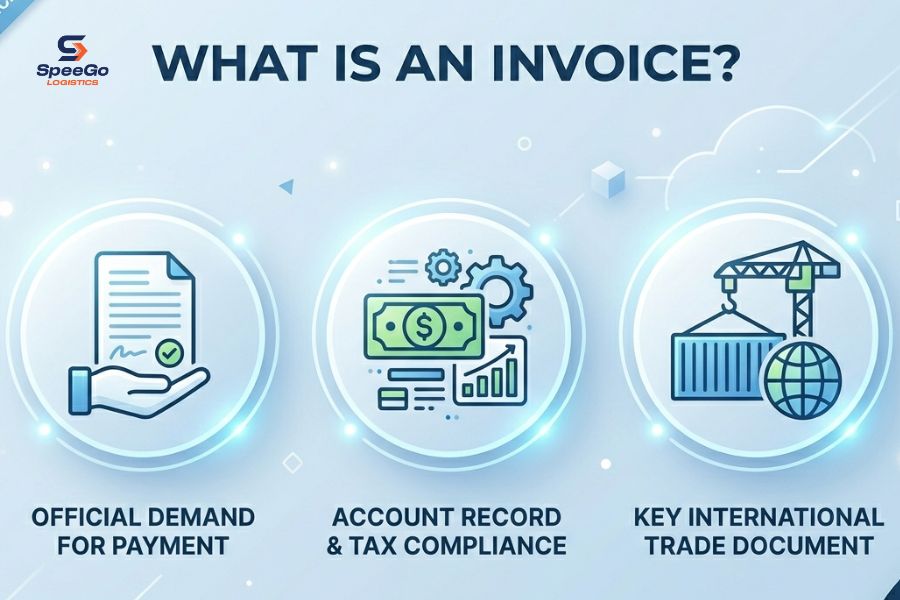
An invoice is an official commercial document issued by a seller to request payment for goods or services that have already been delivered. In international trade, invoices are commonly used for payment processing, customs declarations, accounting records, and shipment verification. A commercial invoice usually includes important details such as buyer and seller information, product descriptions, pricing, payment terms, and shipping information.
For import-export businesses, invoices also play an important role in customs clearance because authorities use them to assess cargo value, duties, and taxes. Accurate invoice preparation helps businesses avoid customs delays, payment disputes, and documentation errors during international shipping operations.
2. What is a Proforma Invoice?
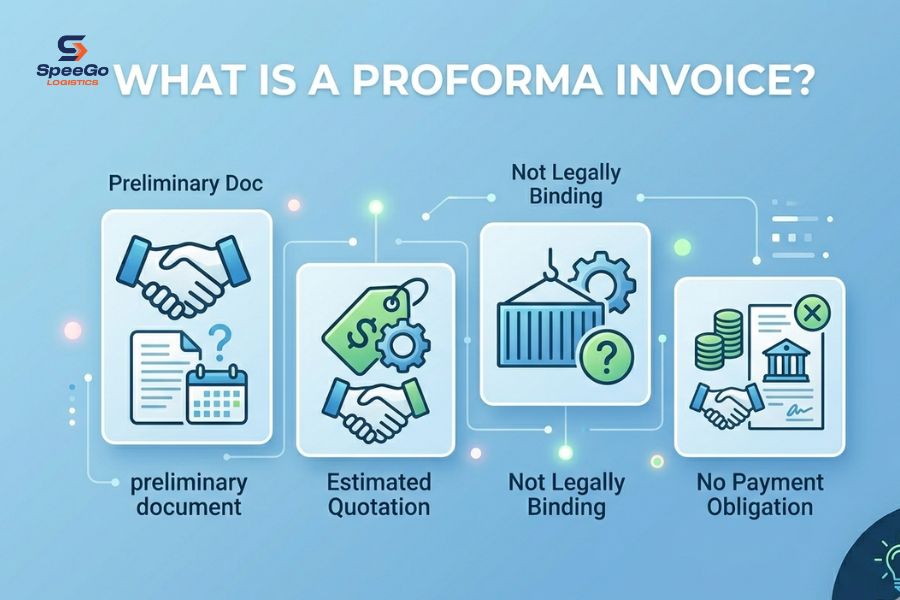
A proforma invoice is a preliminary commercial document issued by a seller before a sale is officially completed. Unlike a standard invoice, it is created before payment is made or goods are shipped. The term “pro forma” comes from Latin and means “for the sake of form,” which reflects the document’s purpose as an estimated transaction proposal rather than a final payment request.
Proforma invoice is often used as a detailed quotation that outlines the expected terms of a transaction. Businesses use this document to help buyers review pricing, shipment details, and commercial terms before confirming a purchase order. However, unlike a commercial invoice, a proforma invoice is not legally binding and does not create an official payment obligation for the buyer.
3. Invoice vs Proforma Invoice
Although invoices and proforma invoices may appear similar, they serve very different purposes in international trade and business transactions.
| Criteria | Invoice | Proforma Invoice |
| Purpose | Used as an official payment request after goods or services are delivered. | Used as a preliminary quotation or estimated transaction document before the sale is finalized. |
| Legal Status | Considered a legally recognized commercial document. | Generally not legally binding and does not represent a completed sale. |
| Payment Obligation | The buyer is expected to pay according to the invoice terms. | The buyer is not legally required to pay the listed amount. |
| Timing of Issuance | Issued after a commercial agreement is confirmed or goods are shipped. | Issued before shipment or before the buyer places a final order. |
| VAT and Tax Use | Can be used for VAT claims and tax reporting where applicable. | Typically cannot be used for VAT recovery or official tax reporting. |
| Customs Usage | Required for formal customs clearance and duty calculation. | May sometimes be used for preliminary customs estimation before shipment. |
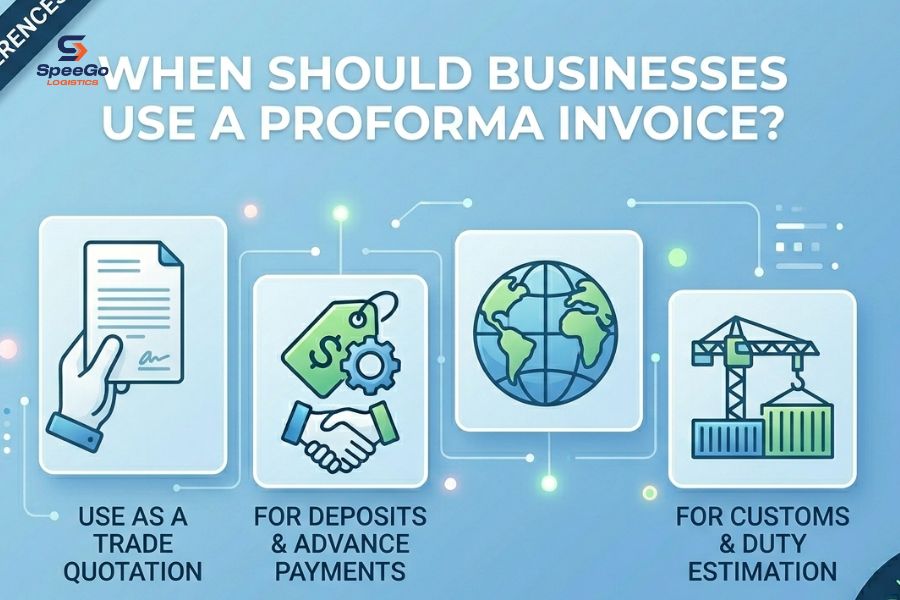
4. When Should Businesses Use a Proforma Invoice?
Understanding when to use a proforma invoice helps companies improve communication with suppliers, reduce documentation errors, and manage cross-border transactions more efficiently.
4.1. During Import-Export Negotiations
Businesses often use a proforma invoice during import-export discussions to confirm estimated pricing, product specifications, shipping arrangements, and payment terms before a transaction becomes official. Compared to a regular quotation, this document usually reflects a stronger buying intention and helps both parties finalize commercial details before issuing a purchase order.
4.2. Customs Value Estimation
A proforma invoice may also support customs preparation before goods are shipped internationally. Importers commonly use this document to estimate duties, taxes, shipping expenses, and licensing requirements. In some countries, customs authorities may review a proforma invoice as a preliminary reference before the final commercial invoice is issued.
4.3. Requesting Advance Payments
Exporters frequently issue proforma invoices when requesting deposits or advance payments before production or shipment begins. This process is common for customized products, large-volume orders, or transactions involving new international buyers. The document helps clarify the expected costs and payment conditions before financial commitments are made.
4.4. Confirm Shipping Quotations
Many businesses use proforma invoices to review transportation costs and shipping details before approving international freight arrangements. The document may include estimated freight charges, delivery schedules, cargo specifications, and Incoterms. It allows buyers to evaluate the total logistics cost before proceeding with the order.
Before approving international freight arrangements, businesses need accurate shipping information and reliable logistics coordination. With SpeeGo Logistics, businesses can access practical logistics support for smoother international shipping, better cargo visibility, and more flexible freight solutions.
5. Common Mistakes Businesses Make With Proforma Invoices and Invoices
Incorrect documentation is one of the most common causes of customs delays, payment disputes, and shipment disruptions in international trade. These common invoice documentation errors help companies improve compliance and reduce international shipping risks.
5.1. Incorrect Product Information
One common mistake businesses make is providing incomplete or inaccurate product details on invoices or proforma invoices. Missing specifications, incorrect quantities, or unclear cargo descriptions can create customs clearance issues.
5.2. Pricing Inconsistencies Between Documents
Differences in pricing information between the proforma invoice, commercial invoice, or purchase order can lead to payment disputes and customs valuation problems. Businesses should ensure that all transaction values, freight charges, and payment terms remain consistent across shipping documents.
5.3. Missing Customs Information
Some companies fail to include important customs-related details such as HS codes, country of origin, Incoterms, or tax identification numbers. Incomplete customs documentation may result in additional inspections, border delays, or regulatory compliance issues during import-export procedures.
5.4. Confusing Proforma Invoices With Commercial Invoices
Many businesses incorrectly treat proforma invoices as final commercial invoices. While a proforma invoice is only a preliminary estimate, a commercial invoice is an official financial and customs document. Using the wrong document during customs clearance or accounting processes may create operational and legal complications.
6. FAQs About Invoice vs Proforma Invoice
6.1. Can a Proforma Invoice Be Changed After It Is Issued?
Yes. A proforma invoice can usually be revised if product quantities, pricing, shipping schedules, or freight costs change during the negotiation process. Since it is not a legally binding financial document, sellers may update the information before issuing the final commercial invoice.
6.2. Does a Commercial Invoice Need to Match the Purchase Order Exactly?
In most cases, yes. Product descriptions, quantities, pricing, and payment terms on the commercial invoice should closely match the approved purchase order and shipping documents.
6.3. Can Customs Reject a Commercial Invoice?
Yes. Customs authorities may reject or question a commercial invoice if important information is missing or inconsistent. Common issues include incorrect HS codes, inaccurate cargo values, unclear product descriptions, or mismatched shipment details between documents.
6.4. Can a Buyer Cancel an Order After Receiving a Proforma Invoice?
Yes. Since a proforma invoice is not usually a legally binding sales contract, the buyer may still cancel or modify the order before confirming the purchase order or signing the final agreement.
The difference between invoice vs proforma invoice goes beyond simple paperwork. Each document plays a unique role in payment processing, customs compliance, and international logistics coordination. Businesses that understand these distinctions can build smoother and more reliable trade operations.