

Cold chain logistics plays a critical role in protecting temperature-sensitive products throughout storage, transportation, and distribution. This complete guide covers everything businesses need to know about cold chain logistics.
1. What Is Cold Chain Logistics?
Cold chain logistics refers to the process of transporting, storing, and handling temperature-sensitive products under controlled environmental conditions throughout the entire supply chain.
The primary goal of temperature-controlled logistics is to keep products within specific temperature ranges to prevent spoilage, contamination, or loss of effectiveness during transportation and storage. Even small temperature fluctuations can damage sensitive products, reduce shelf life, or create serious health and safety risks in highly regulated industries.
2. Key Components of Cold Chain Management
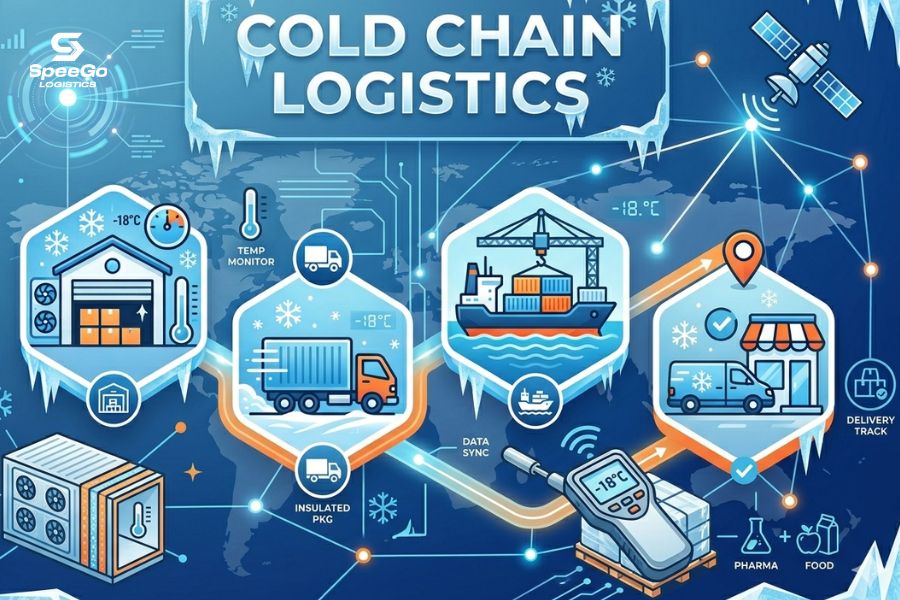
Effective cold chain management depends on multiple interconnected systems that work together to maintain stable temperature conditions throughout transportation, storage, and distribution processes.
2.1. Refrigerated Warehouses
Refrigerated warehouses are one of the most important components of modern cold chain logistics. These facilities are specifically designed to store products under controlled temperature conditions before distribution or final delivery.
Cold storage warehouses may support:
- Chilled storage for fresh food and pharmaceuticals
- Frozen storage for seafood and frozen products
- Ultra-low temperature storage for vaccines and biologic products
Temperature-controlled warehouses help businesses maintain inventory quality while reducing product deterioration during storage periods. Many facilities also use automated climate control systems, backup power supplies, and humidity management technologies to improve environmental stability.
2.2. Temperature-Controlled Transportation
Transportation systems are essential for maintaining uninterrupted cold chain conditions during domestic and international shipping. Temperature-controlled transportation includes refrigerated trucks, insulated containers, reefer containers, and specialised air freight units that protect products from temperature fluctuations during transit.
Maintaining stable temperatures during transportation is critical for protecting sensitive cargo and reducing product loss. SpeeGo Logistics provides professional cold chain transportation services, including refrigerated trucking, reefer container shipping, and international air freight solutions.
2.3. Cold Storage Packaging
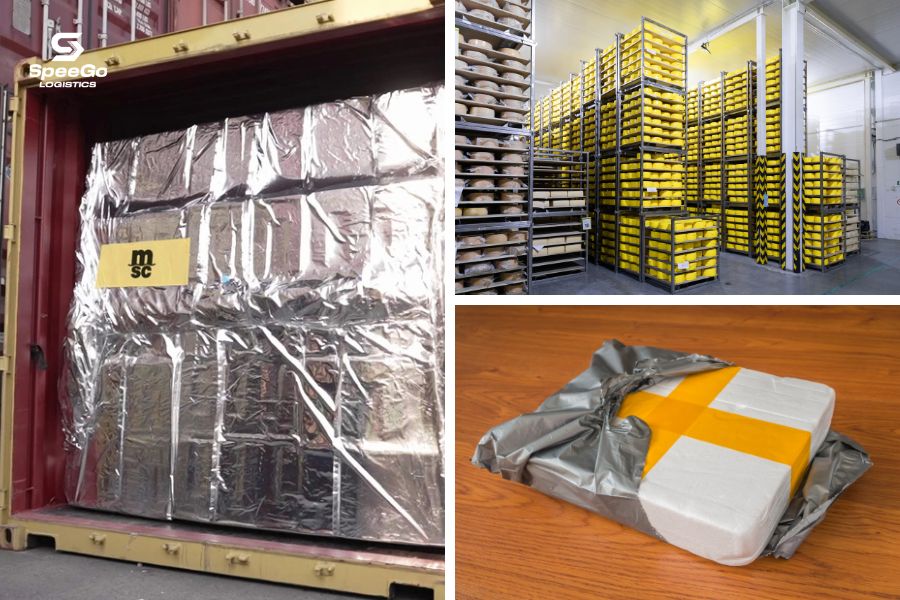
Packaging is another critical element within effective cold chain management. Insulated packaging materials help protect products from external temperature changes during loading, unloading, and transportation.
Common cold chain packaging solutions include:
- Insulated containers
- Gel packs and dry ice
- Thermal blankets
- Vacuum-insulated packaging
- Refrigerated pallet covers
The type of packaging used depends on factors such as transportation duration, product sensitivity, shipping route, and environmental conditions. Proper packaging design helps maintain temperature stability while reducing the risk of product spoilage or contamination.
2.4. Real-Time Temperature Monitoring
Real-time temperature monitoring systems allow businesses and logistics providers to track environmental conditions during storage and transportation.
Modern monitoring systems can:
- Record temperature data continuously
- Send automated alerts when temperature deviations occur
- Improve shipment visibility
- Support regulatory compliance documentation
These systems are particularly important for pharmaceutical and healthcare logistics, where even small temperature changes may affect product safety and effectiveness.
2.5. IoT and Tracking Systems
Digital technology is transforming modern cold chain solutions through the use of IoT sensors, GPS tracking systems, cloud platforms, and AI-driven analytics tools. These technologies help businesses improve supply chain visibility and respond more quickly to operational disruptions.
3. Benefit of Cold Chain Logistics
Modern businesses increasingly depend on reliable cold chain logistics to protect temperature-sensitive products throughout transportation and storage processes. Even minor temperature fluctuations during shipping or storage can damage products, shorten shelf life, and create serious financial or health-related risks.
3.1. Product Quality Preservation
One of the most important functions of cold chain logistics is preserving product quality throughout the supply chain. Many products are highly sensitive to temperature changes and may quickly deteriorate if storage conditions are not maintained properly.
Reliable cold storage solutions help businesses maintain stable product conditions from manufacturing facilities to final delivery locations. This is especially important for products with strict shelf-life requirements or high commercial value.
3.2. Optimising Operational Efficiency
Efficient cold chain management helps businesses reduce operational disruptions and improve overall supply chain performance. When products are stored and transported under stable conditions, companies can minimize the risk of cargo damage, product recalls, shipment rejection, and costly replacements.
Reducing operational disruptions requires more than temperature control alone. SpeeGo Logistics offers integrated supply chain management solutions that help businesses improve cold chain management.
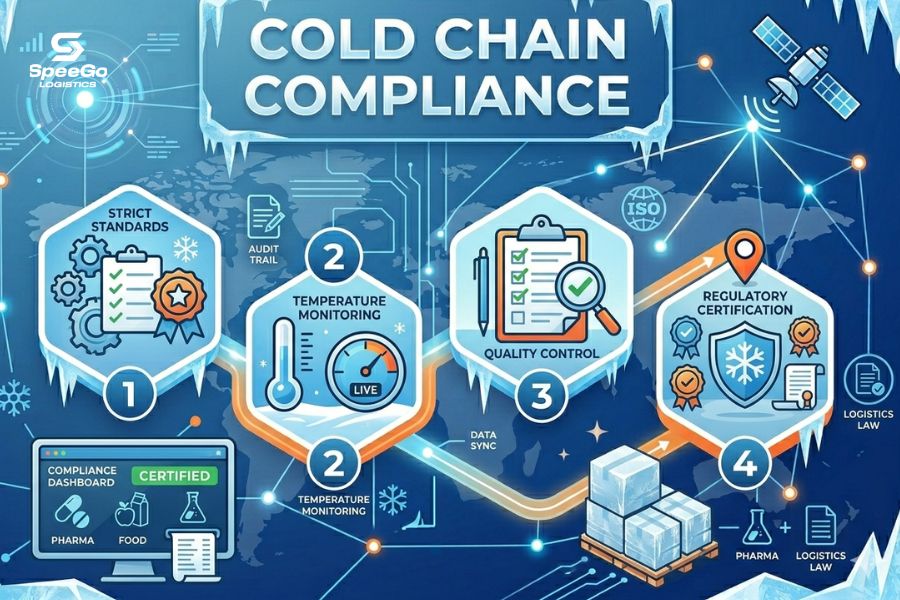
3.3. Compliance with Regulations
Many industries that depend on cold chain logistics must comply with strict safety and quality regulations related to storage, handling, and transportation. Proper cold chain procedures help businesses meet international standards while reducing the risk of non-compliance penalties and product recalls.
3.4. Improving Product Safety
Stable temperature conditions are essential for protecting consumer health and product safety. Refrigerated warehouses and temperature-controlled transportation systems help prevent the growth of harmful bacteria, microorganisms, and contaminants that may develop when products are exposed to unsuitable environmental conditions.
3.5. Reducing Waste and Environmental Impact
A reliable cold chain solution can significantly reduce waste caused by product spoilage and transportation damage. Temperature-sensitive products often represent high commercial value, and losses during shipping may create major financial and operational challenges for businesses.
3.6. Increasing Customer Satisfaction
Reliable cold chain delivery helps businesses maintain stronger customer trust and improve overall customer satisfaction. Consumers and business partners expect temperature-sensitive products to arrive in safe and optimal condition, especially in industries such as healthcare, food distribution, and biotechnology.
4. Types of Products That Require Cold Chain Logistics
Different products require different temperature ranges, packaging methods, and transportation procedures depending on their sensitivity and shelf-life requirements. Modern cold chain management helps businesses reduce spoilage, improve delivery reliability, and maintain product safety throughout domestic and international supply chains.
4.1. Pharmaceuticals and Vaccines
The healthcare and pharmaceutical sectors are among the most important users of pharmaceutical cold chain systems. Many medicines, vaccines, biologic products, insulin, and laboratory materials require strict temperature control to preserve their effectiveness and safety.
Common pharmaceutical cold chain products include:
- Vaccines and biologics
- Blood plasma and laboratory samples
- Insulin and injectable medicines
- Biotechnology products
- Temperature-sensitive medical devices
Some pharmaceutical products must remain within highly specific temperature ranges throughout storage and transportation. Even small temperature deviations may reduce product stability or compromise medical performance.
4.2. Fresh Food and Seafood
Fresh food products are highly vulnerable to spoilage during transportation and storage. Without proper refrigeration, bacterial growth and moisture changes may rapidly reduce product freshness, texture, and safety. Seafood exports, in particular, require stable low-temperature conditions throughout international transportation to preserve freshness and maintain export quality standards.

4.3. Dairy and Frozen Products
Dairy products and frozen goods depend heavily on continuous refrigeration throughout the supply chain. Temperature instability during transportation or storage may cause thawing, spoilage, texture damage, or bacterial contamination.
Products commonly transported through refrigerated logistics systems include:
- Milk and cheese
- Yogurt and butter
- Ice cream and frozen desserts
- Frozen meat and seafood
- Frozen ready-to-cook products
Frozen products often require sub-zero transportation and storage environments to maintain product quality. Refrigerated trucks, reefer containers, insulated packaging, and cold storage warehouses all play important roles in protecting frozen cargo throughout international distribution.
4.4. Chemicals and Biotechnology Products
Certain chemical and biotechnology products are highly sensitive to environmental conditions and require specialised cold chain solutions to maintain stability during transportation.
4.5. Floral and Agricultural Products
Flowers and agricultural exports also rely on cold chain logistics to maintain freshness, appearance, and commercial value during transportation. Products such as cut flowers, seedlings, herbs, and certain agricultural goods can deteriorate quickly if exposed to heat or humidity during transit.
5. Common Challenges in Cold Chain Logistics
Even minor disruptions within the cold chain may lead to product spoilage, shipment rejection, regulatory violations, or significant financial losses.
- Loading and unloading delays: Delays during cargo handling may expose temperature-sensitive products to unstable conditions, increasing the risk of spoilage and quality loss.
- Equipment malfunction: Failures in refrigeration or monitoring systems can quickly disrupt temperature control and damage sensitive cargo during transportation or storage.
- Poor insulation or packaging: Weak packaging materials may allow heat or moisture to affect products, reducing cold chain protection during transit.
- Power interruptions: Unexpected power outages can stop refrigeration systems from operating properly, potentially compromising product safety and shelf life.
- Customs clearance delays: International shipments may face longer inspection times, exposing products to unstable temperatures during border processing.
- Port congestion: Heavy congestion at ports can delay refrigerated containers and increase the risk of temperature fluctuations.
Managing temperature-sensitive products requires far more than basic transportation. SpeeGo Logistics provides reliable cold chain logistics solutions for temperature-sensitive cargo such as pharmaceuticals, frozen food, and perishable products.