
The difference between chargeable weight vs gross weight can significantly impact international freight costs, especially in air cargo and courier shipping. Learning about chargeable weight vs gross weight helps businesses estimate shipping costs more accurately and build more efficient international logistics strategies.
1. What Is Gross Weight in Shipping?
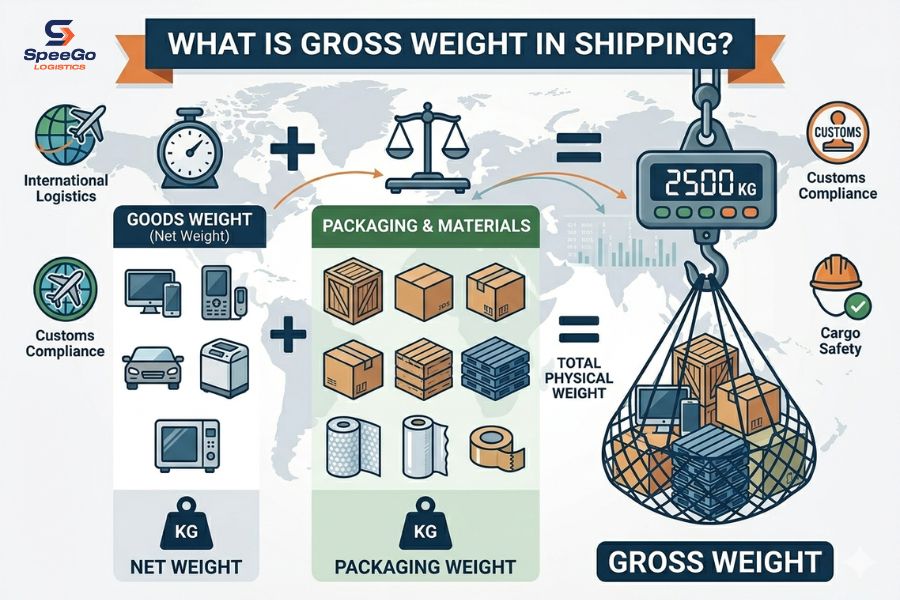
Gross weight refers to the total physical weight of a shipment, including both the products and all packaging materials used during transportation. This measurement is commonly used in logistics operations, freight documentation, and cargo handling processes.
Gross shipment weight includes the products themselves along with cartons, pallets, protective materials, wrapping, and other shipping components. Packaging materials can significantly increase total shipment weight, especially in international freight shipping.
Carriers use gross weight across air freight, ocean freight, rail transport, and trucking operations for cargo handling and transportation planning. Accurate weight declarations also support customs compliance and transportation safety requirements.
2. What Is Chargeable Weight?
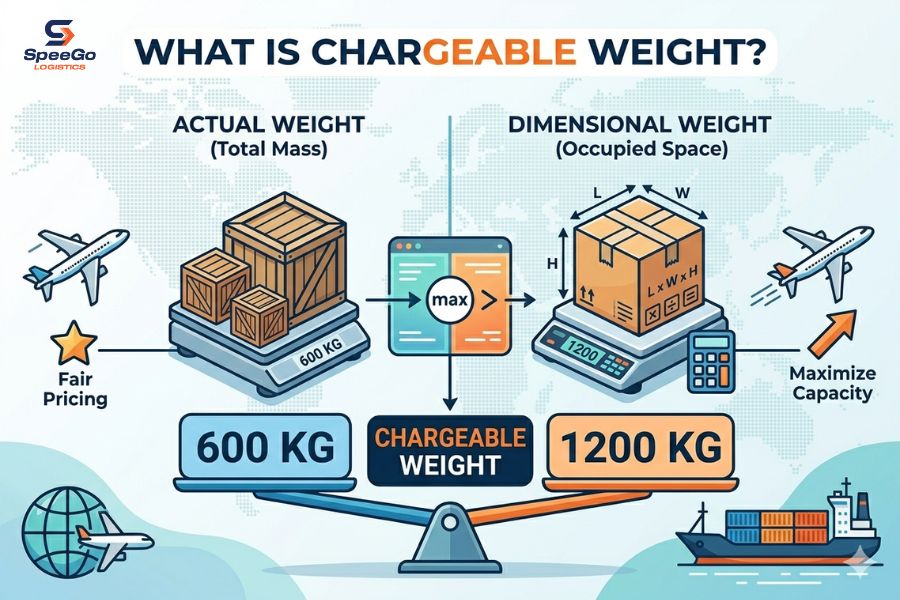
Chargeable weight is the shipping weight carriers use to calculate freight charges based on both cargo weight and occupied space. This system allows logistics providers to price shipments more fairly when bulky packages take up large transportation capacity.
Carriers apply chargeable weight to maximize cargo efficiency and manage limited transportation space more effectively. This pricing method is widely used in air freight, courier shipping, and international logistics operations where cargo capacity is valuable.
3. Difference Between Chargeable Weight And Gross Weight
The difference between chargeable weight and gross weight is essential for businesses involved in international shipping and freight management. Although both measurements are related to shipment weight, they serve different purposes in logistics operations and freight pricing.
| Criteria | Gross Weight | Chargeable Weight |
| Definition | Gross weight refers to the total physical weight of a shipment, including products and all packaging materials. | Chargeable weight is the billable shipping weight carriers use to calculate freight costs. |
| Purpose | Used for cargo handling, transportation planning, customs documentation, and warehouse operations. | Used mainly for freight pricing and shipping cost calculations. |
| What It Includes | Includes products, cartons, pallets, wrapping, and protective packaging materials. | Includes either actual weight or volumetric weight, depending on which value is higher. |
| Calculation Method | Measured directly using a physical scale. | Calculated by comparing actual weight with volumetric weight. |
| Common Use in Logistics | Commonly used in customs clearance, warehouse management, and transportation safety compliance. | Commonly used in air freight, courier shipping, and dimensional weight pricing systems. |
| Most Affected Shipment Types | Dense and heavy cargo shipments. | Large but lightweight products such as pillows, home decor, footwear, and plastic goods. |
| Example | A shipment physically weighs 20 kg including packaging materials. | The same shipment may have a volumetric weight of 28 kg, so the carrier charges based on 28 kg. |
4. Hidden Shipping Costs Caused by Volumetric Weight
Many businesses focus mainly on product weight when estimating freight expenses.But volumetric pricing can create additional logistics costs that are often overlooked.
4.1. Oversized packaging increases freight charges
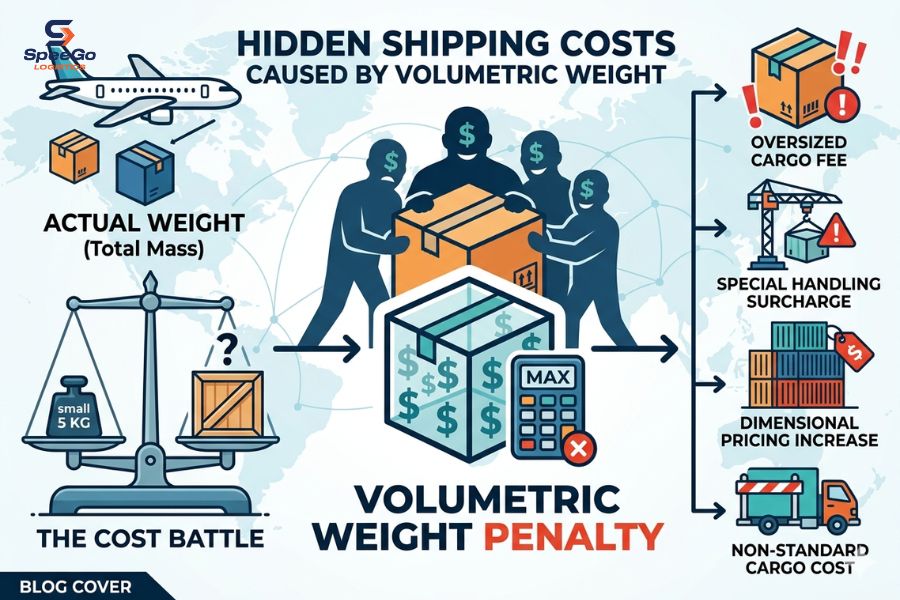
Using boxes that are larger than necessary can increase volumetric weight and raise international shipping costs. Even lightweight products may become expensive to transport when excessive empty space increases the shipment’s chargeable weight.
4.2. Additional oversized cargo fees
Carriers may apply extra fees for shipments that exceed standard size limits or require special handling. These hidden logistics charges often include oversized parcel surcharges, dimensional pricing penalties, and non-standard cargo handling costs.
4.3. Inefficient packaging reduces cargo utilization
Poor packaging design can waste transportation space and reduce cargo efficiency across freight operations. Excessive fillers, unused carton space, and non-stackable packaging may lead to higher shipping expenses over time.
4.4. Higher costs in air freight and courier shipping
Volumetric pricing affects air freight and express delivery services more heavily because cargo space is limited and transportation costs are higher. Businesses shipping bulky but lightweight products often face increased courier and international freight charges.
Managing oversized shipments and rising freight costs requires smarter logistics planning and optimized transportation strategies. SpeeGo Logistics helps businesses reduce unnecessary air freight and courier expenses through flexible shipping solutions.
4.5. Unexpected billing adjustments
If carriers recalculate shipment dimensions after pickup, businesses may receive additional invoices or weight correction fees. Incorrect package measurements and inaccurate freight documentation are common causes of unexpected billing adjustments.
5. Common Misunderstandings Gross Weight and Chargeable Weight
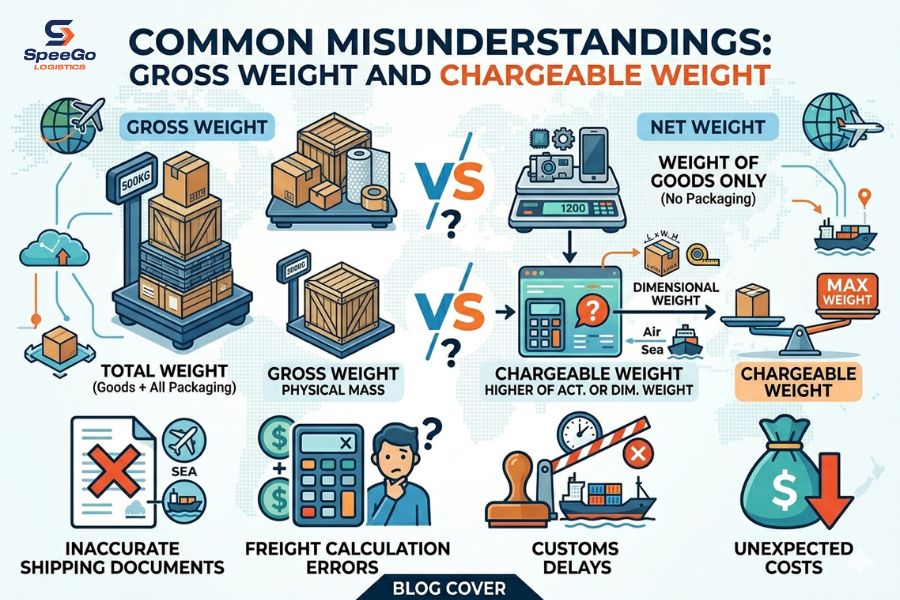
Many businesses misunderstand how freight carriers calculate shipping costs, especially when comparing gross weight vs chargeable weight. These misunderstandings often lead to inaccurate freight estimates, unexpected shipping fees, and inefficient packaging decisions.
5.1. Assuming gross weight always determines shipping costs
Many businesses believe carriers calculate freight charges only based on physical shipment weight. In reality, logistics providers often compare gross weight with volumetric weight, and the higher value becomes the final chargeable weight for billing.
5.2. Confusing gross weight with net weight
Net weight only refers to the products themselves, while gross weight includes both the products and all packaging materials. Misunderstanding these terms can lead to inaccurate shipping documents, freight calculation errors, and customs issues.
5.3. Believing volumetric weight only applies to air freight
Although dimensional pricing is widely used in air cargo transportation, courier services and LCL ocean freight providers also apply volumetric weight calculations. Businesses involved in eCommerce and international parcel delivery are frequently affected by this pricing method.
5.4. Assuming all carriers use the same DIM factor
Different logistics providers may apply different dimensional weight formulas depending on their shipping policies and transportation methods. Businesses that ignore carrier-specific DIM factors may receive inaccurate freight estimates or unexpected shipping charges.
5.5. Ignoring the impact of packaging design
Oversized cartons and inefficient packaging can increase chargeable weight significantly, even for lightweight products. Poor packaging optimization often leads to unnecessary freight expenses and lower transportation efficiency.
5.6. Thinking chargeable weight is always higher than gross weight
Chargeable weight is not always larger than gross weight because dense and compact shipments are often billed using actual physical weight. The final freight charge depends on whether the gross weight or volumetric weight is higher after carrier calculations.
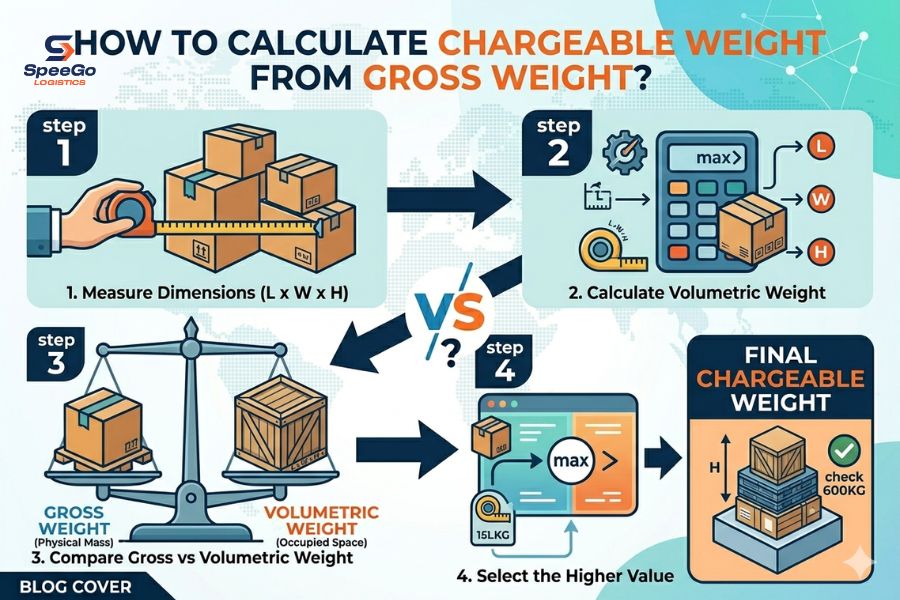
6. How To Calculate Chargeable Weight From Gross Weight?
How to calculate chargeable weight from gross weight is essential for businesses involved in international shipping, air freight, and courier logistics.
6.1. Step 1: Measure shipment dimensions
The first step is measuring the shipment’s length, width, and height after packaging is completed. Accurate dimensions are important because oversized cartons and additional packaging materials can significantly increase volumetric weight and overall freight costs.
6.2. Step 2: Calculate volumetric weight
Businesses use dimensional weight formulas to calculate how much cargo space a shipment occupies during transportation. Different freight methods such as air, ocean, and rail shipping may apply different density ratios and volumetric calculation standards.
6.3. Step 3: Compare gross weight and volumetric weight
After calculating volumetric weight, carriers compare it with the shipment’s gross weight to determine which value is higher. This comparison helps logistics providers calculate freight charges more accurately based on both weight and cargo space usage.
6.4. Step 4: Select the higher value as chargeable weight
The higher value between gross weight and volumetric weight becomes the final chargeable weight used for billing. This system allows carriers to optimize cargo capacity while maintaining balanced freight pricing across transportation networks.
Accurate chargeable weight calculations can help businesses avoid unexpected freight costs and improve shipping efficiency across international supply chains. SpeeGo Logistics provides reliable global transportation solutions, freight optimization support, and professional logistics services.
7. Industries Most Affected by Chargeable Weight Pricing
Chargeable weight pricing affects many industries differently, but businesses shipping large, lightweight, or irregularly shaped products are often impacted the most.
| Industry | Why It Is Affected by Chargeable Weight | Common Products | Main Logistics Challenges |
| Furniture & Home Decor | Many products are large but relatively lightweight, causing volumetric weight to exceed gross weight. | Decorative lamps, lightweight furniture, storage baskets, wall decor | Oversized packaging, high air freight costs, inefficient cargo space usage |
| Fashion & Footwear | Protective packaging and high shipment volume can increase dimensional weight significantly. | Shoes, handbags, jackets, hats, fashion accessories | Parcel shipping costs, packaging optimization, cross-border delivery expenses |
| Toy & Baby Product Industry | Lightweight products often require large retail packaging for protection and branding purposes. | Baby strollers, toys, plastic playsets, storage products | Large package dimensions, increased volumetric weight, higher parcel shipping costs |
| Pet Product Industry | Pet supplies often combine bulky packaging with lightweight materials. | Pet beds, carriers, scratching posts, pet accessories | Oversized cartons, dimensional courier pricing, inefficient storage space |
| Sports & Fitness Equipment | Many products have irregular shapes and occupy large transportation space despite moderate weight. | Yoga mats, fitness accessories, outdoor gear, sporting equipment | Oversized cargo handling, inefficient packaging, higher chargeable weight |
| Electronics & Appliances | Fragile products require additional protective packaging that increases shipment dimensions. | Computer monitors, audio equipment, gaming accessories, kitchen appliances | Protective packaging costs, bulky cartons, dimensional freight charges |
The difference between chargeable weight vs gross weight plays an important role in modern freight pricing and international logistics operations. Businesses that understand how dimensional weight calculations work are often better prepared to optimize packaging strategies, improve cargo utilization, and manage global transportation costs more effectively.