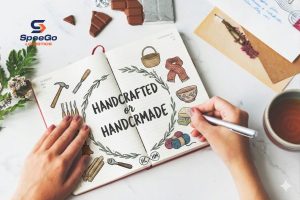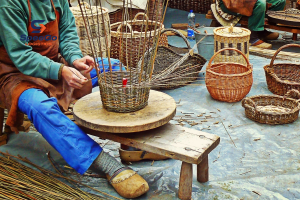
If you’ve ever searched for suppliers or reviewed product catalogs from Vietnam, you’ve probably seen both handcrafts or handicrafts used in different places. It might seem like a minor wording difference, but in practice, it often signals how a product is categorized, marketed, or even produced.
In this guide, we break down the difference between handcraft and handicraft, explain how each term is used in practice, and show how context can influence your sourcing decisions.
1. What is The Handcraft?
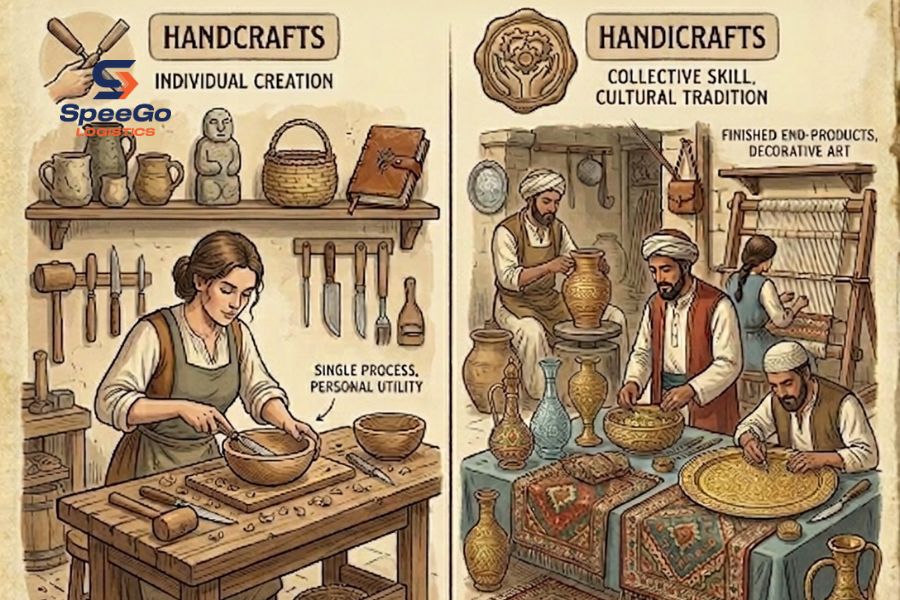
Handcraft refers to the process of creating products primarily by hand, using manual skills supported by simple tools rather than automated machinery. What defines a handcraft product is not just the absence of machines, but the level of human input involved in shaping, assembling, and finishing each item.
Because each piece is made individually, slight variations in shape, texture, or finish are common. These differences are not considered defects. Instead, they are part of what gives handcrafted products their distinct character.
The word handcraft is most commonly used as a verb to describe the process of making something by hand. It highlights the effort, skill, and manual involvement behind the creation of a product, rather than the final item itself.
Examples: She handcrafted a custom ceramic set for a boutique client.
This is where confusion often begins when comparing handcrafts or handicrafts, as the term “handcraft” focuses more on the process than the product itself.
2. What is The Handicraft?
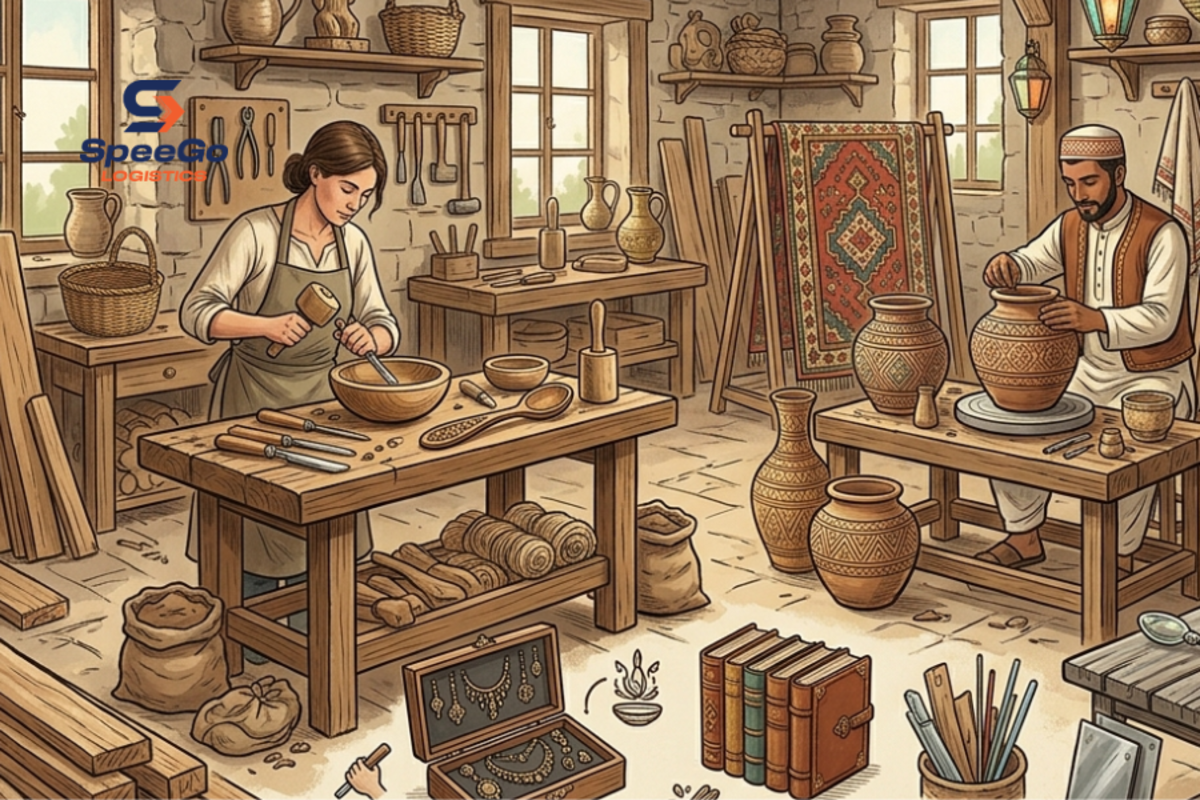
Handicrafts refer to a broad category of products that are made primarily through manual processes, where human involvement plays a central role in shaping the final item. These products may be created entirely by hand or with the support of basic tools, but they are not mass-produced through fully automated systems.
Compared to the concept of “handcraft,” which often highlights the maker’s technical skill, handicrafts are usually understood in a broader context. They combine function, design, and cultural expression, making them suitable for both practical use and aesthetic purposes.
Unlike handcraft, the word handicraft is typically used as a noun. It refers to the finished product that has been made by hand, often with cultural or traditional significance. In most cases, handicraft is used to describe a category of goods rather than the act of making them. This makes it more common in retail, sourcing, and product descriptions.
Examples: These handicrafts are produced in traditional craft villages using local materials.
In most sourcing and trade contexts, this is why “handicrafts” is preferred over “handcrafts or handicrafts” when referring to product categories.
2. Difference Between Handcrafts or Handicrafts
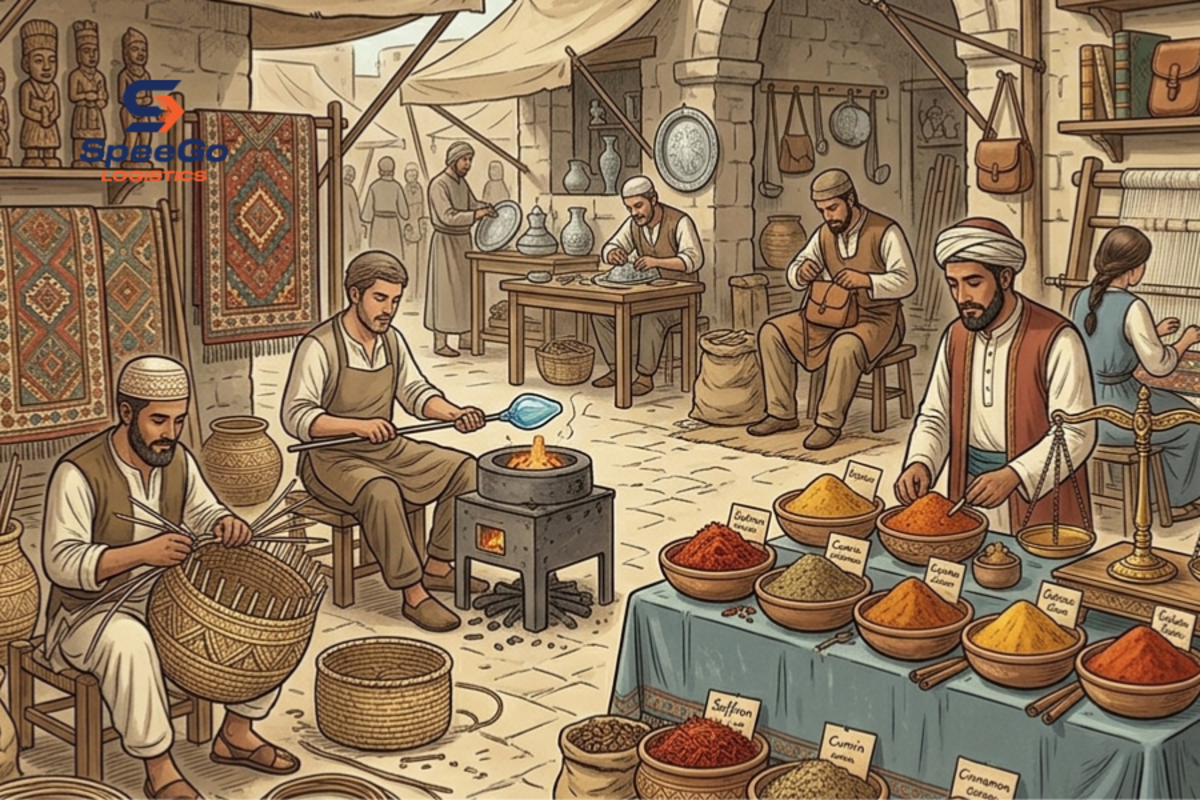
At first glance, handcrafts or handicrafts may seem interchangeable, but in practice, they are used in different contexts. Understanding this distinction helps avoid confusion when working with suppliers or searching for products.
2.1. Meaning and Application
The term handicrafts is broader and refers to a category of products made primarily by hand, often using traditional techniques and local materials. It is commonly used to describe finished goods such as baskets, ceramics, textiles, or decorative items.
In contrast, “handcrafts” are less standardized. It is sometimes used to describe the act of making something by hand rather than a clearly defined product category. Because of this, it does not clearly define a specific group of products in commercial use.
2.2. Global Trade and Sourcing
In global sourcing and export markets, handicrafts is the widely accepted term. It appears in supplier catalogs, trade reports, and official documentation. Organizations such as UNESCO and the International Trade Centre consistently use “handicrafts” when referring to handmade product sectors.
On the other hand, handcrafts rarely appear in formal trade contexts. Its usage is more informal and can vary depending on region or writing style, which makes it less reliable for professional communication.
3. When Should You Use Handcrafts or Handicrafts?
The choice between handcraft or handicraft is not only about language but depends on how the product is positioned, produced, and communicated in different contexts. For businesses, understanding these nuances can help align product development with market expectations.
3.1. Artisanal Products
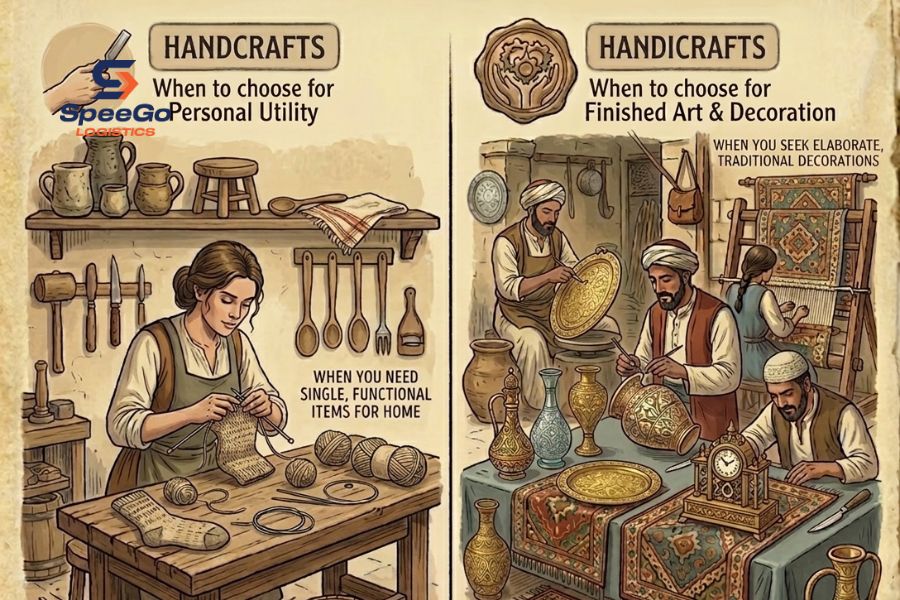
In the artisanal segment, terminology plays a role in how products are perceived. Items described as handcrafted are usually associated with a higher level of manual input and individual attention. This often leads to a stronger perception of authenticity, especially in categories such as ceramics, woodwork, or textile-based goods.
By contrast, handicrafts as a category can include both highly artisanal items and products that are partially standardized for export. For example, a ceramic bowl shaped and glazed entirely by hand may be positioned differently from one produced using molds, even if both are technically handmade.
3.2. Training Context
The term “Handicraft” is often used when referring to structured activities designed for learning basic skills. This may include kits or guided processes where materials and outcomes are predefined, making it easier for beginners to follow.
On the other hand, a handcraft approach usually allows more flexibility. It is often introduced at a more advanced stage, where individuals already understand the basics and can explore their own techniques, materials, or design variations.
If you want to work with craft communities, this distinction matters because the level of training directly affects production consistency and scalability.
3.3. Branding Impact
In branding, word choice can influence how a product is perceived in the market. The term handcrafted is frequently used to signal higher quality, attention to detail, and a more refined production process. It is commonly seen in premium or design-focused product lines.
In contrast, handicrafts is more often used as a broader category label, especially in catalogs, marketplaces, and export documentation. It communicates the nature of the product without necessarily implying a specific quality level.
3.4. Sustainability and Environmentalism
Sustainability is another factor that shapes how these terms are applied. Products described as handcrafted are often associated with smaller-scale production and a more controlled use of materials. This can reduce waste and allow for more careful sourcing of raw inputs.
However, not all handmade or handicraft products are automatically sustainable. Environmental impact depends on factors such as material origin, treatment processes, and production scale. For example, natural fibers like bamboo or rattan can be renewable, but improper processing may still create environmental concerns.
4. Conclusion
Understanding the difference between handcrafts or handicrafts helps businesses communicate more clearly with suppliers, avoid misinterpretation in product specifications, and make better decisions when sourcing from Vietnam.
In international trade, using the correct term “handicrafts” ensures alignment with industry standards and improves consistency across production and documentation.
Looking to import handicrafts from Vietnam?
SpeeGo helps you connect with verified suppliers, manage quality, and streamline the entire sourcing process from sampling to shipment.
Get in touch to explore a sourcing solution tailored to your product and market.