Vietnam’s handicraft exports have gained growing attention in global markets as international buyers increasingly seek handmade products made from natural materials.
1. Overview of Vietnam’s Handicraft Export Industry
Over the past two decades, Vietnam has gradually emerged as one of the world’s most promising sourcing destinations for handmade products. From woven baskets and ceramic decor to embroidered textiles and wooden handicrafts, Vietnamese artisans combine traditional craftsmanship with modern export capabilities.
Unlike mass-produced factory goods, Vietnamese handicrafts often carry cultural stories that appeal strongly to global consumers who value sustainable and artisanal products. This growing international interest has helped the country’s handicraft sector expand steadily, creating new opportunities for retailers, wholesalers, and e-commerce brands looking for distinctive product lines.
1.1. Growth of Vietnam’s Handicraft Exports
Vietnam’s handicraft export industry has experienced remarkable growth in recent years, supported by increasing global demand for handmade and eco-friendly products. According to Chu (2024), the country’s handicraft export value grew from approximately USD 1.62 billion in 2015 to around USD 3.5 billion in 2023, more than doubling within less than a decade.
This steady growth reflects several global market trends. First, consumers in many developed markets are showing stronger interest in sustainable materials such as bamboo, rattan, and seagrass. Second, lifestyle retailers and home decor brands increasingly prefer handmade items that bring natural textures and cultural authenticity into modern interiors.
1.2. Key Export Markets
Vietnamese handicrafts are now exported to more than 163 countries and territories worldwide, demonstrating the global appeal of these products (Chu, 2024). Among all export destinations, the United States stands out as the largest market, accounting for approximately 35% of Vietnam’s total handicraft export value (nhandan.vn, 2020).
Across several international markets, Vietnamese handicrafts and home decor products have gained growing attention due to their natural materials and artisanal appeal. In many European Union countries, consumer interest in sustainable home decor and handmade lifestyle products continues to expand, reflecting broader environmental and ethical consumption trends. In Japan, the market places strong emphasis on refined craftsmanship and minimalist aesthetics, making carefully crafted decor items particularly attractive. Meanwhile, Australia has shown consistent demand for home decor made from natural materials such as rattan and bamboo, which align well with the country’s preference for organic and nature-inspired interior design. For importers in North America and Oceania, Vietnam’s handicraft industry represents an appealing sourcing option beyond mass-produced goods. By working with Vietnamese suppliers, retailers can introduce collections that feel authentic, environmentally conscious, and visually distinctive.
1.3. Vietnam’s Craft Village Ecosystem
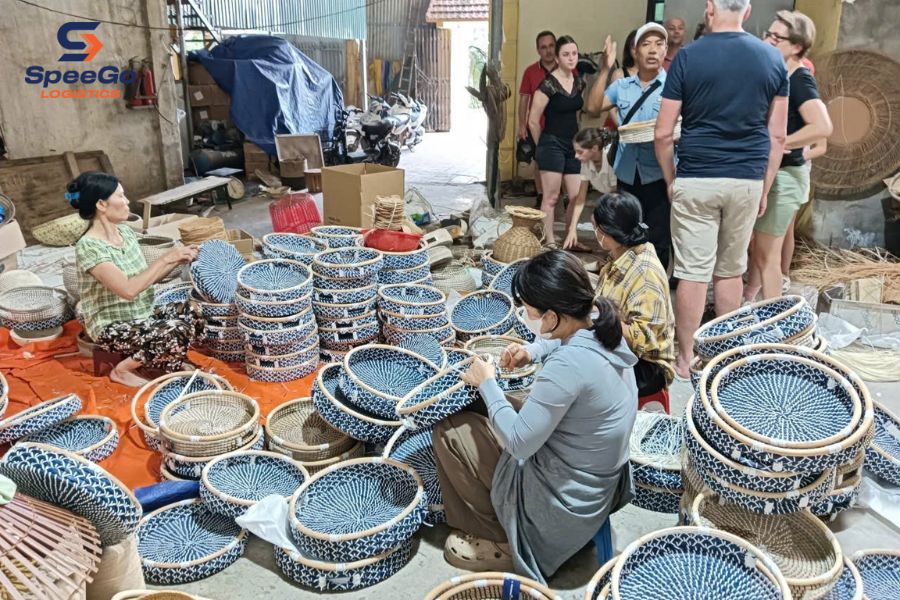
One of the most fascinating aspects of Vietnam’s handicraft industry is its deep connection to traditional Vietnam craft villages, which serve as both cultural heritage centers and important production hubs for the country’s handicraft exports. Across the country, there are more than 5,400 recognized craft villages, many of which have preserved their specialized skills for generations. These craft villages form the cultural and production backbone of Vietnam’s handicraft export industry. Local artisans pass down their techniques through generations, ensuring that each product reflects both skill and heritage.
Instead of sourcing from anonymous mass-production factories, importers can access authentic handmade goods rooted in centuries of craftsmanship. At the same time, many craft villages now collaborate with export companies and logistics partners, allowing them to meet international quality standards and shipping requirements.
2. Where to Find Reliable Handicraft Suppliers in Vietnam?
Unlike highly industrialized manufacturing sectors, the handicraft industry is built on a mix of traditional artisans, export manufacturers, and sourcing intermediaries. Each sourcing channel offers different advantages depending on your order size, customization needs, and level of experience with international trade.
Based on practical sourcing experience shared by global importers and trade organizations, businesses typically rely on four main channels to identify reliable Vietnamese handicraft suppliers.
2.1. Traditional Craft Villages
One of the most authentic ways to source handicrafts in Vietnam is by working directly with traditional craft villages. Many international buyers value this connection because it allows them to offer products with clear origin stories and genuine craftsmanship, which are increasingly important to consumers in markets such as the United States, Canada, and Australia.
However, sourcing directly from craft villages also requires careful coordination. Many small workshops may have limited export experience, meaning buyers often need support with product standardization, packaging, and export documentation. For this reason, some importers collaborate with local sourcing agents or logistics partners when purchasing from artisan communities.
2.2. Export Manufacturers and Trading Companies
Another common sourcing channel is working with Vietnam handicraft manufacturers and trading companies that specialize in exporting products to international markets. These companies often operate as handicraft exporters in Vietnam, consolidating products from multiple craft villages and preparing them for overseas distribution. Organizations such as the Vietnam Handicraft Exporters Association (VIETCRAFT) also support international trade by connecting overseas buyers with verified Vietnamese handicraft exporters. Industry associations like this play an important role in improving transparency and helping businesses identify credible suppliers.
2.3. B2B Platforms and Sourcing Websites
Digital sourcing platforms have also become an increasingly popular way for international buyers to explore Vietnamese handicraft suppliers before visiting the country in person. It allows buyers to compare product catalogs, request quotations, and evaluate supplier profiles before making sourcing decisions. While online sourcing can save time, experienced importers usually recommend conducting sample testing and supplier verification before placing large orders.
2.4. Trade Shows and Sourcing Events
Trade shows provide a unique opportunity to meet manufacturers face-to-face, evaluate product quality directly, and understand production capabilities. Some of the most important sourcing events for handicraft buyers include:
- Vietnam Sourcing Expo & ITE HCMC.
- Global Sourcing Fair Vietnam.
- Vietnam International Home Decor & Gifts Fair.
- HawaExpo (Vietnam’s Furniture & Handicraft Fair).
These exhibitions regularly attract hundreds of Vietnamese manufacturers and thousands of international buyers. Visiting these events offers two key advantages: discovering new product trends and building direct relationships with suppliers, both of which are essential for long-term sourcing success.
3. Guide to Import Handicraft from Vietnam
3.1. Product Research and Supplier Selection
Businesses that plan to import handicrafts from Vietnam typically begin by identifying products that match demand in their target markets. Handicrafts from Vietnam range from bamboo baskets and ceramic tableware to rattan furniture and decorative lighting.
3.2. Price Negotiation and MOQ Agreement
Once potential suppliers are identified, the next step involves negotiating pricing structures and minimum order quantities (MOQ). Because handicrafts are often handmade, pricing can vary depending on materials, craftsmanship complexity, and order volume.
3.3. Product Sampling and Quality Inspection
Before confirming a bulk order, requesting product samples is an essential step. Samples allow buyers to evaluate craftsmanship, material quality, and product durability.Quality inspection becomes especially important when importing handmade products because small variations may occur during production.
3.4. Production and Export Documentation
After sample approval and order confirmation, suppliers begin the production process. Depending on the product type and order volume, manufacturing lead times for handicrafts typically range from 30 to 60 days.
During this period, suppliers prepare essential export documentation, including:
- Commercial invoice
- Packing list
- Bill of lading
- Certificate of origin (if required)
3.5. International Shipping and Customs Clearance
The final step involves transporting the goods from Vietnam to the destination market. Most handicraft shipments are transported by sea freight because of the large shipment volume and lower cost compared with air transport.
4. Top Handicraft Export Products Sourced from Vietnam
4.1. Footwear and Leather Goods
Vietnam is widely recognized as one of the world’s leading exporters of footwear and leather products. According to the Vietnam Leather, Footwear and Handbag Association (LEFASO), Vietnam’s footwear exports reached approximately USD 20.2 billion in 2023, making the country the second-largest footwear exporter globally after China.
These products are often produced by smaller workshops or specialized manufacturers that emphasize manual stitching, natural materials, and unique design details. Popular export items include:
- Handcrafted leather sandals and espadrilles.
- Handmade leather handbags and travel bags.
- Small leather accessories such as wallets and belts.
- Artisan footwear designed for boutique fashion brands.
4.2. Furniture and Wood Products
Furniture and wood handicrafts represent another major strength of Vietnam’s export sector. Over the past decade, Vietnam has emerged as one of the world’s largest furniture exporters thanks to its strong woodworking industry and access to both domestic and imported timber materials. According to the Vietnam Ministry of Agriculture and Rural Development (MARD), the country’s wood and wood product exports reached approximately USD 14.4 billion in 2023, with the United States accounting for more than 50% of total export value.
Vietnamese furniture exporters produce a wide range of products for global markets, including both industrial furniture and handcrafted wooden decor items:
- Solid wood furniture for living rooms and bedrooms.
- Hand-carved decorative wood items.
- Wooden kitchenware and home accessories.
- Outdoor furniture made from acacia, teak, and eucalyptus.
- Handcrafted wooden lighting and decor pieces.
4.3. Rattan, Bamboo, and Natural Fiber Products
Natural fiber handicrafts are among the most iconic exports from Vietnam. Materials such as rattan, bamboo, seagrass, and water hyacinth are widely used to produce eco-friendly home decor and storage products.
- Rattan and bamboo furniture.
- Seagrass baskets and storage containers.
- Handwoven trays and organizers
- Decorative lighting made from natural fibers.
- Wall decor and woven home accessories.
These products are especially popular with home decor retailers, lifestyle brands, and hospitality projects in Western markets.
4.4. Lacquerware and Decorative Handicrafts
Lacquerware is another distinctive Vietnamese handicraft that combines traditional artistry with modern interior design trends. The production process involves multiple layers of lacquer coating, sanding, and hand decoration, which creates a glossy and durable finish.
4.5. Ceramic and Pottery Products
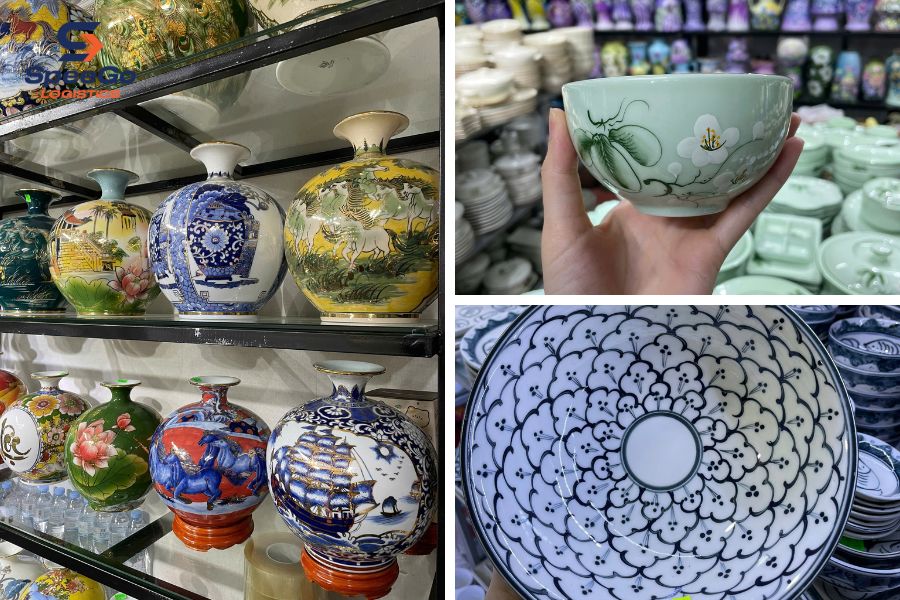
Vietnam also has a long tradition of ceramic production, with famous pottery villages such as Bat Trang (Hanoi) and Binh Duong producing handcrafted ceramics for both domestic and export markets. Vietnamese ceramic products are appreciated for their hand-painted designs, durability, and traditional glazing techniques. Many exporters also develop contemporary designs to suit modern home décor trends.
5. How Logistics Providers Support Imports Handicraft?
Importing handicrafts from Vietnam offers international businesses access to unique, handcrafted products, but managing international shipping can be complex. From coordinating factory pickups to handling export documentation and ocean freight bookings, each step requires careful planning to ensure that goods arrive safely and on schedule in markets such as the United States, Canada, and Australia.
Working with an experienced logistics provider like SpeeGo Logistics helps simplify this process. Our company supports importers by organizing freight forwarding, consolidating cargo from multiple handicraft suppliers, and managing essential export documentation. These services allow businesses to combine shipments efficiently, reduce transportation costs, and avoid common delays during customs clearance.
By coordinating transportation, paperwork, and international shipping routes, SpeeGo Logistics helps global buyers move Vietnamese handicraft products smoothly from local workshops to international retail markets.
Frequently Asked Questions (FAQs)
- What are the most profitable handicraft products to import from Vietnam?
Several Vietnamese handicraft categories have strong international demand due to their natural materials, craftsmanship, and competitive pricing. Popular and profitable products include rattan and bamboo furniture, seagrass baskets, lacquerware, ceramic home decor, wooden handicrafts, and woven lighting products.
- What is the typical MOQ for Vietnamese handicraft suppliers?
Minimum order quantities (MOQ) vary depending on the type of product and production scale of the supplier. The typical MOQ ranges from 100 to 500 pieces per design for smaller items such as baskets or home decor. Some suppliers also allow mixed orders across different designs within a container to accommodate international buyers.
- Are Vietnamese handicrafts eco-friendly?
Many Vietnamese handicrafts are considered environmentally friendly because they are made from renewable natural materials such as bamboo, rattan, seagrass, water hyacinth, and coconut fiber
- How can importers verify handicraft suppliers in Vietnam?
Importers can take several steps to verify suppliers and reduce sourcing risks:
- Request business licenses and export certifications to confirm legal registration like ISO, FSC, and fair trade labels.
- Review product samples to evaluate material quality and craftsmanship.
- Conduct factory audits or third-party inspections before placing large orders.
- Check supplier experience with export markets, including previous clients in the US, Canada, or Australia.
- Work with sourcing agents or logistics partners who have established supplier networks in Vietnam.
- How long does shipping from Vietnam to the US or Canada take?
Shipping time depends on the transport method and the destination port. For sea freight, which is the most common option for handicraft shipments, transit times typically range from:.
- Vietnam to the U.S. West Coast: about 18 – 25 days.
- Vietnam to the U.S. East Coast: about 30 – 40 days.
- Vietnam to Canada: around 25 – 35 days.