Taobao vs 1688 is a common dilemma for businesses entering the Chinese sourcing market. At first glance, both platforms seem similar, but they differ significantly in pricing models, supplier structure, and purchasing processes. Without a clear understanding, buyers may struggle with unexpected costs or supply issues.
1. Is 1688 the Same as Taobao?
A common question when comparing 1688 vs Taobao is whether the two platforms are actually the same. The short answer is no. While both platforms are owned by Alibaba Group, they serve different purposes. Taobao is designed for retail buyers, while 1688 focuses on wholesale transactions within China. This difference affects pricing, order quantity, and supplier types. Understanding this distinction is essential before deciding which platform fits your business model.
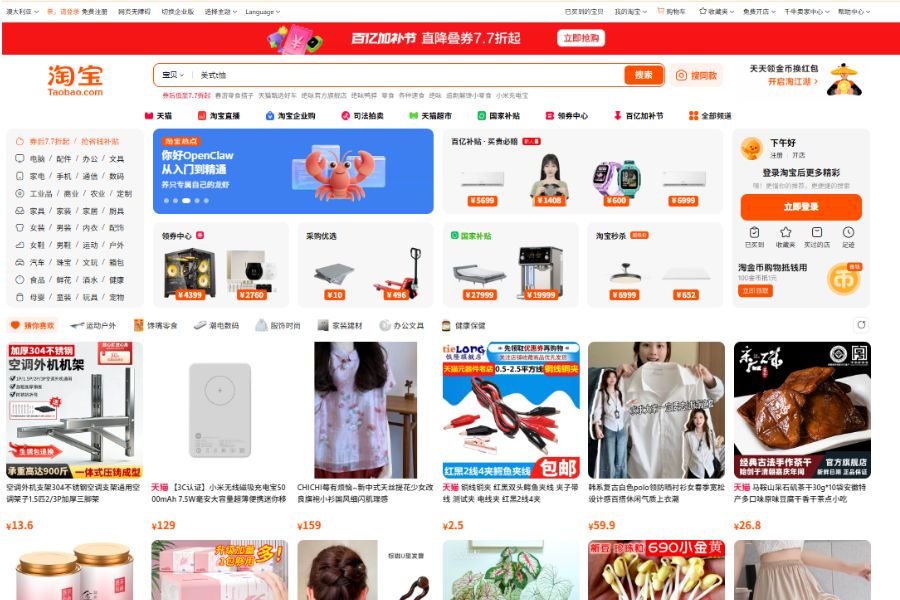
1.1. What is Taobao?
Taobao is a consumer – focused (B2C/C2C) marketplace, built for individual buyers in China. It offers a wide variety of products, often in small quantities, with competitive retail pricing.
Key characteristics:
- Designed for end consumers and small buyers.
- Flexible order quantities (often no minimum order).
- Wide product variety, including trending and low-cost items.
- Strong focus on user experience and fast domestics delivery
Taobao is often used for product testing or small-scale sourcing before committing to bulk orders.
1.2. What is 1688?
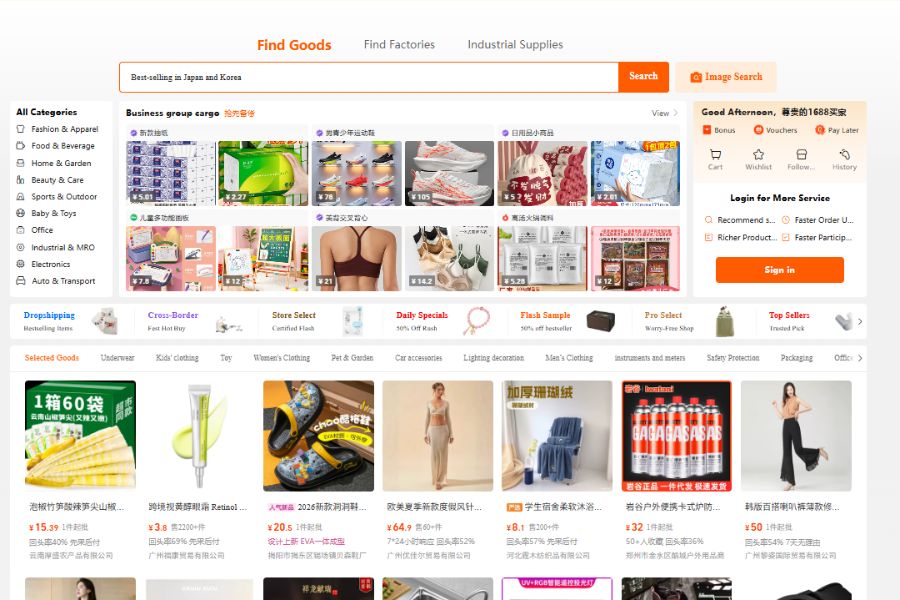
1688 operates as a domestic wholesale (B2B platform). It connects buyers directly with manufacturers and large suppliers.
Key characteristics:
- Built for bulk purchasing and business transactions
- Lower unit prices due to factory-level sourcing
- Minimum order quantities (MOQs) are usually required
- Suppliers often expect negotiation and long-term cooperation
2. Key Differences Between Taobao and 1688
When comparing Taobao vs 1688, the most important differences lie in how each platform structures pricing, order volume, supplier types, and transaction workflows. These factors directly impact sourcing costs, scalability, and operational efficiency for businesses.
2.1. Pricing Model
One of the most noticeable differences between 1688 vs Taobao is how prices are set. On Taobao, pricing is typically retail-oriented. Sellers include margins for individual buyers, marketing costs, and platform competition. Prices are transparent and fixed in most cases. In contrast, 1688.com offers factory-level or near-wholesale pricing. Many suppliers provide tiered pricing based on order quantity.
2.2. Minimum Order Quantity (MOQ)
MOQ is a critical factor when choosing between 1688 vs taobao.
- Taobao: Most listings allow small or single-unit purchases, making it ideal for testing products or placing trial orders.
- 1688: Suppliers usually require minimum order quantities, which can range from a few dozen to several hundred units depending on the product.
This makes Taobao more flexible for beginners, while 1688 is designed for bulk purchasing and long-term supply chains.
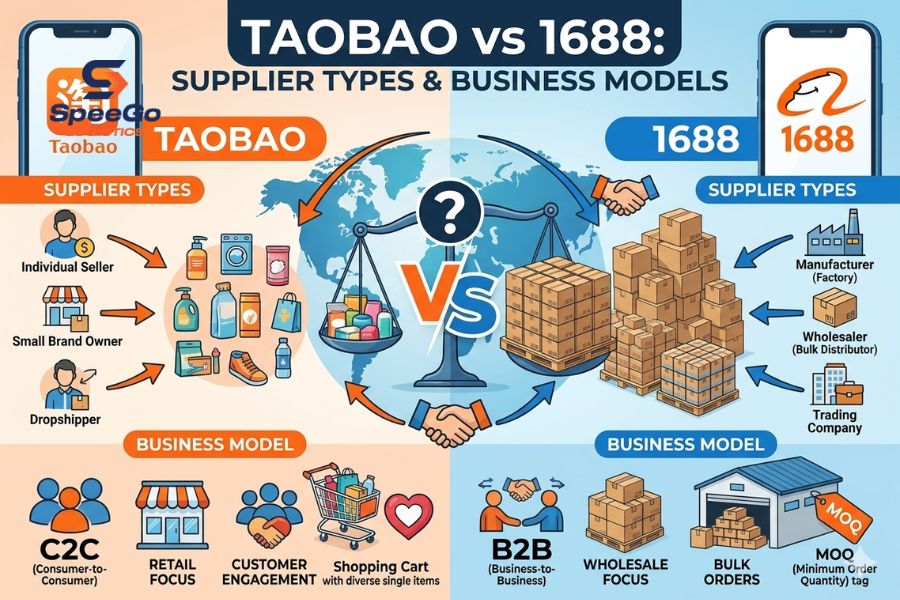
2.3. Supplier Types and Business Models
Another key difference between Taobao vs 1688 is the type of sellers you interact with.
- Taobao suppliers: Often include resellers, small businesses, or individual merchants. Products may come from multiple sources, and branding is common.
- 1688 suppliers: Primarily manufacturers, factories, or large distributors. Many suppliers produce goods directly or operate within industrial clusters in China.
In summary, 1688 offers closer access to the source of production, which can improve pricing and customization options. This is one of the biggest differences between 1688 vs Taobao, especially for businesses that want to work directly with manufacturers instead of intermediaries.
2.4. Order Structure and Negotiation Flexibility
The transaction process also differs significantly.
- Taobao: Orders are typically standardized and automated. Buyers select products, pay, and receive goods with minimal interaction.
- 1688: Transactions are often negotiation-based, especially for large orders. Buyers can discuss pricing, packaging, customization, and delivery terms directly with suppliers.
This flexibility allows businesses to optimize costs and tailor products, but it requires more communication and experience.
2.5. Private Labeling
Customization is another area where the difference between 1688 and Taobao becomes clear.
- Taobao: Limited customization, mostly focused on ready-made products.
- 1688: Many suppliers support OEM/ODM services, including custom logos, packaging, and product modifications.
This is essential for businesses building private-label brands or differentiated product lines.
3. Key Challenges When Sourcing from Taobao and 1688
Many beginners assume that Taobao and 1688 operate in the same way. However, this assumption often leads to confusion in payment, communication, and logistics.
3.1. Payment Barriers
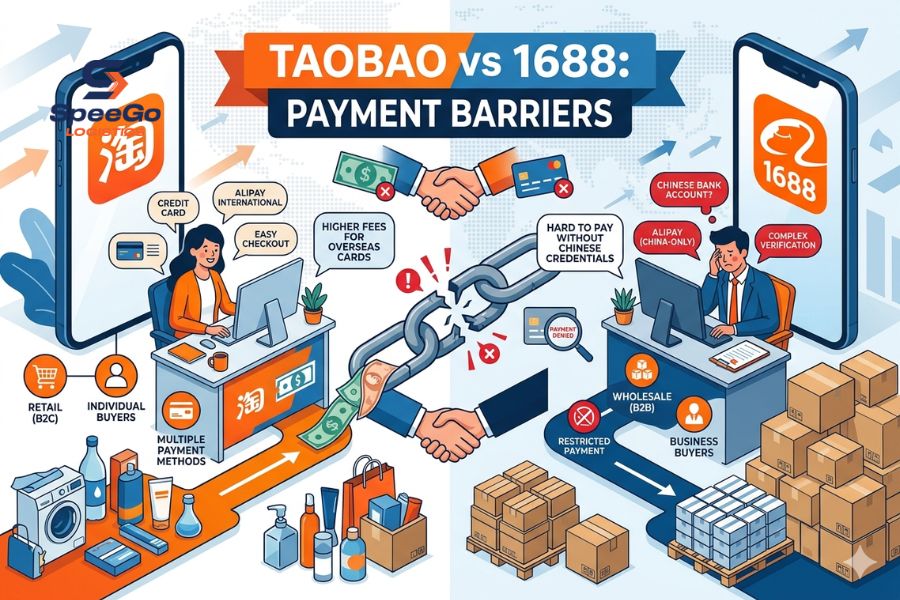
One of the first difficulties foreign buyers face is making payments successfully. Most transactions on Taobao and 1688 are processed through Ailpay, which is closely tied to the Chinese financial systems.
Common challenges:
- Difficulty verifying Alipay accounts without a Chinese bank account.
- Limited support for foreign credit cards on certain transactions.
- Payment rejections due to security checks or account restrictions.
Recommended solutions:
- Use sourcing agents or partners who can handle domestic payments.
- Work with suppliers that accept alternative payment methods.
- Prepare backup payment options to avoid delays.
3.2. Language Barrier
Both Taobao and 1688 operate almost entirely in Chinese, which creates a major challenge for non-Chinese speakers.
Key issues:
- Product descriptions are written in Chinese, increasing the risk of misunderstanding specifications
- Supplier communication (chat, negotiation…) requires Chinese language skills.
- Automatic translation tools may produce inaccurate or unclear meanings.
Miscommunication can lead to incorrect orders, quality issues, or disputes.
Practical solutions:
- Use translation tools cautiously and verify key details
- Work with bilingual sourcing agents or logistics partners
- Request images, videos, or samples to confirm product specifications
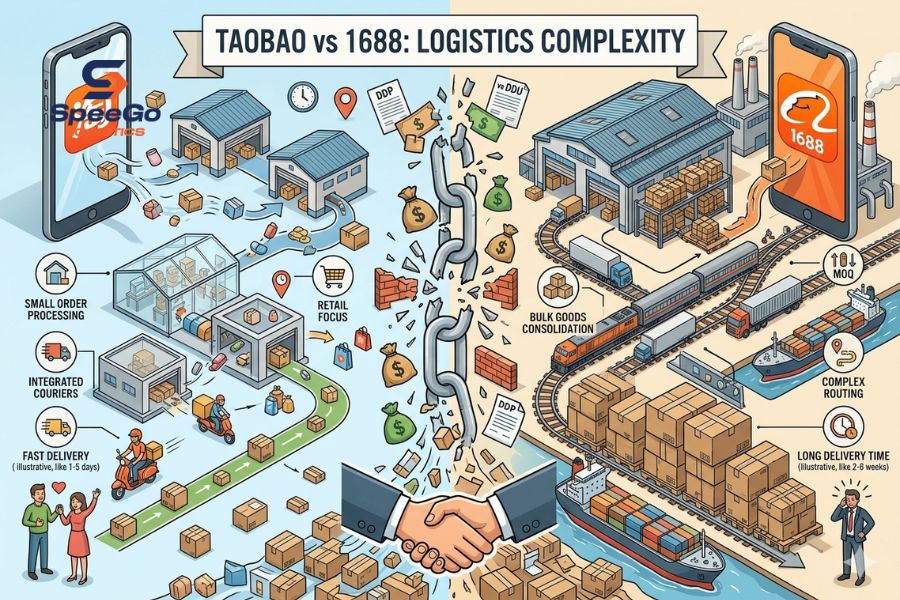
3.3. Logistics Complexity
Another major challenge is that both platforms are built for China’s domestic logistics network, not international shipping.
Common difficulties:
- Sellers typically ship only within China
- Buyers must arrange international shipping separately
- Multiple steps are required (seller, warehouse, international shipment, customs, final delivery)
Without proper coordination, this process can become confusing and time-consuming.
Recommended solutions:
- Use integrated logistics services like Cainiao for smoother consolidation
- Partner with experienced freight forwarders for international shipping
- Track shipments at each stage to avoid delays or lost packages
4. When Should You Use Taobao vs 1688?
Choosing between 1688 vs Taobao is not about which platform is better overall, it depends on your business stage, order volume, and sourcing goals. Each platform serves a different purpose, and using them strategically can improve both cost efficiency and operational flexibility.
4.1. When You Should Choose 1688
1688.com is the better option when your priority is cost efficiency and long-term scalability.
You should choose 1688 if you:
- Plan to order in bulk (typically 50 – 500+ units)
- Want lower unit prices through wholesale tiers
- Need customization or private labeling (OEM/ODM)
- Are building long-term relationships with manufacturers
- Aim to increase profit margins at scale
1688 is ideal for established businesses that have already validated their products and want to optimize costs while ensuring consistent supply.
4.2. When You Should Choose Taobao
Taobao is more suitable when you need flexibility and low-risk purchasing.
You should choose Taobao if you:
- Want to test new products before scaling
- Need small quantities with no or low MOQ
- Prefer faster and simpler ordering processes
- Are exploring market trends or niche items
- Need to source from multiple sellers quickly
Taobao works best for startups, small businesses, or companies in the product research phase.
5. Conclusion
Instead of choosing one over the other, successful businesses often combine both platforms to balance risk, cost, and growth. A clear strategy built around taobao vs 1688 will help you make smarter sourcing decisions and improve overall profitability.
SpeeGo Logistics specializes in sourcing products from China, helping you identify reliable suppliers on both Taobao and 1688, verify product quality, and negotiate better deals.