The global cosmetics industry has experienced rapid growth in recent years, driven by evolving consumer preferences, the expansion of e-commerce, and increasing demand for personalized beauty solutions. As a result, more entrepreneurs and retailers are choosing to establish their own cosmetic brands rather than solely distributing third-party products. Owning a brand allows businesses to control their market positioning, profit margins, and long-term development strategies.
However, at the early stage of brand development, companies often face a critical decision: whether to adopt a Private Label model or pursue Contract Manufacturing. Each approach offers distinct advantages and challenges. Private Label enables faster market entry with relatively lower upfront investment, whereas Contract Manufacturing provides the opportunity to develop proprietary formulations, albeit with higher costs and longer development timelines.
This article aims to provide a clear and structured comparison between these two manufacturing models. By examining their respective strengths and limitations, businesses can make an informed decision aligned with their financial capacity, branding goals, and long-term growth strategy.
1. What is Private Label Manufacturing?
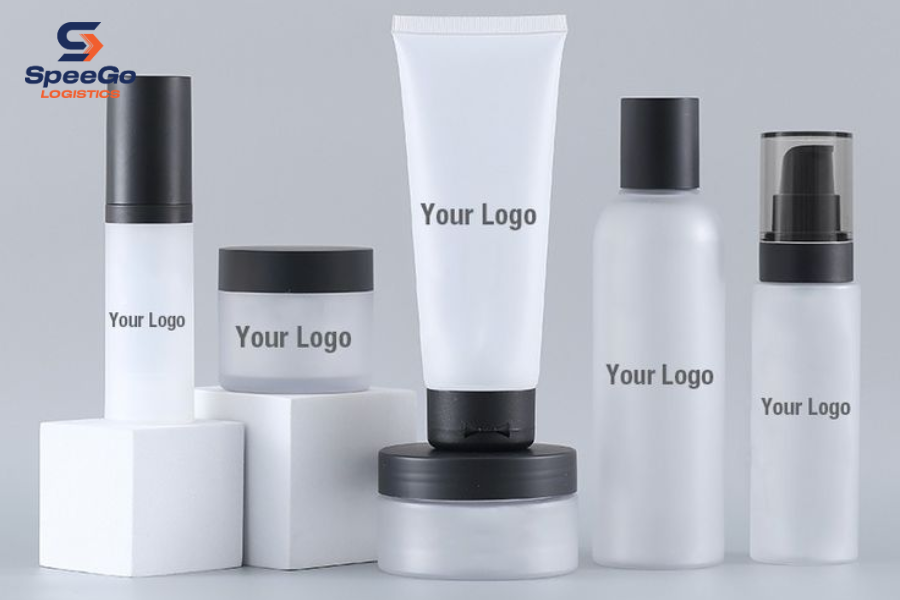
Private Label refers to a business model in which a company markets products that are manufactured using pre-developed formulations provided by a supplier. Instead of investing in research and development, the brand focuses primarily on packaging design, branding, and distribution.
In practice, manufacturers typically maintain a catalogue of ready-made products, including skincare creams, serums, shampoos, lipsticks, or foundations. A brand selects suitable items, customizes the packaging and visual identity, and launches them under its own name. For example, a newly established skincare brand may choose a ready-formulated vitamin C serum, redesign the bottle and outer box, and position it according to its target market segment.
In many cases, businesses choosing private label manufacturing often rely on sourcing from China, where large-scale factories provide ready-made cosmetic formulations and flexible packaging options at competitive costs. This model is particularly common in skincare, haircare, and basic makeup categories due to its efficiency and relatively low entry barriers.
2. What is Contract Manufacturing?
Contract Manufacturing refers to a production model in which a brand collaborates with a manufacturer to develop customized cosmetic formulations based on specific requirements. Unlike Private Label, where companies utilize pre-existing formulas, Contract Manufacturing enables brands to participate directly in product development, ingredient selection, testing, and refinement.
The fundamental distinction between these two models lies in the level of control and exclusivity. While Private Label emphasizes speed and cost efficiency, Contract Manufacturing prioritizes differentiation and long-term brand value. In this model, companies not only own the brand name but also gain greater control over product performance, texture, formulation integrity, and scientific positioning. For brands seeking higher quality control and customization, sourcing from Vietnam has become increasingly popular, as many manufacturers offer OEM and ODM capabilities with improving compliance standards and production flexibility.
This approach is commonly adopted by mid-range and premium brands seeking to establish a distinct identity rather than compete solely on packaging and marketing. For brands planning long-term cosmetics exports, the choice between Private Label and Contract Manufacturing becomes even more strategic, as product differentiation directly affects competitiveness in international markets.
3. Contract Manufacturing vs. Private Label
3.1. Speed to Market
Speed to market is a critical factor when planning a product launch or restocking inventory. The sooner a product reaches consumers, the earlier a brand can validate demand and begin recovering its investment. While both Private Label and Contract Manufacturing can support product development, they operate on significantly different timelines.
Typical Timeline
Private Label: The process begins with a finished base formula. Brands can immediately move into selecting packaging, shades, fragrances, and label design. If brand assets and design guidelines are already prepared, the transition from product selection to mass production can often be completed within a few weeks.
Contract Manufacturing: It involves developing or refining a formula in collaboration with the manufacturer. This stage includes laboratory work, sample production, evaluation, and final approval. Stability testing and scale-up planning follow, extending the overall lead time. As a result, the full process typically spans several months.
Main Time Drivers
Private Label: The timeline is largely influenced by how quickly decisions are made and how efficiently finalized design files are submitted. Late revisions to packaging or shade selection can delay the launch, even when the factory is technically ready to produce.
Contract Manufacturing: The primary time driver is the formulation process. Each modification may require an additional sampling round and further testing. Regulatory requirements in the target market also play a significant role, as additional safety assessments or claim substantiation tests may be necessary before distribution is permitted.
If the primary objective is to enter the market quickly and begin generating revenue, Private Label is generally better aligned with that goal. It provides a faster path to commercialization while allowing brands to maintain control over visual identity and positioning. However, if the aim is to launch a product based on a unique concept and a long-term brand strategy, Contract Manufacturing requires more time but offers deeper control and stronger differentiation.
3.2. Upfront Cost
Upfront cost refers to the investment required before the first production batch is shipped. It typically includes product setup, sample development, packaging selection, and any necessary laboratory testing. For businesses, this initial expenditure determines the financial risk of the launch and influences how quickly the brand can reach its break-even point.
Private Label and Contract Manufacturing distribute these early costs in fundamentally different ways, making it important to understand what the initial payment actually covers.
Cost Components
Private Label: Companies primarily pay for finished formulations, packaging options, and labeling. Since the product base already exists, most research and development expenses have been absorbed by the manufacturer. As a result, the upfront cost is generally more predictable and easier to manage.
Contract Manufacturing: It requires investment in formula development or refinement, laboratory sampling, testing, and production setup prior to mass manufacturing. These stages increase the initial cost, particularly when a brand requests a customized texture, shade, or specific product claims.
Brands that choose to import from Vietnam may experience slightly higher initial costs compared to mass private label production, but benefit from better control over formulation quality and long-term brand positioning.
Budget Flexibility
Private Label: This model allows businesses to begin with a smaller budget because R&D expenditure is not required at the outset. It also enables brands to test product concepts before committing significant financial resources.
Contract Manufacturing: The higher initial investment makes this model more suitable for businesses prepared to pursue a long-term development plan. Additional budget allocation may also be necessary for revisions if early samples do not meet expectations.
Private Label is generally the more cost-efficient route for launching an initial product. It reduces financial exposure during the early stage of brand development. Contract Manufacturing, while requiring greater upfront investment, supports brands that aim to build products aligned with their own strategic vision and long-term positioning.
3.4. Minimum Order Quantity (MOQ)
Minimum Order Quantity (MOQ) refers to the smallest number of units a manufacturer will produce in a single production run for your brand. It directly affects how much capital is tied up in inventory and how flexible your launch strategy can be. When testing a new market or introducing a new product, MOQ can determine whether the first order feels manageable or financially stressful.
In most cases, Private Label arrangements involve lower MOQs, whereas Contract Manufacturing typically requires larger production runs.
Typical MOQ Range
Private Label: MOQs are often lower because the manufacturer already produces the base formula in bulk. This allows businesses to begin with smaller quantities and expand their SKU range without facing significant stock pressure.
Contract Manufacturing: MOQs are generally higher because the factory must set up a dedicated production run for the brand’s specific formula. The batch size needs to be sufficient to justify setup time and raw material procurement.
In practice, businesses import from China often benefit from lower minimum order quantities in private label arrangements, while sourcing from Vietnam may involve slightly higher MOQs due to more customized production processes.
Impact on Inventory Risk
Private Label: Lower minimum quantities help brands minimize overstock while testing market demand. They also make it easier to refresh, adjust, or discontinue a product if sales performance falls below expectations.
Contract Manufacturing: Higher minimums mean holding more inventory upfront. As a result, a clear sales strategy is essential before committing to production. If demand shifts unexpectedly, excess stock may remain in storage longer than planned.
Private Label is well suited for businesses seeking to maintain light initial inventory and operational flexibility. Contract Manufacturing is more appropriate for brands with stable demand and sales projections capable of supporting larger production runs.
3.5. Formula Ownership and Exclusivity
Formula ownership refers to who controls the core recipe behind a product. Exclusivity concerns whether that same formulation can be supplied to other brands. These factors are particularly significant for companies seeking to align their products closely with their brand narrative and long-term strategic positioning.
Private Label and Contract Manufacturing provide markedly different levels of control in this regard.
Who Owns the Formula
Private Label: The manufacturer retains ownership of the base formula. The brand applies its own label to the product and may adjust certain surface-level elements such as fragrance, shade, or packaging. However, the fundamental formulation remains shared.
Contract Manufacturing: The formula can be developed specifically for the brand or supplied by the brand itself. Depending on the contractual agreement, the company may hold full ownership, granting control over ingredient selection and future modifications.
The Allure of Exclusive Products
Private Label: Because the base formula is shared, similar products may be offered by multiple brands. Differentiation is therefore achieved primarily through branding, packaging, and market positioning rather than through the formulation itself.
Contract Manufacturing: A customized formula can be contractually restricted to a single brand. This level of exclusivity makes it easier to establish a distinctive product identity that competitors cannot easily replicate.
3.6. Quality Control and Risk
Quality control refers to the processes used to ensure that every production batch remains consistent in appearance, texture, and performance. Risk encompasses potential issues that may arise during manufacturing, storage, or distribution. For a commercial brand, both factors directly influence reputation and the financial cost of resolving problems later.
Private Label and Contract Manufacturing approach control and risk in structurally different ways, making it essential to understand their respective vulnerabilities before making a decision.
Control Over Production
Private Label: The manufacturer follows standardized procedures already applied across multiple brands. This consistency supports stable large-scale production. The brand’s role is primarily to approve samples and packaging before the production run.
Contract Manufacturing: Production is based on the brand’s specific formula and performance targets. This allows greater involvement in raw material selection and technical specifications. While this additional control enhances flexibility, it also introduces more checkpoints that must be carefully managed by the brand’s team.
Common Risk Areas
Private Label: The primary limitation lies in restricted control over the base formula. Because the formulation is shared, it may not fully align with every market requirement. If changes beyond minor adjustments are needed, the brand may encounter structural constraints.
Contract Manufacturing: Risk frequently emerges during scale-up. A laboratory-approved sample must perform identically in large-batch production. If variations occur during this transition, additional adjustments may be required before the batch meets target specifications.
4. How to Start Your Cosmetics Brand with SpeeGo Logistics?
After selecting the appropriate production model, whether Private Label for speed and lower upfront investment, or Contract Manufacturing for deeper customization, then the next critical step is building a reliable logistics strategy. A cosmetics brand does not succeed based on formulation alone: Operational stability, timely material sourcing, safe international transportation, and cost control are equally essential. This is where SpeeGo Logistics becomes a strategic partner.
4.1. Plan Logistics Alongside Production
Logistics planning should begin as soon as your production model and launch timeline are defined. SpeeGo supports brands by:
- Advising on optimal shipping routes (China-US, Vietnam-US, and other markets)
- Recommending suitable transport modes (air freight, sea freight, express)
- Forecasting transit times, including peak-season variations
This proactive planning helps prevent costly delays after production is completed.
4.2. Managing Cost and Transportation Risk
Cosmetic products often involve specific requirements related to:
- Storage conditions
- Customs documentation
- Export and import compliance
SpeeGo assists in preparing documentation and identifying potential risks in advance, helping brands reduce unexpected logistics expenses. Import cosmetics from China and Vietnam often involve specific regulatory documentation depending on the destination market, making professional logistics coordination critical for smooth customs clearance.
4.3. Supporting International Expansion
Once sales become stable, the focus shifts from launching to scaling. SpeeGo can assist with:
- Small-batch shipments for market testing
- FBA shipments to Amazon warehouses
- Consolidating goods from multiple factories into one export point
This is particularly valuable for cosmetics brands selling through Amazon, Shopify, or multi-channel distribution networks. As cosmetics exports scale, shipment frequency and inventory turnover increase, requiring a more structured logistics framework.
4.4. Building a Scalable System from Day One
Long-term success in the cosmetics industry requires more than product differentiation. It demands a coordinated system where production and logistics are aligned from the outset. With structured planning, brands can:
- Improve cash flow management
- Reduce inventory risk
- Maintain delivery timelines
- Expand product lines more efficiently
If you are evaluating different sourcing options, you may also explore our detailed guides on sourcing from Vietnam and China to better understand supplier capabilities and logistics planning.
Start your import journey with expert support, submit your request here.