
Many businesses focus on product samples when sourcing handicrafts, but overlook a critical factor behind consistent quality: the handicrafts tools used in production. In reality, the same design can lead to very different outcomes depending on how materials are cut, shaped, and finished at the workshop level.
This guide breaks down the top handicrafts tools every supplier should have, helping you understand how production tools impact quality, scalability, and long-term sourcing decisions.
1. Basic Craft Tools Kit Every Supplier Should Have
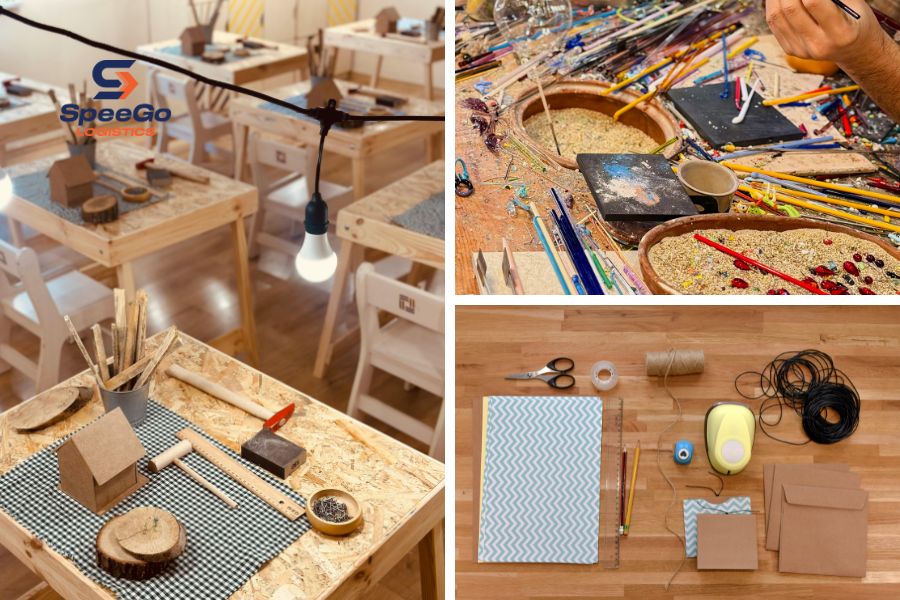
A well-structured craft tools kit is more than a collection of basic equipment. It reflects how organised and consistent a supplier’s production process is. For businesses sourcing handicrafts in Vietnam, reviewing the tools in handicrafts at the workshop level is a practical way to assess whether a supplier can maintain stable quality across orders. A reliable craft tools kit typically covers three main stages of production: cutting, shaping, and finishing. Each stage requires specific tools to ensure both precision and efficiency.
1.1. Cutting Process
At this stage, craft cutting tools play a critical role in ensuring material consistency before moving into shaping and assembly. The cutting stage is the starting point of all handicraft production. At this stage, materials used in crafts such as wood, bamboo, rattan, or fabric are trimmed and sized into usable components.
This process requires precision and consistency, as even small deviations can affect the entire production flow. For example, uneven cutting in bamboo strips may lead to irregular weaving patterns later on.
Common tools used:
- Hand saws for wood and bamboo
- Utility knives for flexible materials
- Craft scissors for textiles and fibers
1.2. Shaping Process
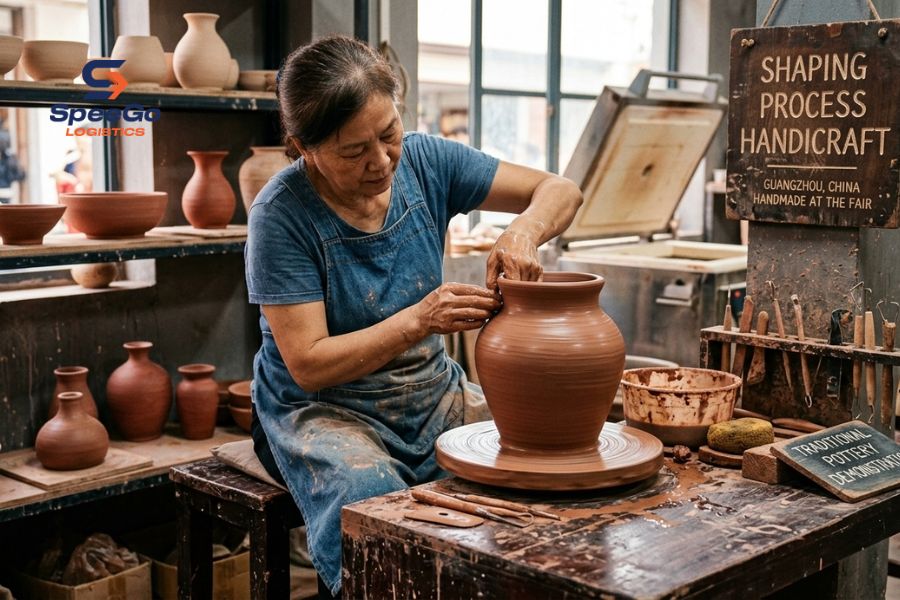
Once materials are prepared, the shaping stage defines the structure and form of the product. This is where craftsmanship becomes more visible, as artisans begin assembling, carving, or weaving components. Unlike cutting, shaping requires both technical skill and process control. The same material can produce very different results depending on how it is handled.
Common tools used:
- Chisels for carving wood details
- Hammers or mallets for assembly
- Hand drills for joints and connections
Inconsistent shaping is one of the main causes of structural defects in handicraft products Vietnam, especially in furniture and woven goods. The effectiveness of each handicraft tool in this stage directly impacts the structural integrity and final appearance of the product.
1.3. Finishing Process
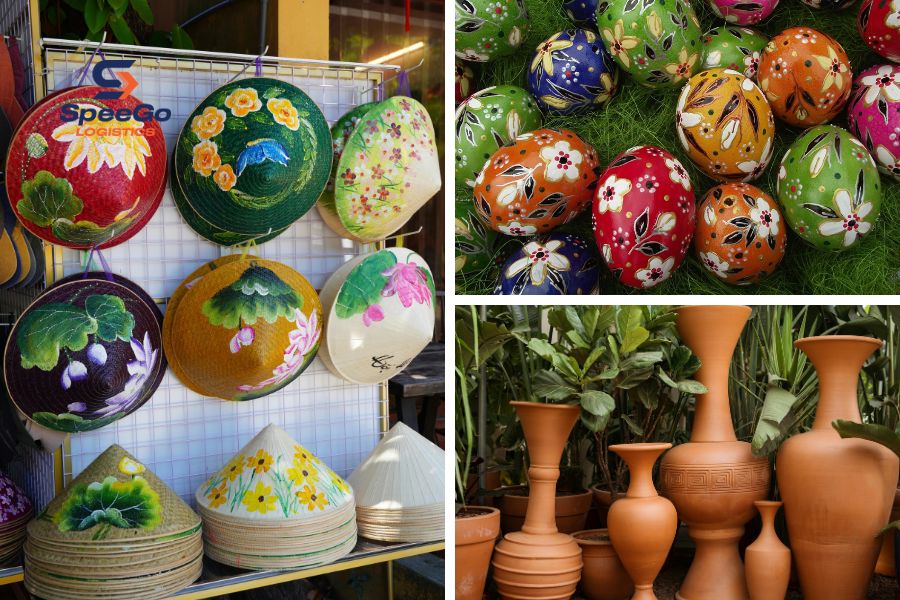
The finishing stage is the final step before a product is ready for market. It focuses on refining the surface, improving aesthetics, and ensuring the product meets quality expectations. This process often determines perceived value, especially for export markets where buyers expect smooth surfaces and consistent coatings.
Best tools used:
- Sandpaper or sanding machines for smoothing
- Polishing cloths or brushes
- Coating tools for paint, oil, or lacquer application
Poor finishing is one of the easiest defects to detect and one of the most common reasons for rejected shipments.
2. Top 13 Handicrafts Tools for Production and DIY Use
A standard craft tools kit is not defined by complexity, but by how well each tool supports precision, repeatability, and material handling. Whether working with wood, bamboo, ceramics, or fibers, most workshops rely on a combination of craft cutting tools, shaping tools, and finishing tools to maintain consistent output.
2.1. Cutting Tools
2.1.1. Heavy-Duty Hot Knife
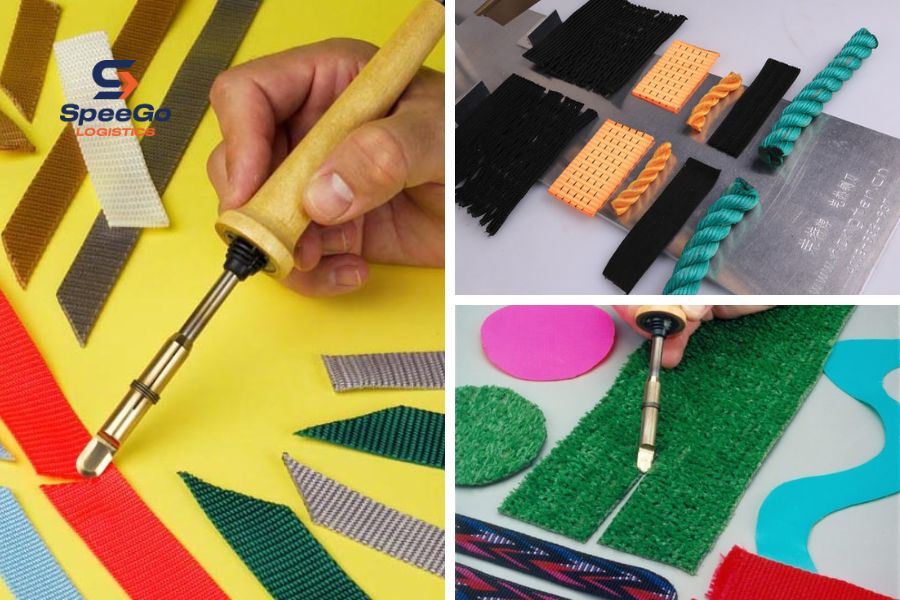
A heavy-duty hot knife is a specialised craft cutting tool designed to cut and seal synthetic or semi-synthetic materials using heat. Instead of slicing mechanically like a standard utility knife, this tool uses a heated blade to melt through materials, which helps prevent fraying and ensures clean edges.
In handicraft production, especially when working with materials such as synthetic rattan (PE rattan), nylon ropes, or coated fabrics, a hot knife provides higher precision and better finishing quality compared to traditional cutting tools.
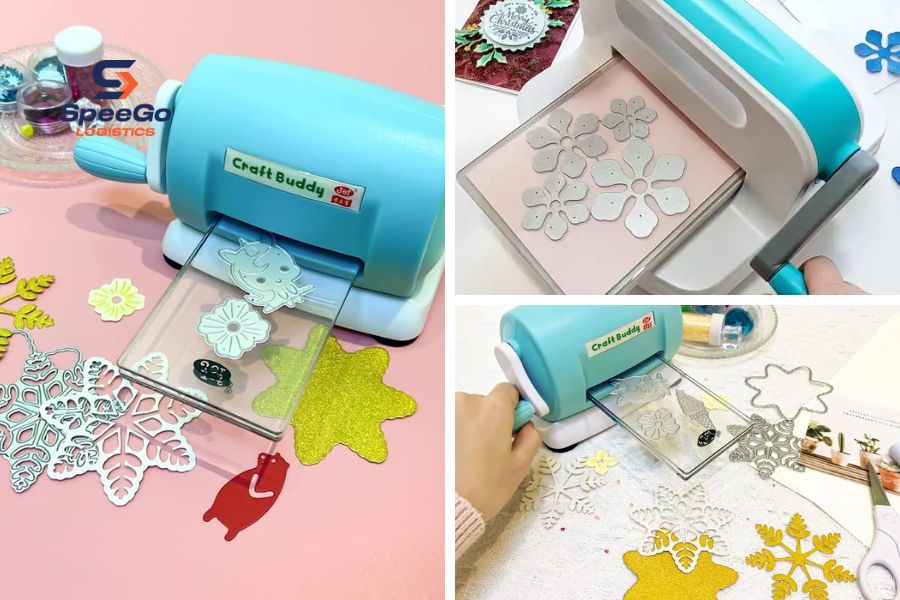
2.1.2. Cutting Machine
A cutting machine refers to mechanical or semi-automatic equipment used to process materials with higher speed and consistency. Unlike manual tools, cutting machines are typically applied when production volume increases or when precision must be standardised across batches.
Depending on the material, this can include wood cutting machines, fabric cutting machines, or CNC-assisted tools. While still part of tools in handicrafts, these machines support artisans rather than replace them.
Suitable materials: solid wood (acacia, pine, rubberwood), engineered wood (MDF, plywood), fabric and leather (with specialised blades).
Cutting machines provide consistent dimensions and are suitable for bulk processing, especially when working with rigid or large materials.
2.1.3. Guillotine Paper Cutter
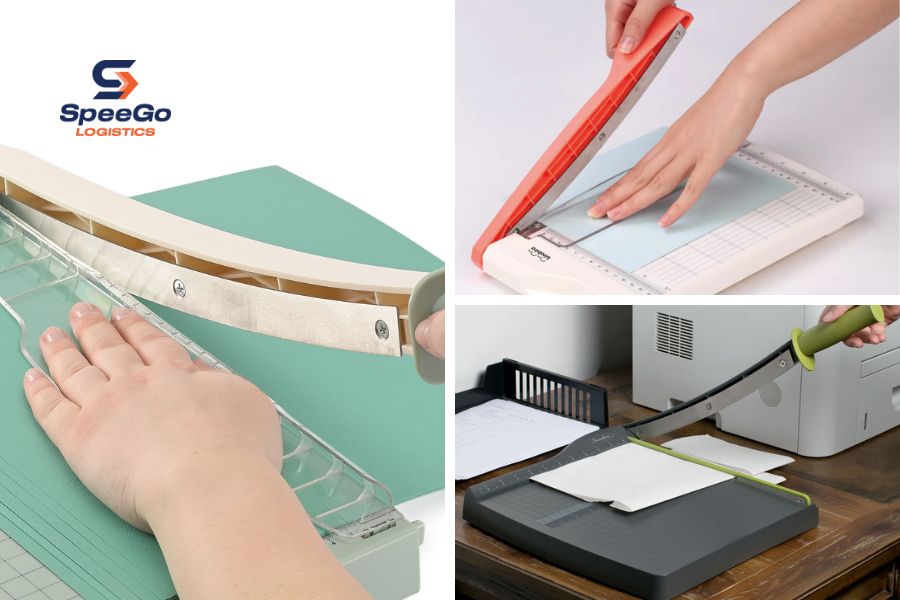
A guillotine paper cutter is a precision cutting tool designed for flat materials such as paper, cardboard, or thin sheets. It uses a straight, downward blade to create clean, accurate cuts in a single motion. In handicrafts, this tool is commonly used in packaging, paper crafts, and products involving layered materials. It helps maintain uniform sizing, which is important for retail-ready items.
Best materials: paper, cardboard, thin plastic sheets, veneer sheets (thin wood layers).
The straight blade ensures clean, uniform cuts across flat materials, which is important for packaging and layered products.
2.1.4. Hobby Knife
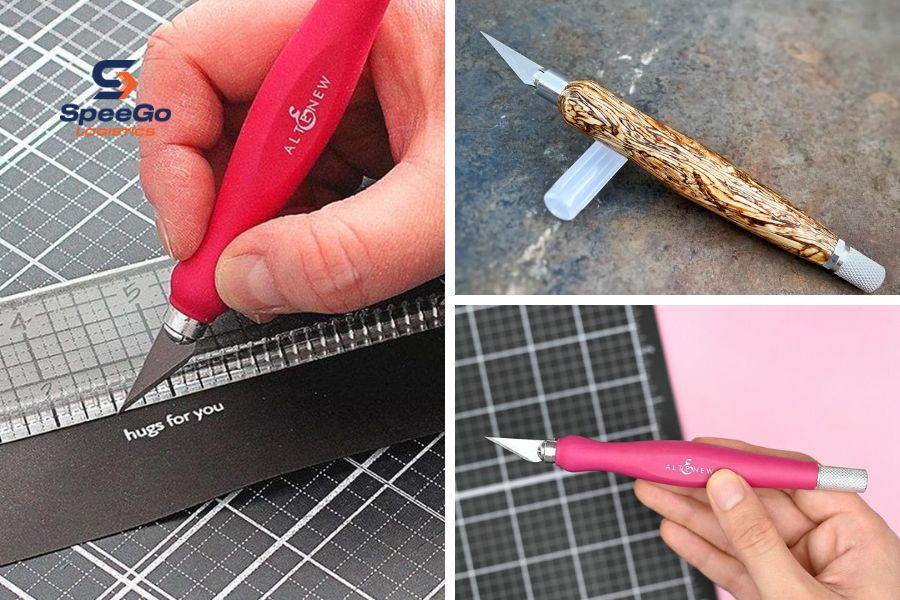
A hobby knife is a lightweight and highly precise cutting tool used for detailed work. It is typically used in craft diy tools setups where fine control is required. Unlike larger cutting tools, a hobby knife allows artisans to work on small areas, intricate shapes, or delicate materials without damaging surrounding parts. This makes it one of the most commonly used tools in craft diy tools setups, especially for detailed and small-scale production.
Best materials: paper, foam, thin wood, soft plastic sheets and leather (thin layers).
2.1.5. Craft Knife
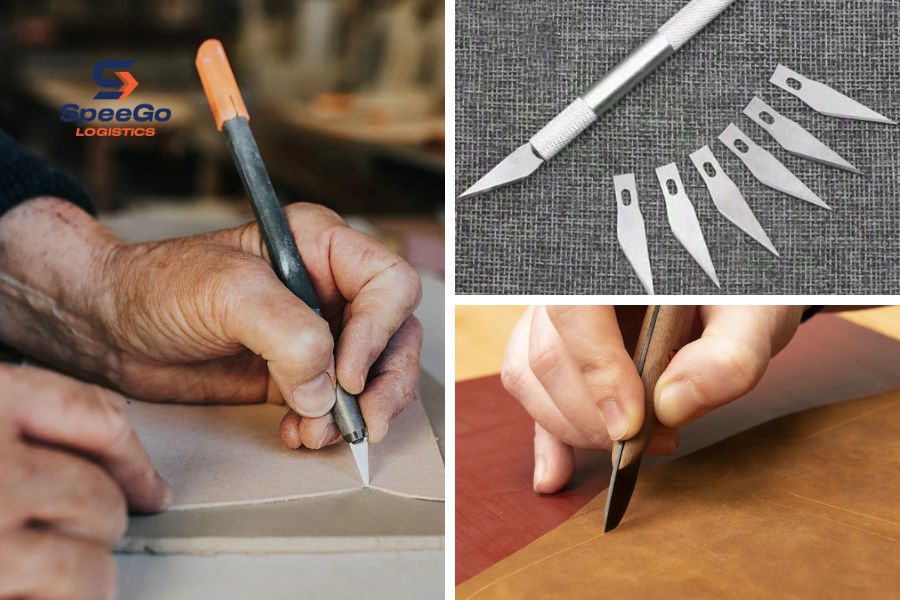
A craft knife is a general-purpose cutting tool widely used across different handicraft materials. It offers a balance between strength and control, making it suitable for both rough and semi-precise cutting tasks. Compared to a hobby knife, a craft knife is more robust and can handle thicker materials, making it a core item in any basic handicraft tools set.
Suitable materials: cardboard, thick paper, leather, rubber sheets and natural fibers (bamboo strips, rattan).
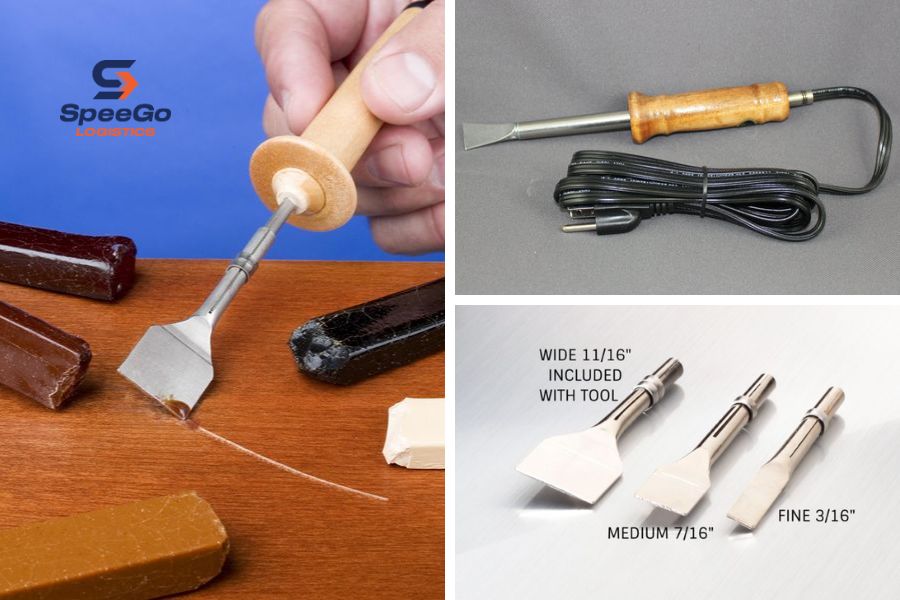
2.1.6. Lacquer Burn-In Knife
A lacquer burn-in knife is a specialised tool used in lacquerware production. It is designed to repair, fill, or refine lacquer surfaces by applying heat to soften materials and blend imperfections. This tool is not used for cutting raw materials, but rather for correcting surface defects, which is a critical step in high-quality finishing processes.
Best materials: lacquer surfaces, resin-based coatings and composite decorative surfaces.
2.2. Shaping Process
Shaping tools are used after the cutting stage to define the form, structure, and assembly of a product. In handicraft production, this stage has the strongest impact on durability and design accuracy. The choice of tools for handicrafts here depends heavily on the material and product type.
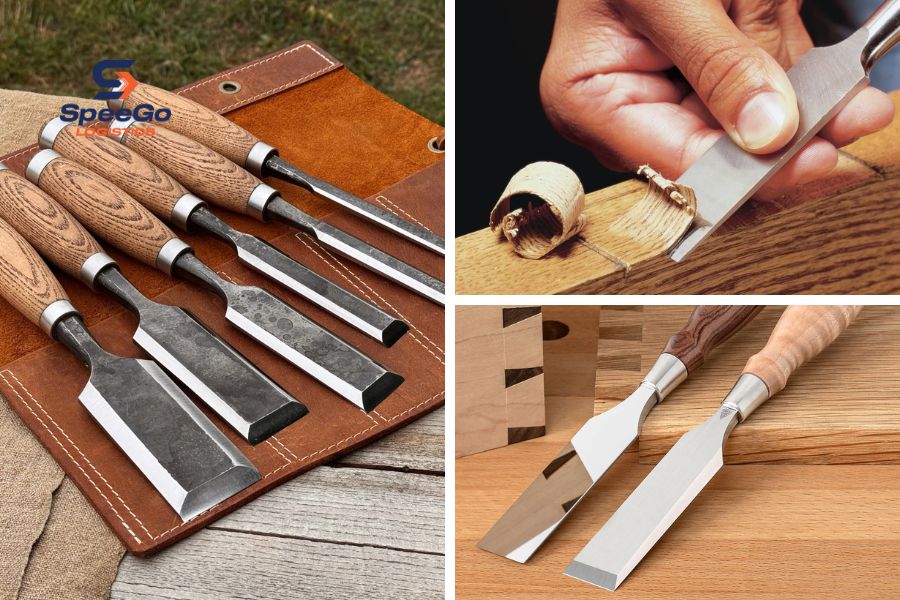
2.2.1. Chisel (Wood Chisel)
A chisel is a precision hand tool with a hardened steel blade, specifically designed to remove layers of material through controlled force. In handicraft production, chisels are not only used for carving decorative details but also for creating structural joints such as mortise and tenon. The effectiveness of a chisel depends heavily on the user’s control, blade sharpness, and the angle of application. Unlike cutting tools, which separate material, chisels shape and refine surfaces by gradually removing small portions.
Suitable materials: solid wood (acacia, oak, rubberwood) and thick bamboo.
2.2.2. Mallet / Hammer
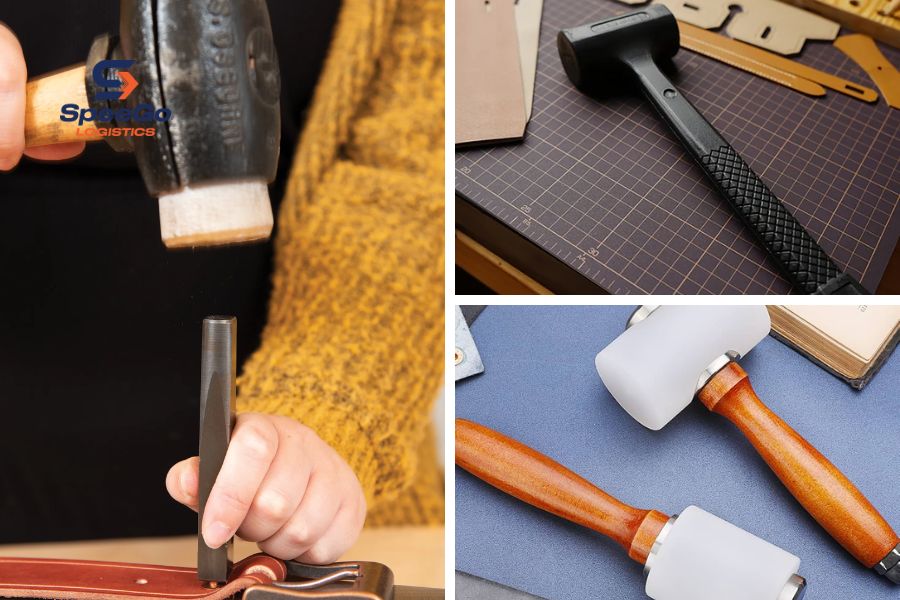
A mallet or hammer is a force-application tool used to drive, fit, or adjust components during shaping and assembly. These tools are often made of wood or rubber to distribute impact evenly and prevent surface damage.
Best materials: wood structures, bamboo frames.
2.2.3. Hand Drill / Power Drill
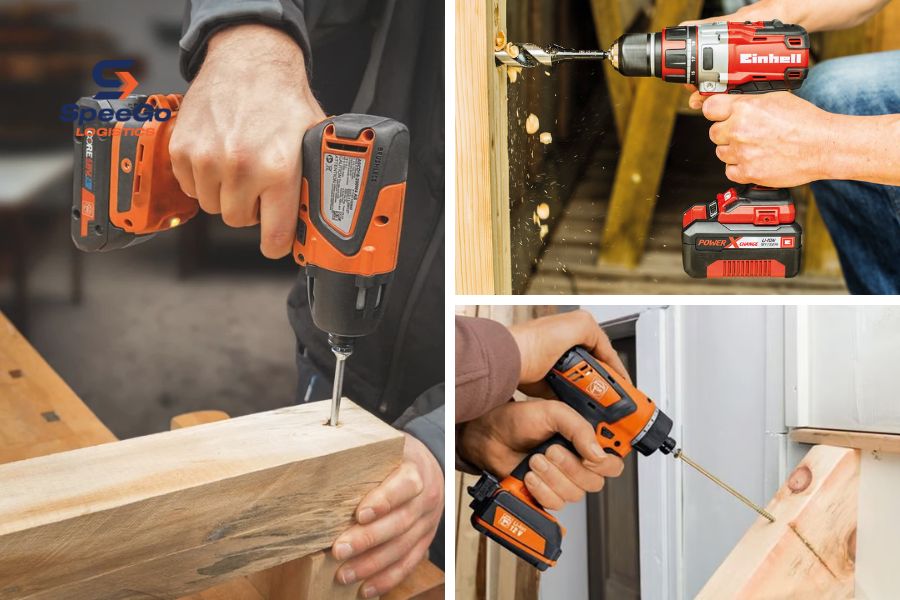
A drill is a rotary tool used to create precise holes in materials, enabling mechanical connections such as screws, dowels, or fasteners. In shaping processes, drilling is essential for preparing connection points that ensure structural stability. The difference between manual and powered drills lies in efficiency and consistency, but both rely on correct positioning and control to avoid misalignment.
Suitable for: wood, bamboo, Metal connectors and Composite materials.
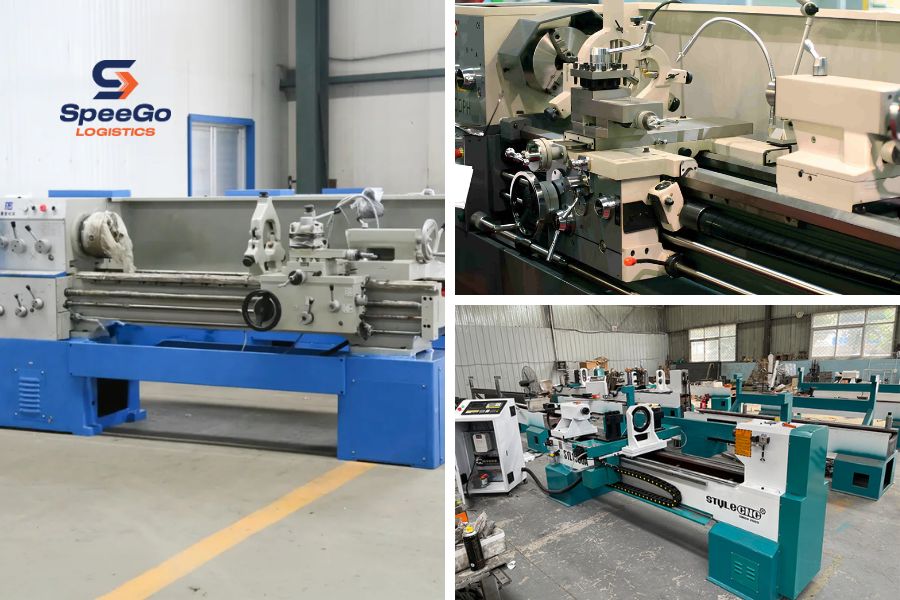
2.2.4. Lathe Machine
A lathe is a shaping machine that rotates a workpiece while cutting tools are applied to remove material symmetrically. This process allows artisans to produce round or cylindrical forms with high consistency. In handicraft production, lathes are often semi-manual, meaning the artisan still controls the shaping process while the machine provides rotational stability.
Best for: solid wood, bamboo, silk.
2.2.5. Weaving Frame
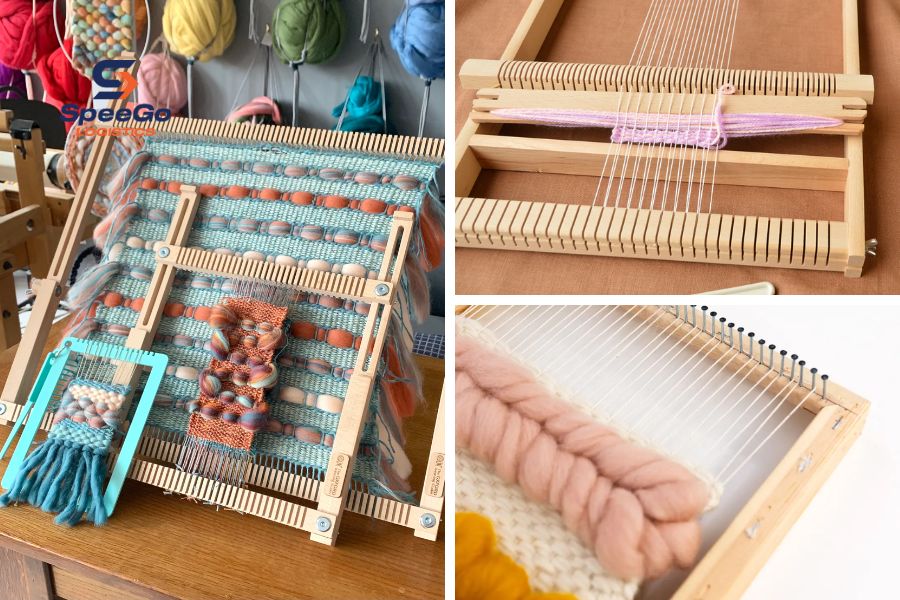
A weaving frame or loom is a structural tool that holds flexible materials under tension while they are interlaced into patterns. This tool ensures uniform spacing, alignment, and pattern consistency. Without proper tension control, woven products can become loose, uneven, or structurally weak. For woven products, these tools for handicrafts ensure consistency in pattern and tension, which is critical for export quality standards.
Suitable materials: rattan, seagrass, water hyacinth and natural fibers.
2.3. Finishing Process
Unlike cutting or shaping, this stage is less about structure and more about surface control and consistency, which is critical for buyers evaluating handicraft products.
2.3.1. Sandpaper / Sanding Machine
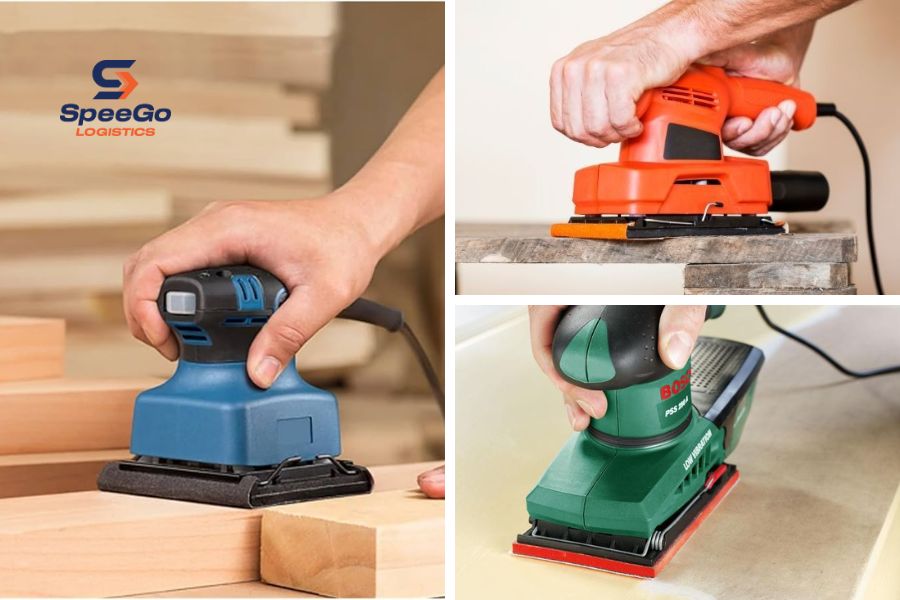
Sandpaper and sanding machines are handicrafts tools used to smooth surfaces by gradually removing small layers of material. Manual sanding allows for detailed control, while machines improve speed and consistency in larger production runs. The process typically involves multiple grit levels, starting from coarse (for rough shaping) to fine (for final smoothing).
Suitable for: solid wood (acacia, pine, rubberwood), bamboo and rattan (after shaping).
2.3.2. Polishing Cloth / Buffing Wheel
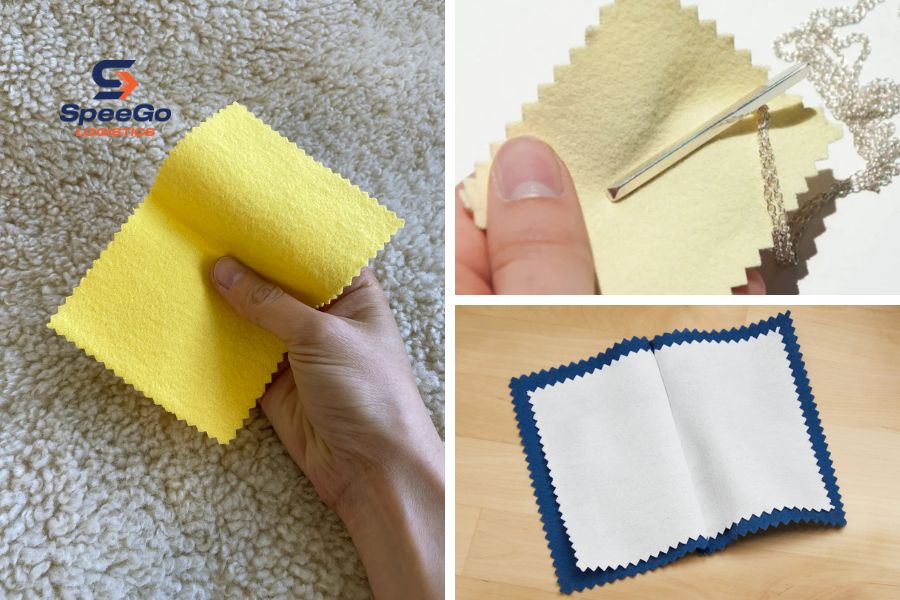
Polishing tools are designed to enhance surface smoothness and create a refined finish. A polishing cloth is typically used manually, while buffing wheels (machine-assisted) increase efficiency and consistency. These tools work by applying friction to improve surface shine and remove minor imperfections.
Best materials: lacquered wood, metal components, resin or coated surfaces
Choosing the right handicrafts tools for each production stage is key to maintaining consistency and scalability. For businesses sourcing from Vietnam, understanding how tools for handicrafts are used in real production environments can significantly reduce quality risks.