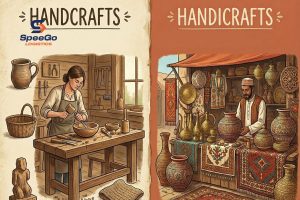
Handmade or handcrafted are often used loosely, yet they can reflect very different production methods. One may involve individual work with natural variation, while the other follows a more structured process with tighter control over finishing and consistency.
This guide breaks down the difference between handmade or handcrafted from a practical sourcing perspective so you can make clearer decisions, communicate more effectively with suppliers, and avoid costly mistakes.
The main difference between handcrafted or handmade is how the product is made and controlled. Handmade emphasizes manual production with natural variation, while handcrafted involves skilled processes with greater consistency and refined finishing.
1. What Does “Handmade” Really Mean?
The term handmade is often broader than many buyers expect. It generally indicates that human labor plays a central role in shaping the product, but it does not necessarily mean that every step is done entirely by hand.
Example:
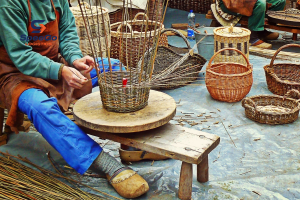
A handwoven seagrass basket may be shaped and finished entirely by hand using simple tools. While the overall size and structure follow a general standard, slight variations in weaving pattern, color tone, or edge finishing can occur from one piece to another.
One important aspect of handmade production is natural variation. Since products depend on human input, slight differences in size, color, or finishing are expected. These variations are not usually considered defects, as long as they fall within agreed tolerances. However, for buyers, this also means that relying on a single sample can be misleading. What you see in one unit may not fully represent the entire batch.
2. What Does “Handcrafted” Actually Imply?
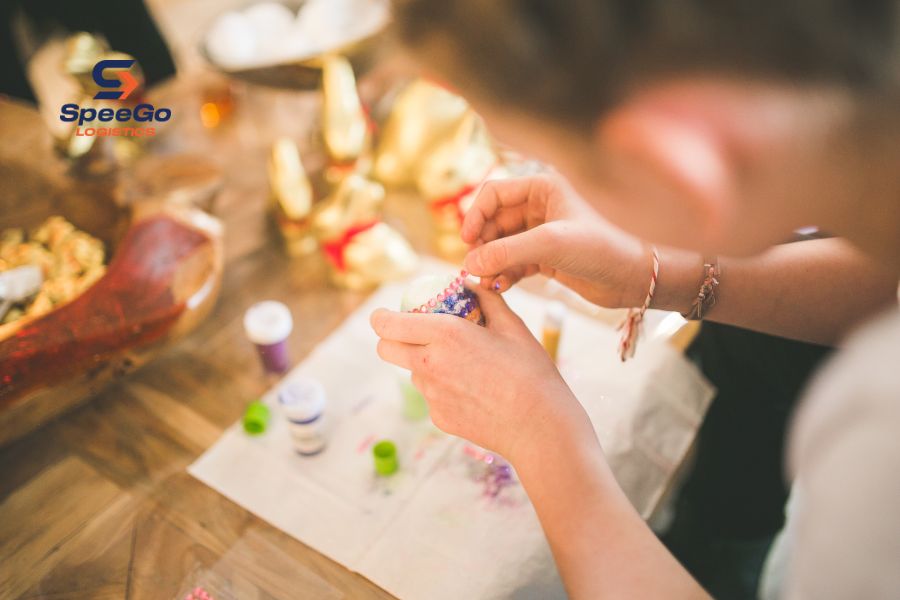
The term handcrafted goes beyond the idea of simply making something by hand. It reflects a combination of skilled manual work, controlled processes, and deliberate finishing standards. The focus is not just on human involvement, but on how expertise is applied at each stage to achieve a refined result.
Examples:
A handcrafted wooden table may involve machine-assisted cutting for accuracy, but key stages such as edge finishing, surface sanding, and final coating are handled by skilled workers. Each step follows a defined process to ensure consistent dimensions, smooth surfaces, and uniform color across multiple units.
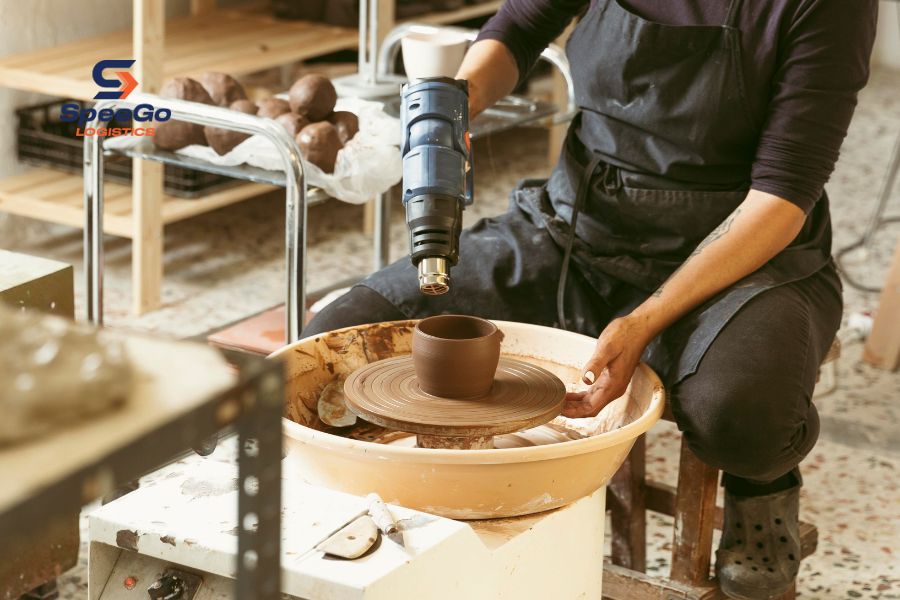
Artisans may rely on equipment such as lathes, cutting tools, or sanding machines to enhance precision and durability. The key difference lies in control: tools support the process, while decisions remain in the hands of experienced workers. From material selection to the final surface treatment, each step is guided by human judgment rather than automated systems.
3. Key Differences Between Handcrafted or Handmade
To clearly distinguish between handcrafted or handmade, it is important to look beyond definitions and focus on how each approach affects production, quality, and scalability. While both methods involve human input, the degree of process control, consistency, and finishing quality can vary considerably depending on the manufacturing approach used.
3.1. Production Process
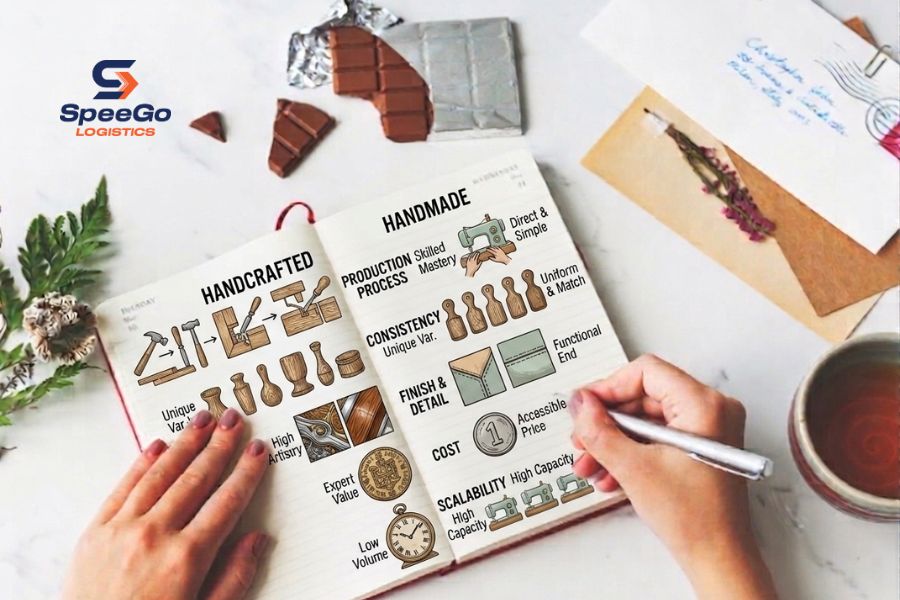
In handmade production, the focus is on manual involvement across most steps. However, processes are often simplified to maintain efficiency. In contrast, handcrafted production involves intentional process control, where each stage is executed with a higher level of precision. Tools may be used, but only to support the artisan, not replace them.
3.2. Consistency Across Orders
Variation is a natural outcome of handmade production. While this can add uniqueness, it may create challenges for buyers who require uniformity. Handcrafted products, on the other hand, tend to show tighter control over dimensions, color, and finishing, especially when experienced workers handle critical steps.
3.3. Level of Finish and Detail
This is frequently the most noticeable distinction. Handmade items may meet functional requirements but show minor inconsistencies in edges, coating, or texture. Handcrafted products typically undergo additional refinement stages, resulting in smoother surfaces and more polished details.
3.4. Cost Implications
Pricing reflects both labor intensity and skill level. Handcraft products are usually more cost-efficient, making them suitable for mid-range or volume-driven segments. Handmade items require more time and expertise, which increases unit cost but also enhances perceived value.
3.5. Scalability and Production Capacity
Handmade production is often associated with individual craftsmanship, where a single artisan may complete most or all stages of the product. This approach may be effective for small batches or niche products; however, scaling up becomes challenging when production largely depends on the capacity and pace of a single individual.
In contrast, handcrafted production is usually more structured and collaborative. Different stages such as cutting, shaping, assembling, and finishing may be handled by multiple workers, each specialising in a specific task. While the product still involves manual work, certain steps can be supported by machines or simple digital tools to improve speed and accuracy.
4. Which One Should You Choose Between Handcrafted or Handmade?
Selecting between handcrafted or handmade products is not about choosing a “better” option. The optimal choice depends on your product positioning, target customer demographics, and your long-term business scaling strategy.
4.1. When You Should Choose “Handcrafted”
You should consider handcrafted products when your focus is on quality, consistency, and premium positioning. This approach works well if your brand targets design-conscious customers or higher-end markets where finishing details and product presentation matter.
Handcrafted production typically involves more structured workflows, skilled labor, and controlled processes, which results in a more refined and consistent output. Although costs are higher and lead times may be longer, this option enables you to strengthen brand value and justify premium pricing in competitive markets.
Choose this if you need:
- High-end finishing with consistent quality across batches
- Strong brand positioning in premium or design-led segments
- Better control over product details and presentation
- Products that can command higher margins
4.2. When You Should Choose “Handmade”
Handmade products are a better fit when your priority is cost efficiency and production flexibility. This option is suitable for mid-range product lines, seasonal collections, or businesses testing new designs with smaller budgets.
Because handmade production relies more on manual labor and simpler processes, it can adapt more quickly to changes in order volume. However, variation between units is more common, so it is important to define acceptable quality standards and monitor production closely to avoid inconsistencies.
This works well when you want to:
- Competitive pricing for cost-sensitive markets
- Flexible production for small to medium order volumes
- Faster adjustments in design or quantity
- Unique, slightly varied products with artisanal character
5. Conclusion
Understanding the difference between handcrafted or handmade is only useful if you can apply it to real sourcing decisions. At SpeeGo Logistics, we help businesses go beyond product descriptions by verifying suppliers, reviewing production processes, and ensuring consistency from sample to shipment.
If you want to avoid costly mistakes and work with the right manufacturers from the start:
Contact our team today to get a sourcing solution tailored to your product and market.