
Import furniture is a common strategy for businesses looking to source high-quality products at competitive prices. Many companies choose to import furniture from China and Vietnam due to their strong manufacturing capabilities and cost advantages.
Import furniture involves sourcing products from manufacturing countries such as China or Vietnam and managing international shipping, packaging, and customs clearance.
To import furniture successfully, businesses must:
- Choose reliable suppliers with export experience.
- Use proper packaging to prevent damage during transit.
- Optimize container space to reduce shipping costs.
- Prepare customs documentation for each destination market.
- Comply with regulations in countries such as Canada, the USA, and Australia.
This guide explains how to import furniture efficiently, including packaging methods, shipping strategies, and cost management tips for international markets such as Canada, the USA, and Australia.
1. How to Pack Furniture When You Import Furniture Internationally?
Furniture shipments typically pass through multiple stages, including warehouse handling, container loading, ocean or air transportation, and final delivery. Each stage exposes the cargo to potential risks such as vibration, compression, humidity, and accidental impact. For bulky and high-value items like furniture, protective packaging is therefore a critical part of supply chain risk management. Proper packaging is particularly important for companies that import furniture from China or Vietnam, where products often travel long distances before reaching international markets.
1.1. Why Proper Furniture Packaging Is Important?
Furniture products are often large, heavy, and constructed from materials that are sensitive to environmental conditions. Wood, glass, upholstery fabrics, and decorative surfaces can all be damaged if they are not adequately protected during shipping. By using appropriate packaging methods, exporters and importers can reduce financial losses, maintain product quality, and ensure that goods arrive in sellable condition.
1.2. Standard Furniture Packaging Materials
A variety of protective materials are commonly used to secure furniture during international transportation. The selection of materials typically depends on the size, fragility, and value of the furniture being shipped.
- Corrugated cartons: Heavy-duty corrugated cardboard cartons are widely used for smaller furniture items. Multi-layer corrugated boards provide structural strength and help protect items from pressure when packages are stacked during transport
- Wooden crates: For large, heavy, or high-value furniture pieces, wooden crates offer stronger structural protection than standard cartons. Crates help stabilize cargo and protect it from compression, impact, and rough handling during loading and unloading operations.
- Bubble wrap and foam padding: Cushioning materials such as bubble wrap, polyethylene foam, and foam sheets are commonly used to absorb shocks and reduce vibration. These materials are especially important for protecting delicate surfaces such as polished wood, glass, or lacquer finishes.
- Corner protectors: The edges and corners of furniture are particularly vulnerable to damage during transportation. Protective corner guards made from plastic, foam, or reinforced cardboard help prevent dents, chips, and scratches when items are stacked or moved.
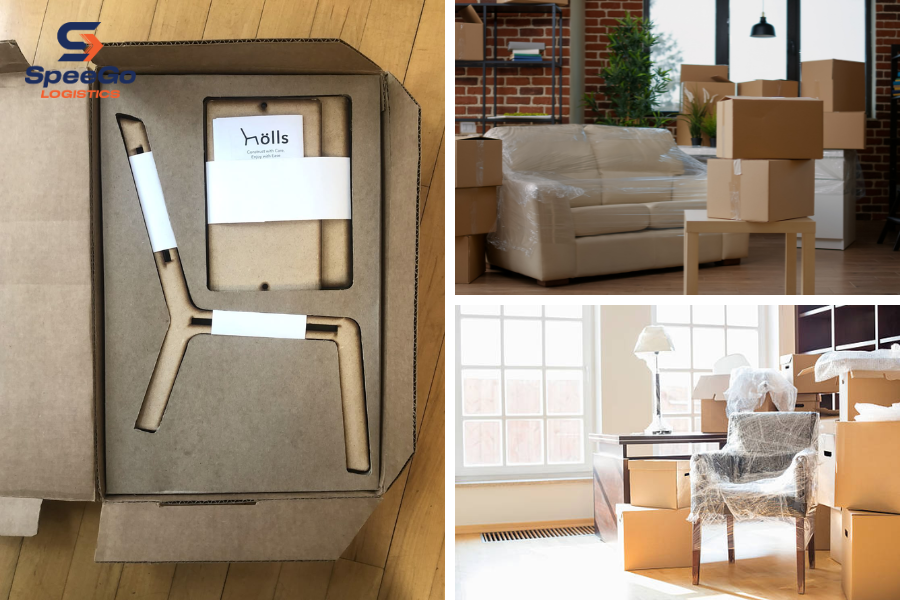
1.3. Special Packaging for Fragile or High-Value Furniture
Certain types of furniture require additional protection due to their fragility or high commercial value. In these cases, reinforced packaging methods are necessary to minimize risks during transportation.
- Glass components: They are typically wrapped in multiple layers of protective film and foam padding before being placed in reinforced cartons or wooden crates. In some cases, glass elements are packed separately to reduce the risk of breakage.
- Marble or stone tables: Furniture made from marble or natural stone is extremely heavy and sensitive to sudden impacts. These items are usually stabilized with thick foam padding and secured within reinforced wooden crates to prevent movement during transit.
- Luxury furniture items: High-end furniture often features delicate finishes, premium upholstery, or decorative carvings that are vulnerable to scratches and environmental exposure. Protective covers, anti-scratch films, and moisture-resistant wrapping materials are commonly used to maintain product quality throughout the shipping process.
For businesses that import furniture, packaging is not just a protective measure. It directly affects shipping cost, damage rate, and customer satisfaction. Poor packaging can result in returns, replacements, and additional logistics expenses.
In real operations, one of the most common issues when shipping furniture is surface damage caused by insufficient internal padding. Even when outer packaging appears intact, internal movement during transit can lead to scratches or cracks, especially for high-value items.
2. How to Reduce Costs When You Import Furniture?
When you import furniture from China or Vietnam, controlling logistics costs is essential to maintain profitability. Furniture shipping often involves higher logistics expenses than many other product categories due to the bulky size and heavy weight of the cargo. International transportation costs typically depend on shipment volume (CBM), container utilization, transport distance, and handling requirements.
2.1. Optimize Container Space
Efficient container utilization is one of the most important ways to control furniture shipping costs. Because ocean freight is typically charged based on volume or container capacity, poorly packed cargo can lead to unused space and higher shipping expenses per unit. Arranging furniture components vertically, removing unnecessary packaging materials, and using modular packaging designs can significantly increase the number of units that fit into a container. Optimizing container space is one of the most effective strategies for reducing overall furniture freight costs in international logistics.
For most businesses, LCL shipments are suitable for testing the market with small volumes. However, once demand becomes stable, switching to FCL can significantly reduce cost per unit and improve overall profitability.
2.2. Use Flat-Pack Furniture Design
Flat-pack furniture design has become increasingly popular in international logistics because it reduces shipping volume and simplifies transportation. Instead of shipping fully assembled products, manufacturers design furniture components that can be disassembled and packed into compact boxes.
This approach is widely used by businesses that import furniture from China, where manufacturers frequently design products specifically for flat-pack international shipping. Well-known global furniture brands have widely adopted this strategy to improve supply chain efficiency and reduce distribution expenses
2.3. Consolidate Shipments
Shipment consolidation is another effective method for reducing furniture freight costs, especially for small and medium-sized businesses that do not ship large volumes regularly. Instead of sending multiple small shipments separately, businesses can combine goods into a single larger shipment.
2.4. Choose the Right Shipping Route
Transportation routes and shipping methods can significantly influence logistics costs. In many cases, indirect routes or alternative ports may offer lower freight rates compared with direct shipping options.
2.5. Work With Experienced Freight Forwarders
Partnering with experienced freight forwarders can help businesses manage logistics costs more effectively. Freight forwarders typically have established relationships with shipping lines, airlines, and logistics providers, allowing them to negotiate competitive freight rates.
In addition to cost optimization, professional logistics companies can assist with cargo consolidation, route planning, customs documentation, and risk management. These services help businesses reduce operational complexity and avoid unexpected delays or expenses.
3. Key Factors Affecting Costs When You Import Furniture Internationally
Shipping furniture internationally can be more expensive than transporting many other types of goods because furniture is typically bulky, heavy, and requires careful handling. Freight charges are usually calculated based on shipment volume, transportation distance, and additional logistics services. Understanding the factors that influence shipping costs can help importers and exporters plan their logistics strategy more effectively and avoid unnecessary expenses.
3.1. Shipment Size and Volume (CBM)
Furniture products often have large dimensions relative to their weight, meaning they consume more container space compared with compact goods. As a result, inefficient packaging or oversized product designs can significantly increase transportation costs.
3.2. Shipping Distance and Route
Transportation distance and shipping routes also play a major role in determining logistics costs. Longer shipping distances generally result in higher freight charges due to increased fuel consumption, port handling fees, and operational costs.
3.3. Packaging and Handling Requirements
Furniture shipments often require specialized packaging and careful handling to prevent damage during transit. Protective materials such as wooden crates, foam padding, and reinforced cartons can increase packaging costs but are necessary for protecting fragile or high-value items. Besides, bulky furniture items may require extra labor or equipment during loading and unloading operations. These handling services may add additional logistics charges, particularly when shipping oversized or delicate products.
For example, businesses that import furniture to Australia often need to account for biosecurity-related costs, while those importing furniture to Canada or the USA may focus more on inland transportation and distribution efficiency. Understanding these cost factors allows businesses to make better sourcing and logistics decisions. In many cases, reducing product size or redesigning packaging can have a greater impact on profitability than negotiating freight rates.
4. Key Challenges When Importing Furniture to Different Markets
Although the core process to import furniture is similar, each market presents unique challenges.
- Australia: Very strict biosecurity regulations, especially for wooden furniture. In many cases, shipments may require fumigation certificates or quarantine inspection, which can increase costs and delay delivery if not prepared properly.
- Canada: Focuses more on labeling and product safety compliance, with relatively smoother customs procedures compared to Australia.
- USA: Offers large port capacity and faster clearance in major hubs, but logistics costs can vary significantly depending on the port and inland transportation.
In practice, Australia is often considered the most complex market due to quarantine inspections and fumigation requirements for wood-based products.
SpeeGo Logistics supports end-to-end furniture shipping, from supplier coordination to customs clearance and final delivery. With practical experience in handling bulky and fragile cargo, the team helps optimize packaging, container usage, and shipping routes to improve overall cost efficiency.
Submit your request here and SpeeGo Logistics will get back with a customized solution.
Frequently Asked Questions (FAQs)
- How do you prevent furniture damage during shipping?
Preventing damage during furniture shipping requires proper packaging, secure loading, and careful handling throughout the transportation process. Furniture items should be wrapped with protective materials such as bubble wrap, foam padding, and protective covers to prevent scratches or impacts.
- What is the best packaging method when importing furniture from China or Vietnam?
Fragile furniture should be protected using multi-layer packaging and reinforced structural protection. This typically includes wrapping the product with protective film, cushioning it with foam or bubble wrap, and placing it inside strong cartons or wooden crates.
- What is the cheapest way to ship furniture internationally?
The most cost-effective way to ship furniture internationally is typically ocean freight, especially through Full Container Load (FCL) or Less-than-Container Load (LCL) services.
- What should I consider when I import furniture to Canada?
You should focus on labeling compliance, product safety standards, and inland transportation costs, which can vary depending on the province.
- Is it difficult to import furniture to the USA?
The USA offers relatively efficient customs clearance, but logistics costs and distribution complexity can vary significantly across states.
- Why is it harder to import furniture to Australia?
Australia has strict biosecurity regulations, especially for wooden furniture. Importers may need fumigation certificates and face quarantine inspections, which increase both cost and lead time.