

In today’s fast-moving business environment, logistics is no longer just about transportation. It directly affects delivery performance, inventory control, customer satisfaction, and overall business efficiency. Understanding the Benefits of Logistics helps companies build stronger supply chains while improving operational flexibility in both domestic and international markets.
1. Why Logistics is Important in Business Operations?
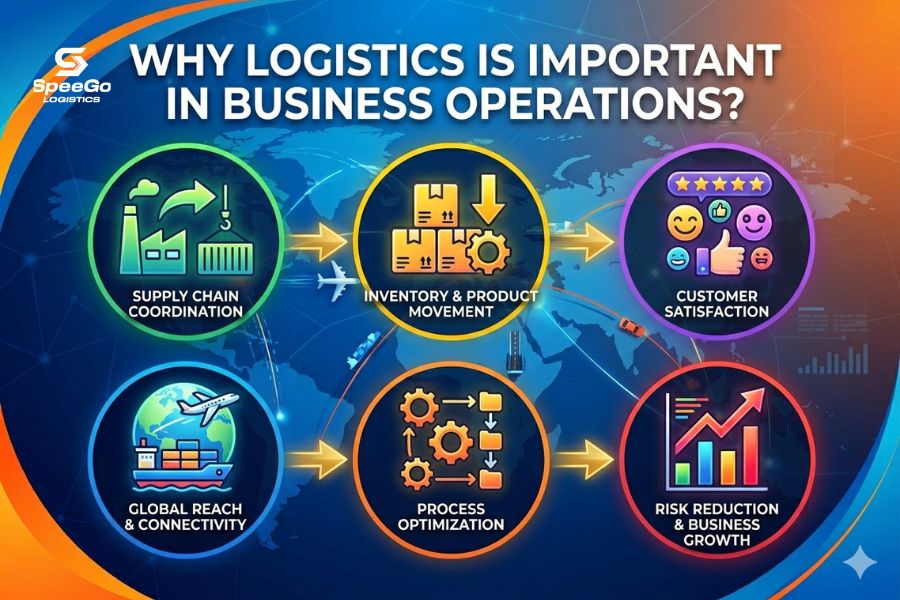
Modern businesses depend heavily on efficient logistics systems to keep products moving smoothly across the supply chain. From sourcing raw materials to delivering finished products to customers, logistics connects every stage of business operations.
1.1. The Role of Logistics in Supply Chain Management
Logistics plays a key role in coordinating transportation, warehousing, inventory control, and order fulfillment across the supply chain. Efficient logistics management helps businesses move products more smoothly, reduce delays, and maintain stable operations.
1.2. Improving Product Movement and Inventory Coordination
Strong logistics systems help businesses manage inventory and product flow more accurately between suppliers, warehouses, ports, and distribution centers. Better coordination can reduce storage costs, improve shipment visibility, and help companies respond more effectively to changing customer demand.
1.3. Supporting Better Customer Satisfaction
Efficient logistics operations directly affect customer experience by improving delivery speed, order accuracy, and shipment tracking visibility. Businesses with reliable logistics systems are often better positioned to build customer trust, reduce complaints, and strengthen long-term customer relationships.
1.4. Reducing Operational Risks and Supply Chain Disruptions
Modern supply chains face many challenges, including customs delays, transportation shortages, and port congestion. Effective logistics management helps businesses improve coordination across shipping networks and respond more quickly to operational disruptions, reducing the impact on delivery performance and business continuity.
2. Benefits of 3rd Party Logistics (3PL) Services
As supply chains become more complex, many businesses are turning to external logistics providers to improve operational efficiency and reduce transportation challenges.
2.1. Access to Logistics Expertise
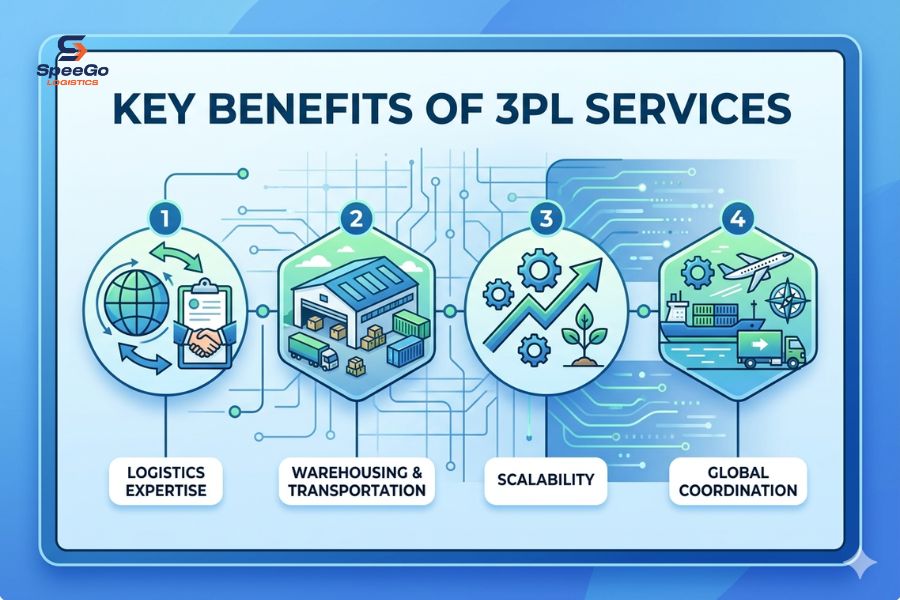
One of the key advantages of working with a 3PL provider is access to professional logistics knowledge and industry experience. Businesses can benefit from specialized support in freight coordination, customs procedures, transportation planning, and international shipping management.
2.2. Warehousing and Transportation Support
3PL providers often offer warehousing, cargo handling, freight transportation, and distribution services through established logistics networks. This allows businesses to improve delivery efficiency and access professional logistics infrastructure.
2.3. Scalability for Growing Businesses
As shipping volumes and market demand increase, logistics operations can become more difficult to manage internally. Third-party logistics providers help businesses scale more flexibly by offering adjustable warehousing capacity, transportation resources, and distribution support.
2.4. International Shipping Coordination
Managing global freight operations requires accurate customs documentation, transportation planning, and coordination across multiple countries. 3PL providers help businesses simplify international shipping processes, improve cargo visibility, and reduce operational risks associated with cross-border logistics.
3. Benefits of Logistics Outsourcing for Growing Companies
The benefits of logistics outsourcing helps businesses evaluate how external logistics support can reduce operational challenges while improving scalability and international shipping coordination.
3.1. Lower Operational Costs
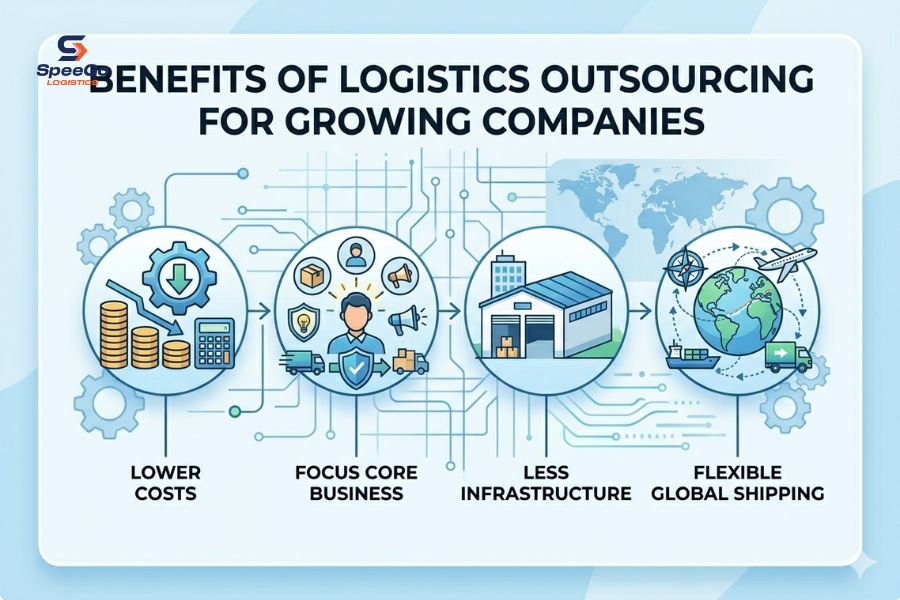
One of the biggest benefits of logistics outsourcing is cost reduction. By using external logistics providers, businesses can lower expenses related to warehousing, transportation, labor, and logistics management.
3.2. Focus on Core Business Activities
Outsourcing logistics allows companies to spend less time managing transportation, customs procedures, and inventory operations. This gives businesses more flexibility to focus on product development, customer service, marketing…
3.3. Reduced Infrastructure Investment
Building internal logistics systems often requires significant investment in warehouses, transportation equipment, and technology platforms. By outsourcing logistics operations, businesses can access professional logistics infrastructure without large upfront capital costs or long-term operational commitments.
3.4. Flexible Global Logistics Support
International logistics can become difficult to manage as businesses expand into new markets. Logistics outsourcing helps companies improve shipping coordination, customs management, and international freight. Besides, businesses can adapt more easily to changing supply chain demands and global trade requirements.
4. How SpeeGo Logistics Supports Business Growth?
As global supply chains become more demanding, businesses need logistics partners that can provide reliable transportation, flexible shipping support, and efficient international coordination. Managing cross-border shipments internally can increase operational pressure, especially for companies handling multiple suppliers, international customers, or growing shipment volumes.
SpeeGo Logistics supports businesses with international logistics solutions designed to improve shipping efficiency, simplify freight management, and strengthen supply chain performance across global markets.
4.1. International Freight Forwarding Support
SpeeGo Logistics helps businesses manage international cargo transportation through coordinated freight forwarding services. This support improves shipment visibility, simplifies logistics coordination, and helps businesses reduce delays during cross-border transportation.
4.2. Flexible Shipping Solutions for Different Business Needs
Different businesses require different shipping strategies depending on cargo size, delivery urgency, and destination markets. SpeeGo Logistics provides flexible freight solutions, including FCL, LCL, and customized transportation planning. It allows companies to optimize shipping costs while maintaining reliable delivery schedules.
4.3. Customs Documentation and Compliance Assistance
International shipping often involves complex customs procedures and documentation requirements. SpeeGo Logistics supports businesses with customs paperwork, shipping documents, and import-export coordination. It helps reduce customs delays and improve shipment compliance across international markets.
4.4. Scalable Logistics Services for Business Expansion
As companies expand globally, logistics operations become more challenging to manage internally. SpeeGo Logistics offers scalable international logistics support. It helps businesses increase shipping capacity, manage changing supply chain demands, and support long-term growth in international trade operations.
5. FAQs About SpeeGo Logistics Services
5.1. What types of international shipping services does SpeeGo Logistics provide?
SpeeGo Logistics supports businesses with multiple international freight solutions, including ocean freight, air freight, cargo consolidation, customs coordination, and cross-border transportation services. The company helps businesses manage both small and large shipment volumes across different international markets.
5.2. Can SpeeGo Logistics support both FCL and LCL shipments?
Yes. SpeeGo Logistics provides both Full Container Load (FCL) and Less than Container Load (LCL) shipping solutions. This flexibility allows businesses to choose transportation options based on cargo volume, shipping urgency, and logistics budget while optimizing international freight efficiency.
5.3. Does SpeeGo Logistics help with customs documentation?
SpeeGo Logistics assists businesses with customs paperwork and international shipping documentation. Accurate documentation support helps reduce customs delays and improve shipment compliance during international transportation.
The Benefits of Logistics extend far beyond transportation alone. Strong logistics systems help businesses improve efficiency, strengthen customer experience, and adapt more effectively to changing supply chain demands. Companies that invest in reliable logistics support are often better positioned for long-term operational growth.