

The development of free trade in China has transformed the country into one of the world’s most important logistics and manufacturing centers. Chinese Free Trade Zones are designed to simplify trade activities, encourage foreign investment, and support faster international cargo movement.
1. What is a Free Trade Zone China?
A free trade zone China refers to a designated economic area where businesses can benefit from more flexible trade policies, simplified customs procedures, and investment incentives. These zones are designed to encourage international trade, attract foreign investment, and support China’s role in global supply chains.
Companies operating within a free trade zone in China often receive advantages related to warehousing, import-export activities, and cross-border logistics management. These zones are intended to serve as testing grounds for new trade policies, customs systems, financial reforms, and international business regulations.
2. How Do Free Trade Zones Work in China?
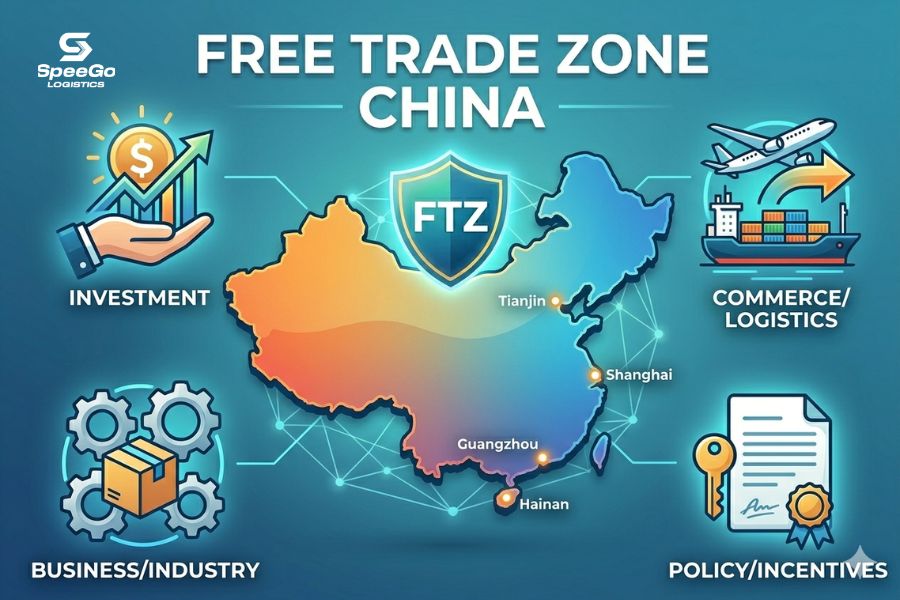
Free Trade Zones (FTZs) in China operate under specialized trade and customs policies designed to simplify international business activities. These zones allow companies to move goods more efficiently, reduce certain trade barriers, and improve supply chain flexibility.
Compared to standard customs environments, businesses inside a China customs free zone often benefit from faster cargo processing and more flexible import-export procedures.
3. Major Free Trade Zones in China
China has developed multiple Free Trade Zones (FTZs) across key economic regions to support international trade, foreign investment, and supply chain modernization. Each zone focuses on different industries and logistics strategies.
3.1. Shanghai Free Trade Zone
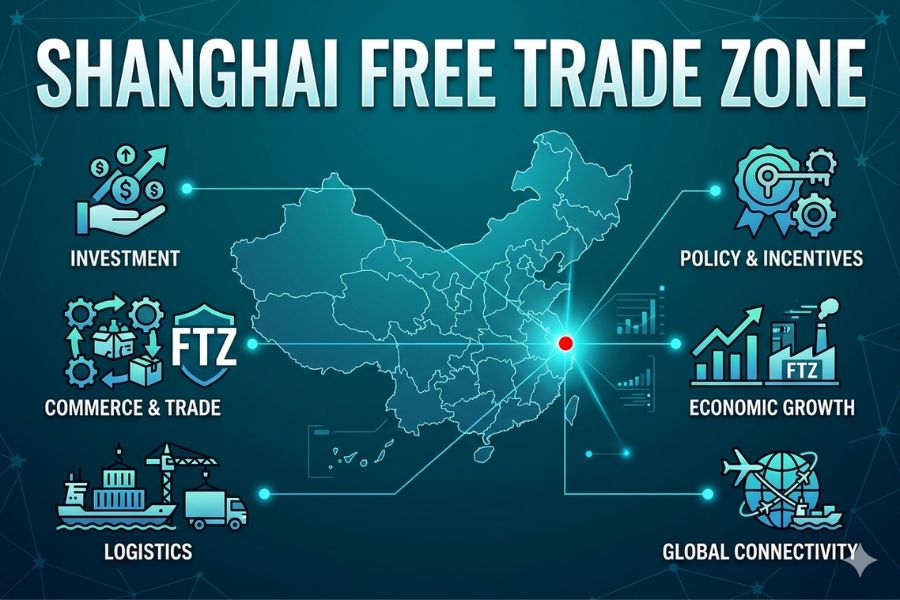
The Shanghai Free-Trade Zone was China’s first official FTZ, launched in 2013 by the State Council of the People’s Republic of China. The zone was created to test new economic reforms, simplify customs procedures, and encourage international investment.
Shanghai Free Trade Zone (Shanghai FTZ)
- Established: 2013
- Main Area: Pudong District, Shanghai
- Official Website: Shanghai Free Trade Zone Official Website
- Core Industries: International trade, finance, logistics, technology, and cross-border services
Key Operational Areas
- Waigaoqiao Free Trade Logistics Park: major bonded logistics and warehousing zone
- Yangshan Free Trade Port Area: connected to one of the world’s busiest deep-water ports
- Pudong Airport Comprehensive Free Trade Zone: supports air cargo and international freight operations
- Shanghai Jinqiao Economic and Technological Development Zone: focuses on advanced manufacturing and innovation
- Zhangjiang Hi-Tech Park: well known for technology, research, and digital industries
Main Business Advantages
- Preferential corporate tax policies for selected industries and qualified enterprises
- Import duties and taxes can often be deferred while cargo remains inside bonded warehouse areas
- Simplified foreign currency transactions and more flexible financial operations
- Faster customs declaration and cargo clearance procedures compared to traditional trade zones
- Strong logistics ecosystem with freight forwarders, warehousing companies, and fulfillment providers located nearby
- More efficient VAT refund processing for export-oriented businesses
3.2. Guangdong Free Trade Zone
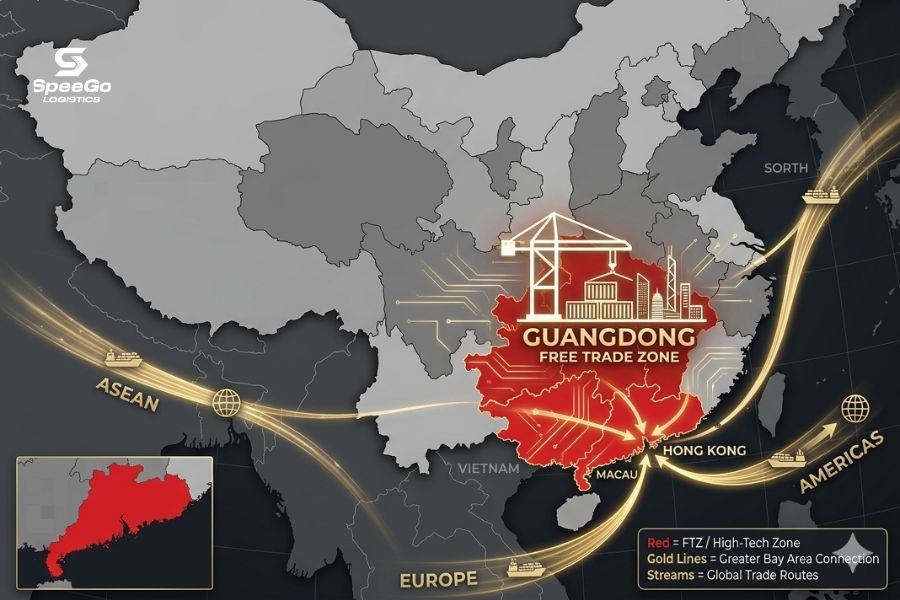
The Guangdong Free Trade Zone covers multiple strategic areas, including Guangzhou, Shenzhen, and Zhuhai. This FTZ was designed to strengthen trade cooperation between mainland China, Hong Kong, and Macau.
Tianjin Free Trade Zone (Tianjin FTZ)
- Established: 2015
- Official Website: Tianjin Free Trade Zone Official Website
- Main Focus: Advanced manufacturing, aviation logistics, international trade, and financial services
Key Operational Areas
- Tianjin Airport Economic Area: specializes in aviation, aerospace, equipment manufacturing, IT, research and development, and air logistics services
- Tianjin Dongjiang Free Trade Port Zone: focuses on shipping logistics, bonded trade operations, international commerce, and financial leasing services
- Tianjin Binhai New Area Central Business District: supports financial industries, modern commerce, and international business services
Main Business Advantages
- Strong access to northern China’s port and transportation infrastructure
- Well-developed aviation and aerospace logistics ecosystem
- Supportive environment for advanced manufacturing and industrial supply chains
- Efficient bonded logistics and international shipping operations
- Expanding financial leasing and trade financing services
- Integrated business districts that support cross-border commercial activities
3.3. Fujian Free Trade Zone
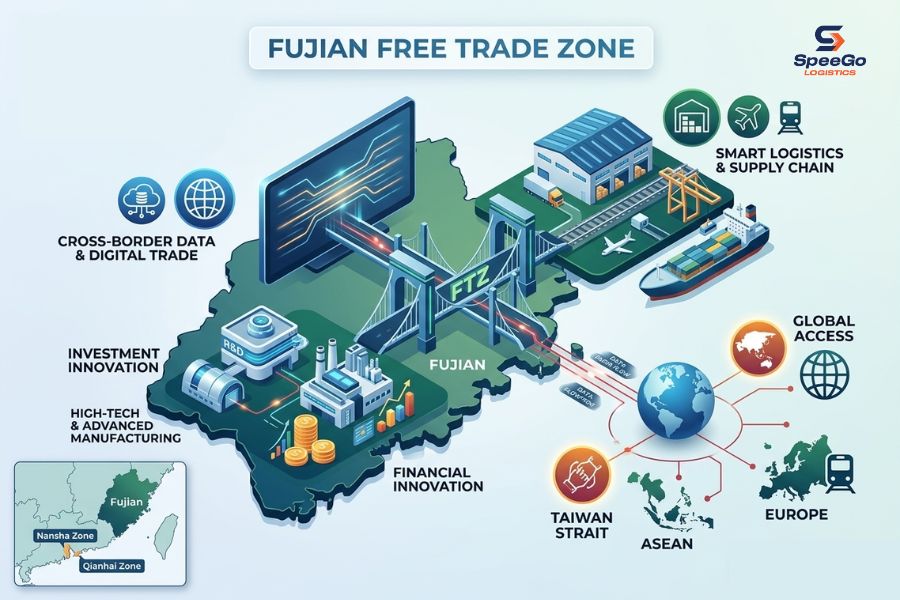
Many businesses choose the Fujian FTZ because of its strong position along regional maritime trade routes and its close connection to Southeast Asian markets. The zone is particularly attractive for companies involved in international sourcing, logistics, import-export operations, and regional distribution activities.
Fujian Free Trade Zone (Fujian FTZ)
- Established: 2015
- Province: Fujian
- Official Website: Fujian Free Trade Zone Official Website
- Main Focus: International trade, finance, logistics, and cross-border business development
Key Operational Areas
- Fuzhou Area: focuses on international commerce, financial services, and regional trade cooperation
- Xiamen Area: supports international shipping, logistics operations, trade services, and investment activities
- Pingtan Area: developed to strengthen economic cooperation, international trade, and cross-border business exchanges
Main Business Advantages
- Strategic location near major Southeast Asian shipping routes
- Simplified customs and trade procedures for international businesses
- Supportive policies for foreign investment and cross-border trade
- Access to strong regional logistics and maritime transportation infrastructure
- Growing ecosystem for international finance and commercial services
- Efficient connectivity with export manufacturing and shipping operations
3.4. Chongqing Free Trade Zone
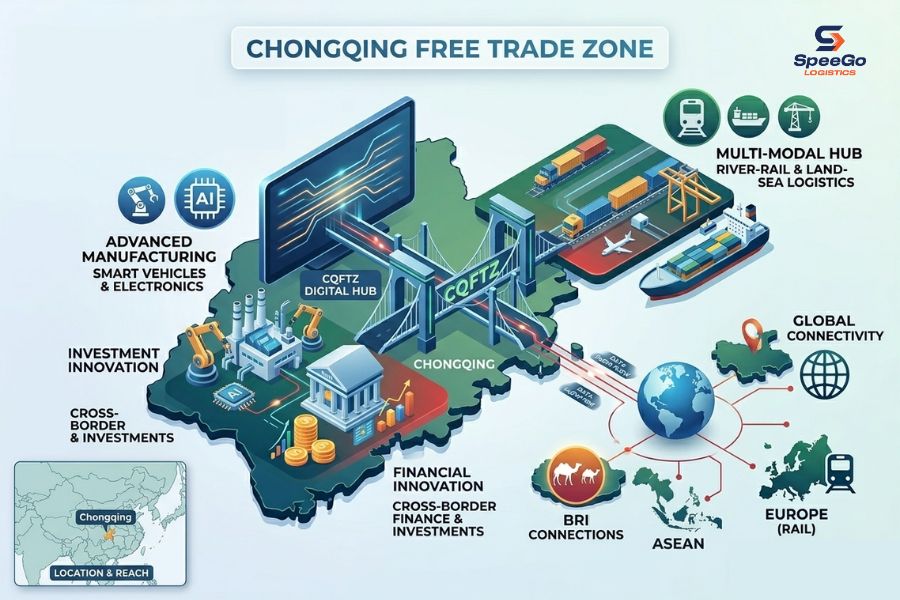
The Chongqing FTZ attracts businesses looking to strengthen manufacturing capacity and improve inland logistics operations within China. Its location near the Yangtze River Economic Belt and China-Europe rail corridors gives companies greater flexibility for regional distribution and international cargo movement.
Chongqing Free Trade Zone (Chongqing FTZ)
- Launched: 2016
- Region: Chongqing
- Official Platform: Liangjiang New Area Official Website
- Key Sectors: High-tech manufacturing, biotechnology, logistics, electronics, and international trade
Main Development Areas
- Liangjiang New Area: This district focuses on innovation-based industries such as biotechnology, smart manufacturing, and emerging technologies. It has become an important center for industrial upgrading and foreign investment in western China.
- Xiyong Area: Known for its strong electronics and semiconductor ecosystem, Xiyong supports microelectronics production, technology assembly, and advanced research activities.
- Guoyuan Port Area: This section of the FTZ concentrates on cargo transportation, warehousing, logistics services, and international trade operations. The port area plays a major role in connecting inland China with global shipping routes.
Key Advantages for Businesses
- Faster customs declaration and cargo processing systems
- Convenient access to freight forwarders, warehouses, and fulfillment services in one logistics network
- Strong multimodal transportation links connecting rail, river, highway, and air cargo routes
- Growing industrial supply chain for electronics and advanced manufacturing sectors
- Strategic inland location supporting domestic distribution across western and central China
3.5. Sichuan Free Trade Zone
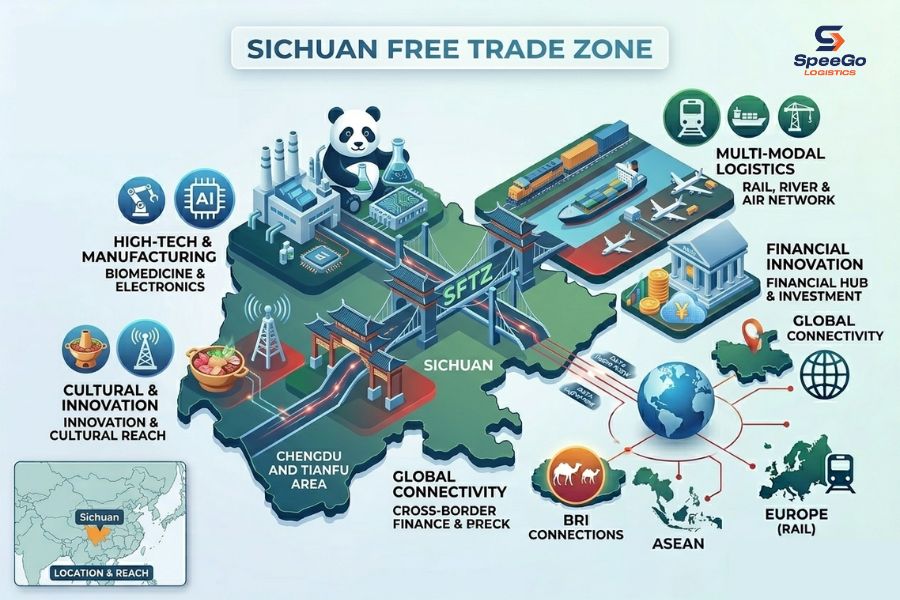
Its location within the Belt and Road network also supports stronger transportation links between China, Central Asia, and European markets. As inland trade infrastructure continues expanding, Sichuan is becoming a more important logistics and industrial center for international businesses operating in western China.
Sichuan Free Trade Zone (Sichuan FTZ)
- Established: 2016
- Province: Sichuan
- Official Website: Chengdu Free Trade Zone Official Website
- Key Industries: Information technology, logistics, high-end manufacturing, financial services, and transportation-related industries
Main Development Areas
- Chengdu Area: The Chengdu section focuses heavily on IT and communications, logistics operations, vehicle imports, financial services, advanced manufacturing, and high-tech industrial development. It also supports aviation-related industries and port service activities linked to international cargo transportation.
- Suining Area: This area supports industrial manufacturing, processing operations, and regional logistics activities connected to western China’s growing supply chain network.
- Luzhou Area: Luzhou plays an important role in river transportation, trade logistics, and industrial distribution along inland shipping routes.
Key Business Advantages
- Simplified customs processing for selected product categories depending on HS code classification
- Access to a concentrated logistics ecosystem with nearby warehousing, fulfillment, freight forwarding, and transportation providers
- Strong connectivity to rail, air cargo, and inland transportation networks
- Strategic position within China’s Belt and Road logistics corridors
- Growing support for international sourcing, cross-border trade, and regional distribution operations
4. Benefits of Using a Free Trade Zone in China
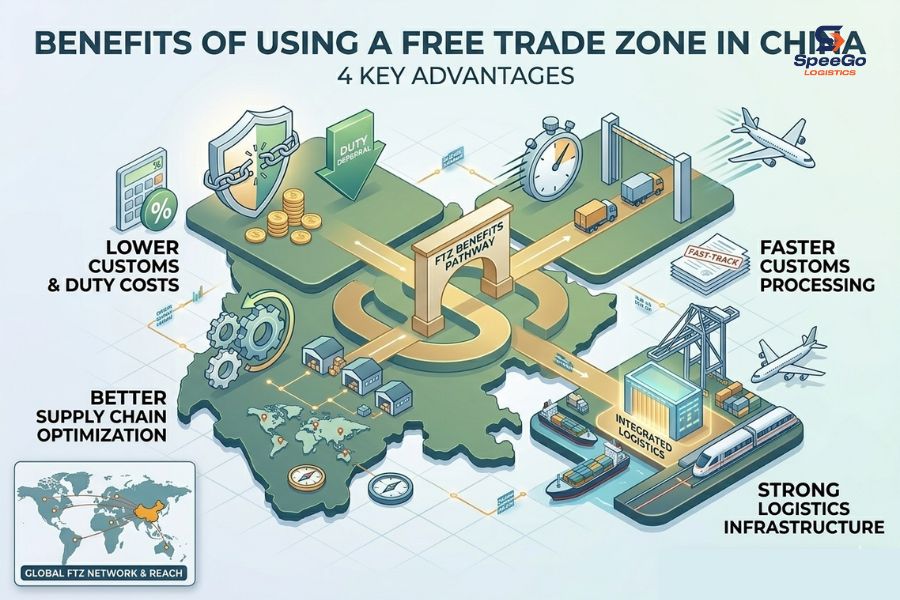
Operating inside a free trade zone China can provide businesses with important advantages in customs management, logistics efficiency, and international trade operations.
4.1. Reduced customs and import costs
One of the main advantages of operating inside a free trade zone China is the ability to delay import duties and taxes while products remain in bonded warehouses. This helps businesses improve cash flow, reduce short-term import expenses, and manage inventory more flexibly before products enter the domestic market or are re-exported internationally.
4.2. Faster cargo movement and customs processing
Chinese FTZs are designed to simplify customs procedures and speed up logistics operations. Many zones use digital customs systems and streamlined inspection processes that help businesses reduce paperwork, shorten cargo clearance time, and improve shipment efficiency across international supply chains.
4.3. Better supply chain optimization
Businesses often use FTZs to strengthen inventory management and regional distribution strategies. Access to bonded warehousing, nearby transportation hubs, and integrated logistics services allows companies to consolidate shipments, reduce delivery lead times, and respond more quickly to changing market demand.
4.4. Access to strong logistics infrastructure
Most major FTZs in China are located near ports, airports, rail terminals, and industrial centers. This gives businesses direct access to warehousing providers, freight forwarding companies, fulfillment services, and multimodal transportation networks that support international trade operations more efficiently.
4.5. Increased flexibility for international trade
Free trade zones provide a more adaptable business environment for companies involved in sourcing, manufacturing, cross-border eCommerce, and global distribution. Businesses can test new market strategies, manage international inventory more effectively, and support regional trade operations with fewer customs-related restrictions.
5. FAQs About Free Trade Zone China
5.1. Are Free Trade Zones in China Completely Tax-Free?
Chinese free trade zones are not entirely tax-free, but they do provide several customs and tax-related advantages for businesses involved in international trade. In many FTZs, companies can delay import duties and taxes while products remain inside bonded warehouse systems. Taxes are generally applied only when goods officially enter the domestic Chinese market.
5.2. Can Foreign Companies Operate in China FTZs?
Yes, foreign businesses are allowed to establish operations inside many Chinese FTZs. In fact, attracting international investment is one of the main objectives behind China’s free trade zone strategy.
5.3. What Products Can Be Stored in FTZ Warehouses?
A wide range of products can be stored inside a China customs warehouse or bonded warehouse located within an FTZ. Businesses commonly use these facilities for temporary storage, cargo consolidation, repackaging, or international distribution activities.
5.4. Are FTZs Only Useful for Large Companies?
No. Small and medium-sized businesses can also benefit from FTZ operations, especially companies involved in sourcing, importing, exporting, or cross-border eCommerce. Many smaller businesses use FTZ warehousing and logistics services to improve shipping flexibility without investing heavily in local infrastructure.
Understanding how a free trade zone China operates allows businesses to make better decisions about sourcing, warehousing, and international shipping. With streamlined customs procedures and strong logistics infrastructure, Chinese FTZs continue to support faster and more flexible global trade operations.