


Many businesses encounter HSN codes when preparing invoices, customs declarations, or GST filings, but not everyone fully understands how the system works. Learning what is HSN code helps companies improve product classification accuracy, reduce customs issues, and maintain smoother domestic and international trade operations.
1. What is HSN Code?
An HSN code, short for Harmonized System of Nomenclature, is a product classification system used in international trade and taxation. Developed by the World Customs Organization (WCO), the system helps businesses and customs authorities identify goods using standardized numerical codes.
HSN codes are widely used in shipping documents, tax invoices, customs declarations, and GST reporting to simplify trade processes and improve product classification accuracy.
2. How Does the HSN Code System Work?
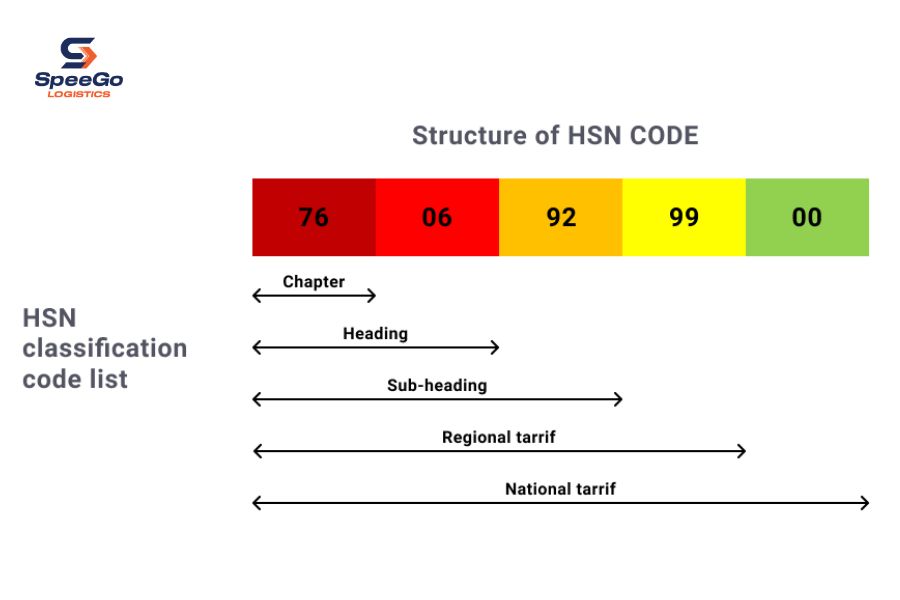
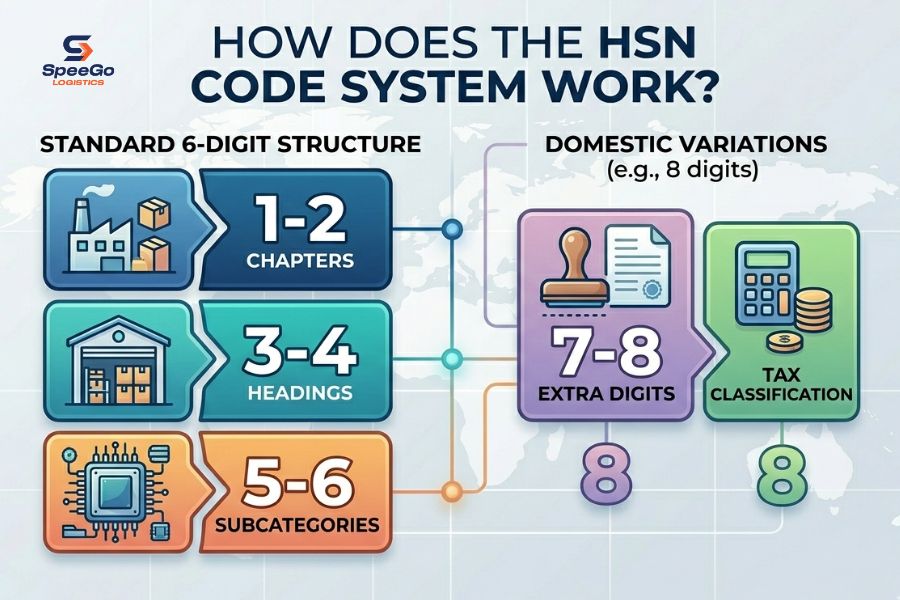
The HSN code system follows a structured numerical format used to classify products in domestic and international trade. Each code is designed to identify a specific category of goods, making customs procedures, tax calculations, and shipping documentation more organized. The system is based on a globally standardized framework developed by the World Customs Organization (WCO).
The standard HSN code structure usually contains multiple digits including:
- The first 2 digits = product chapter
- The next 2 digits = product heading
- Additional digits = detailed subcategories
This format creates a clear product hierarchy and simplifies global trade classification.
Many countries also expand the standard HSN format by adding extra digits for domestic taxation or customs purposes. As a result, HSN code formats may vary slightly depending on local regulations and reporting systems.
3. How to Find the Correct HSN Code?
Since different products may appear similar but fall under different tariff categories, businesses should carefully verify product details before selecting an HSN code.
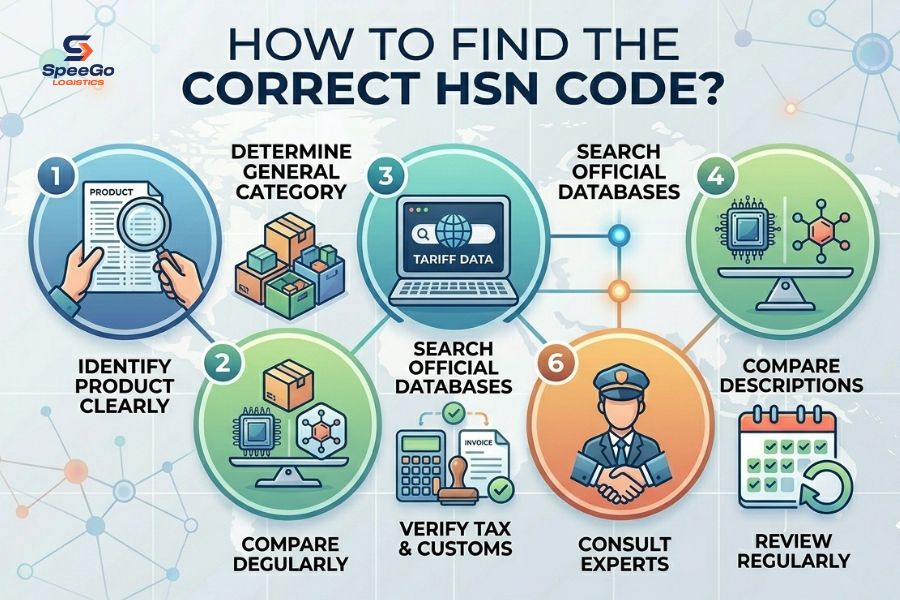
3.1. Step 1: Identify the Product Clearly
Start by collecting complete information about the product. Businesses should understand the product’s material, function, composition, and intended use before searching for an HSN code. Accurate product details help reduce classification mistakes and improve customs documentation accuracy.
3.2. Step 2: Determine the Product Category
After identifying the product, businesses should determine which general product category it belongs to. The HSN system organizes goods into chapters and headings based on product type. Similar products are grouped together under related tariff classifications.
3.3. Step 3: Search Official Tariff Databases
Businesses can use government customs portals or official tariff databases to perform a product HSN lookup. These systems allow users to search by product description, keywords, or category. Official databases often provide the most reliable classification references for customs and tax reporting.
3.4. Step 4: Compare Product Descriptions Carefully
Some products may appear under multiple classifications. Businesses should carefully compare product descriptions, technical specifications, and tariff notes before selecting a final HSN code. Small differences in product material or usage may affect classification results.
3.5. Step 5: Verify Tax and Customs Requirements
Once a possible HSN code is identified, businesses should verify whether the classification matches applicable tax rates, import duties, or customs regulations in the target country. This step helps reduce compliance risks during shipping and invoicing.
3.6. Step 6: Consult Customs or Logistics Experts if Needed
If product classification is unclear, businesses should seek support from customs brokers, freight forwarders, or trade compliance specialists. Professional guidance can help avoid customs penalties, shipment delays, and incorrect tax filings.
Unclear product classification can create costly customs issues and unexpected shipping delays in international trade. SpeeGo Logistics supports businesses with freight forwarding, customs coordination, and cross-border shipping solutions.
3.7. Step 7: Review HSN Codes Regularly
HSN classifications may change over time due to updates from customs authorities or international trade regulations. Businesses should review product classifications periodically to ensure continued compliance and accurate reporting.
4. HSN Code vs HS Code
Many businesses use the terms HSN code and HS code interchangeably, but there are small differences in how they are applied.
| Criteria | HSN Code | HS Code |
| Full Meaning | HSN stands for Harmonized System of Nomenclature. | HS stands for Harmonized System. |
| Primary Purpose | Mainly used for product classification in taxation and domestic reporting systems. | Primarily used for international customs classification and global trade. |
| Developed By | Based on the international HS system developed by the World Customs Organization (WCO) | Developed directly by the World Customs Organization (WCO) |
| Usage Scope | Commonly used in GST, VAT, invoices, and domestic tax compliance. | Used globally for customs declarations, tariffs, and international shipping. |
| Main Application | Supports local taxation and product reporting systems. | Supports import-export procedures and customs tariff calculations. |
| Flexibility by Country | Some countries expand HSN codes for domestic reporting purposes. | The first six digits remain standardized internationally. |
5. Understanding How The HSN Code is Used in Vietnam, USA, Canada and Australia
Although Vietnam, the USA, Canada, and Australia all use the international Harmonized System as a foundation, each country applies additional classification rules for taxation, customs administration, and trade reporting.
| Country | Classification System Used | Example | Main Purpose |
| Vietnam | HS Code / ASEAN Harmonized Tariff Nomenclature (AHTN) | Wooden furniture – HS Code 9403 | Used for customs declarations, VAT calculation, and import-export procedures |
| USA | Harmonized Tariff Schedule (HTS) | Cotton T-shirts – HTS Code 6109.10 | Used for customs duties, tariff calculations, and trade compliance |
| Canada | HS-Based Tariff Classification | Coffee makers – HS Code 8516.71 | Used for import tax calculation, customs declarations, and trade agreement eligibility |
| Australia | HS-Based Customs Tariff System | Sports footwear – HS Code 6404.11 | Used for GST reporting, customs clearance, and tariff assessment |
6. FAQs About HSN Codes
6.1. Can One Product Have Multiple HSN Codes?
In some situations, a product may appear to fit under more than one HSN classification. This usually happens when products have multiple functions, mixed materials, or different commercial uses.
6.2. How Often Are HSN Codes Updated?
HSN and HS classifications are updated periodically to reflect changes in technology, manufacturing, and global trade patterns. The World Customs Organization (WCO) reviews and updates the Harmonized System approximately every five years.
6.3. How Can Businesses Reduce HSN Code Errors?
Businesses can reduce classification mistakes by maintaining detailed product records and reviewing tariff databases regularly. Companies should also verify product descriptions carefully before preparing invoices or customs declarations.
6.4. How do businesses choose the correct HSN code for a new product?
Businesses usually determine the correct HSN code by analyzing the product’s material, function, composition, and intended use. Many companies use official customs tariff databases or government classification portals to search for suitable product categories. If classification is unclear, businesses often consult customs brokers or logistics specialists to reduce compliance risks.
HSN codes play an important role in modern trade and supply chain management. By understanding what is HSN code, businesses can improve invoice accuracy, avoid customs delays, and maintain better compliance with international shipping and taxation requirements.