

When discussing logistics and eCommerce, many businesses mistakenly treat shipping and delivery as the same process. However, shipping vs delivery represents two different stages within the supply chain. Understanding the difference helps companies improve fulfillment efficiency, communicate more clearly with customers, and manage shipping expectations more effectively.
1. What Does Shipping Mean?
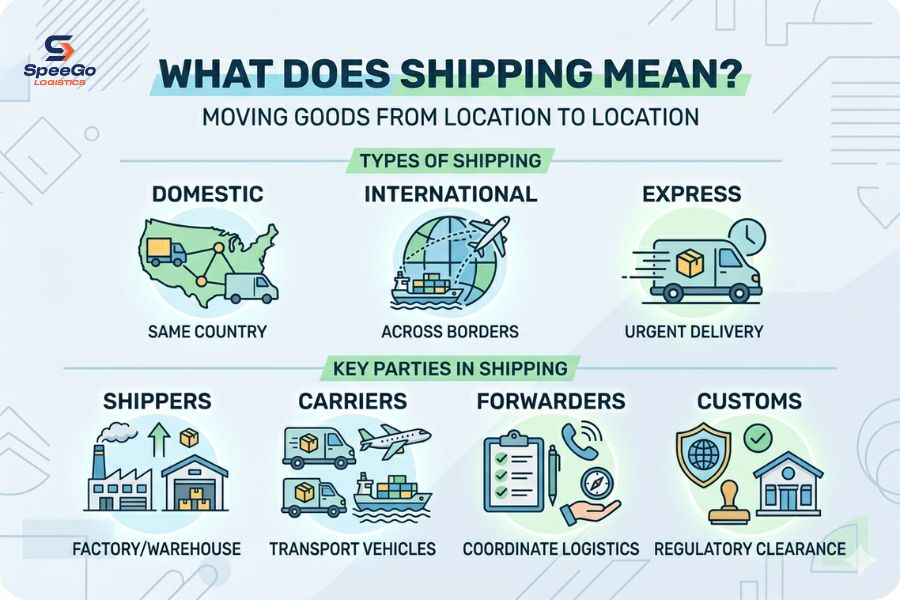
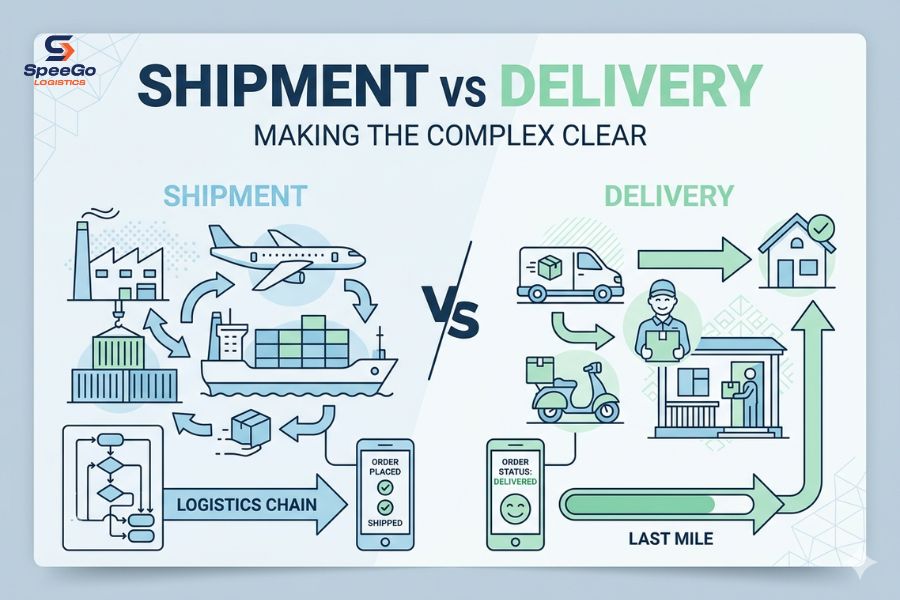
Shipping refers to the process of moving goods from one location to another before they reach the final customer. The journey may start at a factory, warehouse, supplier facility, or fulfillment center and continue through several transportation stages until the shipment arrives at a distribution hub or delivery network.
1.1. Common Types of Shipping
Different businesses use different shipping methods depending on product type, destination, delivery speed, and budget.
- Domestic Shipping: It refers to transporting goods within the same country. This method is common among retailers, wholesalers, and eCommerce businesses serving local customers.
- International Shipping: It involves moving goods across borders. This process is more complex because it includes customs procedures, import duties, export regulations, and international documentation.
- Express Shipping: It is designed for urgent deliveries that require faster transit times. This service is commonly used for high-value goods, time-sensitive documents, medical products, or priority eCommerce orders.
1.2. Key Parties Affect Shipping Process
Shipping usually involves several stakeholders working together to move goods efficiently.
- Shippers: The shipper is the party sending the goods. This may be a manufacturer, supplier, retailer, or eCommerce seller.
- Carriers: These are responsible for transporting the shipment. They may operate by truck, air, rail, or sea depending on the shipping route and service type.
- Freight Forwarders: This coordinates shipping operations on behalf of businesses. Their responsibilities may include booking cargo space, preparing shipping documents, and arranging customs clearance.
- Warehouses and Fulfillment Centers: These facilities store inventory and prepare products for shipment. Many eCommerce companies use fulfillment centers to speed up order processing and shipping operations.
- Customs Authorities: For international shipping, customs agencies inspect goods and ensure compliance with import and export regulations.
While many people use shipping and delivery interchangeably, shipping usually refers to the broader transportation process before the product reaches the final recipient.
2. What Does Delivery Mean?
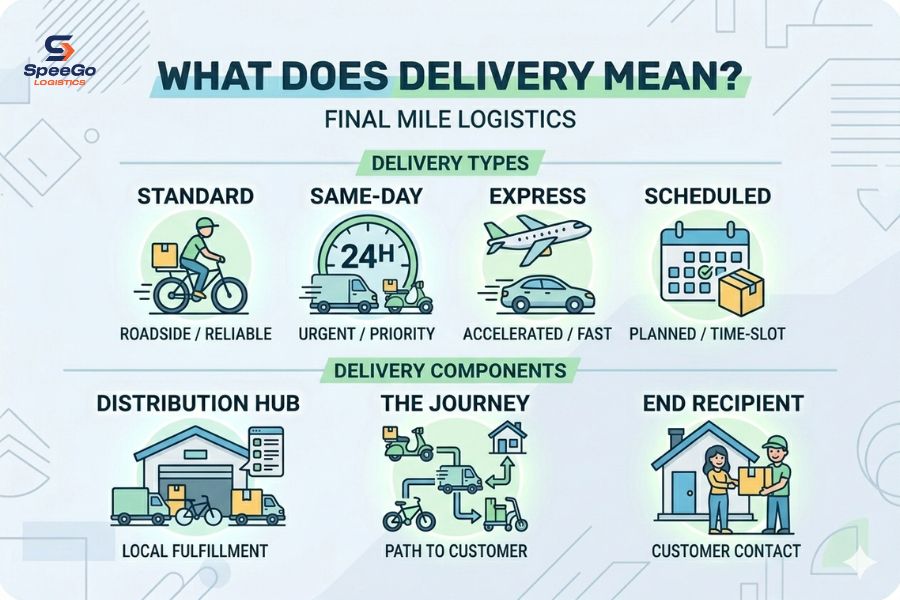
Delivery refers to the final stage of the order journey when a product is transported from a local distribution point to the end customer. While shipping covers the broader movement of goods through the supply chain, delivery focuses on the moment the package actually reaches its destination.
Common Types of Delivery Services
Businesses use different delivery models depending on product type, customer location, and service requirements.
- Standard Delivery: It is the most common option for routine orders. It usually offers lower shipping costs but longer transit times compared to express services. This method is widely used for general retail and non-urgent eCommerce orders.
- Same-Day Delivery: It allows customers to receive products within a few hours after placing an order. This service has become increasingly popular in urban areas, such as grocery delivery, food delivery, and local retail frequently use this model.
- Express Delivery: It prioritizes speed and shorter transit windows. Businesses often choose this service for urgent shipments, premium orders, or high-value products.
- Scheduled Delivery: It enables customers to select a preferred delivery date or time slot. This option is common for furniture, electronics, and bulky products that require customer availability during delivery.
Delivery is far more than simply handing over a package. It represents the final connection between a business and its customer. A smooth delivery process can strengthen brand trust, while poor delivery performance may negatively affect customer retention.
3. What’s The Difference Between Delivery And Shipping?
Many businesses use the terms shipping and delivery interchangeably. However, in logistics and supply chain management, these two processes refer to different stages of moving goods from seller to buyer.
| Criteria | Shipping | Delivery |
| Definition | The movement of goods from the seller, warehouse, or manufacturer through the transportation network. | The final step where the package reaches the customer or recipient. |
| Main Purpose | To transport goods efficiently across different locations or countries. | To complete the order by handing the package to the end customer. |
| Scope of Transportation | Often covers long-distance transportation, including domestic and international freight. | Usually focuses on short-distance or local transportation. |
| Main Activities | Packaging, freight booking, customs clearance, cargo movement, warehouse transfers, and transit coordination. | Route planning, local courier dispatch, doorstep drop-off, proof of delivery, and customer communication. |
| Common Transportation Methods | Ocean freight, air freight, rail freight, trucking, and multimodal transport. | Vans, motorcycles, local courier vehicles, and parcel delivery networks. |
| Parties Involved | Freight forwarders, carriers, customs brokers, warehouses, and 3PL providers. | Local delivery companies, couriers, and delivery drivers. |
| Cost | Includes freight charges, fuel costs, customs duties, warehousing, and transportation fees. | Includes courier fees, last-mile delivery costs, and delivery handling charges. |
| Relationship Between Both Terms | Shipping is the broader logistics process that moves goods through the supply chain. | Delivery is a smaller part within shipping that completes the customer order journey. |
| Example | A supplier ships products from Vietnam to a warehouse in Canada. | A courier delivers the package from the Canadian warehouse to the customer’s address. |
4. Why Do Businesses Often Confuse Shipping vs Delivery?
Many businesses use the terms shipping vs delivery as if they mean the same thing. This confusion is common in eCommerce, retail, and even international trade because both processes are closely connected within the order fulfillment journey.
4.1. The terms are frequently used together
Many companies use “shipping” and “delivery” in the same sentence when communicating with customers. Phrases like “fast shipping and delivery” appear across eCommerce websites, advertisements, and tracking systems. Over time, this repeated usage makes customers assume both terms describe the same logistics activity.
4.2. Logistics terminology differs from marketing language
In supply chain operations, shipping and delivery have separate meanings and responsibilities. However, marketing teams often simplify logistics language to make communication easier for customers. As a result, businesses may unintentionally blur the distinction between transportation stages and final delivery services.
4.3. eCommerce platforms simplify the customer journey
Online marketplaces usually display simplified tracking updates such as “shipped,” “in transit,” or “delivered.” Customers only see a few order statuses, while the actual logistics process involves multiple transportation and handling stages behind the scenes. This simplified experience contributes to confusion between shipping vs delivery.
4.4. Customers focus more on the final outcome
Most buyers mainly care about receiving their order safely and on time rather than understanding logistics workflows. Because customers view the process as one continuous journey, they rarely separate shipping from delivery in everyday conversations. This behavior naturally reinforces the confusion between the two terms.
5. Frequently Asked Questions (FAQs)
5.1. How long does shipping take before delivery?
The time between shipping and delivery depends on several factors, including shipping method, destination, customs clearance, and carrier capacity.
5.2. Can a shipment be delayed after shipping?
Yes, a shipment can still face delays after the shipping process begins. Common reasons include customs inspections, weather disruptions, transportation congestion, incorrect addresses, or operational issues at sorting facilities. In some cases, delays happen during the delivery stage rather than the shipping stage.
5.3. Why is delivery more important for customer experience?
Delivery is the final interaction between a business and its customer. Even if shipping operations run smoothly, a failed or delayed delivery can negatively affect customer satisfaction. Fast delivery, accurate tracking, and reliable communication often play a major role in customer retention and online reviews.
The difference between shipping vs delivery helps businesses manage logistics more efficiently and communicate clearly with customers. Knowing how these two stages work together can improve fulfillment performance, customer satisfaction, and overall supply chain operations.