


As global trade volumes continue to rise, the demand for stronger logistics infrastructure is becoming increasingly important for businesses worldwide. Modern supply chains now require faster transportation, better inventory visibility, advanced warehousing systems, and more efficient customs operations to meet growing customer expectations.
1. What Is Logistics Infrastructure?
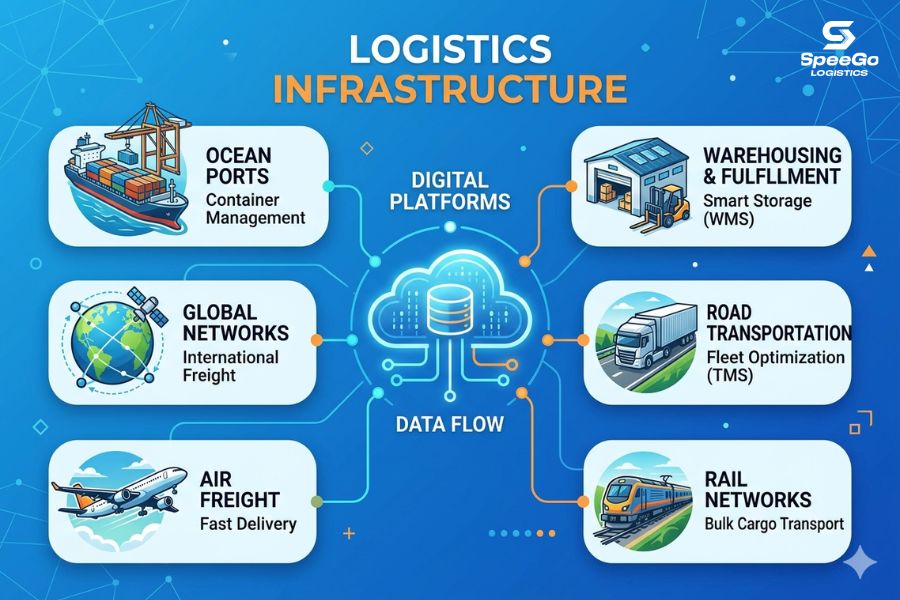
Logistics infrastructure refers to the systems, facilities, and technologies that support the movement, storage, and distribution of goods throughout the supply chain. The logistics infrastructure includes transportation networks, ports, airports, warehouses, customs facilities, and digital logistics platforms that help businesses manage domestic and international freight operations more efficiently.
Modern international logistics infrastructure also depends heavily on technology such as warehouse management systems (WMS), transportation management systems (TMS), IoT tracking devices, and automation tools.
2. Key Components of Logistics Infrastructure
Modern logistics infrastructure consists of interconnected physical facilities, transportation systems, and digital technologies that support the movement of goods throughout global supply chains. Each component within the logistics network plays a specific role in supporting freight movement, cargo visibility, and supply chain coordination.
2.1. Transportation Networks
Transportation networks form the foundation of global logistics operations. These networks include highways, rail systems, shipping lanes, inland waterways, and air cargo routes that connect suppliers, manufacturers, ports, warehouses, and customers across domestic and international markets.
2.2. Warehousing and Distribution Centers
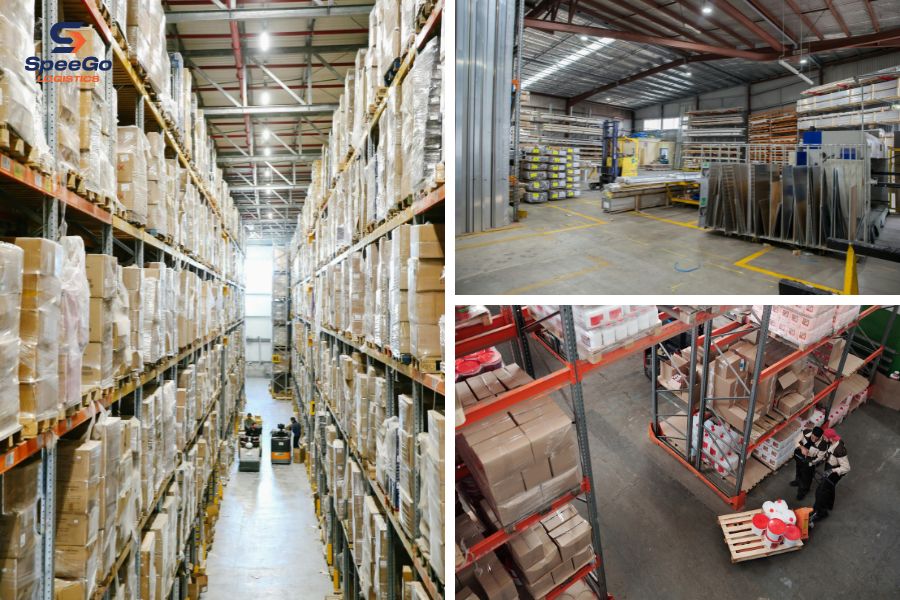
Warehouses and distribution centers are essential logistics facilities that support inventory storage, order processing, packaging, and shipment consolidation. Modern warehouse infrastructure helps businesses maintain inventory visibility while improving fulfillment speed and inventory accuracy.
Many logistics providers now use automated warehouse technologies such as robotics, barcode scanning systems, and warehouse management systems (WMS) to improve operational productivity and reduce manual handling errors.
2.3. Ports and Airports
Ports and airports are critical logistics hubs within modern supply chain networks. Seaports manage container shipping, bulk cargo handling, customs inspections, and international maritime trade. Airports support air freight transportation for express cargo, perishable goods, high-value products, and urgent international shipments.
SpeeGo Logistics provides flexible international freight solutions through global sea freight and air freight networks, helping businesses manage cargo movement more efficiently across international markets.
3. Types of Logistics Infrastructure
Modern logistics infrastructure includes multiple transportation and distribution systems that work together to support domestic and international supply chains. Each type of infrastructure plays a different role in cargo movement, inventory distribution, and freight coordination across the global logistics network.
3.1. Road Infrastructure
Road infrastructure is one of the most widely used components of global logistics systems. It includes highways, urban roads, bridges, tunnels, truck terminals, and freight corridors that support cargo transportation between factories, warehouses, ports, retail stores, and final customers.
Trucking networks are especially important for domestic distribution and e-commerce fulfillment because they allow businesses to transport goods directly to customers without relying heavily on fixed transport schedules.
3.2. Rail Infrastructure
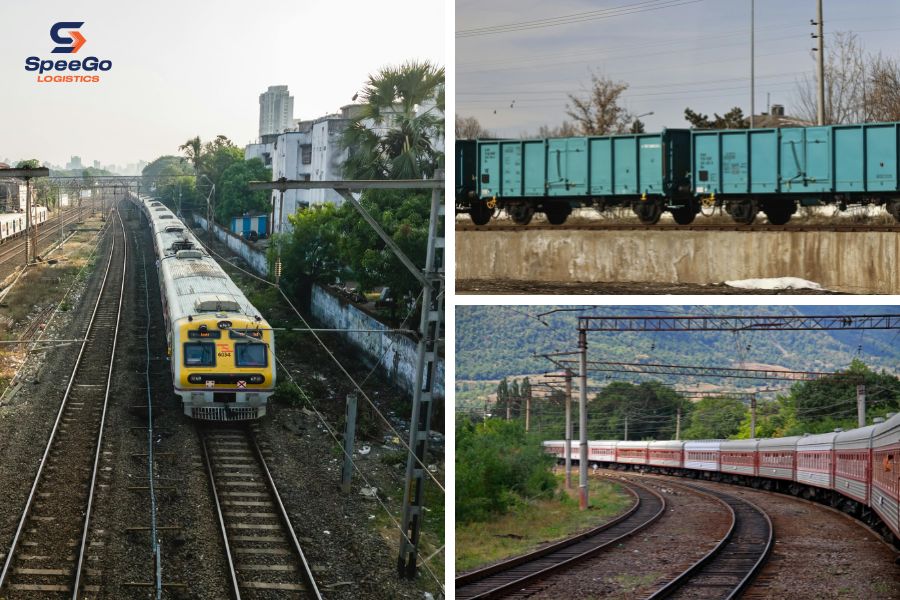
Rail infrastructure supports large-scale cargo transportation over long distances through railway networks, freight terminals, and intermodal rail facilities. Rail freight is commonly used for transporting bulk cargo, industrial materials, agricultural products, and container shipments.
Many countries are expanding rail freight systems to improve supply chain sustainability and reduce pressure on road transportation networks. Rail infrastructure is also becoming increasingly important in cross-border trade corridors connecting manufacturing regions and international ports.
3.3. Air Cargo Infrastructure
Air cargo infrastructure supports fast international freight transportation through airports, cargo terminals, aircraft handling systems, and customs processing facilities. This type of cargo infrastructure is essential for industries that depend on speed, shipment security, and time-sensitive delivery.
Modern airports often include automated cargo terminals, cold storage systems, digital tracking technologies, and specialised customs facilities to improve operational efficiency.
3.4. Maritime Infrastructure
Maritime infrastructure forms the backbone of global international trade. It includes seaports, container terminals, shipping lanes, cranes, storage yards, and customs facilities that support ocean freight transportation. Major international ports play a critical role in global supply chains by connecting manufacturers, exporters, and importers across different regions.
3.5. Urban Logistics Infrastructure
Urban logistics infrastructure supports freight distribution within cities and metropolitan areas. As e-commerce continues to expand, urban logistics has become increasingly important for managing last-mile delivery operations and maintaining fast delivery services.

4. Challenges Facing Modern Logistics Infrastructure
Modern logistics infrastructure is under increasing pressure as global trade volumes continue to rise and supply chains become more complex. Businesses today must manage higher customer expectations, faster delivery requirements, growing e-commerce demand, and ongoing geopolitical and economic uncertainty.
4.1. Port Congestion
Port congestion remains one of the most visible infrastructure challenges affecting international trade. When ports experience excessive cargo volumes, limited terminal capacity, labor shortages, or customs delays, containers may remain at terminals for extended periods before being processed.
4.2. Aging Transportation Infrastructure
Many countries continue to rely on transportation systems that were built decades ago and are no longer fully capable of supporting modern logistics demand. Aging highways, rail systems, bridges, airports, and port facilities can reduce transportation efficiency and increase operational risks.
4.3. Rising Logistics Demand
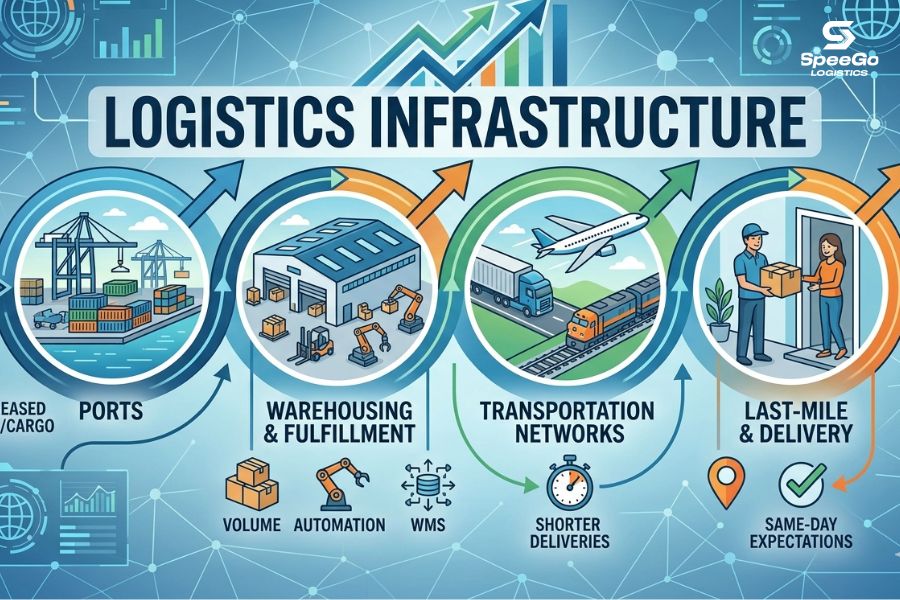
The rapid expansion of e-commerce, cross-border trade, and same-day delivery expectations has placed enormous pressure on modern logistics infrastructure. Warehouses, transportation networks, ports, and fulfillment centers are all being required to process larger shipment volumes within shorter delivery timelines.
4.4. Limited Warehouse Capacity
Warehouse capacity has become increasingly constrained in major logistics markets due to rapid e-commerce growth and higher inventory storage demand. Businesses are now storing more inventory closer to consumers to support faster delivery expectations and improve supply chain flexibility.
4.5. Increasing Pressure for Sustainability
Environmental concerns are also reshaping modern logistics infrastructure. Governments, consumers, and investors are placing greater pressure on businesses to reduce emissions, improve energy efficiency, and adopt more sustainable transportation methods.
Modern logistics infrastructure plays a central role in supporting global supply chains, international trade, and business competitiveness. Transportation networks all work together to improve cargo movement, inventory management, and delivery efficiency across domestic and international markets.