


Different air cargo types are essential for businesses involved in international shipping, global sourcing, and cross-border logistics. This guide explores the most common air cargo types, the air freight services used in global logistics, and the aircraft that support international cargo transportation.
1. What Is Air Cargo?
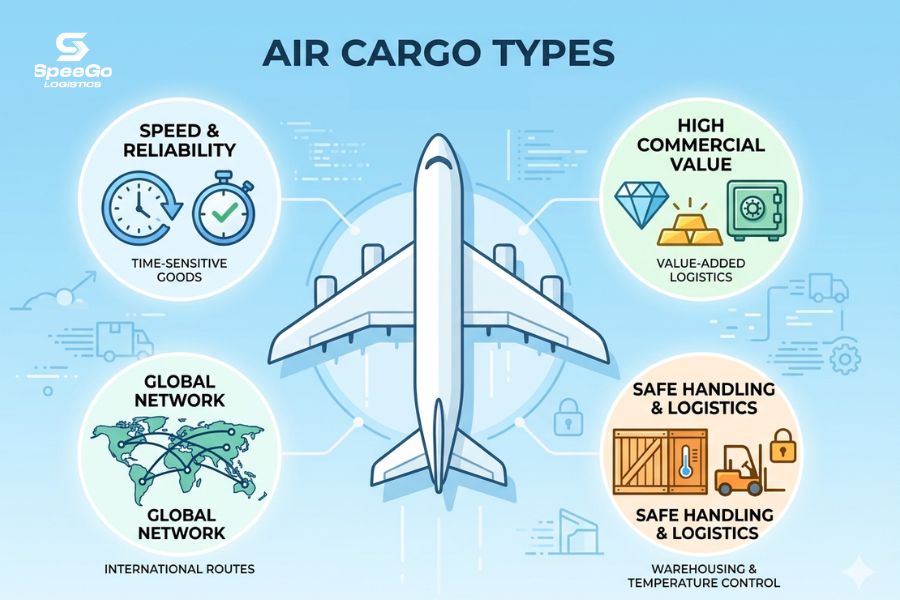
Air cargo refers to goods transported by aircraft through domestic or international air freight networks. It allows businesses to move products quickly, especially when delivery speed, cargo security, or shipment reliability is important. Compared with sea freight or road transportation, air cargo is generally faster and more suitable for time-sensitive shipments.
Businesses often use air freight shipping for products that require urgent delivery, have high commercial value, or need strict handling conditions. Air cargo operations involve multiple logistics activities beyond transportation itself. These services may include cargo handling, customs clearance, warehousing, shipment consolidation, temperature-controlled logistics, and final-mile delivery coordination.
2. Types of Cargo Aircraft
Different types of aircraft are used in air cargo transportation depending on shipment size, cargo volume, delivery routes, and operational requirements. Understanding the main types of cargo aircraft helps businesses choose more suitable air freight solutions for international shipping.
2.1. Freighter Aircraft
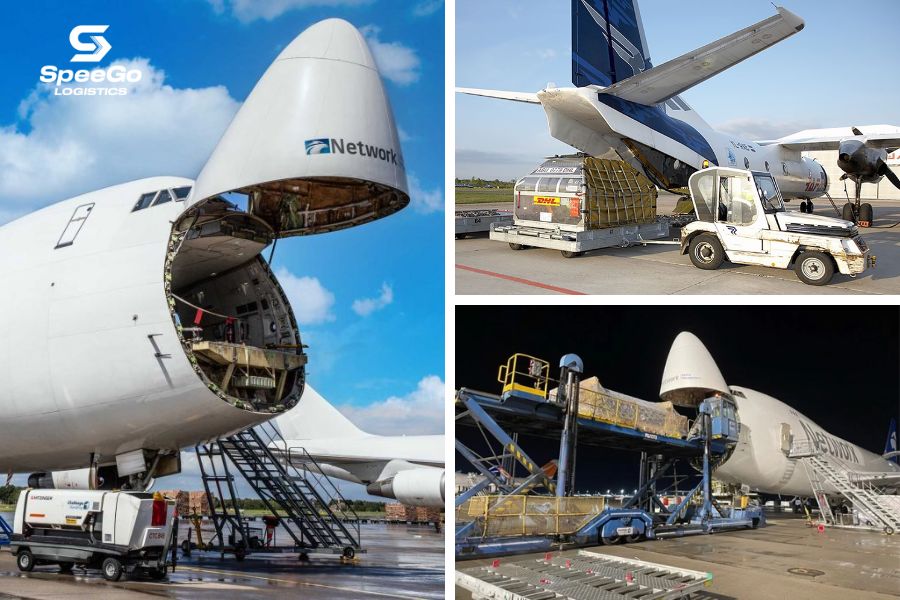
Freighter aircraft, also called cargo aircraft, are planes specifically designed or converted for transporting cargo rather than passengers. These aircraft have reinforced floors, larger cargo doors, and open cabin space that allows logistics operators to load pallets, containers, oversized cargo, and heavy industrial equipment more efficiently.
Some well-known freighter aircraft models include the Boeing 747 Freighter, Boeing 777F, and Airbus A330-200F. These aircraft can transport significantly more cargo compared to passenger aircraft belly holds. For businesses shipping oversized machinery, bulk commercial goods, or high-volume international cargo, choosing the right air freight partner is essential for maintaining safe and efficient transportation. SpeeGo Logistics offers professional air cargo solutions supported by global airline partnerships and flexible freight capacity for large-scale shipments.
2.2. Wide-Body Passenger Aircraft
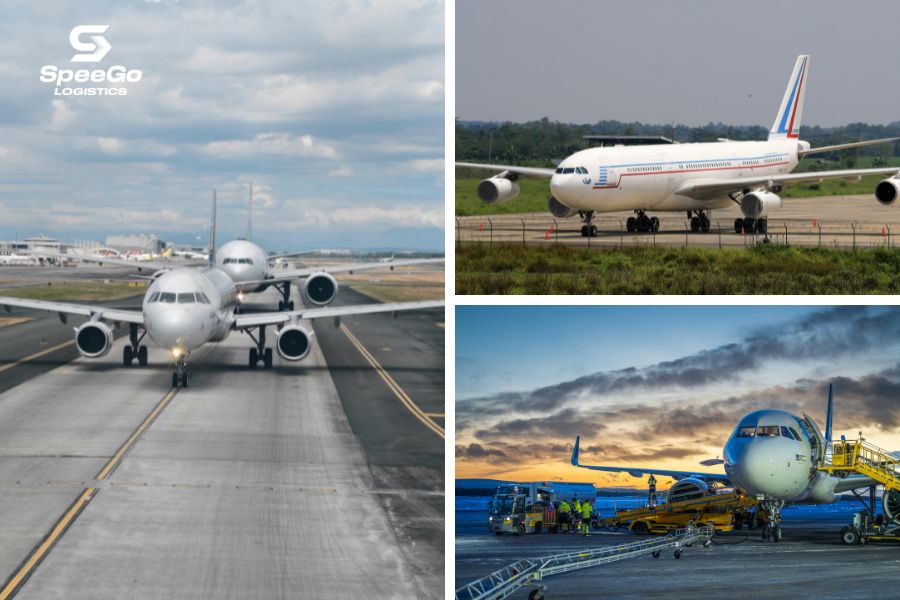
Wide-body passenger aircraft are large commercial airplanes primarily designed for carrying passengers. They also transport cargo in the lower deck belly hold area beneath the passenger cabin. Because these aircraft operate on long-haul international routes, they play a major role in global air cargo networks.
Examples include the Boeing 777, Airbus A350, and Boeing 787 Dreamliner. These aircraft provide substantial cargo capacity while combining passenger and freight operations, making them cost-efficient for airlines and logistics providers.
2.3. Narrow-Body Passenger Aircraft
Narrow-body passenger aircraft are smaller commercial airplanes mainly used for short-haul and regional routes. Although their cargo capacity is more limited than wide-body aircraft, they still play an important role in domestic and regional air freight transportation.
Popular narrow-body aircraft include the Boeing 737 and Airbus A320. Because of their high flight frequency and operational flexibility, narrow-body aircraft are widely used for fast regional distribution and airport-to-airport cargo transportation.
3. Types of Air Cargo Services
Businesses use different types of air cargo services depending on shipment urgency, cargo size, delivery destination, and transportation budget. Some services focus on speed and priority handling, while others are designed to reduce shipping costs through cargo consolidation and flexible routing.
3.1. Standard Air Freight
Standard air freight is one of the most commonly used air cargo services for international shipping. It offers a balance between transportation speed and shipping cost, making it suitable for general commercial cargo that does not require urgent delivery.
This service is often used for:
- Electronics and consumer goods
- Manufacturing components
- Retail inventory replenishment
- Medium-priority international shipments
Standard air freight typically operates through scheduled airline routes and may involve cargo transfers between airports depending on the destination. Businesses that need faster international delivery without the high cost of express shipping often choose standard air freight for better flexibility and stable transit times.
SpeeGo Logistics provides reliable air freight solutions for electronics, retail products, manufacturing materials, and commercial cargo through global airline networks.
3.2. Express Air Cargo
Express air cargo is designed for urgent and time-sensitive shipments that require very fast delivery. Compared with standard air freight, this service offers shorter transit times, priority cargo handling, and more detailed shipment tracking.
Businesses commonly use express air freight for:
- Medical supplies and pharmaceuticals
- Urgent business documents
- High-value electronics
- E-commerce orders with fast delivery requirements
Major international courier companies often provide integrated express air cargo networks with customs clearance and door-to-door delivery services.
3.3. Charter Air Services
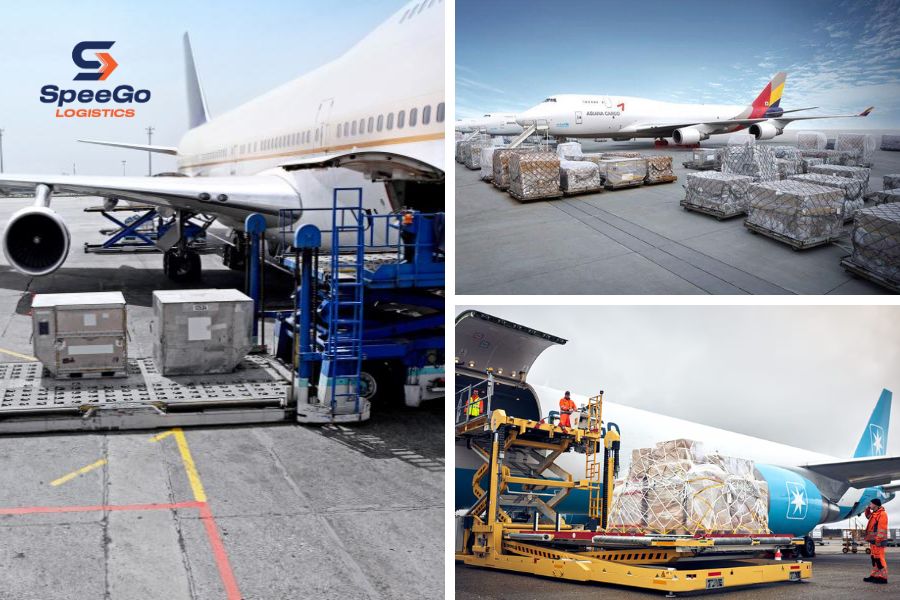
Charter air services involve renting an entire aircraft for dedicated cargo transportation. This option is commonly used when shipments are oversized, highly urgent, or unable to fit within regular airline schedules.
Charter air freight may be suitable for:
- Industrial machinery
- Humanitarian relief cargo
- Automotive equipment
- Large project cargo
- Emergency supply transportation
Although charter services are usually more expensive than scheduled air freight, they provide greater flexibility in routing, scheduling, and cargo handling.
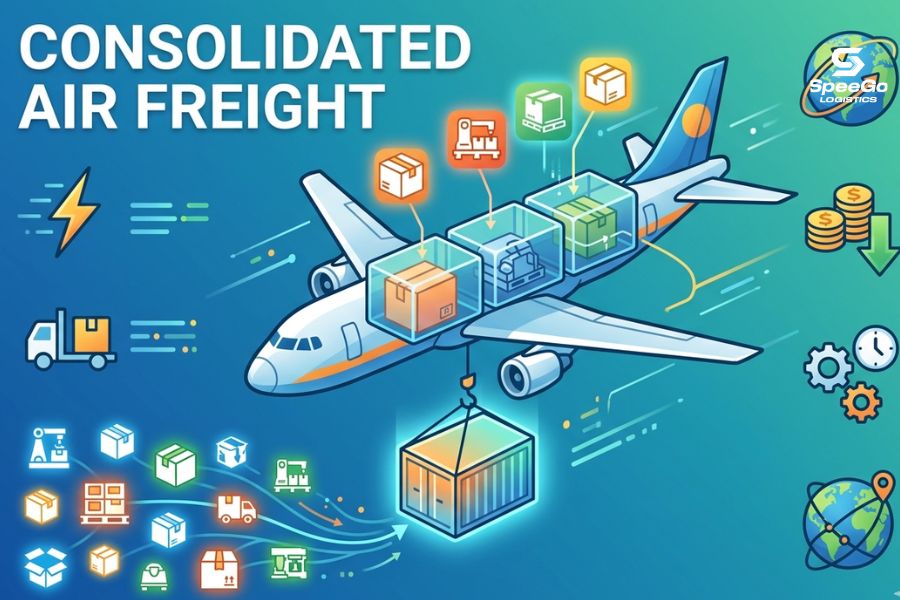
3.4. Consolidated Air Freight
Consolidated air freight combines shipments from multiple businesses into a single cargo load. Freight forwarders group smaller shipments together to reduce transportation costs and improve aircraft space utilisation.
This service is beneficial for:
- Small and medium-sized businesses
- Lower-volume cargo shipments
- Cost-sensitive international shipping
- Regular export operations
However, consolidated shipments may involve slightly longer handling times because cargo must be sorted and grouped before departure.
3.5. Door-to-Door Air Cargo Services
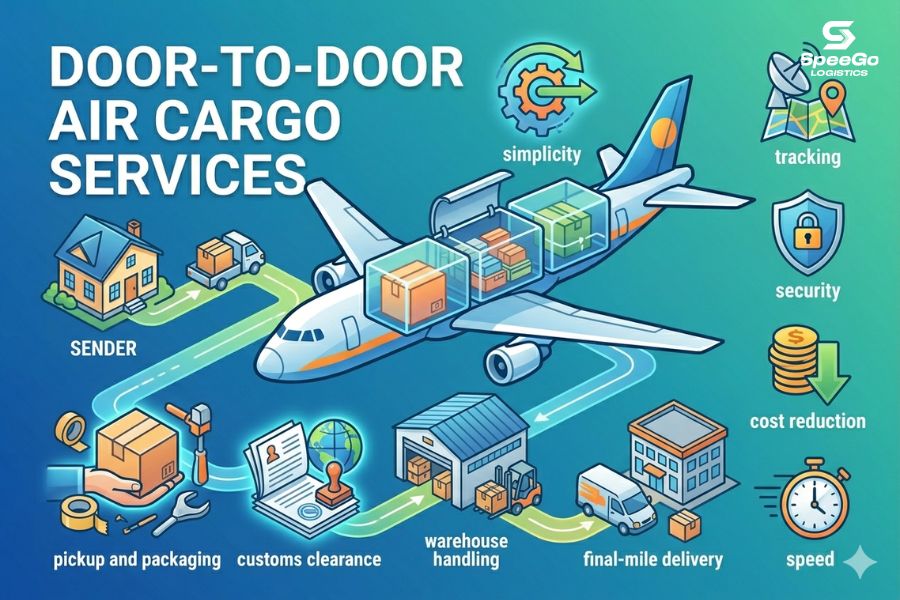
Door-to-door air cargo services provide end-to-end logistics support from the sender’s location to the final delivery destination. This service combines cargo pickup, air transportation, customs clearance, and final-mile delivery into a single logistics process.
Typical services may include:
- Cargo pickup and packaging
- Customs documentation support
- Air freight transportation
- Warehouse handling
- Final delivery coordination
Door-to-door solutions are widely used because they simplify international shipping management and reduce coordination between multiple logistics providers.
4. Common Air Cargo Types
Different air cargo examples require different transportation conditions, handling procedures, and regulatory compliance. Airlines, freight forwarders, and airport operators classify cargo based on factors such as product characteristics, safety requirements, temperature sensitivity, and shipment value.
4.1. General Cargo
General cargo refers to standard commercial shipments that do not require specialised handling, temperature control, or additional safety procedures during transportation. This category represents a large portion of global air freight activity because it includes many commonly traded consumer and industrial products.
Typical air cargo examples in this category include clothing, textiles, consumer electronics… Household productsAlthough these shipments are considered lower risk compared with dangerous or sensitive cargo, they still require proper packaging, labelling, and customs documentation to ensure efficient handling throughout the supply chain.
4.2. Special Cargo
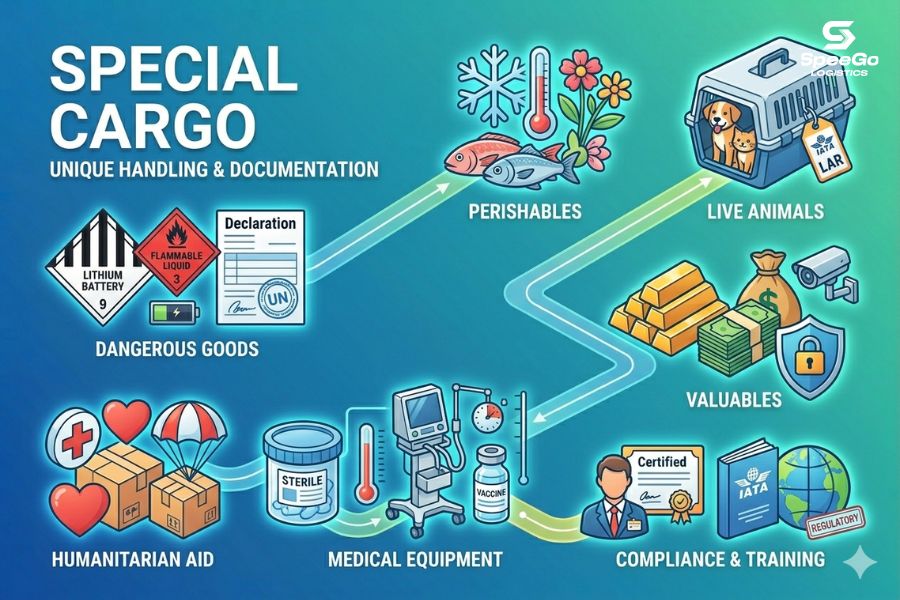
Special cargo includes shipments that require unique handling procedures, additional documentation, or specific transportation conditions due to their nature, size, or regulatory requirements. This category covers a broad range of cargo types that cannot be managed under standard freight procedures.
Examples of special cargo include dangerous goods, humanitarian relief supplies, medical equipment… Special cargo often requires trained handling personnel, specialised packaging materials, and compliance with international aviation safety regulations.
4.3. Live Animal Cargo
Live animal cargo involves transporting animals through carefully controlled air freight procedures designed to protect animal health, welfare, and safety during transit. Airlines must comply with international regulations regarding ventilation, feeding, temperature management, and cargo container standards.
4.4. Perishable Cargo
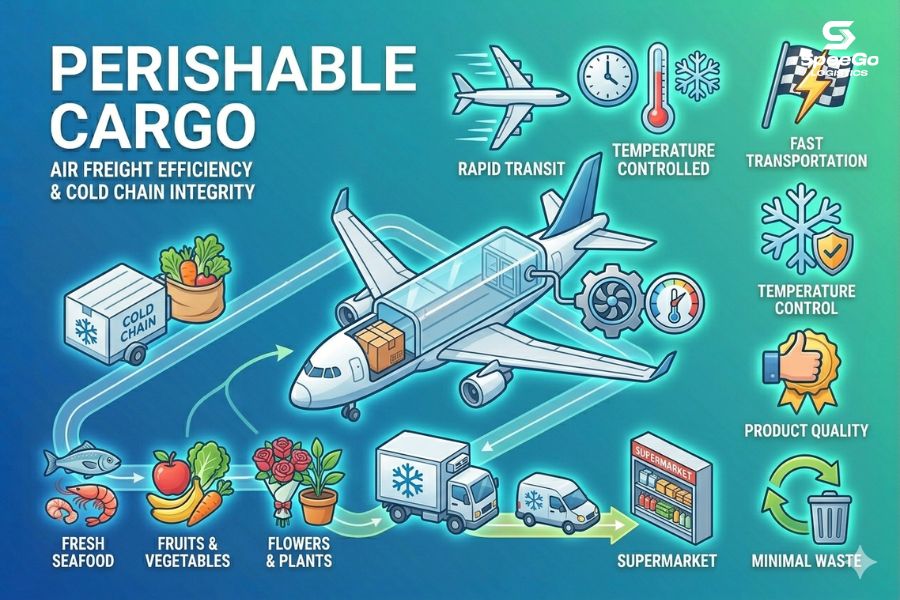
Perishable cargo consists of products with limited shelf life that require fast transportation and controlled environmental conditions to maintain product quality. Air freight is commonly used for perishables because it significantly reduces transit time compared with sea freight or road transportation.
Some perishable air cargo examples like fresh seafood, fruits, vegetables, flowers and plants… Many perishable shipments depend on cold chain logistics systems that maintain stable temperatures throughout storage, loading, transportation, and final delivery. Delays or improper handling may lead to spoilage, financial losses, and product safety risks.
4.5. Mail Cargo
Mail cargo refers to postal shipments and courier packages transported through commercial air cargo networks. This category supports global communication, e-commerce fulfillment, and express parcel delivery services. Many airlines now dedicate cargo space specifically for express parcel and postal logistics operations to support faster international delivery services.
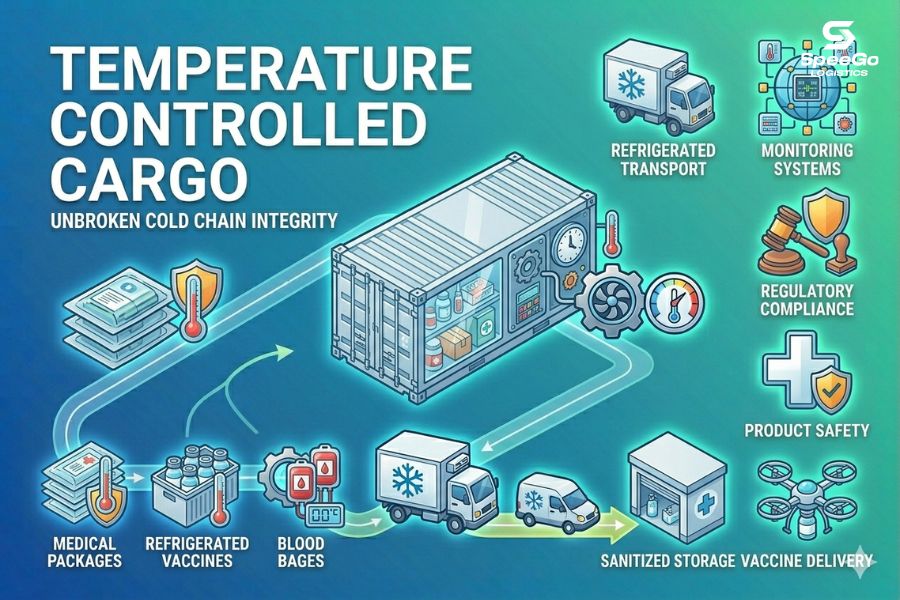
4.6. Temperature Controlled Cargo
Temperature-controlled cargo includes products that must remain within specific temperature ranges during transportation to preserve quality, safety, or effectiveness. These shipments require specialised packaging, refrigerated containers, and continuous monitoring systems throughout transit.
4.7. High – Value Cargo
High-value cargo includes goods with significant financial value that require enhanced security measures during handling and transportation. These shipments are often exposed to higher theft and damage risks, making secure logistics procedures especially important.
Different air cargo types allow businesses to select more suitable air freight services, improve supply chain visibility, reduce operational risks, and optimise shipping costs. As global supply chains continue to evolve, businesses that understand modern air cargo types and air freight services will be better prepared to reduce shipping risks.