

As supply chains become more complex, businesses are turning to New Generation Logistics to improve efficiency, visibility, and decision-making. This modern approach integrates digital systems, automation, and real-time insights to create more agile and resilient logistics operations.
1. What is New Generation Logistics?
At its core, new generation logistics refers to a modern approach to managing the movement of goods using advanced technologies, real-time data, and automated systems. Unlike traditional logistics models, which often rely on manual processes and limited visibility, this new model focuses on digital integration and informed decision-making throughout the entire supply chain.
1.1. How Does It Differ from Traditional Logistics?
Traditional logistics systems are typically fragmented, with limited coordination between transportation, warehousing, and inventory management. In contrast, modern logistics systems are highly connected and data-driven.
- Traditional logistics depends on manual tracking and reactive decision-making
- New generation logistics uses real-time data to predict demand and optimise operations
- Legacy systems often operate in silos, while digital logistics integrates all supply chain functions
This shift allows businesses to move from reactive operations to proactive and predictive logistics strategies.
1.2. Key Elements of New Generation Logistics
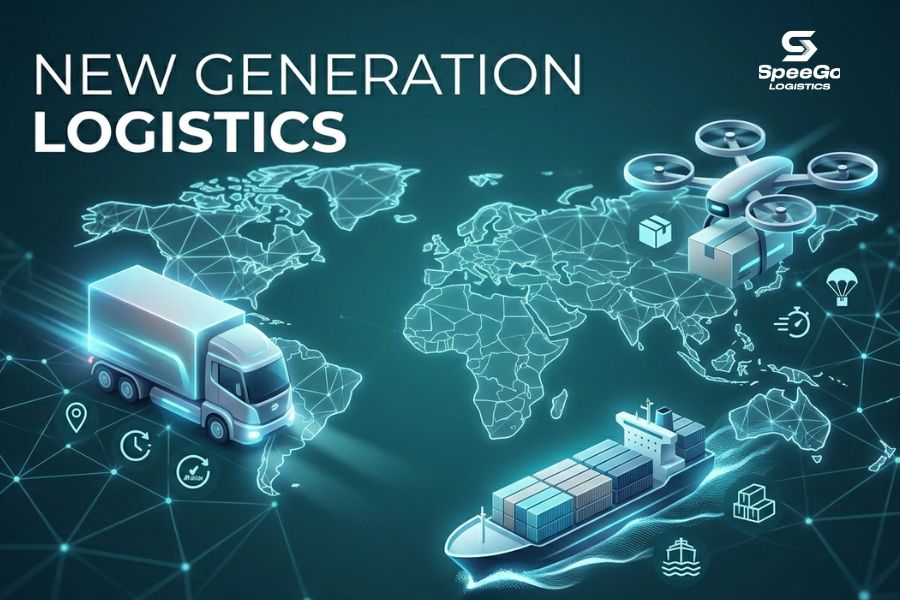
Several core components define digital logistics in the modern era:
- Real-time visibility: Businesses can track shipments, inventory, and delivery status instantly
- Automation: Warehousing, order processing, and route planning are increasingly automated
- Data-driven decisions: Analytics tools help forecast demand and optimise supply chain performance
- Connectivity: Systems are integrated across suppliers, logistics providers, and customers
2. Key Technologies Driving New Generation Logistics
The transition to next-generation logistics is predominantly driven by rapid technological innovations. These technologies enable businesses to move beyond traditional, reactive operations and adopt more intelligent, data-driven logistics systems
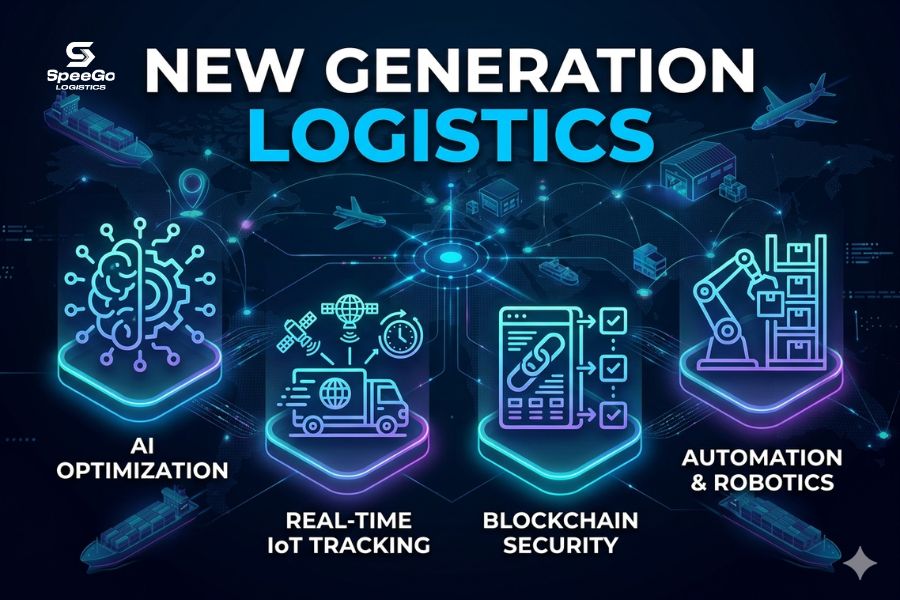
- AI in Logistics: It plays a central role in modern logistics by transforming how decisions are made. AI in logistics systems analyse large volumes of data to forecast demand, optimise routes, and improve delivery accuracy.
- Internet of Things (IoT) and Real-Time Tracking: It connects physical assets such as vehicles, containers, and warehouse equipment to digital systems. This connectivity provides real-time visibility across the entire supply chain.
- Using Blockchain to Enhance Transparency and Security: Blockchain technology is increasingly used to improve trust and transparency in logistics operations. It creates a secure and tamper-resistant record of transactions, which can be shared across multiple parties in the supply chain.
- Automation and Robotics: Automation is another key driver of smart logistics technology from automated warehouses to robotic picking systems.
Technologies such as AI, IoT, blockchain, and automation are at the core of new generation logistics. Together, they enable businesses to build smarter, faster, and more reliable supply chains that can adapt to the demands of modern global trade.
3. Benefits of New Generation Logistics
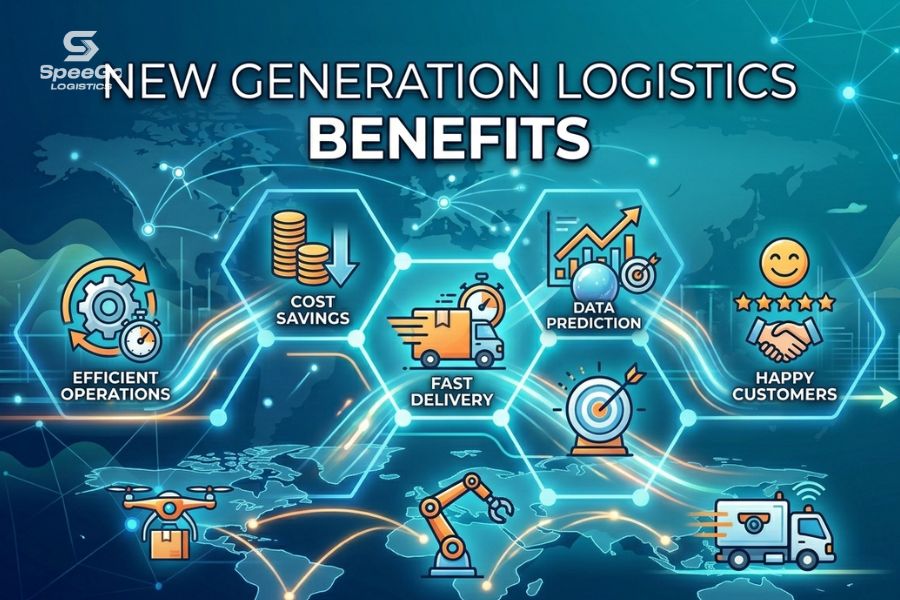
The adoption of new generation logistics brings measurable advantages for businesses aiming to improve performance in increasingly complex supply chains.
- Improved Operational Efficiency: With real-time data and automated systems, businesses can streamline workflows, reduce manual errors, and eliminate unnecessary steps in the supply chain.
- Cost Optimisation: Digital logistics systems allow businesses to identify inefficiencies, reduce fuel consumption, and minimise waste in transportation and warehousing.
- Faster and More Reliable Delivery: New generation logistics enables faster delivery through real-time tracking, dynamic routing, and improved coordination between supply chain partners.
- Enhanced Data Accuracy and Forecasting: Advanced analytics tools help businesses collect and analyse large volumes of data to improve decision-making.
- Better Customer Experience: Real-time tracking, faster delivery times, and more reliable service help build trust and satisfaction.
The benefits of new generation logistics go beyond technology adoption. It enables businesses to optimize costs, improve delivery performance, enhance forecasting accuracy, and deliver a better customer experience.
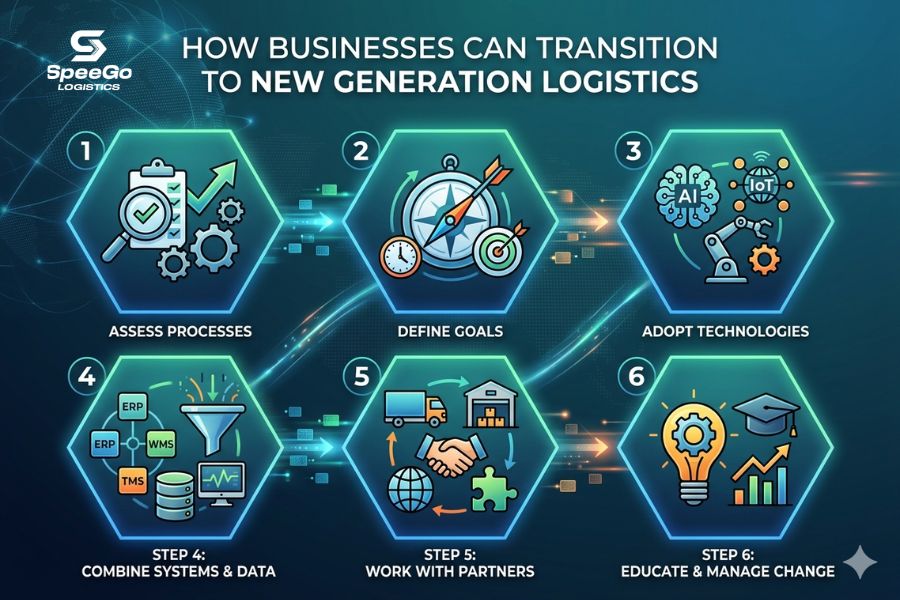
4. How Businesses Can Transition to New Generation Logistics?
Moving toward new generation logistics is not a one-time upgrade but a gradual transformation. Businesses need a clear logistics strategy that aligns technology adoption with operational goals.
Step 1: Assess existing processes
Review logistics processes, systems, and performance to identify inefficiencies and gaps.
Step 2: Define specific goals
Define specific goals such as cost reduction, faster delivery, or better visibility.
Step 3: Adopt suitable technologies
Select tools like AI, IoT, or automation based on actual business needs.
Step 4: Combine systems and consolidate data
Connect platforms (ERP, WMS, TMS) to ensure smooth data flow and real-time visibility.
Step 5: Work together with logistics collaborators
Work with experienced providers to access advanced capabilities and reduce implementation risks.
Step 6: Educate staff and oversee change management
Equip employees with the skills needed and align internal processes for successful adoption.
When it comes to reliable and efficient shipping, choosing the right partner makes all the difference. SpeeGo Logistics offers professional international transport services designed to handle your shipments smoothly from origin to destination.
5. Challenges in Adopting New Generation Logistics
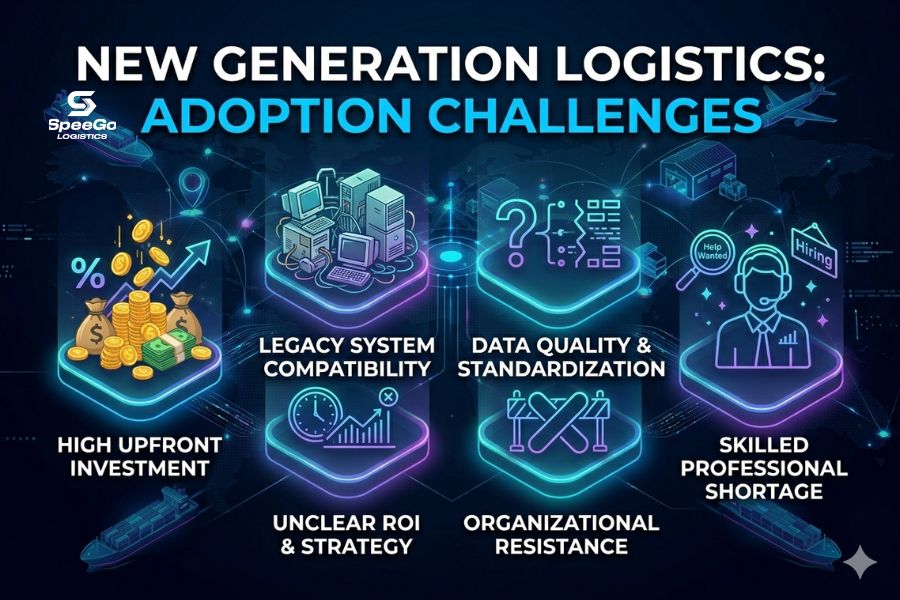
While new generation logistics offers clear advantages, the transition is not always straightforward. Many businesses face practical barriers that can slow down adoption or reduce the expected return on investment.
- Significant upfront investment expenses: Businesses often need to allocate budgets for new software systems, infrastructure upgrades, and integration processes.
- Compatibility issues with legacy systems: Many companies still rely on outdated logistics infrastructure that was not designed to support modern technologies.
- Lack of High-Quality and Standardised Data: Data plays a central role in modern logistics, but not all businesses have access to clean and consistent data.
- Limited availability of skilled professionals: Roles such as data analysts, AI engineers, and system architects are in high demand but not always easy to recruit.
- Unclear ROI and Strategic Alignment: For many organisations, the return on investment in new generation logistics is not always immediately visible. Long implementation timelines and unclear performance metrics can create hesitation among decision-makers.
- Change Management and Organisational Resistance: Employees may resist these changes due to concerns about job security or unfamiliarity with new technologies.
The challenges of adopting new generation logistics are not purely technical. They involve investment, data quality, system integration, and organisational readiness.
To sum up, new generation logistics is not just an upgrade but it is a strategic advantage. Companies that embrace this approach can reduce costs, improve delivery speed, and build stronger, more responsive supply chains.