In today’s highly competitive retail environment, expanding businesses need more than just attractive products. They require reliable sourcing strategies that safeguard profit margins and support sustainable growth. Vietnamese home decor wholesale presents a smart advantage in this regard. Combining craftsmanship, scalability, and cost efficiency, Vietnam offers an ideal sourcing solution for brands seeking growth without sacrificing quality.
1. Why Does Vietnamese Home Decor Have a Competitive Edge in Export Markets?
Vietnam’s home decor items are increasingly recognized as a prominent sector with high potential. Beyond mere decoration, Vietnamese decor products are deeply connected to traditional craftsmanship, natural materials, and the global trend toward sustainable consumption.
Abundant and Diverse Natural ResourcesVietnam benefits from rich natural resources that support home decor manufacturing, including bamboo, rattan, seagrass, ceramics, and wood. These materials are renewable, environmentally friendly, and align well with sustainability trends in developed markets. As a result, handcrafted products from Vietnam can easily position themselves within the eco-friendly decor segment that international consumers actively seek.
Traditional Craftsmanship and Unique AestheticsFrom the bamboo weaving villages in the North to rattan craft regions in Central and Southern Vietnam, Vietnamese artisans produce not just mass goods but culturally rich, highly handcrafted items. According to recent data, Vietnam has approximately 893 craft villages specializing in bamboo, rattan, and weaving, involving hundreds of thousands of artisans in the export product chain.
Competitive Production Costs Compared to Regional PeersLabor and manufacturing expenses in Vietnam for crafts are generally lower than in neighboring countries like Indonesia and Thailand. Additionally, the quality and volume of Vietnamese handicrafts are often superior to low-cost Chinese products. According to VietnamNet, the US is a target export market worth USD 266 million, accounting for 46.3% of total export turnover.
International Consumer Trends Favor Handmade and Sustainable ProductsConsumers in the US and EU are increasingly prioritizing handcrafted, environmentally friendly products with cultural value. This is where Vietnamese artisanal decor, made from natural materials like bamboo, rattan, and seagrass, excels.
2. Top Vietnamese Home Decor for Export
Vietnamese home decor is diverse in types and designs, but only a few products are especially suitable for international markets. These items are trendy, easy to source, profitable, and help differentiate your store.
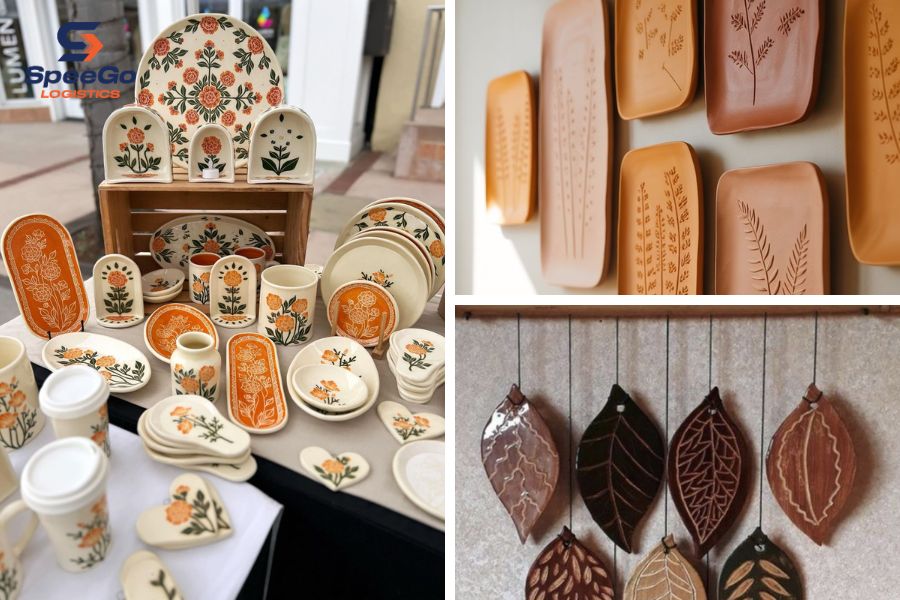
2.1. Ceramic and Pottery Decor
According to ITC Trade Map (HS codes 6912, 6913), Vietnam’s exports of ceramic arts and decor reached over USD 600 million in 2023, with the US being one of the largest importing markets. The Vietnam Ceramic Association reports that over 60% of ceramic exports go to the US and EU.
Top Products:
- Glazed vases with minimalist or indigo-inspired designs.
- Decorative jugs and elegant carafes.
- Handcrafted bowls and complete tea sets.
- Rustic-style pots and plant containers.
- Incense holders and essential oil burners.
2.2. Bamboo and Rattan Furniture
According to the Vietnamese Ministry of Industry and Trade, in the first eight months of 2025, exports of rattan, bamboo, seagrass, and mats reached approximately USD 574 million, up 5.4% year-on-year. The US alone accounted for USD 266 million, representing 46.3%. Additionally, the Food and Agriculture Organization (FAO) ranks Vietnam as one of the largest global exporters of rattan and bamboo, with products in 130 countries.
Must-Have Items:
- Lounge chairs and relaxing daybeds.
- Foldable stools for flexible seating.
- Round coffee tables and small side tables.
- Lightweight shelving units.
- Handcrafted headboards and benches.
2.3. Handwoven Baskets
According to Lifestyle Vietnam (an international handicraft trade fair), woven baskets and storage decor dominate export orders to the US and Europe, especially via e-commerce platforms.
Popular Items:
- Woven wall baskets.
- Seagrass laundry hampers.
- Nested storage baskets with handles.
- Hanging planters and ceiling baskets.
- Picnic and market tote bags.
2.4. Lacquerware and Wooden Crafts
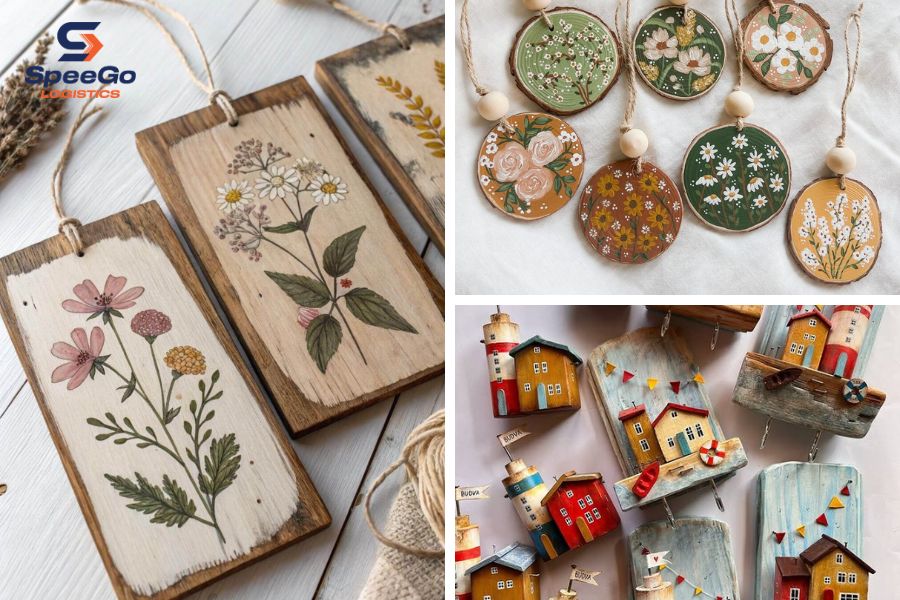
Lacquer trays, jewelry boxes, and decorative art pieces are high-value items reflecting Vietnamese culture. These products serve as both decor and art, often sold in boutique segments, as luxury gifts, or hotel interior decor.
Best Sellers:
- Serving trays and coasters.
- Jewelry boxes and organizers.
- Wall panels and framed decorative art.
- Mother-of-pearl inlay bowls.
2.5. Embroidered and Woven Textiles
This segment combines artistic value, versatile application, and strong international appeal. Textile decor suits boho, Scandinavian, minimalist, and eco-friendly interior styles. Lightweight and flexible, these products are ideal for e-commerce and large-volume exports.
Must-Have Items:
- Embroidered throw pillows.
- Cotton or hemp cushion covers.
- Boho-style table runners.
- Handwoven blankets and wall hangings.
- Reversible placemats and cloth napkins.
3. Vietnamese vs. Other Asian Home Decor Sources
When contrasting Vietnamese decor with products from China, India, or Indonesia, factors such as cost, production structure, market adaptability, and design identity are key. Vietnam isn’t the cheapest producer nor the most traditional craft hub in Asia, but it uniquely balances craftsmanship, flexibility, and stable manufacturing capacity.
3.1. Balance Between Traditional Handcraft and Modern Production
Many countries excel in either large-scale industrial manufacturing or refined artisanal craftsmanship. China is renowned for mass production and efficient supply chains; India for intricate carving, embroidery, and metalwork; Indonesia for natural wood and handcrafted furniture.
Vietnam has developed a hybrid production model that effectively supports the growth of Export handicrafts. The country preserves its traditional craft villages, specializing in ceramics, lacquerware, and weaving, while simultaneously investing in semi-automated factories to meet global standards.
This balanced approach allows Vietnam to maintain the authentic, handcrafted identity that international buyers value, while also ensuring consistent color, size, finishing, and quality control. As a result, Export handicrafts from Vietnam can satisfy both small boutique orders and large-volume shipments, making the supply chain more reliable for overseas partners. By combining artisan heritage with modern production systems, Vietnam strengthens its position as a competitive and sustainable hub for export handicrafts in the global market.
3.2. Rich Raw Material Resources
Vietnam’s tropical geography provides abundant bamboo, rattan, seagrass, rubberwood, and other natural fibers, aligning with sustainable consumption trends in the US, Canada, and Australia.
Compared to China, which mainly produces decor with MDF, plastic, or metal, Vietnamese products tend to be lighter, more natural, and create a warmer ambiance. While Indonesia primarily uses teak, it tends to be more expensive.
Vietnam stands in a middle ground leveraging natural local resources and cost-effective production to offer versatile material options at competitive prices. This enables brands to position products in the mid-range segment, balancing profitability and appeal to a broad customer base.
4. Meet SpeeGo Logistics: Your Strategic Source Agency from Vietnam to the USA, Canada and Australia
SpeeGo Logistics is an agency that supports exporters, brands, and eCommerce sellers throughout the entire shipping journey from factory pickup in Vietnam to final delivery in the U.S.
- Direct Access to Suppliers: Work directly with Vietnamese manufacturers and skilled artisans without intermediaries. This allows clearer communication, faster negotiations, and better control over product specifications, timelines, and pricing terms.
- Clear and Transparent Pricing: All price discussions take place openly between buyers and suppliers. There are no concealed commissions or unexpected markups, and SpeeGo does not step into or influence the final pricing agreement.
- Zero Cost for Buyers: Buyers can explore, connect, and negotiate on the platform at no charge. SpeeGo Logistics operates on a simple model where suppliers pay a one-time listing fee upon joining, keeping the experience free for sourcing businesses.
- Carefully Selected Supplier Network: Each supplier is screened before being listed, giving buyers access to dependable partners across key categories such as bamboo furniture, lacquerware, ceramics, and woven products. This curated approach helps reduce sourcing risks and saves time when searching for trustworthy manufacturers.