Sourcing from China remains one of the most effective ways to reduce costs and scale product lines. However, many businesses struggle with supplier reliability, quality control, and logistics. This guide will walk you through a clear, actionable process to source safely and efficiently.
1. Supplier Verification Framework: How to Assess Chinese Manufacturers Beyond Alibaba Profiles?
Sourcing from China becomes risky when supplier evaluation relies only on online profiles. Many businesses assume that a verified badge or high rating guarantees reliability, but in practice, these indicators are not enough.
A structured verification process helps you filter out unreliable suppliers early, reduce quality risks, and avoid costly delays. Below is a practical framework used by experienced importers.
1.1. How to verify a supplier in China?
If you are wondering how to find suppliers in China, verification should always come before price negotiation. To verify a supplier in China, follow 4 key steps:
- Check the business license and registration details
- Confirm whether the supplier is a factory or trading company
- Evaluate production capacity and technical capability
- Review export experience and identify red flags
1.2. Business License Verification
The first step is to verify whether the supplier is a legally registered entity in China. You can cross-check this information through official Chinese databases or request a translated version from the supplier.
- A valid business license (营业执照).
- Company registration number.
- Registered address and legal representative.
A verified business license confirms that the company legally exists. However, it does not guarantee production capability or reliability, so it should only be treated as a starting point. Some details in the business licence that you need to verify like expired or inconsistent registration details and company name on invoice does not match the bank account.
1.3. Factory vs Trading Company: Identify the Real Supplier Type
Understanding whether you are dealing with a manufacturer or a trading company is critical.
Factory (Manufacturer):
- Owns production facilities
- Better control over quality and lead time
- More flexible for customization
Trading Company:
- Acts as an intermediary
- May offer a wider product range
- Less control over production
How to verify:
- Ask for factory photos or videos (production lines, machinery)
- Request a factory audit report
- Check product consistency across categories
Expert insight: If a supplier offers too many unrelated product categories, they are likely a trading company.
1.4. Production Capability: Evaluate Real Manufacturing Strength
A supplier’s ability to deliver consistent quality depends on its production capacity.
Key factors to assess:
- Machinery and equipment (manual vs automated)
- Workforce size and skill level
- Monthly production capacity
- MOQ logic (Minimum Order Quantity)
1.5. Export Experience: Check Market Familiarity and Compliance
Suppliers with export experience are more likely to understand international standards and documentation requirements.
Key indicators:
- Previous export markets (e.g., U.S., Canada, Australia)
- Familiarity with product compliance (labeling, testing)
- Experience with shipping terms (FOB, CIF)
Why this matters: An experienced exporter reduces the risk of:
- Incorrect documentation
- Customs delays
- Non-compliant products
2. Cost Breakdown When Sourcing from China (Real Cost vs Quoted Price)
One of the most common mistakes when you import from China is focusing only on the quoted unit price. In reality, the price you see is rarely the final cost you pay. To make informed decisions, importers need to understand the full cost structure, including logistics, documentation, and hidden operational expenses.
2.1. What is the real cost of sourcing from China?
Understanding the real cost of China manufacturing sourcing helps businesses avoid unexpected expenses and pricing mistakes. The real cost of sourcing from China includes:
- Product price (EXW, FOB, or CIF)
- Inland transportation and handling
- Export documentation and fees
- International shipping
- Import duties and taxes
This total is known as the landed cost, not just the supplier’s quotation.
2.2. EXW vs FOB vs CIF
Suppliers in China typically quote prices using Incoterms. Each term defines what is included in the price and who is responsible for logistics.
- EXW (Ex Works): It is usually the lowest quoted price because the supplier only prepares the goods at the factory, and the buyer is responsible for everything else. This option is only suitable if you already have a reliable logistics partner in China.
- FOB (Free On Board): This is the most commonly used term for international buyers because the supplier handles all local costs up to the port of departure, including inland transport, export clearance, and port handling.
- CIF (Cost, Insurance, Freight): includes sea freight and basic insurance, delivering the goods to the destination port.
2.3. Hidden Costs When Sourcing from China
Even with clear pricing terms, several additional costs can impact your budget. These include packaging upgrades for export standards, inland trucking from factory to port, and export documentation fees. If these elements are not discussed early, they can significantly increase the total cost and affect your pricing strategy in the target market.
2.4. Cost per Unit vs Landed Cost
Many businesses focus on the unit price when comparing suppliers, but this approach can be misleading. The real cost is the landed cost, which includes product price, shipping, import duties, and final delivery. A supplier with a slightly higher unit price may actually offer better overall value if their logistics and packaging are more efficient.
2.5. MOQ Impact on Pricing and Cost Efficiency
Minimum Order Quantity (MOQ) plays a key role in determining your cost structure. Lower MOQs are useful for testing products but often come with higher unit prices. Higher MOQs reduce production costs but require greater upfront investment. A balanced approach is to start small, validate demand, and then scale production to optimize profitability.

3. Product Specification and Sampling
One of the most common issues when sourcing from China is the gap between the approved sample and the final bulk production. This problem, often called quality drift, usually happens when product requirements are not clearly defined from the beginning. To prevent this, buyers need a structured approach that combines detailed specifications with a disciplined sampling process.
3.1. How to avoid quality issues when sourcing from China?
To avoid quality drift when sourcing from China:
- Define clear product specifications (materials, dimensions, finishing)
- Approve a “golden sample” before production
- Use a structured sample approval checklist
- Align expectations with the supplier before mass production
3.2. Writing Clear Product Specifications
A product specification is the foundation of quality control. Without it, suppliers will rely on assumptions, which often leads to inconsistent results.
- Material details: exact type, grade, or composition
- Dimensions and tolerance: acceptable size variations
- Finishing requirements: color, coating, texture, or polish level
- Functionality standards: load capacity, durability, or performance
If a requirement is not written down, it cannot be inspected or enforced later. In professional sourcing, no specification means no quality control.
3.3. Golden Sample vs Production Sample
Not all samples serve the same purpose. Understanding the difference helps avoid confusion during production. A development sample is used to test design and feasibility, while a production sample reflects the actual manufacturing process. The most important reference is the golden sample, which is the final approved version agreed upon by both buyer and supplier.
3.4. Sample Approval Checklist
Approving a sample should not rely on visual judgment alone. A structured checklist ensures consistency and reduces subjective decisions.
Key elements to review:
- Material accuracy compared to specification
- Color consistency under different lighting conditions
- Surface finishing and workmanship
- Functional performance (if applicable)
- Packaging and labeling requirements
Document feedback clearly and request revisions if needed. Never move to mass production based on a “close enough” sample.
4. Pre-shipment Inspection and AQL Standards
Maintaining consistent quality is one of the biggest challenges when sourcing from China. Even with a reliable supplier, variations can occur during production. A structured quality control (QC) system helps buyers detect issues early, reduce defect rates, and ensure that products meet agreed standards before shipment.
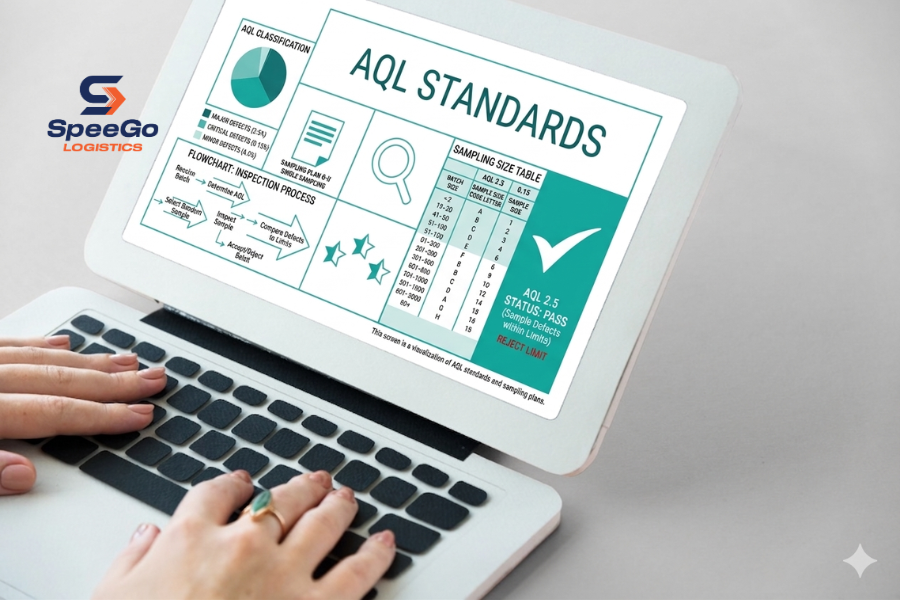
4.1. What is AQL in sourcing?
AQL (Acceptable Quality Limit) is a sampling method used in quality inspections to determine the maximum number of defects allowed in a batch. It helps buyers decide whether to accept or reject a shipment based on predefined quality thresholds.
4.2. Types of Inspection in a Real QC Workflow
A professional QC system includes multiple inspection stages rather than a single final check. Each stage serves a different purpose and reduces risk progressively.
Pre-production Inspection
This inspection takes place before manufacturing begins. It focuses on verifying raw materials, components, and production readiness. At this stage, buyers confirm whether the factory fully understands the specifications and has the correct inputs to start production. Catching issues early prevents costly corrections later.
During Production Inspection (DUPRO)
During production inspection is conducted when around 20 – 50% of the goods are completed. This allows buyers to identify defects while production is still ongoing. If problems are detected, the supplier can adjust the process immediately, reducing the risk of large-scale defects in the final batch.
Pre-shipment Inspection (PSI)
Pre-shipment inspection is the final quality check before goods leave the factory. Inspectors randomly select samples based on AQL standards and evaluate them against specifications. This step determines whether the shipment is acceptable, needs rework, or should be rejected.
5. Requirements for US, Canada, and Australia Markets
Each country has its own regulatory framework, and failing to meet these requirements can lead to shipment delays, fines, or even product recalls. A structured approach to compliance helps businesses reduce risk and build long-term credibility in international markets.
5.1. What compliance is required when importing from China?
To import products from China successfully, you must ensure:
- Product-specific compliance (e.g., electronics, textiles, food-contact items)
- Accurate labeling according to local regulations
- Required testing and certification
- Complete documentation for customs clearance
5.2. United States (Strict Standards with Category-Specific Regulations)
The United States applies detailed regulations depending on product type, especially for consumer goods. When planning shipping from China to US, businesses must not only focus on logistics but also ensure full compliance with product-specific standards before shipment.
- Electronics: Products may need certification from the Federal Communications Commission to ensure they meet electromagnetic compatibility standards.
- Consumer products: Compliance is often enforced by the Consumer Product Safety Commission. This includes safety standards for items such as children’s products, furniture, and household goods.
- Food-contact products (e.g., kitchenware): Regulations from the U.S. Food and Drug Administration apply. Importers must ensure materials are safe and properly tested for substances like lead or chemical migration.
Compliance should be integrated into your sourcing and logistics plan from the beginning. During the shipping process, incomplete certification, incorrect labeling and import tax from China to US are the most common causes of customs delays.
5.3. Canada (Emphasis on Labeling and Consumer Protection)
Canada’s regulatory system focuses strongly on transparency and consumer safety, with strict labeling requirements across many product categories.
- Textiles: Compliance is governed by the Textile Labelling Act, which requires clear disclosure of fiber composition and dealer identity. Labels must often be provided in both English and French.
- Consumer products: Safety is regulated under the Canada Consumer Product Safety Act. This applies to a wide range of goods, including home products and accessories.
- Food-related items: The Canadian Food Inspection Agency oversees compliance, including ingredient labeling and safety standards.
5.4. Australia (Biosecurity and Import Control Focus)
Australia is known for its strict import controls, especially for products that may pose environmental or biological risks. The Department of Agriculture, Fisheries and Forestry enforces biosecurity regulations. If you want to import from China to Australia, businesses need to research and understand these requirements early to avoid shipment delays, re-export, or destruction of goods.
6. Payment Terms & Risk Control
Many sourcing failures are not caused by product quality, but by poor payment control. A clear understanding of payment terms, combined with basic risk management practices, helps protect your capital and maintain stable supplier relationships.
6.1. How to pay suppliers in China safely?
To pay suppliers in China safely:
- Use standard payment terms such as 30/70 or Letter of Credit (LC)
- Avoid paying 100% upfront without verification
- Confirm bank account details carefully
- Include clear payment and delivery terms in the contract
6.2. Key Risk Signals You Should Never Ignore
Certain warning signs often appear before payment-related problems occur. Recognizing these signals early can prevent financial loss.
One common issue is a sudden change in bank account details, especially if the new account belongs to a different company or country. This may indicate fraud or internal issues within the supplier’s organization.
Another red flag is when a supplier requests full payment upfront, particularly without a proven track record. This shifts all risk to the buyer and should be avoided unless there is a strong, verified relationship.
Delayed or inconsistent communication during the payment stage is also a concern, as it may reflect operational instability.
7. How to Optimize Shipping from China?
A well-planned logistics strategy can significantly reduce expenses, improve delivery timelines, and increase overall efficiency. Instead of choosing the cheapest option by default, experienced importers focus on optimizing space, timing, and shipment structure. Also, the business needs to consider the sample shipping costs when calculating the total cost.
How to reduce shipping costs from China?
- Choose between LCL and FCL based on shipment volume
- Maximize container space (CBM utilization)
- Plan production and shipping timelines together
- Consolidate shipments from multiple suppliers
7.2. When to Use LCL vs FCL
Choosing the right shipping method is the first step in cost optimization. LCL (Less than Container Load) is suitable for smaller shipments that do not fill an entire container. It allows you to share container space with other importers, reducing upfront costs. However, LCL often comes with higher cost per cubic meter and longer handling time due to consolidation and deconsolidation.
FCL (Full Container Load), on the other hand, is more cost-effective for larger shipments. Once your volume is sufficient to fill most of a container, FCL reduces handling risks, shortens transit time, and lowers the cost per unit. For growing businesses, transitioning from LCL to FCL is a key milestone in improving logistics efficiency.
7.3. Container Optimization (CBM Utilization)
Shipping costs are largely based on volume, measured in cubic meters (CBM). Efficient use of container space directly reduces cost per unit. Even small improvements in packaging can lead to significant savings when scaled across large shipments. Suppliers with experience in export packaging can often help optimize this process.
7.4. Lead Time Planning
Logistics efficiency depends heavily on timing. Many delays occur not during shipping, but due to poor coordination between production and logistics. A well-structured plan should include production timeline (manufacturing duration), booking schedule for shipping and transit time based on shipping method. By aligning these elements, businesses can avoid rushed shipments, which often require expensive air freight. Instead, they can rely on planned sea freight, which offers better cost efficiency.
7.5. Combining Shipments from Multiple muppliers
When sourcing from multiple factories, shipping separately from each supplier can significantly increase costs. A more efficient approach is shipment consolidation, where goods are combined into a single shipment before export.
Start Sourcing from China with SpeeGo Logistics
If you are serious about sourcing from China and want to build a reliable, long-term supply chain:
- Get a clear sourcing and logistics plan tailored to your product
- Identify the right suppliers based on your market and budget
- Optimize shipping costs before placing your first order
Partnering with SpeeGo Logistics can help you source smarter, reduce risk, and deliver consistently from factory floor to your final market. Contact us at to start sourcing now.