Global sourcing has become increasingly dynamic, and Vietnam is now emerging as one of the most reliable partners for businesses looking to optimize cost and supply chain stability. With strong trade ties and improving logistics infrastructure, shipping from Vietnam to the US is no longer just an alternative.
1. Why Is Shipping from Vietnam to the USA Growing Rapidly?
Since the Bilateral Trade Agreement (BTA) was signed in 2001, Vietnam has evolved into one of the most strategic sourcing destinations for U.S. businesses. A major driver behind this growth is the strong trade relationship between Vietnam and the United States. Tariffs have dropped significantly from around 40% to approximately 3%, helping accelerate bilateral trade. This policy shift has played a key role in making it more cost-effective for businesses to import to the USA from Vietnam.
As a result, trade volume has expanded rapidly. According to the U.S. Census Bureau, Vietnam’s exports to the United States reached approximately USD 97 billion in 2023, even amid global economic fluctuations. This highlights not only the scale of trade but also the continued demand for Vietnamese goods in the U.S. market. If you want a clearer picture of what’s actually being shipped, take a look at our guide on the top US imports from Vietnam.
From a logistics perspective, Vietnam has also made steady improvements in port infrastructure and international connectivity. This has led to more stable and predictable shipping time from Vietnam to the USA, particularly for major routes to the West Coast and East Coast. As shipping frequency increases, businesses can better plan inventory cycles and reduce the risk of stockouts.
2. Our Shipping Services from Vietnam to USA
Depending on your shipment size, urgency, and budget, businesses typically choose between ocean freight and air freight.
3.1. Ocean Freight (FCL & LCL)
Ocean freight remains the most widely used option for businesses shipping to US, especially for bulk shipments and long-term supply chains. It is generally the most cost-effective method when compared to air freight, particularly for large volumes.
There are two main options:
- FCL (Full Container Load): Suitable for businesses with high shipment volumes. You use an entire container, which helps reduce handling and lowers the risk of damage. It also offers better cost efficiency per unit when scaling operations.
- LCL (Less than Container Load): Ideal for smaller shipments that do not require a full container. Goods are consolidated with other shipments, which helps reduce upfront costs but may increase handling time.
Ocean freight remains the backbone of global trade, accounting for over 80% of international goods transport by volume. This explains why it is the preferred choice for businesses aiming to optimize USA shipping costs over the long term.
3.2. Air Freight
Air freight is the fastest option for shipping from Vietnam to USA, making it suitable for urgent shipments or high-value goods where speed is critical. In terms of pricing, shipping cost from Vietnam to USA via air freight is usually calculated per kilogram and can be several times higher than sea freight. However, for time-sensitive products such as electronics, fashion items, or seasonal goods, the faster delivery can outweigh the additional expense. According to the International Air Transport Association, air cargo represents less than 1% of global trade volume but accounts for over 35% of trade value, highlighting its importance for high-value and time-critical shipments.
4. Key Factors to Consider When Shipping from Vietnam to US
The first time working on a shipment from Vietnam to the U.S., everything may seem straightforward like get a quote, book a container, and wait for delivery. In reality, the process tends to be more layered. Small details, often overlooked at the beginning, are usually what determine whether your shipment runs smoothly or ends up costing more than expected.
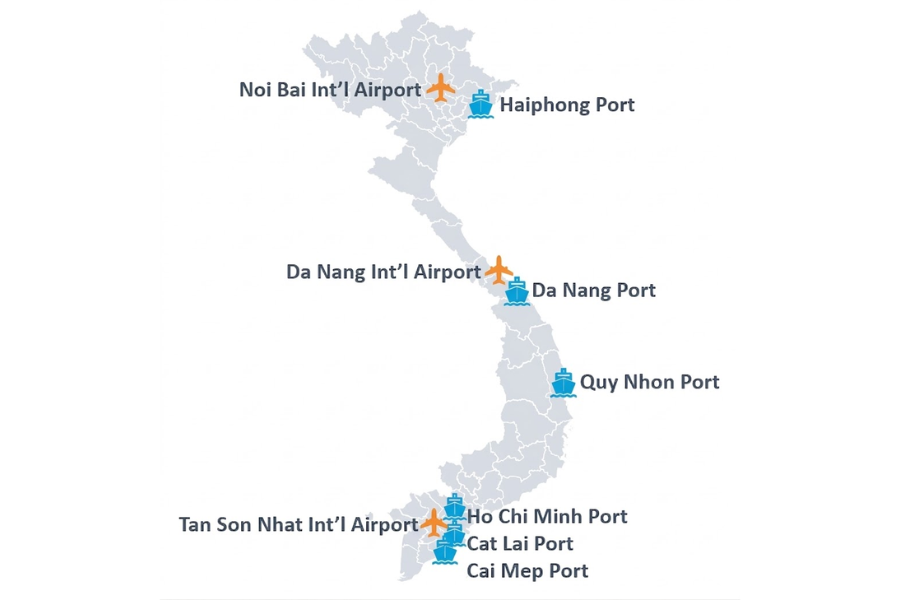
- Location: Vietnam has a coastline of over 3,200 km, creating strong advantages in international shipping connectivity. Major seaports and airports are distributed across key regions (North, Central, South), allowing flexible routing options. Choosing the right origin port can help reduce inland transport costs and improve overall shipping time from Vietnam to US. Proximity between factory and port directly affects lead time and handling efficiency
- Type of Commodity: The nature of your product plays a major role in selecting the shipping method. High-value or time-sensitive goods, such as electronics, integrated circuits, or urgent fashion orders, are typically moved by air to ensure faster delivery and lower risk. On the other hand, bulk products like furniture, garments, or large-volume consumer goods are more suited for ocean freight, where cost efficiency becomes the priority. Matching the right shipping method with your product is one of the simplest ways to balance speed and USA shipping costs without overpaying for unnecessary urgency.
- Time: Delivery timelines tend to influence more decisions than expected, especially once inventory planning comes into play. Air freight usually takes around 5 – 8 days, making it ideal for urgent restocking or high-margin products. Ocean freight, while slower, offers a more economical option, with typical transit times of 25 – 33 days to the West Coast and 40 – 50 days to the East Coast. Some express ocean services can shorten this slightly, but the trade-off between speed and cost always remains.
- Cost: At first glance, shipping costs may seem easy to compare, but the reality is more nuanced. Air freight is significantly more expensive per unit, which makes it suitable only when speed justifies the cost. Ocean freight, by contrast, spreads cost across larger volumes, making it the preferred option for optimizing shipping cost from Vietnam to USA.
5. Shipping Route from Vietnam to US
After working with a few shipments, one thing becomes clear quite quickly: the route your cargo takes can influence just as much as the shipping method itself. It affects not only shipping time from Vietnam to USA, but also reliability, cost stability, and how easily you can plan your inventory.
5.1. Air Freight Routes from Vietnam to the US
Air freight is typically used when speed becomes the priority. Instead of focusing on seaports, shipments move between major international airports, allowing for faster and more flexible delivery when shipping to US.
| Origin Airport (Vietnam) | Destination Airport (USA) | Typical Transit Time |
| Tan Son Nhat (SGN) | Los Angeles (LAX) | 5 – 7 Days |
| Noi Bai (HAN) | Chicago (ORD) | 6 – 8 Days |
| Tan Son Nhat (SGN) | New York (JFK) | 6 – 8 Days |
Major airports in Vietnam usually act as the main departure gateways for international air cargo. From there, shipments are routed through major global transit hubs in Asia or the Middle East before continuing on to the United States.
Common transit hubs include:
- East Asia: Hong Kong (HKG), Seoul (ICN), Taipei (TPE), Tokyo (NRT)
- Southeast Asia: Singapore (SIN)
- Middle East: Dubai (DXB), Doha (DOH)
These hubs play a key role in connecting long-haul routes, helping optimize flight schedules and ensure smoother cargo movement across international supply chains.
5.2. Ocean Freight Routes from Vietnam to the US
Ocean freight remains the backbone of global trade and is the most common method for shipping from Vietnam to USA, especially for bulk shipments.
5.2.1. The West Coast Routes (Faster Transit)
This route is considered the most direct and time-efficient option for ocean freight between Vietnam and the United States. Shipments departing from key ports such as Hai Phong in the north or Cat Lai (Ho Chi Minh City) in the south typically cross the Pacific Ocean and arrive at major West Coast gateways like Los Angeles, Long Beach, or Oakland.
Advantages:
- Shorter transit time: This is the fastest sea route, with transit times usually ranging from 15 to 25 days to the US West Coast.
- Frequent sailing schedules: Due to strong trade volume, carriers operate multiple weekly sailings from major Vietnamese ports, offering greater flexibility for exporters.
Disadvantages:
- Port congestion risks: West Coast ports are among the busiest globally, which can lead to congestion and potential delays during peak periods.
- Higher costs in peak seasons: Especially between August and October can drive up freight rates and increase overall shipping costs.
5.2.2. The East Coast Routes (Cost-Optimized)
Shipments typically depart from Vietnam, pass through the Strait of Malacca, cross the Indian Ocean, transit the Suez Canal into the Mediterranean, and then continue across the Atlantic to major ports such as New York–New Jersey, Savannah, or Charleston.
Advantages:
- Bypasses West Coast congestion: This route avoids heavily congested ports on the US West Coast, reducing the risk of delays caused by port backlogs.
- More cost-efficient for East Coast delivery: This option can be more economical than routing through the West Coast and then relying on inland rail or trucking.
Disadvantages:
- Longer transit time: Due to the extended distance, transit times typically range from 30 to 45 days, requiring more careful inventory planning.
- Potential surcharges and disruptions: Conditions affecting the Suez Canal, including geopolitical factors, may lead to unexpected delays or additional surcharges.
6. Shipping Costs from Vietnam to US
One of the most common misunderstandings when shipping from Vietnam to USA is assuming that freight cost is the only major expense. The table below provides a simplified breakdown of the key cost components involved:
| Cost Component | Description | Estimated Cost Range |
| Ocean Freight | Cost of shipping a full container (FCL) or shared container (LCL) from Vietnam to U.S. ports | $1,500 – $5,000+ per container |
| Air Freight | Charged per kg for urgent shipments; depends on weight, volume, and airline capacity | $5 – $10+ per kg |
| Inland Transportation | Delivery from U.S. port to final warehouse (truck or rail) | $500 – $3,500+ per shipment |
| Customs Duties & Taxes | Import tariffs based on HS code and product category | 0% – 25% of product value |
| Export Packaging | Materials and handling to ensure safe transport, especially for fragile goods | $0.5 – $2+ per unit |
| Port Handling Charges | Terminal handling, documentation, and local port fees | $100 – $500 per shipment |
| Storage & Demurrage | Fees if cargo is delayed at port or not picked up on time | $50 – $200 per day |
7. Shipping Process from Vietnam to US
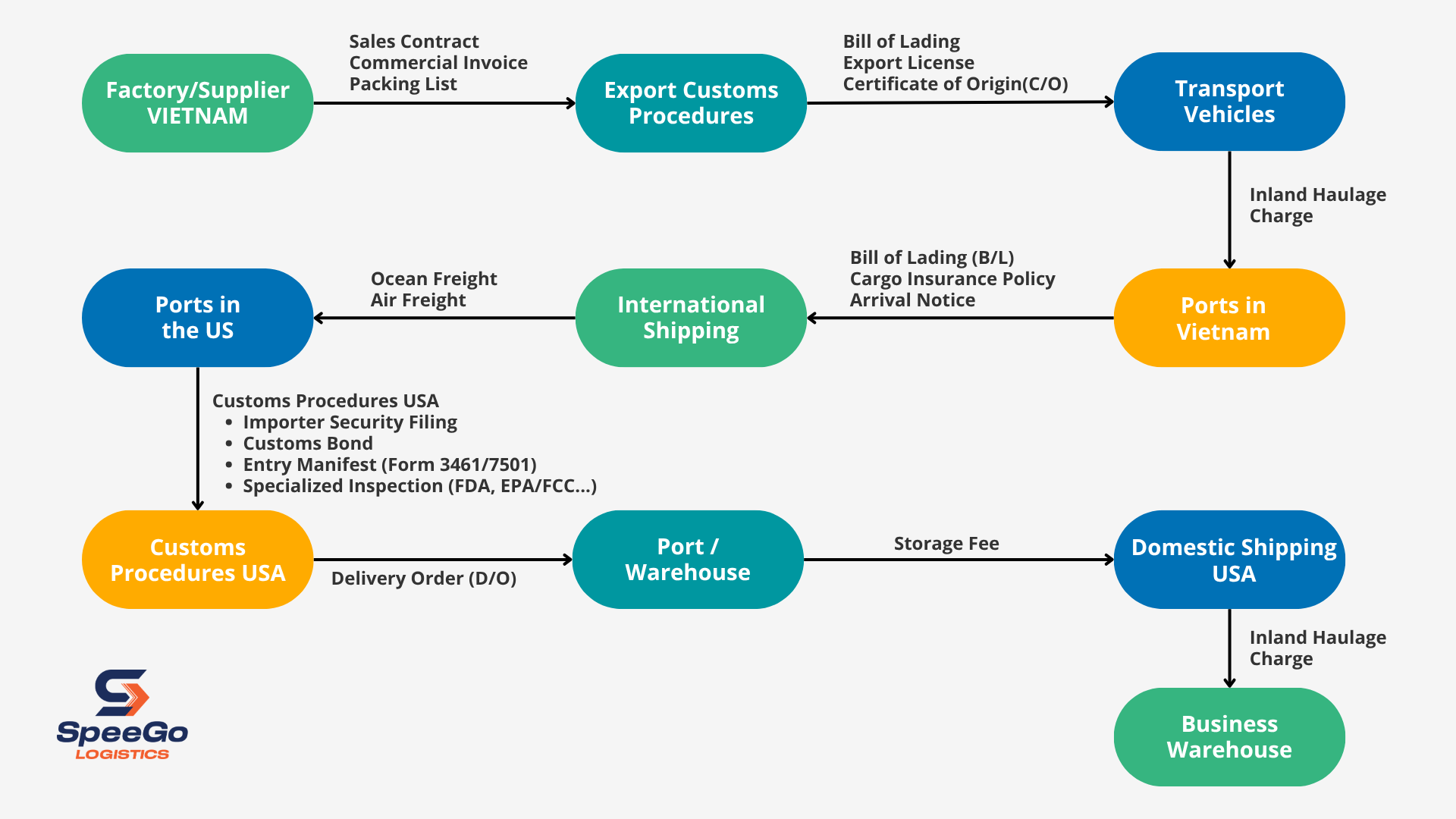
The journey from Vietnam to the United States often looks simple on paper, but in practice, it unfolds through several connected steps that need to be handled carefully. A clear understanding of the shipping process from Vietnam to US helps keep timelines predictable, control costs, and avoid issues that only show up once the goods are already in transit.
8. How SpeeGo Logistics Supports Shipping From Vietnam to US?
Choosing the right approach for shipping from Vietnam to USA is not always straightforward. Between supplier selection, quality control, and logistics coordination, each step requires careful planning to avoid delays and unnecessary costs. SpeeGo Logistics focuses on simplifying this process by offering tailored, end-to-end support based on your business needs.
Our team can help you:
- Identify reliable suppliers in Vietnam: We support sourcing by connecting you with verified manufacturers, ensuring your products meet both quality and export standards from the beginning.
- Evaluate product quality before shipment: Pre-shipment inspections help reduce defects, ensuring goods are consistent and ready for international delivery when you import from Vietnam.
- Optimize packaging for export: Proper packaging not only protects your goods but also helps reduce volume, improving cost efficiency and lowering overall shipping cost from Vietnam to USA.
- Select the most suitable shipping method: Whether it’s ocean freight for cost efficiency or air freight for urgent deliveries, we help you balance USA shipping time and cost based on your priorities.
- Manage documentation and customs procedures: We assist with preparing accurate shipping documents and coordinating customs clearance, helping minimize delays and unexpected charges when shipping to US.
- Track shipments and coordinate final delivery: From departure in Vietnam to arrival in the U.S., we provide visibility throughout the process and support delivery to your final destination.
With local expertise in Vietnam and a strong understanding of U.S. import requirements, SpeeGo Logistics helps businesses build a more efficient and reliable supply chain, ensuring your cargo arrives on time and within budget.
Ready to start shipping from Vietnam to the US? Contact SpeeGo Logistics today for a free quote and expert guidance on your next shipment.
Frequently Asked Questions (FAQ)
- What is the cheapest way to ship from Vietnam to the US?
Ocean freight is generally the most cost-effective option, especially for large or heavy shipments. Full Container Load (FCL) offers better value for high-volume cargo, while Less than Container Load (LCL) is suitable for smaller shipments.
- How can I reduce shipping costs from Vietnam to the US?
There are several practical ways to optimize costs when shipping to US:
- Choose the right shipping method based on urgency and cargo type
- Optimize packaging to reduce volume (CBM)
- Plan shipments early to avoid peak season surcharges
- Select the most suitable port based on final delivery location
- Ensure accurate documentation to avoid delays and extra fees
- What documents are required to import goods into the US?
The basic documents required when you import to USA include:
- Commercial Invoice
- Packing List
- Bill of Lading (for ocean freight) or Air Waybill (for air freight)
- Importer Security Filing (ISF) for ocean shipments
- Customs declaration forms