


Old modern handicrafts are becoming a key trend in global sourcing, especially in markets looking for a balance between tradition and modern design. If you are wondering what old modern handicrafts are, how they are produced, and why Vietnam is a leading supplier, this guide will walk you through materials, techniques, and real product applications.
1. What Are Old Modern Handicrafts?
The term “old modern handicrafts” refers to a hybrid approach in craft production, where traditional techniques and materials are combined with contemporary design and functionality. Instead of preserving crafts in their original form, this approach adapts them to meet modern lifestyle needs and global market expectations. As a result, products are not only culturally rooted but also commercially viable in today’s design-driven markets.
In many cases, old modern handicrafts are inspired by old craft ideas that have been redesigned for modern use. These ideas may come from traditional household items, cultural objects, or historical production methods that are adapted into contemporary products for global markets.
To fully understand old modern handicrafts, it is important to look at how materials are selected and combined. The material strategy is what allows traditional craft ideas to evolve into scalable and market-ready products.
2. Materials Behind Old Modern Handicrafts
Understanding the materials used in crafts is essential when working with old modern handicrafts. These products rely on a careful combination of traditional natural materials and modern engineered alternatives to achieve both authenticity and commercial performance. The choice of material is not random, it directly influences product durability, appearance, and scalability.
2.1. Natural Materials
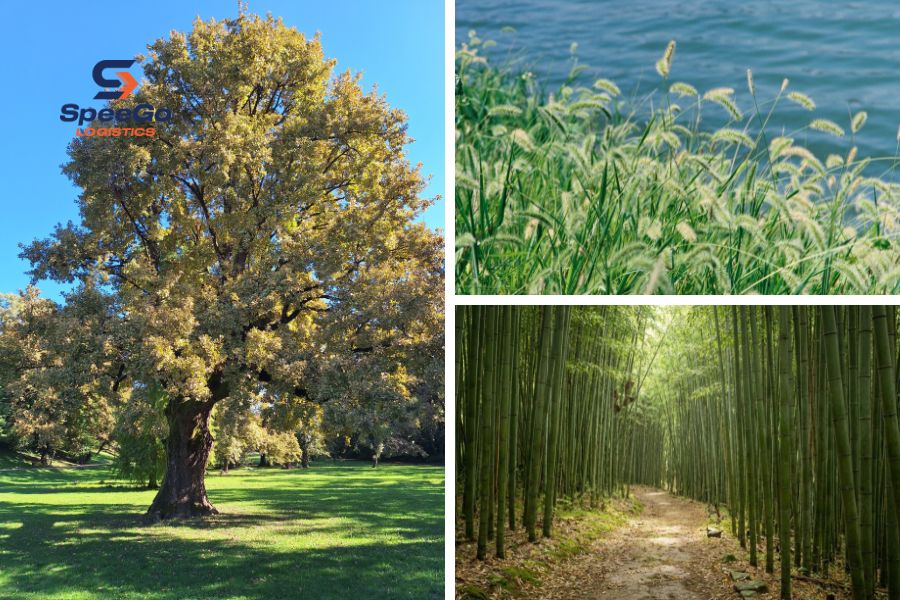
Natural materials remain at the core of most old modern handicraft products. They provide the organic texture and cultural identity that buyers expect from handmade goods.
Common materials include:
- Bamboo: flexible, lightweight, widely used in woven and structural products
- Rattan: strong and suitable for furniture or detailed weaving
- Wood (acacia, oak, rubberwood): used for structure and premium finishes
- Seagrass, water hyacinth: soft fibers for baskets and decor
2.2. Engineered Materials
To balance the limitations of natural materials, manufacturers often integrate engineered components into the production process. These materials help improve structural stability and reduce variation.
Handicraft materials examples:
- MDF and plywood: stable base for furniture and panels
- Veneer: thin natural wood layer applied to engineered cores
- Composite materials: combine fibers with binders for added strength
This combination is especially common in export-oriented production, where buyers expect uniform quality across multiple shipments.
2.3. Synthetic Materials
Synthetic materials are often introduced to meet specific functional requirements, particularly in products exposed to outdoor conditions or heavy use. These materials are not used to replace craftsmanship but to enhance product performance where natural materials may fall short.
Common materials used in crafts
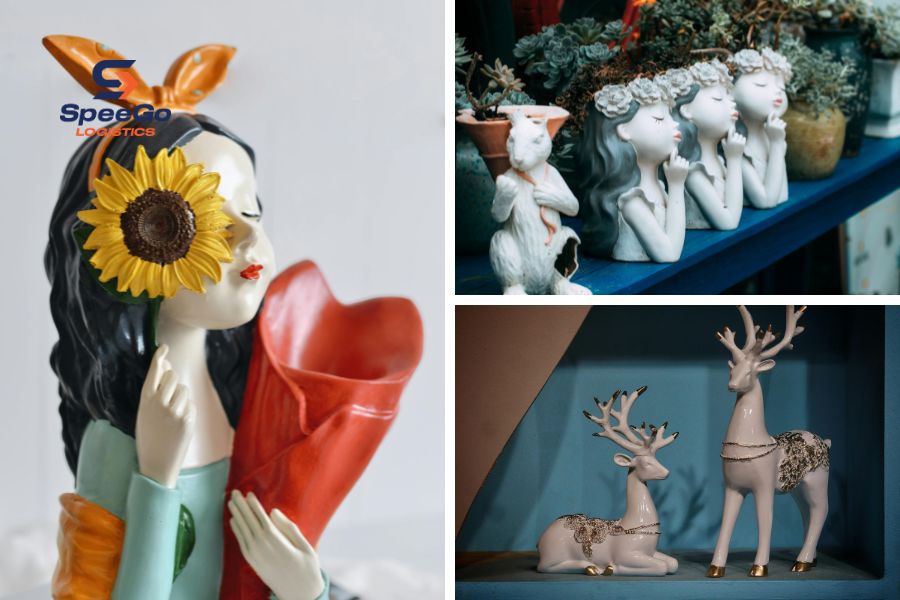
- Polyresin: detailed decorative items with consistent shapes
- PE rattan: weather-resistant alternative to natural rattan
- Metal (iron, aluminum): structural support in furniture
This combination of natural, engineered, and synthetic materials explains why import from Vietnam can meet both aesthetic expectations and commercial requirements in global markets.
3. Traditional Techniques Meet Modern Design
One of the defining features of old modern handicrafts is the way traditional handicraft techniques are reinterpreted through modern design thinking. Instead of preserving craft methods in their original form, manufacturers adapt them to create products that fit contemporary lifestyles while still maintaining their cultural roots.
Many old craft ideas are not applied in their original form anymore. Instead, they are reinterpreted through modern design to fit current lifestyle trends, which is a defining characteristic of old modern handicrafts.
3.1. Weaving Techniques in Contemporary Products
Traditional weaving methods, commonly used with materials such as bamboo, rattan, and seagrass, have been widely adapted into modern product categories. While the core technique remains unchanged, the final design often reflects current market preferences.
Example:
- Storage baskets with minimalist shapes for modern homes
- Pendant lighting made from woven bamboo or rattan
- Lounge chairs and accent furniture combining woven surfaces with metal frames
- Wall décor and planters designed for contemporary interiors
3.2. Wood Carving with Refined Design Language
Carving has long been a key technique in many craft villages, especially for wooden products. In traditional settings, carvings are often detailed and decorative. In modern applications, however, the focus shifts toward subtle textures and controlled detailing.
Examples:
- Wooden cabinets with light carved patterns instead of heavy ornamentation
- Dining tables or coffee tables with textured edges or surfaces
- Decorative panels and wall art with geometric carving
- Kitchenware such as trays or cutting boards with minimal carved accents
3.3. Lacquer Techniques in Modern Finishing
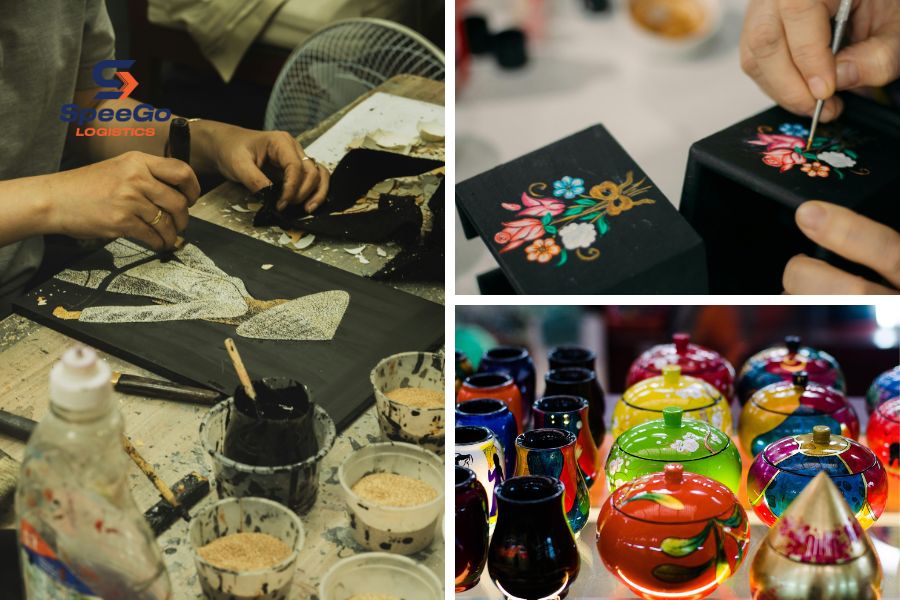
Lacquerware is traditionally associated with intricate, multi-layered decorative processes. In modern handicraft design, these techniques are simplified and adapted to suit current consumer preferences.
Example:
- Serving trays and boxes with matte or semi-gloss lacquer finishes
- Furniture surfaces (tables, cabinets) with lacquer coating for durability
- Decorative vases and home accessories with simplified lacquer patterns
- Wall panels combining lacquer with natural materials
3.4. Combining Craft Techniques with Modern Production Support
In many cases, traditional techniques are combined with basic machinery or structured workflows to improve consistency. This does not replace craftsmanship but supports it.
Example:
- Furniture using machine-cut wooden frames with hand-finished surfaces
- Woven products with pre-sized frames to ensure consistent dimensions
- Lacquer items where base shaping is done by tools, followed by manual finishing
- Hybrid products combining handwoven elements with metal or engineered structures
4. Popular Old Modern Handicraft Products from Vietnam
Vietnam has become a key sourcing destination for old modern handicrafts, thanks to its strong craft heritage and growing ability to adapt to international design trends. Many products now combine traditional techniques with updated forms, making them suitable for both retail and commercial projects in global markets.
Below are some of the most common old modern handicrafts examples from Vietnam, where traditional forms are adapted into commercially viable products for international markets.
4.1. Wooden Canoe Handicrafts
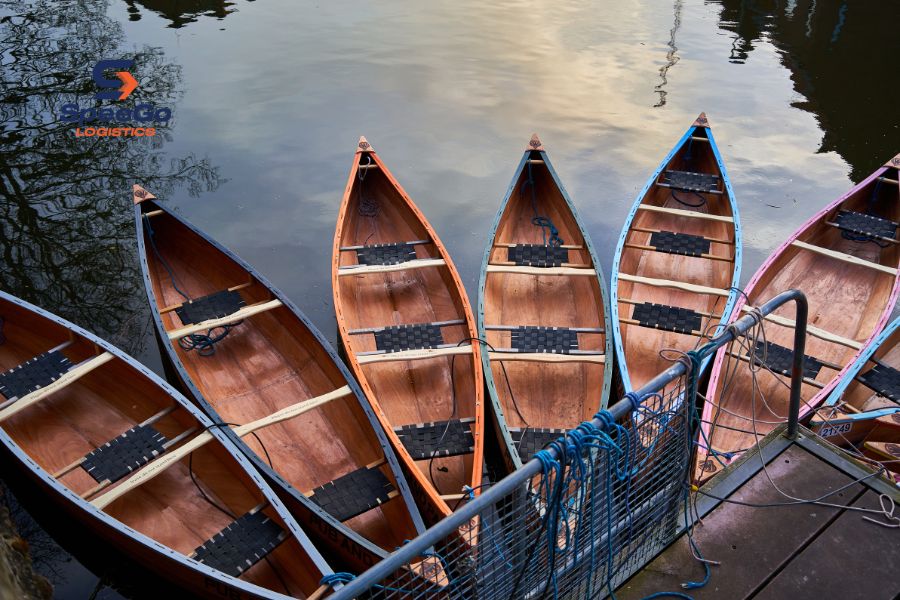
The old modern handicrafts wooden canoe is a strong example of how traditional craft forms can be repurposed for modern use. Originally designed as functional boats in rural and river-based communities, these canoes are now transformed into decorative and lifestyle products.
Instead of serving as transportation, manufacturers reshape them into interior-focused items while preserving the original carving techniques and wood textures. Common materials include solid wood such as acacia or teak, which are valued for durability and grain quality.
Applications:
- Decorative wooden canoe shelves for retail display
- Mini canoe centerpieces for hospitality projects
- Large carved canoes used as statement furniture
This type of old modern handicrafts wooden canoe shows how a purely functional object can be transformed into a high-value decorative or commercial product.
4.2. Rattan Pendant Lighting
Rattan lighting products are a leading example of old modern handicraft adaptation. Traditional weaving techniques are applied to create lighting fixtures that match contemporary interior styles, especially in European and North American markets.
The materials used in crafts here typically include natural rattan combined with metal frames to ensure structural stability. Designs have shifted from complex patterns to simpler, geometric forms that align with modern aesthetics.
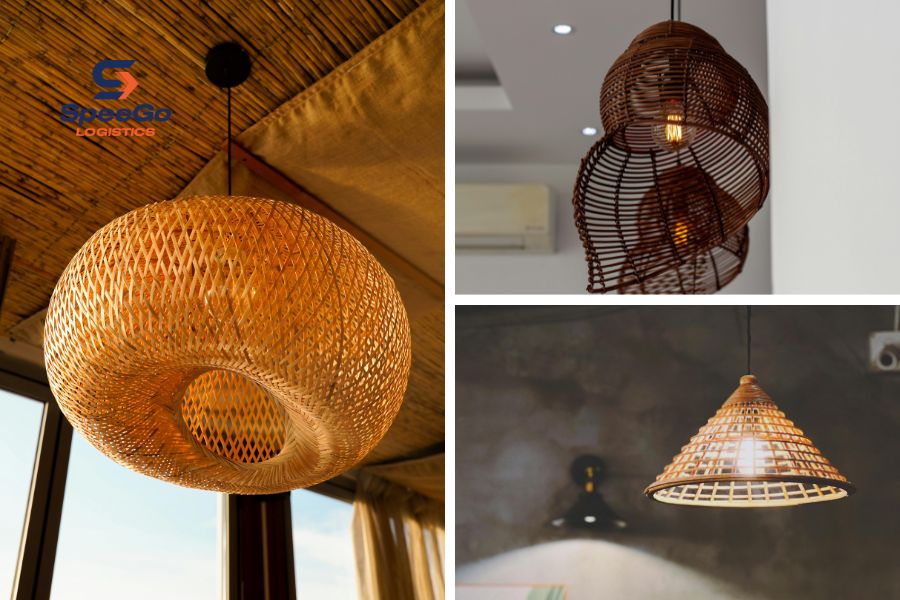
Example:
- Hanging pendant lamps for cafes and restaurants
- Layered woven lampshades for residential interiors
- Custom lighting installations for hotels
4.3. Seagrass Storage Baskets
Traditional woven baskets have evolved into more functional storage solutions through the addition of internal frames. This transformation improves durability and consistency, making them more suitable for export markets.
Seagrass and water hyacinth are the primary materials, both of which are renewable and widely used in Vietnamese handicrafts. However, modern designs focus on structured shapes such as square or rectangular forms to fit shelving systems.
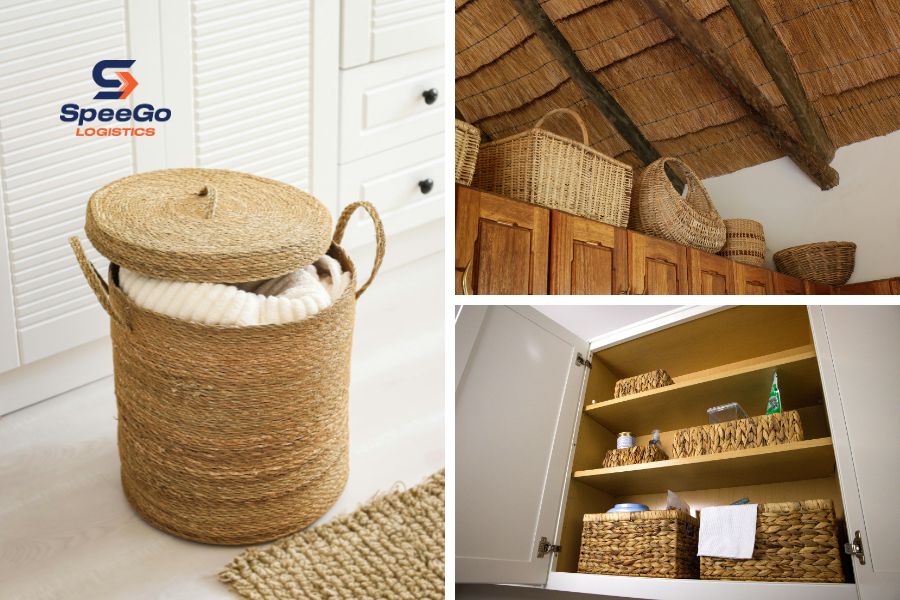
Applications:
- Square or rectangular storage baskets for shelving systems
- Laundry hampers with lids and handles
- Modular storage solutions for retail packaging
4.4. Carved Wooden Wall Panels
Wood carving has been simplified to meet modern design preferences. Instead of highly detailed traditional patterns, contemporary versions use subtle textures and geometric designs. These panels are often made from acacia or engineered wood with veneer, combining natural aesthetics with production efficiency. The focus is on creating decorative surfaces that complement minimalist interiors.
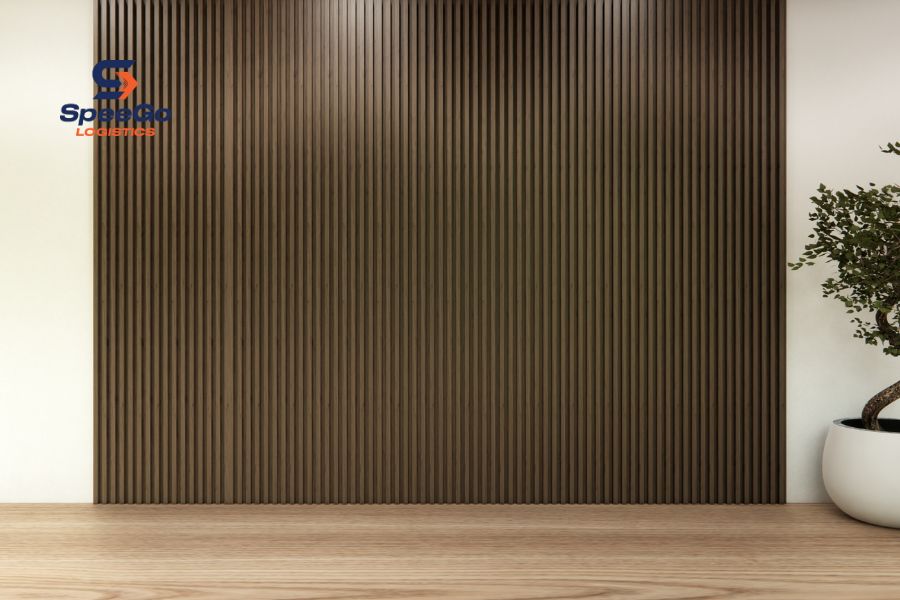
Example:
- Wall panels for hotels, resorts, and commercial spaces
- Headboards or room dividers in interior design projects
- Decorative art pieces for modern homes
4.5. Coconut Shell Tableware
Coconut shell products represent a growing segment within sustainable handicrafts. By using agricultural by-products, manufacturers create items that are both functional and environmentally friendly. Each product is slightly different due to the natural shape of the shell, which adds uniqueness but also requires careful quality control.
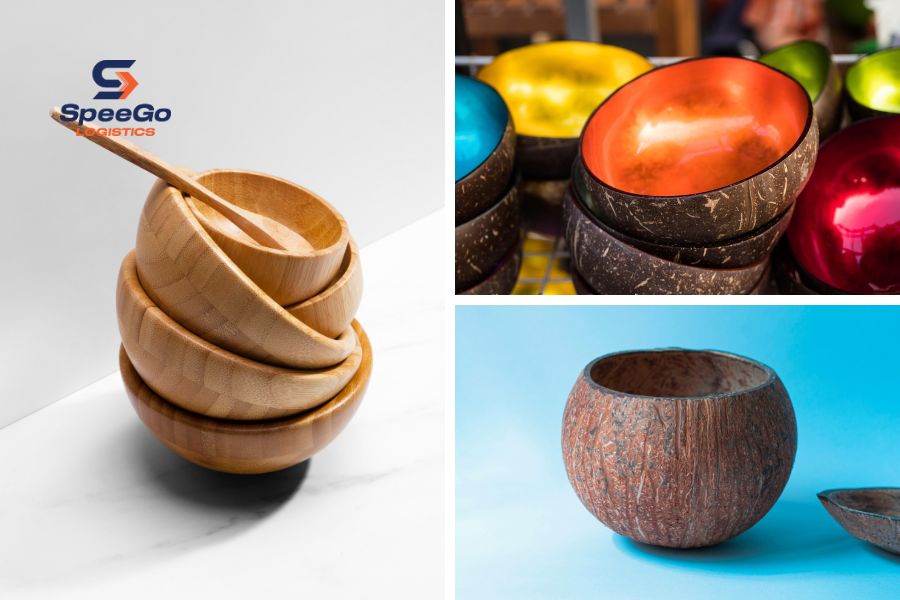
Applications:
- Bowls and cups for food serving or decoration
- Kitchen accessories for eco-conscious brands
- Gift items targeting sustainable product markets
5. Challenges When Sourcing Old Modern Handicrafts
Sourcing old modern handicrafts may seem straightforward at first, but in practice, many businesses encounter issues that are not visible during the sampling stage. These challenges often come from the nature of handmade production, where materials, techniques, and human factors are closely linked.
- Material variation across batches: Natural materials (bamboo, rattan, wood) can vary in colour, texture, and durability due to differences in moisture, age, and treatment processes.
- Inconsistent workmanship quality: Product quality depends heavily on artisan skill, leading to variation in weaving, carving, or finishing between units.
- Limited scalability for large orders: Production capacity is constrained by the availability of skilled labour, making it difficult to scale without affecting consistency.
- Unclear quality standards between buyer and supplier: Differences in interpretation (e.g. “handmade or handcrafted”) can result in mismatched expectations and rework.
- Production lead time uncertainty: Manual processes and dependency on labour can lead to delays, especially during peak seasons or large orders.
- Difficulty in maintaining uniform finishing: Achieving consistent colour, coating, or texture across bulk production is challenging due to manual processes.
Understanding these challenges is essential when working with sourcing handicrafts in Vietnam. It allows businesses to move from assumption-based sourcing to a more controlled and predictable process.

6. How to Source Old Modern Handicrafts in Vietnam Effectively?
To successfully source old modern handicrafts Vietnam, businesses need a structured approach that goes beyond product selection. The goal is to align materials, craftsmanship, and production processes with your market requirements from the beginning.
- Define material specifications clearly from the beginning: Specify the exact materials used in crafts (type, grade, finish, moisture tolerance) to avoid variation in bulk production.
- Evaluate supplier capability beyond samples: Do not rely on one prototype. Request multiple samples or past production references to assess consistency.
- Standardise quality expectations early: Align on measurable criteria such as size tolerance, colour variation, and finishing level to avoid misunderstandings.
- Implement multi-stage quality control: Check materials, semi-finished goods, and final products instead of waiting until shipment stage.
- Plan production based on realistic capacity: Confirm the supplier’s actual output capability, especially for labour-intensive products, before placing large orders.
- Use structured workflows for consistency: Work with suppliers who divide production into clear stages (cutting, shaping, finishing) to reduce variation.
- Optimise packaging for fragile and mixed-material products: Ensure proper packing methods to protect items during shipping, especially for woven, lacquer, or ceramic goods.
- Work with integrated sourcing and logistics partners: Combining supplier management, quality control, and shipping helps reduce operational risks and improve efficiency.
7. Conclusion
Old modern handicrafts represent a balance between tradition and innovation, combining cultural craftsmanship with modern production needs. Understanding how materials, techniques, and design interact is essential for businesses looking to source these products effectively. With the right approach, old modern handicrafts Vietnam can offer both aesthetic value and scalable production for global markets.
In practice, many businesses still face challenges when turning samples into consistent bulk production. This is where working with a local partner like SpeeGo Logistics can help bridge the gap between design expectations and real production conditions in Vietnam.