
Importing furniture from China is one of the most effective ways for businesses to reduce costs and access a wide range of manufacturers.
However, to successfully import furniture from China, businesses must understand supplier sourcing, product quality control, shipping methods, and import regulations. Without proper planning, even small mistakes can lead to delays, unexpected costs, or product issues.
This guide walks you through the complete process, helping you import efficiently and reduce risks.
1. Overview Furniture Market In China
China has established itself as the world’s largest furniture producer and exporter, playing a central role in the global furniture supply chain. According to data from Mordor Intelligence, China’s furniture market is $160.53 billion in 2025, making it the leading furniture exporter worldwide by a wide margin. Industry reports estimate that the Chinese furniture sector generates over $80 billion in annual revenue and employs more than 10 million workers (Watson, 2026).
1.1. Key Furniture Manufacturing Regions in China
Furniture production in China is concentrated in several industrial clusters that specialize in different types of furniture manufacturing. These clusters provide integrated supply chains that include raw material suppliers, furniture factories, design studios, and export logistics services.
- Guangdong Province: Cities such as Foshan and Dongguan host large furniture industrial zones and international furniture trade markets. Guangdong alone is estimated to produce around 30% of China’s total furniture output, making it a major sourcing hub for global buyers.
- Zhejiang Province: It is another major furniture production center, known for manufacturing office furniture, modern home furniture, and export-oriented furniture products. Cities such as Hangzhou and Huzhou are important production bases that serve international retailers and wholesalers.
- Fujian Province: Fujian has developed a strong furniture manufacturing industry focused on wooden furniture, home decor products, and export furniture. The province benefits from its strategic coastal location, which facilitates international shipping furniture to North America and Europe.
- Shandong Province: Shandong is known for producing wooden furniture and panel furniture for global markets. Many factories in this region specialize in large-scale production of bedroom furniture, dining sets, and office furniture.
1.2. Advantages of Sourcing Furniture From China
There are several reasons why international buyers continue to import from China.
- Large-Scale Manufacturing Capacity: China has developed a massive production network that includes thousands of manufacturers and specialized suppliers. It allows productivity from small to largest orders for global retailers.
- Cost Efficiency and Competitive Pricing: Due to Large-Scale Manufacturing Capacity, Chinese furniture producers are often able to offer competitive pricing compared with manufacturers in many other regions.
- Comprehensive Supply Chain Ecosystem: China’s furniture manufacturing clusters include raw material suppliers, hardware manufacturers, upholstery producers, and packaging providers within the same industrial zones. This integrated ecosystem helps reduce production lead times and simplifies logistics coordination for export shipments.
This is why many global buyers continue to import furniture from China as part of their long-term sourcing strategy.
2. Popular Types Of Furniture Made In China
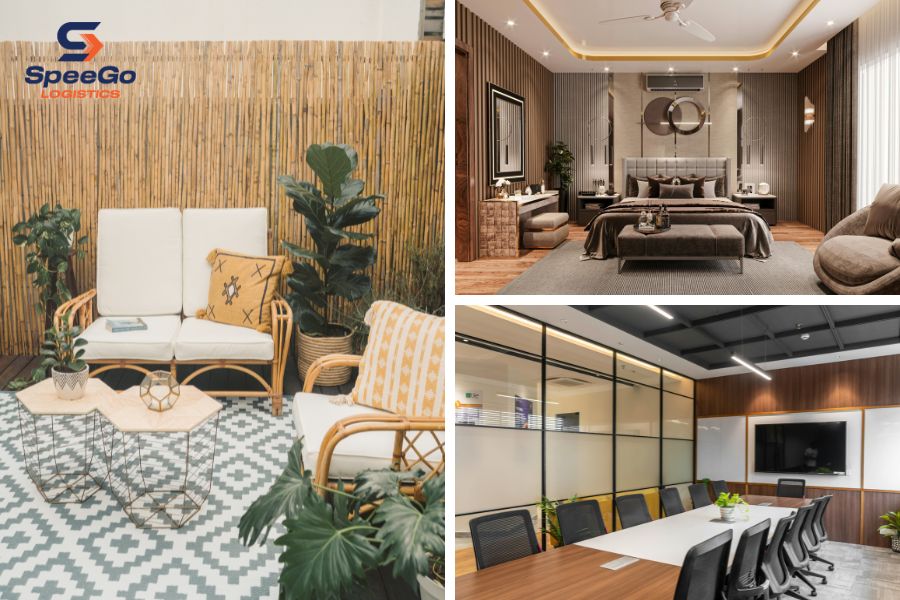
Below are several of the most popular types of furniture commonly produced in China, along with key manufacturing regions known for each category.
- Home Furniture: This category includes products such as sofas, dining sets, coffee tables, bedroom sets… Foshan and Dongguan in Guangdong Province is widely recognized as one of the largest furniture production hubs in the world, particularly for modern home furniture. Besides, Shandong Province in Northern China has developed strong capabilities in producing wooden bedroom and dining furniture.
- Office Furniture: Since Covid-19 and the work-from-home trend, office furniture including office desks, ergonomic chairs, conference tables… has been in high demand. One of the most important manufacturing clusters for office furniture is Anji County in Zhejiang Province, known as “chair capital of China”. It’s a large share of the world’s office chairs and seating products import furniture to the United States.
- Outdoor Furniture: Products in this category include patio sets, garden seating, rattan sofas, aluminum outdoor sets… If you want to find sourcing in China, Zhejiang Province, especially cities such as Hangzhou and Ningbo, hosts factories that produce synthetic rattan furniture, outdoor lounge chairs, and garden tables for international retailers.
- Custom Furniture: Many factories in China offer OEM/ODM services, allowing international buyers to customize designs, materials, and branding. Dongguan and Shenzhen in Guangdong Province have developed strong reputations for custom furniture production, particularly for hospitality projects, commercial interiors, and branded retail environments.
- Sustainable and Eco-Friendly Furniture: Some of the most demanded products are bamboo furniture, recycled wood furniture, and low-emission engineered wood products designed to comply with international environmental regulations. Eco-friendly furniture manufacturing is particularly common in Zhejiang Province and Jiangsu Province, where factories have invested in environmentally responsible production technologies and sustainable material sourcing.
- Luxury and Designer Furniture: These products often feature premium materials such as solid hardwood, marble, leather upholstery, and handcrafted decorative elements. Luxury furniture production is especially concentrated in Guangdong Province, particularly in Foshan’s Shunde District, which is known for producing high-end furniture collections.
3. Import Duties, Taxes, And Regulations From China
When importing furniture from China, businesses must understand the taxation systems, customs procedures, and regulatory frameworks of the destination country.
3.1. United States
- Import duties: Typically 0% – 6% under HS Chapter 94.
- Additional tariffs: Up to 25% under Section 301 for Chinese goods.
- Taxes: No federal VAT, but state sales tax applies (0% – 10%).
- Regulations: Flammability standards (16 CFR Part 1640), Formaldehyde limits under TSCA Title VI.
- Customs system: Automated Commercial Environment (ACE).
3.2. Australia
- Import duties: Around 5% depending on classification.
- GST: 10% applied to imported goods.
- Customs system: Integrated Cargo System (ICS).
- Regulations: Must comply with national consumer safety standards.
3.3. Canada
- Import duties: 0% – 9.5% depending on product type.
- GST: 5% (plus HST in some provinces: 13% – 15%).
- Regulations: Canada Consumer Product Safety Act.
- Customs process: Electronic declaration system.
Overall, the cost to import furniture from China varies significantly depending on the destination country, applicable duties, and compliance requirements. Proper planning and understanding of these regulations can help businesses avoid delays, reduce risks, and optimize total import costs.
4. Payment Terms And Options When Import Furniture From China
Selecting the appropriate payment method is a critical step when importing furniture and shipping from China. Payment terms directly affect financial risk, cash flow management, and supplier relationships. Below are several of the most commonly used payment methods for importing furniture from Chinese manufacturers.
- Letter of Credit (LC): It’s a bank-issued payment guarantee that reduces financial risk for both buyers and suppliers. Under this arrangement, the buyer’s bank commits to paying the supplier once specific shipping documents are presented and verified.
- PayPal: Many furniture importers use PayPal mainly for prototype orders, sample purchases, or small shipments rather than full production orders.
- Bank Transfer: The buyer sends funds directly from their bank account to the supplier’s bank account.
- Western Union: It allows buyers to send funds quickly to suppliers without requiring traditional bank transfers. However, Western Union payments are generally considered high-risk for large commercial transactions because they offer limited buyer protection.
- Escrow Services: If you are new importers that may not yet have established long-term supplier relationships in China then Escrow is the best when it helps reduce risks associated with supplier fraud or delivery failures.
- Currency Considerations: Most international transactions with Chinese suppliers are conducted in U.S. dollars (USD), although some manufacturers may accept payments in Chinese yuan (RMB) depending on the agreement. So currency exchange rates can affect the total cost of imported goods.
5. Shipping Furniture From China
Shipping furniture from China requires careful planning due to the size and volume of goods.
Common shipping methods include:
- FCL (Full Container Load): Best for large orders
- LCL (Less than Container Load): Suitable for smaller shipments
Transit time typically ranges from 20 to 40 days depending on the destination and shipping route. Choosing the right logistics partner can help reduce delays and optimize shipping costs.
6. Cost to Import Furniture From China
The total cost to import furniture from China includes several components beyond product price.
Typical costs include:
- Product cost (FOB).
- Ocean freight.
- Import duties and taxes.
- Customs clearance fees.
- Inland transportation.
Understanding the full cost structure helps businesses avoid unexpected expenses.
7. How to Import Furniture From China Step by Step?
Importing furniture from China involves several key steps that businesses should follow to reduce risks and ensure smooth operations.
- Step 1: Identify product specifications.
- Step 2: Find reliable suppliers.
- Step 3: Request samples and verify quality.
- Step 4: Negotiate pricing and payment terms.
- Step 5: Arrange production and inspection.
- Step 6: Book shipping and handle customs clearance.
8. How SpeeGo Logistics Helps You Find Reliable Furniture Exporters In China?
When importing furniture from China or other manufacturing hubs in Asia, working with a reliable logistics partner can significantly simplify the process. SpeeGo Logistics supports businesses by:
- Verifying suppliers and factories.
- Managing quality inspections.
- Coordinating international shipping.
- Handling customs clearance and documentation.
Get expert support to import furniture from China with lower costs and reduced risk. Contact SpeeGo Logistics today for a free consultation.
Frequently Asked Questions (FAQ)
- How long does it take to import furniture from China?
Typically 30 – 60 days depending on production and shipping time.
- Is it profitable to import furniture from China?
Yes, due to competitive pricing and large-scale manufacturing, many businesses achieve strong margins.
- Do I need a license to import furniture from China?
Import requirements depend on your country. In most cases, businesses need a registered company, tax ID, and customs registration to legally import goods.
- How much does it cost to ship furniture from China?
Shipping costs vary depending on container size, destination, and freight rates, but ocean freight is generally the most cost-effective for bulky furniture.
- Are there hidden costs when importing furniture from China?
Yes, hidden costs may include:
- Port handling fees.
- Customs clearance charges.
- Storage and demurrage.
- Inland transportation.