The global hospitality sector is increasingly competing on experiential value rather than on functional service delivery alone. Industry analysis by Deloitte (Hospitality Industry Outlook, 2023) highlights that customer experience has become a primary driver of competitive differentiation, particularly within boutique and lifestyle hotel segments. At the same time, the Sustainable Travel Report 2023 by Booking indicates that a significant proportion of global travelers prefer accommodations that visibly demonstrate authenticity and sustainability commitments.
Interior design has shifted from being purely aesthetic to becoming a strategic branding instrument. Visually distinctive and “Instagrammable” spaces encourage organic digital exposure, strengthening brand visibility in an era dominated by social media influence. Handcrafted décor, which is characterized by natural materials, artisanal techniques, and cultural narratives. It offers hospitality businesses an opportunity to create emotionally engaging environments that stand apart from standardized, mass-produced interiors. As a result, handcraft should no longer be viewed as a decorative afterthought. Instead, it represents a strategic investment that enhances brand identity, guest experience, and long-term operational value for hotels and restaurants.
1. Why Handcrafted Decor Matters in Hospitality Branding?
1.1. Enhancing Memorable Guest
Experienced emotional connection is now key to keeping customers coming back in the hospitality industry. Deloitte’s Hospitality Industry Outlook highlights how personalized experiences and thoughtful design choices really matter when it comes to guest satisfaction and whether they’ll come back.
The look and feel of a place aren’t just afterthoughts anymore; they directly impact how guests feel about the value they’re getting. Natural materials like wood, rattan, bamboo, and handcrafted ceramics bring a warmth and a sense of realness that mass-produced, cookie-cutter furniture simply doesn’t. The inherent uniqueness of handcrafted pieces prevents spatial uniformity, allowing properties to cultivate a distinctive identity rather than replicate global templates.
Furthermore, visual appeal directly affects online engagement. The 2023 Expedia Group Traveler Value Index indicates that the visual appeal and ambiance of accommodations significantly influence consumer choices. Spaces that are visually attractive naturally foster social media sharing, which, in turn, amplifies brand visibility without incurring extra advertising costs.
1.2. Strengthening Storytelling and Brand Positioning
Successful hospitality brands do more than deliver services. They communicate narratives. Handcrafted details breathe life into conceptual ideas, transforming them into real-world experiences, whether it’s an eco-resort prioritizing sustainability or a boutique hotel celebrating local culture.
The 2023 Booking.com Sustainable Travel Report reveals that most travelers worldwide favor places to stay that showcase local culture and demonstrate a commitment to the environment. Incorporating artisanal products from local communities directly addresses these preferences, strengthening the sense of authenticity. Boutique hotels, unlike their chain counterparts, frequently set themselves apart through carefully chosen design elements. Handcrafted decor serves as both a visual and emotional touchstone, enabling brands to go beyond mere lodging and into the realm of experiential storytelling.
1.3. Competitive Differentiation in Saturated Markets
Markets As numerous urban hospitality markets near saturation, the imperative for significant differentiation becomes increasingly pronounced. Research conducted by McKinsey & Company, which examines shifting consumer preferences, reveals a heightened demand for authenticity and artisanal quality within premium lifestyle sectors. Handcrafted interiors often elicit a higher perceived value relative to their mass-produced counterparts, notwithstanding minimal differences in actual production expenses. This perceived premium facilitates more robust pricing strategies and a more distinct upscale positioning.
2. Handcrafted for Hotels and Restaurants
Choosing handcrafted pieces for hotels and restaurants is a bit of an art form. You have to think about how things look, but also whether they’ll hold up to heavy use and meet all the safety rules. In the hospitality world, people talk a lot about how design choices need to fit the brand and make daily operations smoother.
2.1. Lobby and Public Space Features
These days, hotel lobbies are much more than just waiting areas—they set the scene for the whole guest experience. Hospitality Design Magazine points out that the best lobbies tell a visual story and pull guests in from the moment they walk through the door.
Common handcrafted elements include:
- Handwoven wall installations, which introduce texture and organic character.
- Artisan lighting fixtures, often made from rattan, bamboo, or ceramics, providing warm and ambient illumination.
- Large-scale ceramic art pieces serving as focal installations.
- Carved wooden sculptures reflecting cultural or regional identity.
- Such features prevent spatial uniformity and strengthen first impressions.
2.2. Guest Room and Suite Furnishings
Guest rooms get a lot of use, so the materials in there have to last, but they should still look good. The American Hotel & Lodging Association reminds everyone that things need to be tough enough for heavy traffic and meet safety standards.
Typical handcrafted applications include:
- Custom-designed headboards, adding uniqueness to standardized room layouts.
- Rattan seating, valued for its lightweight structure and aesthetic versatility.
- Bespoke wooden bedside tables, tailored to room dimensions.
- Textile enhancements, such as handcrafted cushion covers and throws.
These elements elevate perceived quality without necessarily increasing long-term lifecycle costs.
2.3. Restaurant and Food & Beverage Applications
How food looks on the table is very important when it influences people’s feelings regarding the entire dining experience. Studies in the International Journal of Gastronomy and Food Science show that the plates, bowls, and even the trays you use can change how guests judge taste and satisfaction.
Popular handcrafted items include:
- Handmade ceramic plates and bowls, enhancing visual presentation.
- Wooden serving trays, contributing to rustic or natural branding themes.
- Linen table runners, often associated with premium dining atmospheres.
- Decorative partitions, dividing spaces while preserving design coherence.
However, ceramics and other food-contact materials must comply with safety standards, such as the U.S. FDA guidelines on lead content.
2.4. Outdoor and Resort Installations
Resorts and open-air locations have their own challenges. The furnishings and decorations must withstand exposure to sun, rain, and frequent use with sustainability being very important now. Reports from the World Tourism Organization say travelers want greener hotels, so natural, responsibly sourced materials are in demand.
Typical handcrafted outdoor applications include:
- Bamboo lounge furniture, suited for tropical or beachfront settings.
- Woven outdoor lighting fixtures, providing soft ambient effects.
- Handcrafted garden pots, enhancing landscape integration.
- Weather-treated wooden seating, engineered for durability under environmental exposure.
Material treatment, UV protection, and maintenance planning are critical for ensuring longevity in outdoor hospitality settings.
3. Compliance and Durability Standards in Hospitality Projects
In hotels and restaurants, style isn’t enough. Everything has to meet safety rules and hold up to heavy use. If you skip the regulations, you risk lawsuits, fines, and a hit to your reputation. Here’s what really matters when you’re adding handcrafted goods:
3.1. Fire Resistance
Textiles used in commercial settings must comply with fire safety regulations to reduce ignition risk. In the United States, widely recognized standards include:
- NFPA 701, which evaluates flame propagation characteristics of textile materials.
- California Technical Bulletin 117 (TB117-2013), addressing smolder resistance in upholstered furniture.
According to the National Fire Protection Association, compliance with flame-resistance standards forms a critical component of fire risk management in public buildings. Natural fabrics such as cotton or linen may require certified flame-retardant treatment before installation in hospitality settings.
3.2. Food Safety Requirements for Ceramics and Tableware
Handmade ceramics for food use? They need to pass strict tests for lead and cadmium. The FDA has clear limits under 21 CFR 109.16 break them, and your shipment gets turned away or recalled. If you’re sourcing these items, always ask for test reports from an accredited lab before you buy.
3.3. Legal Sourcing of Wood and Plant-Based Materials
If you’re importing wood, bamboo, or other plant-based decor, you need proof it was harvested legally. The U.S. Lacey Act demands documentation to show the origin is legit. On top of that, sustainability certifications like FSC or PEFC matter more and more, especially for companies focused on ESG. These stamps on your products show you care about responsible sourcing and boost your brand’s credibility.
4. How SpeeGo Logistics Help Business Export Handcraft From Vietnam?
Getting beautiful handcrafted pieces is just the start. The real challenge is making sure they meet all the rules, pass quality checks, get the right paperwork, and actually arrive on time and ready to use. For hotels, restaurant chains, or interior fit-out teams working on tight deadlines, a reliable supply chain matters as much as the design..
SpeeGo Logistics positions itself as a sourcing and export coordination partner for hospitality businesses seeking to procure handcrafted décor, furniture, and tableware from Vietnam to markets such as the United States, Canada, and Australia.
4.1. Strategic Sourcing from Verified Artisan Networks
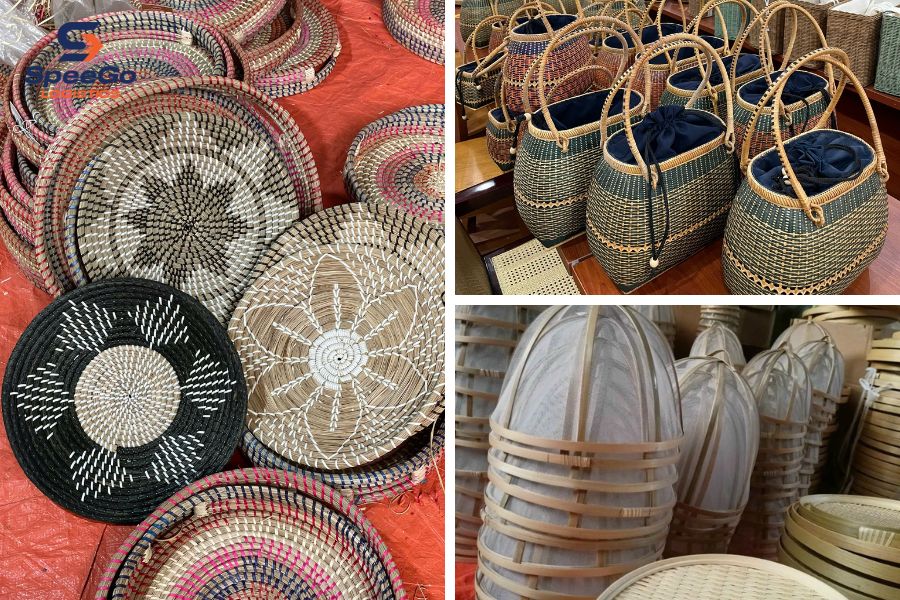
Vietnam is widely recognized for its strengths in handcrafted production, particularly in rattan, bamboo, wood, ceramics, and textile-based décor. However, working directly with small workshops can present challenges in terms of production consistency, documentation, and export readiness.
SpeeGo supports hospitality clients by:
- Identifying suitable manufacturers based on product category and project scale
- Evaluating production capacity and export experience
- Coordinating sampling and prototype development
- Aligning specifications with commercial hospitality standards
This structured sourcing approach helps reduce risks related to inconsistent quality or missed delivery schedules, which are common concerns in project-based hospitality procurement.
4.2. Compliance and Documentation Management
SpeeGo Logistics assists clients by coordinating documentation such as:
- Commercial invoices and packing lists
- Certificate of Origin (C/O)
- Fumigation or phytosanitary certificates when required
- Laboratory testing reports from accredited facilities
By managing documentation accuracy, SpeeGo helps reduce the risk of customs delays, inspection issues, or shipment rejections
4.3. Delivery Coordination to the USA, Canada, and Australia
Every destination market applies its own import regulations, documentation standards, and customs procedures. SpeeGo simplifies this complexity by managing the full compliance process for businesses engaged in shipping to USA, shipping to Canada, and shipping to Australia.
4.4. Supporting Long-Term Hospitality Supply Chains
Beyond one-time shipments, many hotel groups and restaurant brands require repeat orders, seasonal updates, or expansion to new locations. SpeeGo supports scalable supply chains by:
- Managing reorder cycles
- Consolidating shipments from multiple suppliers
- Coordinating quality inspections prior to export
- Providing transparent freight cost structures
A lot of hotel groups and restaurant brands need more than just one delivery. They want regular reorders, fresh seasonal items, or inventory for new locations. SpeeGo makes that easy. We manage reorder schedules, bundle shipments from different suppliers, arrange quality checks before shipping, and keep freight costs transparent. With this kind of support, hospitality businesses can focus on design and branding instead of getting bogged down by logistics.
In short, SpeeGo Logistics connects Vietnamese artisans with international hospitality projects. By bringing together smart sourcing, compliance support, and custom freight solutions, we help hotels and restaurants in the USA, Canada, and Australia get handcrafted products delivered smoothly so their creative vision always matches up with a reliable supply chain.