

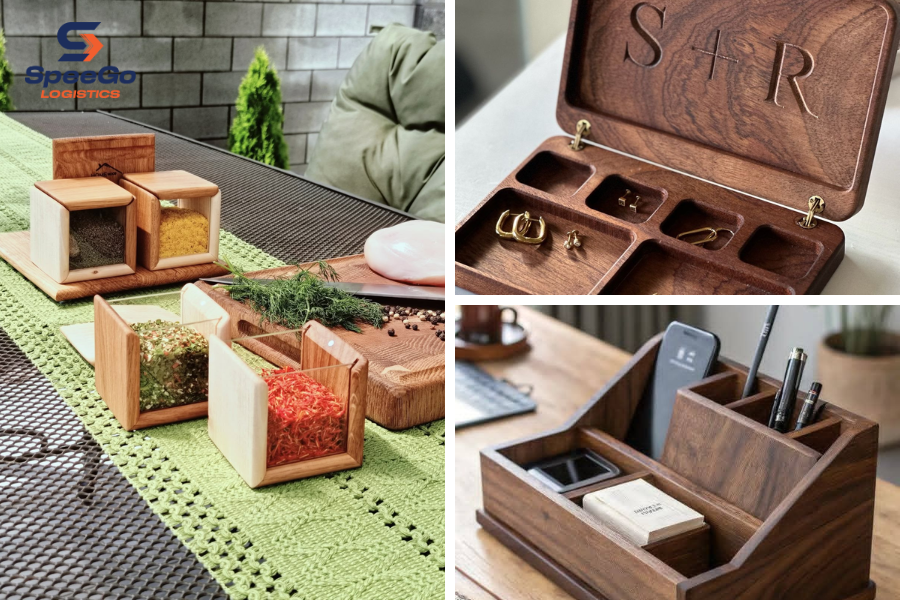
Many independent brands, boutique retailers, and interior designers in the U.S. have started looking to import wooden handicrafts from Vietnam. The country has a long tradition of wood craftsmanship, with villages specializing in carving, decorative objects, wooden tableware, and artistic home décor.
Vietnam has also become a strong player in the global Vietnam wooden home decor export sector. Handcrafted wooden products from Vietnam are valued for their natural materials, artisan techniques, and distinctive design styles that are difficult to replicate with mass manufacturing.
For small brands in the U.S., these products offer a way to stand out in a competitive retail environment. However, once businesses begin contacting manufacturers in Vietnam, they often encounter a challenge that many did not expect: minimum order quantities (MOQ).
1. The Reality of MOQ When Sourcing Handicraft from Vietnam
According to the Vietnam Timber and Forest Products Association (VIFOREST) and the General Department of Vietnam Customs, Vietnam’s wood and wood product exports reached over USD 14 billion in 2023, with the United States accounting for roughly 55 – 60% of total export value. This means the U.S. is by far the largest market for Vietnamese wooden products, including furniture and handcrafted home decor.
However, once many small brands start contacting suppliers, they encounter a reality that often feels discouraging are minimum order quantities (MOQ).
A Situation Many Buyers Experience
When businesses start sourcing from Vietnam, this is one of the most common situations they encounter. In practice, the conversation with a supplier often looks something like this.
A brand owner from the U.S. might reach out to a workshop and say “We’d like to start with 300 to 500 pieces to test the market.” The response from the workshop is usually polite but firm “Our minimum order is around 1,000 to 3,000 pieces.”
For a small business, this moment can feel overwhelming when ordering a few hundred pieces already feels like a commitment. But ordering several thousand units means tying up a significant amount of capital before the product has even been validated in the market.
2. Why Do Workshops Require MOQ When You Import Handicraft from Vietnam?
If you’re a buyer, starting with a test order of 300 to 500 units just makes sense. For small retailers, that’s enough to see if there’s demand, without sinking too much money or ending up with piles of unsold stock. You get a real feel for what customers want before making any big moves.
But things shift when you look at it from the side of a Vietnamese handicraft workshop. Most of these places are small teams with skilled artisans who rely on batch production to keep things running smoothly. Take a wood carving workshop: a handful of people, maybe five or ten, work side by side on one batch. They buy their raw wood in bulk to lock in good prices, and all the finishing touches like sanding, oiling, lacquering, happen in big groups of pieces, not one by one.
When orders drop below a certain number, everything gets messier and more expensive. Small batches throw off their rhythm and drive up costs, which means they just can’t offer the same prices on tiny orders. That’s why you’ll see so many Vietnamese handicraft producers setting minimum order quantities somewhere between 1,000 and 3,000 units, even for small decorative items. It’s not just a rule, they need those numbers to keep the whole operation sustainable.
3. How to Negotiate MOQ When Sourcing Handicraft from Vietnam?
If you’re trying to import handicrafts from Vietnam, you probably know the real headache isn’t picking the right products. You spend weeks hashing out designs, picking materials, maybe even getting a sample you love. Everything feels on track, and then the supplier drops their MOQ. Suddenly, it feels like you’ve hit a wall.
People with experience in Vietnam’s wooden home decor export scene know this well. They’ve learned that you can often get the MOQ lowered, as long as you approach the negotiation from the manufacturer’s point of view. If you show them it makes sense for both sides, you’ve got a shot.
When you import from Vietnam, MOQ negotiation is not just about pricing. It is about understanding how local workshops operate, how they manage production, and how to align your order strategy with their capabilities.
So, how do the pros do it? Let’s look at some real strategies that experienced importers use when dealing with Vietnamese workshops.
3.1. Start With Honest Volume Expectations
New buyers often make the mistake of pretending they’re bigger than they are. They worry that if they admit they’re a small business, suppliers won’t take them seriously. But honestly, most workshops care more about honesty than size. If you’re planning to test out the market with a small run before going bigger, just say so. It’s usually best to lay your cards on the table.
Instead of just asking, “Can we reduce MOQ?”. You can try something like, “We’re launching a new product line and want to test the market. If things go well, we’ll place a larger order next time.” That kind of honesty signals you’re thinking long-term, and that’s something suppliers appreciate, especially in Vietnam’s wooden home decor export world. Here, building relationships matters a lot more than just chasing one-off deals.
3.2. Combine Multiple Designs Using the Same Material
One of the most effective ways to negotiate MOQ is to group multiple designs that use the same raw material and production process. For example, instead of ordering 1,000 wooden trays of a single design.
You could propose something like:
- 200 trays (design A)
- 200 trays (design B)
- 200 trays (design C)
- 200 trays (design D)
- 200 trays (design E)
3.3. Simplify the Product Design
MOQ depends a lot on how complicated your product is. If you’re asking for things like detailed carving, lots of separate pieces, or fancy finishing, the setup costs shoot up and so does the minimum order.
You want to start small? Make the design simpler. Go for a basic carving style, cut back on finishing steps, and stick to fewer materials. When you make life easier for the workshop, they’re usually more willing to work with lower starting quantities. This is a common approach for brands exporting decorative wooden items from Vietnam’s home decor scene. It keeps things flexible without sacrificing quality.
3.4. Focus on Building a Long-Term Partnership
When you’re negotiating MOQs in the handicraft world, you have to remember this business runs on relationships. In Vietnam, a lot of workshops stick with the same buyers for years, sometimes even decades. That loyalty doesn’t just happen. It’s because both sides see the value in working together for the long haul.
If you’re trying to import wooden handicrafts from Vietnam, chasing the lowest MOQ shouldn’t be your only goal. What really matters is building a partnership where both you and your supplier can grow. Sure, your first order might not hit the perfect volume or price. That’s normal. But once you build trust, everything gets easier. The sourcing process starts to flow, and suddenly, negotiating better terms down the line isn’t such a big deal.
4. Basic Process to Import Handicraft from Vietnam
For businesses new to sourcing from Vietnam, understanding the basic process can help reduce risks and avoid costly mistakes.
- Step 1: Identify product category and supplier type
- Step 2: Evaluate suppliers and request samples
- Step 3: Negotiate MOQ, pricing, and production timeline
- Step 4: Confirm materials and compliance requirements
- Step 5: Arrange shipping and export documentation
- Step 6: Manage customs clearance in the destination market
This structured approach helps businesses streamline the sourcing process and build a reliable supply chain when importing from Vietnam.
5. Work with a partner that can help you import Handcrafted Wood Products from Vietnam
If you’re a business in the U.S. looking to import wooden handicrafts from Vietnam, the real challenge isn’t finding great products when Vietnam is packed with talented artisans and workshops. The tricky part is everything that comes after. Sourcing from overseas gets complicated fast. You run into language gaps, different ideas about how things should be made, and business customs that just don’t match what you’re used to. Before you know it, small misunderstandings pile up and the whole process drags on way longer than it should.
That’s where SpeeGo Logistics steps in and genuinely changes the game. They have boots-on-the-ground experience with both Vietnamese manufacturers and international buyers, so they know how to bridge that messy gap between local workshops and the global market. SpeeGo screens suppliers, makes sure everyone’s on the same page about what’s being made, and keeps the communication flowing. This kind of hands-on support clears away so many of the usual sourcing headaches. If you’re new to importing handcraft, you need someone like SpeeGo in your corner who can save you weeks or even months from rookie mistakes.
There’s more. Figuring out a practical production plan can trip up even seasoned importers. Minimum order quantities, fuzzy timelines those things sneak up on you. SpeeGo works directly with workshops to help businesses pick the right products, group designs that use similar materials, and set up order quantities that let you test the waters without overloading your inventory. For small or mid-sized retailers, this approach is a lifesaver. You get to grow your product range without biting off more than you can chew.
In the end, sourcing handcrafted goods isn’t just about placing an order and hoping for the best. It’s about building a supply chain you can actually rely on. SpeeGo handles supplier coordination, preps everything for export, and sorts out international freight, including getting your wooden products shipped to the U.S. With all the logistics and compliance details taken care of, you’re free to focus on what really matters: growing your business and bringing unique, handcrafted products to customers around the world.
Contact us today to simplify your sourcing process and start importing from Vietnam with confidence.