


Importing home decor or handcrafted wooden goods from Asia seems pretty simple at first. You get some product photos from a supplier, the prices look good, and production seems under control. But the real headache usually starts when your shipment lands at a U.S. port. Imagine your container of wooden crafts arrives in Los Angeles, and instead of heading straight to your warehouse, customs puts everything on hold.
Now, you’re scrambling. Customs might ask for extra paperwork, proof of the wood species, details about where the wood came from, or evidence of proper quarantine treatment. If you’re buying from Vietnam, this can throw off your delivery plans and add unexpected costs. A lot of businesses only learn about these rules after their products are already stuck at the port.
For many businesses, import handcraft to USA may seem straightforward at the sourcing stage. However, once the shipment reaches the port, strict regulations and documentation requirements often become the biggest challenge. At the same time, shipping handcraft to USA involves multiple risk factors, especially when products are made from natural materials like wood, which are subject to inspection and environmental regulations.
1. Handcraft Wood Imports in the United States From Vietnam
If you work in the furniture, home decor, or retail business in the United States, chances are you have already seen products labeled “Made in Vietnam.” There’s a reason for that Vietnam has become one of America’s biggest wooden product suppliers. According to the U.S. International Trade Commission, the U.S. brought in over $8.1 billion worth of wooden furniture from Vietnam in the first eleven months of 2025. That’s more than 45% of all wooden furniture imports in that time. This is why businesses planning to import handcraft to USA need to understand not only sourcing advantages but also regulatory and logistics requirements.
2. Comparison Vietnam vs China for Handmade Products
Ì you planning to import handicraft to USA, choosing the right sourcing market is just as important as understanding shipping regulations. Vietnam and China are two of the most common sourcing destinations for handcrafted and home decor products, but they offer different advantages depending on your business goals.
Vietnam is often preferred for:
- Handmade and artisan-based products
- Natural materials such as bamboo, rattan, and solid wood
- Flexible production with lower minimum order quantities
On the other hand, sourcing from China is typically more suitable for:
- Mass production with highly standardized designs
- Faster production cycles for large-scale orders
- Well-established supply chains for industrial manufacturing
From a logistics perspective, both markets require similar compliance when shipping wooden products to the U.S. However, Vietnam suppliers may require more guidance in export documentation, especially for handcrafted goods produced by smaller workshops. For businesses comparing import from Vietnam and China, the decision often depends on product positioning, pricing strategy, and the level of customization required.
3. Key Requirements to Import Handcraft to USA
Planning to import wooden crafts from Vietnam or anywhere else? You can’t ignore the paperwork. The right documents keep your goods moving and help you avoid frustrating delays. Wood products face strict rules to protect forests, stop pests, and make sure everything’s safe for people. If you’re sending wooden Handicrafts to the U.S., you need to know what’s required.
Below are some of the most important regulatory documents and compliance requirements importers should be aware of.
3.1. Lacey Act Declaration
The Lacey Act is a big deal for anyone importing wood into the U.S. It’s meant to fight illegal logging and make sure your wood comes from legal sources.
You’ll probably run into these PPQ forms:
- PPQ Form 585 (Timber and Timber Products Import Permit):You’ll need this import permit for many wood products, especially those that might carry pests or diseases.
- PPQ Form 586 (Declaration for Importation or Exportation of Plants or Plant Products): Use this to tell APHIS about any plant-based goods you’re bringing in, including wood.
- PPQ Form 587 (Application for Import Permit, Phytosanitary Certificate, and/or Inspection): If you want permits or inspections for plant products like wood, you’ll need this form.
3.2. CITES Permits for Protected Wood Speciests
Some wood species are protected under the Convention on International Trade in Endangered Species of Wild Fauna and Flora (CITES). If a product is made from a CITES-listed species, importers must obtain the appropriate CITES permits before shipping from Vietnam to US. These permits ensure that international trade does not threaten the survival of endangered species.
Examples of CITES-regulated woods:
- Rosewoods (Dalbergia spp.)
- Mahogany (Khaya spp. and Swietenia spp.)
- Ipe (Handroanthus spp, Roseodendron spp, Tabebuia spp)
- Agarwood (Aquilaria spp. and Gyrinops spp.)
- Ramin (Gonystylus spp.)
Companies that import wooden handicrafts from Vietnam should confirm the wood species used in their products to determine whether CITES documentation is required.
3.3. Phytosanitary Certificates and Pest Treatment
You might also need a phytosanitary certificate to prove your wood is free of pests and diseases. The plant protection agency in the country you’re buying from usually issues this. It shows your shipment passed inspection and meets plant health laws. Pest control requirements change depending on what kind of wood product you have, so check what treatments your shipment needs before it leaves for the U.S.
3.4. EPA Formaldehyde Emissions Standards
Another regulation that may affect wood imports relates to formaldehyde emissions in composite wood products. The U.S. Environmental Protection Agency (EPA) sets emission standards for materials such as plywood, particleboard and medium-density fiberboard (MDF).
Importers must ensure that products containing composite wood comply with EPA requirements under the Toxic Substances Control Act (TSCA). Compliance often involves obtaining TSCA certification, confirming that the product meets allowable emission limits. While this regulation mainly applies to engineered wood products, it can affect businesses that import furniture or decorative items made with composite materials.
4. Regulations of Common Handicraft Wood Product
Businesses planning to import wooden handicrafts from Vietnam often focus on product design, craftsmanship, and pricing. However, different types of wooden products may fall under different import regulations when entering markets such as the United States.
The regulatory requirements depend on several factors, including:
- The type of wood used
- The product contains raw or processed wood
- The presence of composite materials
- Potential pest or environmental risks
Below are several common categories in Vietnam wooden home decor export and the regulations that may apply when shipping wooden products to USA.
4.1. Wooden Statues and Carved Sculptures
Vietnam Wooden statues are among the most recognizable items in the global handicraft export market. These products are often hand-carved decorative pieces made from solid wood. Top-selling handcraft wood are Buddha statues, animal sculptures, abstract decorative carvings and traditional cultural figurines.
Requirements for importing wooden statues into the USA:
- Lacey Act Declaration: Because statues are typically made from solid wood, importers must often declare the scientific name of the wood species and the country of harvest.
- CITES permits: If the sculpture is made from a protected species such as rosewood, CITES documentation may be required before the shipment can enter the United States.
- Phytosanitary considerations: If the wood is minimally processed, authorities may review pest risk documentation.
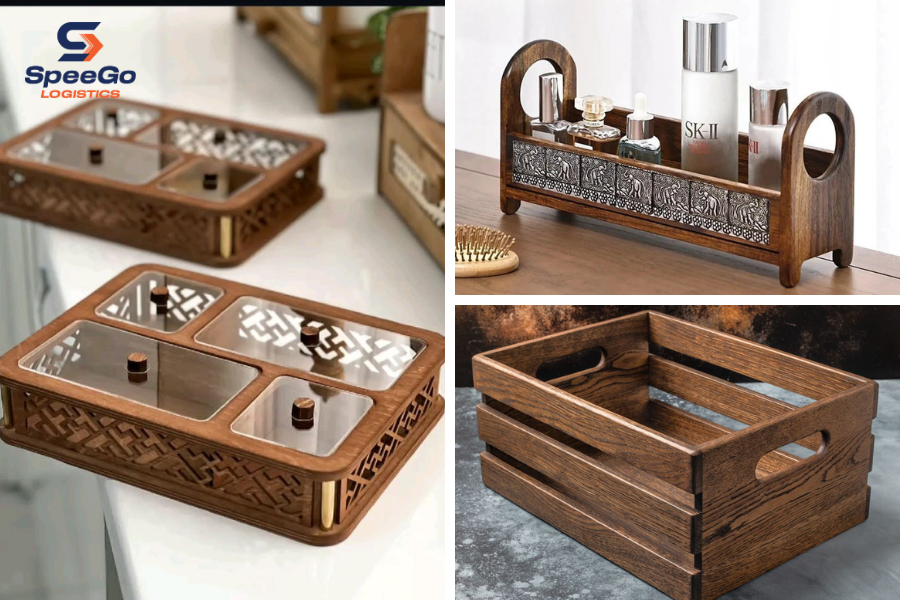
4.2. Wooden Storage Boxes and Decorative Containers
Wooden boxes are extensively exported as both decorative home items and practical storage solutions. Common handicraft wood products from Vietnam are jewelry boxes, tea storage boxes, keepsake boxes and decorative gift boxes. These items are frequently featured among Vietnam’s wooden home decor export products.
Requirements for importing wooden boxes into the USA:
- Lacey Act Declaration: Importers typically need to declare the wood species used in the box construction.
- TSCA Compliance Certification: Some boxes contain additional materials such as plywood, MDF and laminated wood panels. If composite wood is used, the product may need to comply with EPA formaldehyde emission standards under TSCA.
- Wood packaging rules: If the shipment uses wooden pallets, the packaging must comply with ISPM 15 treatment standards.
4.3. Wooden Wall Art and Decorative Panels
Wooden wall art is catching on all over the world, especially with people who love natural, handmade touches in their homes. You’ll find all kinds like carved panels, engraved boards, layered pieces, even relief carvings. Most of these are made light so you can hang them up or move them around without much hassle. Still, they’re very much wood products at heart because of the materials that go into them.
Requirements for importing wooden wall into the USA:
- Lacey Act compliance: Importers must declare the species of wood used in the artwork.
- CITES requirements: If exotic hardwood species are used, CITES permits may be necessary.
- EPA formaldehyde emission regulations: Some decorative panels use MDF boards and plywood backing panels.
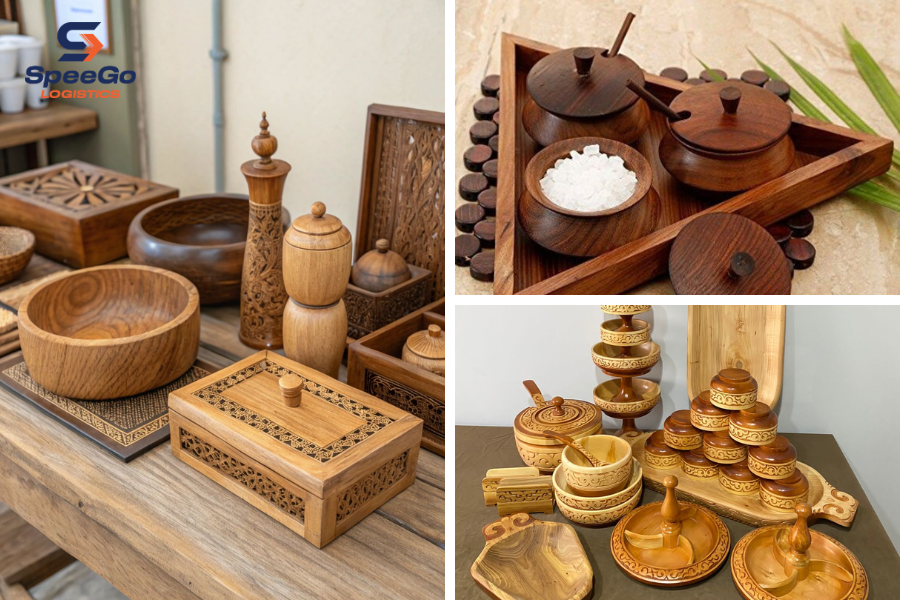
4.4. Wooden Bowls, Plates, and Kitchenware
Wooden kitchenware has emerged as a rapidly growing segment within the global craft and lifestyle market. Popular products in this category include wooden bowls, serving plates, salad bowls, cooking utensils, and wooden trays. These items are widely favored for their natural aesthetics and practicality, making them attractive to retailers and distributors involved in importing wooden handicrafts from Vietnam.
Requirements for importing wooden kitchenware into the USA:
- Lacey Act Declaration: Even small decorative items may require wood species declarations when entering the United States.
- Consumer Product Safety Commission (CPSC) Standards: If the item uses protected hardwood species, additional permits may be necessary.
- Packaging compliance: As with other wood products, shipping pallets must meet ISPM 15 treatment requirements.
4.5. Small Decorative Wooden Accessories
This category includes a wide range of small home decor items made from wood. Examples include: candle holders, decorative trays ornaments, carved coasters, small tabletop decor. These products are common in Vietnam wooden products exports due to their lightweight design and strong demand in gift markets.
Requirements for importing wooden accessories into the USA:
- Lacey Act: Required if the product contains wood components.
- TSCA / Formaldehyde standards: Applies when composite wood materials such as MDF or particleboard are used.
- CITES permits: Required if protected wood species are involved.
5. Shipping Methods for Handcraft Products to the USA
Choosing the right transportation method is a key step when planning to bring handmade products into the U.S. market.
- Sea Freight (FCL / LCL): Sea freight is the most common method for large shipments. FCL is suitable for full container orders, while LCL works well for smaller shipments.
- Air Freight: This method is faster, typically 5 – 10 days, but significantly more expensive. It is suitable for urgent shipments or high-value items.
- Express Shipping: Small packages and samples are often shipped via express services. This option is commonly used when testing products before scaling up.
Selecting the right method is essential to optimize shipping costs and reduce risks when delivering handicrafted goods to the U.S.
6. Shipping Cost and Transit Time Handicraft from Vietnam to the USA
The cost of shipping handcraft to USA depends on several factors, including shipment size, transportation method, and destination. Typical transit times:
- Sea freight: 20 – 35 days
- Air freight: 5 – 10 days
- Express: 3 – 7 days
Cost factors include:
- Freight charges
- Customs clearance fees
- Inspection and compliance costs
- Inland transportation
Understanding these factors helps businesses better plan when they import handcraft to USA.
7. Step-by-Step Process to Import Handcraft to USA
A typical process includes:
- Step 1: Confirm product specifications and wood materials
- Step 2: Verify compliance (Lacey Act, CITES if applicable)
- Step 3: Prepare export and import documentation
- Step 4: Choose shipping method and logistics partner
- Step 5: Customs clearance and final delivery
Following a structured process reduces risks when shipping handcraft to USA.
8. Common Mistakes When Importing Handcraft Wooden into the USA
Many of these issues arise during the process of shipping handicraft to USA, especially when documentation and packaging are not properly prepared. Vietnam has a strong handicraft manufacturing tradition, but not every workshop is experienced in international export procedures. When suppliers are unfamiliar with documentation or shipping standards, small details can lead to delays once the goods arrive at the destination port.
Based on practical sourcing and logistics experience, several common mistakes appear repeatedly when shipping wooden products to U.S or other regulated markets.
8.1. Wood Species Not Clearly Identified
One of the most common issues is incomplete information about the type of wood used. Some invoices or packing lists simply describe the material as “wood” without specifying the exact species. However, U.S. import regulations often require the scientific name of the wood species, especially under the Lacey Act declaration process.
When the species is not clearly identified, customs authorities may request additional documentation before allowing the shipment to proceed. From an importer’s perspective, it is always safer to confirm the wood species with the supplier before production begins.
8.2. Product Descriptions That Are Too Generic
Another issue occurs when product descriptions are overly general. For example, a commercial invoice might describe the product simply as “handicraft item”. While this may seem acceptable from a manufacturing perspective, it is often insufficient for customs documentation. Import authorities typically expect a more specific description of the product.
8.3. Wooden Pallets That Do Not Meet ISPM 15 Standards
Packaging materials can also create unexpected problems during international shipping. Many shipments of handicrafts are transported using wooden pallets. However, these pallets must comply with ISPM 15 standards, which require wood packaging materials to undergo approved treatment such as heat treatment or fumigation.
Pallets that do not carry the official ISPM 15 stamp may trigger additional inspection at the port of entry. In some cases, customs authorities may require the shipment to undergo treatment or even replace the packaging before release. For companies regularly shipping wooden products to the U.S, ensuring that pallets are ISPM 15 compliant is a simple but important step.
9. Why Do Businesses Choose SpeeGo for Shipping Handcrafted Wooden Products to the U.S?
Handcrafted wooden products from Vietnam have really started to turn heads in the global home decor world. Think about those beautiful wooden statues, carved wall art, decorative boxes, and handmade tableware, people love them for their skilled craftsmanship, genuine cultural touch, and that one-of-a-kind look you just can’t fake. For retailers and brands, importing wooden handicrafts from Vietnam isn’t just about stocking new items. It’s about offering customers something with a story, something that feels meaningful, not just mass-produced stuff.
But shipping wooden products to the U.S.? It’s not as easy as just boxing everything up and sending it off. There’s a mountain of rules around imports, paperwork, proving where the wood came from, and making sure everything is packed the right way. For anyone new to international shipping, it gets overwhelming fast.
This is where SpeeGo Logistics becomes a valuable partner.
- Hands-on Experience with Handcrafted Wooden Products
- Understanding U.S. Import Regulations for Wooden Products
- Flexible Shipping Solutions for Growing Businesses
- Supporting the Supply Chain from Vietnam to the U.S.
That is why the goal goes beyond simply shipping to USA. SpeeGo aims to help businesses successfully import wooden handicrafts from Vietnam and bring the beauty of Vietnamese craftsmanship to homes and spaces around the world.