

This article aims to provide U.S. importers with a data-informed market overview of Vietnam handicrafts export, alongside practical insights into sourcing considerations and compliance requirements when importing handcrafted products into the United States.
1. Why do U.S. Consumers Love Vietnamese Handicrafts?
Consumer preferences in the United States have shifted toward handmade products, natural materials, and ethically sourced goods. According to the 2023 sustainability survey conducted by McKinsey & Company, more than 60 percent of U.S. consumers reported a willingness to pay a premium for products positioned as sustainable. This evolving demand has created new opportunities for exporting countries with strong traditions in artisanal manufacturing.
Within this context, Vietnam handicrafts export has gained growing relevance in the U.S. market. Trade data from the International Trade Centre and the U.S. International Trade Commission indicates that the United States is a major importer of furniture and decorative products made from wood, bamboo, rattan, and ceramic.
Beyond cost competitiveness, Vietnam suppliers for U.S. retailers are increasingly valued for their ability to combine traditional craftsmanship with export-oriented manufacturing systems. This hybrid advantage is particularly attractive to boutique retailers, private label brands, and e-commerce sellers in the United States seeking differentiated, story-driven merchandise aligned with sustainability trends.
2. Top-Selling Vietnam Handicrafts in the USA
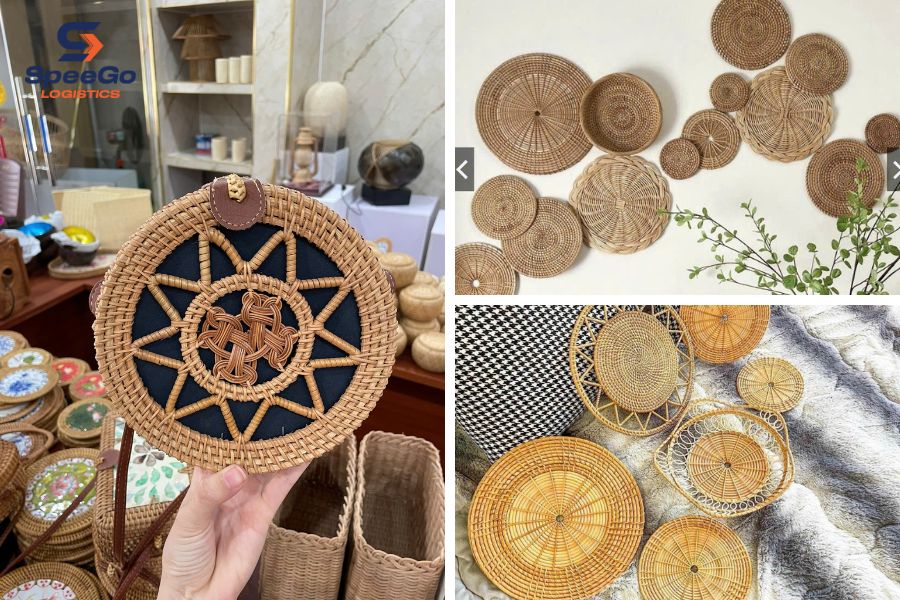
2.1. Rattan and Bamboo Home Decor (HS 46)
In 2024, U.S. imports from Vietnam under HS Code 46, which covers basketware, wickerwork, and other woven products, were valued at approximately USD 85 million, according to data from United States International Trade Commission (USITC DataWeb). This trade flow highlights Vietnam’s continued role in supplying natural-fibre home decor items to the U.S. market, particularly within the broader home furnishings and lifestyle segment.
Market Trend in the United States
Consumer preferences in the United States are increasingly shaped by sustainability concerns. According to the McKinsey & Company Sustainability Survey (2023), a majority of U.S. consumers report a preference for environmentally responsible products, even indicating willingness to adjust purchasing behaviour to align with sustainability values . As a result, home decor export from Vietnam aligns closely with evolving retail and e-commerce trends in the United States.
Vietnam’s Competitive Advantage
Vietnam’s strength in home decor export is supported by abundant domestic bamboo and rattan resources, combined with centuries-old weaving traditions. Trade statistics from the International Trade Centre recognise Vietnam as one of the significant global exporters of basketware and wickerwork products.
The country’s competitive strengths include:
- Established craft villages with specialised weaving skills
- Export-oriented production clusters capable of meeting bulk orders
- Increasing compliance with international packaging and quality standards
- Flexibility in OEM and private-label production
The integration of traditional craftsmanship with structured export systems enhances product differentiation, helping Vietnam home decor brands remain competitive in the U.S. market.
Compliance Considerations
In addition, products containing plant or wood components may be subject to requirements under the Lacey Act, which is administered by the United States Department of Agriculture (USDA). The Act requires proper declaration of plant species and country of harvest to prevent illegal logging and trafficking.
Careful documentation, supplier traceability, and regulatory verification are therefore essential for businesses engaged in exporting or importing rattan and bamboo home decor (HS 46) to the United States.
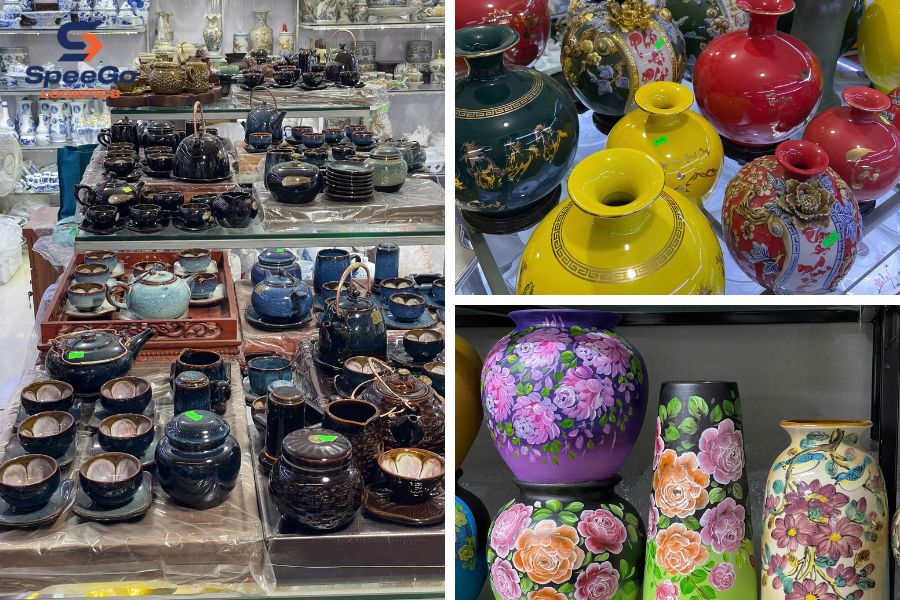
2.2. Ceramics and Pottery (HS 69)
According to data published by the United States International Trade Commission (USITC), U.S. imports of ceramic products from Vietnam reached approximately USD 112 million in 2024. This figure reflects Vietnam’s continued presence in the U.S. home decor and tableware supply chain, particularly within mid-range and artisanal segments.
U.S. Consumer Demand
The American home decor and garden markets continue to demonstrate stable demand, especially across specialty retailers and major e-commerce platforms. Decorative plant pots, glazed vases, and artisanal tableware remain popular categories, benefiting from:
- Growth in home improvement and DIY culture
- Expansion of online marketplaces and direct-to-consumer brands
- Consumer preference for handcrafted or design-oriented interior products
These trends create sustained opportunities for Vietnamese ceramic exporters targeting both brick-and-mortar retailers and online sellers.
Competitive Strengths
Vietnam has a long-established ceramic production tradition, supported by concentrated manufacturing clusters capable of serving export markets. This dual structure allows producers to offer:
- Handcrafted finishes with artisanal detailing
- OEM and private-label production for international brands
- Scalable manufacturing volumes while maintaining cost competitiveness
- Compliance with international packaging and quality standards
The combination of heritage craftsmanship and export-oriented production enhances Vietnam’s positioning within the global ceramic supply chain.
Regulatory Requirements
Vietnam Ceramic products intended for food contact must comply with safety standards enforced by the U.S. Food and Drug Administration (FDA), particularly concerning leachable lead and cadmium limits.
In addition, regulations relating to lead content are overseen by the Consumer Product Safety Commission (CPSC). Importers should ensure that laboratory testing, material declarations, and proper documentation are in place prior to customs clearance and market distribution.
2.3. Wooden Handcrafted Products (HS 44 and 94)
Based on information from the United States International Trade Commission (USITC DataWeb), U.S. imports from Vietnam in 2024 amounted to roughly USD 1.4 billion for products classified under HS 44 (wood and wood articles) and approximately USD 3.7 billion for goods under HS 94 (furniture and related products).
These statistics underscore Vietnam’s key position as a major supplier of both wooden materials and finished furniture to the U.S. market.
Market Dynamics
The United States remains one of the world’s largest markets for furniture and home furnishings, supported by:
- Ongoing residential construction and renovation activity
- Strong demand from mid-range retail chains
- Growth in boutique interior brands and e-commerce platforms
- Expansion of private-label sourcing models
Demand spans mass-market household furniture to higher-value handcrafted wooden décor items, creating space for both large-volume production and differentiated artisanal products.
Vietnam’s Export Position
Trade statistics from the International Trade Centre (ITC Trade Map) consistently rank Vietnam among the world’s leading exporters of wooden furniture.
Vietnam’s competitive strengths include:
- Integrated production clusters combining sawmills, component suppliers, and assembly facilities
- Experience serving global retailers and branded buyers
- Capability to handle OEM and private-label contracts
- Competitive cost structures alongside export-standard quality control
This established supply ecosystem strengthens Vietnam’s position as a reliable sourcing destination for U.S. importers seeking scalable capacity and compliance-ready manufacturing.
Legal Considerations
Wood-based products entering the United States must comply with the Lacey Act, which requires importers to declare:
- Scientific name of timber species
- Country of harvest
- Quantity and value
The Act is administered by the United States Department of Agriculture (USDA) and is designed to prevent illegal logging and timber trafficking. Furthermore, the U.S. Customs and Border Protection (CBP) mandates country-of-origin marking requirements for wood furniture and handcrafted wooden items. Failure to provide proper labeling or complete documentation can lead to customs delays, penalties, or shipment holds.
2.4. Textile and Handmade Fabric Products (HS 63)
Handcrafted textile items, such as cushion covers, embroidered table runners, and decorative wall hangings, are generally classified under HS Chapter 63 (Other made-up textile articles). These products form part of Vietnam’s broader textile and garment export portfolio to the United States.
According to trade statistics from the United States International Trade Commission (USITC DataWeb) and the World Trade Organization (WTO Trade Profiles), Vietnam consistently ranks among the leading textile and apparel exporters to the U.S. market under HS Chapters 61- 6. This strong export performance provides an industrial foundation that also supports smaller-scale handmade textile segments.
U.S. Retail Environment
The U.S. retail landscape has evolved significantly with the expansion of digital marketplaces. Platforms such as Etsy and independent stores built on Shopify have lowered entry barriers for niche and handmade textile products.
Within this environment:
- Consumers often prioritise authenticity and craftsmanship
- Cultural storytelling and artisan background enhance perceived value
- Small-batch and customised designs attract boutique buyers
This trend supports demand for handcrafted Vietnamese textile goods positioned within ethical, artisanal, or heritage-driven branding strategies.
Competitive Capability
Vietnam’s competitive advantage lies in the integration of:
- A well-developed textile manufacturing ecosystem
- Skilled hand-finishing techniques (embroidery, weaving, dyeing)
- OEM and private-label production capabilities
Compliance Requirements
Textile imports into the United States must comply with fibre content and labelling requirements enforced by the Federal Trade Commission (FTC). Labels typically must disclose:
- Fibre composition
- Country of origin
- Manufacturer or importer identity
- Care instructions (where applicable)
Additionally, products intended for children may fall under the Consumer Product Safety Improvement Act (CPSIA), administered by the Consumer Product Safety Commission (CPSC). CPSIA requirements may include testing for lead content and compliance certification.
3. Compliance Requirements When Importing Handicrafts into the United States
For U.S. businesses, importing handicrafts from Vietnam involves more than negotiating competitive pricing. Regulatory compliance is a fundamental component of market entry and long-term operational stability. Importers must ensure adherence to U.S. customs regulations, product safety standards, and material disclosure requirements.
According to U.S. Customs and Border Protection (CBP), all imported goods must be accurately classified under the Harmonized Tariff Schedule (HTS) and properly marked with their country of origin, as required under 19 U.S.C. Incorrect classification or mislabeling may result in shipment delays, monetary penalties, or refusal of entry.
Wooden handicrafts and products containing plant-based materials are subject to the Lacey Act, administered by the U.S. Department of Agriculture (USDA). This legislation requires importers to declare the scientific name and country of harvest for certain plant products in order to combat illegal logging and wildlife trafficking. The Act is particularly relevant for wooden décor, furniture components, and bamboo or rattan items that include regulated plant materials.
For handicraft items intended for children, such as decorative nursery accessories or handcrafted toys-compliance with the Consumer Product Safety Improvement Act (CPSIA) is mandatory. Enforced by the U.S. Consumer Product Safety Commission (CPSC), CPSIA establishes limits on lead content and requires third-party testing for children’s products.
Additionally, ceramic tableware and other food-contact articles may fall under the regulatory oversight of the U.S. Food and Drug Administration (FDA). FDA regulations address material safety and permissible levels of heavy metals in food-contact substances.
4. Government Schemes and Export Incentives for Vietnam Handicraft Exporters
Vietnam’s handicraft sector represents a significant component of the country’s non-agricultural export portfolio. Recognising its contribution to employment and rural development, the Vietnamese government has implemented multiple policy instruments aimed at enhancing export competitiveness and market access.
4.1. Export VAT Incentives
Under Vietnam’s Value Added Tax Law and guidance issued by the Ministry of Finance and the General Department of Vietnam Customs, exported goods are generally subject to a 0% VAT rate, provided that documentation and payment conditions are met.
4.2. Preferential Tariffs Under Free Trade Agreements
Vietnam is a signatory to major trade agreements including CPTPP, EVFTA and RCEP. These agreements reduce or eliminate import tariffs in partner countries, subject to compliance with rules of origin requirements. According to MOIT, many tariff lines under EVFTA were eliminated immediately upon entry into force or are subject to short reduction schedules.
5. Unlocking Global Opportunities for Vietnam Handicrafts With SpeeGo Logistics
Speego supports international importers and sourcing partners by connecting Vietnam’s diverse manufacturing network with global logistics and compliance frameworks. Beyond facilitating handicrafts export from Vietnam, Speego also provides structured solutions for businesses engaged in shipping to USA and other major markets, ensuring that products move smoothly across borders while meeting destination-specific regulations.
Through systematic supplier verification, export documentation guidance, freight planning, and risk control advisory, SpeeGo Logistics strengthens transparency and operational efficiency throughout the supply chain. Whether coordinating handicraft shipments, consumer goods, or private-label production, Speego transforms Vietnam’s manufacturing and artisanal capabilities into reliable, scalable solutions for global distribution.
Frequently Asked Questions (FAQs)
- How does Vietnam remain competitive compared to other sourcing countries?
Vietnam’s competitive strengths include:
- Established craft villages and heritage production systems
- Integrated furniture manufacturing clusters
- Competitive labor costs relative to certain regional competitors
- Participation in multiple Free Trade Agreements (e.g., CPTPP, EVFTA, RCEP), which enhance overall export capacity
- What are the typical risks when importing handicrafts from Vietnam?
Common risks include:
- Incorrect HS classification
- Incomplete Lacey Act documentation
- Non-compliant labeling
- Insufficient product testing for regulated categories
- Packaging damage during long-distance shipping
- What shipping method is best for handicrafts export?
Selecting the most appropriate shipping method for handicrafts exports depends on several factors, including the nature of the product, order volume, fragility, delivery timelines, and cost sensitivity.
- Do I need a license to export handicrafts from Vietnam to the USA?
In most cases, no specific export license is required solely for exporting handicrafts from Vietnam into the United States. However, there are important regulatory and documentation requirements that exporters and importers must fulfil to ensure lawful cross-border trade.
Export requirements in Vietnam:
- Register the export contract with the relevant authorities
- Complete customs declarations through the National Single Window system
- Provide accurate HS classification for the goods