

Before you start sourcing, negotiating prices, or calculating shipping costs, there’s one critical question you need to answer: What type of product are you actually selling? Understanding product types is more than a marketing concept when it directly impacts your pricing strategy, inventory risk, supplier selection, branding investment, and long-term profitability.
For businesses planning sourcing from Vietnam, understanding product types is not just a theoretical concept. It directly affects supplier selection, pricing strategy, production planning, and even logistics decisions.
Vietnam offers a wide range of product categories, from handcrafted goods and furniture to industrial components and consumer products. However, each category requires a different sourcing approach, and choosing the wrong product type can lead to higher costs, inventory risks, and supply chain inefficiencies.
1. What Are Product Types?
In business and global commerce, product types refer to the classification of goods based on consumer buying behavior, usage purpose, and consumption characteristics. This framework is not merely academic; it serves as a strategic tool that enables companies to make informed decisions when manufacturing, importing, distributing, or expanding into new markets.
By clearly defining a product type, businesses can align their operations with market demand, competitive positioning, and long-term growth objectives.
2. Why Buyers, Importers, and Brand Owners Must Understand Product Types Before Sourcing
Many businesses begin their import journey with a simple question: “Is this product selling well?” However, short-term sales performance does not guarantee long-term sustainability. Without understanding the underlying product type, even a high-demand item can lead to poor strategic decisions.
Identifying the correct product type is comparable to laying a solid foundation before constructing a building. If the foundation does not align with your business model, subsequent decisions—ranging from pricing and marketing to logistics and compliance—may become misaligned.
A clear understanding of product types provides several strategic advantages:
- Reduced inventory risk: Each product category has a different lifecycle. Fast-moving consumer goods require continuous replenishment, whereas durable goods typically have slower turnover rates.
- Optimized budget allocation: Not every product requires heavy branding or marketing investment.
- Appropriate supplier selection: Industrial products demand strict technical standards, while shopping products emphasize design and finishing quality.
- Market alignment: Consumer behavior differs significantly across the US, Canada, and Australia. Defining your product type enables more precise market adaptation.
3. The 7 Main Types of Products
3.1. Convenience Products
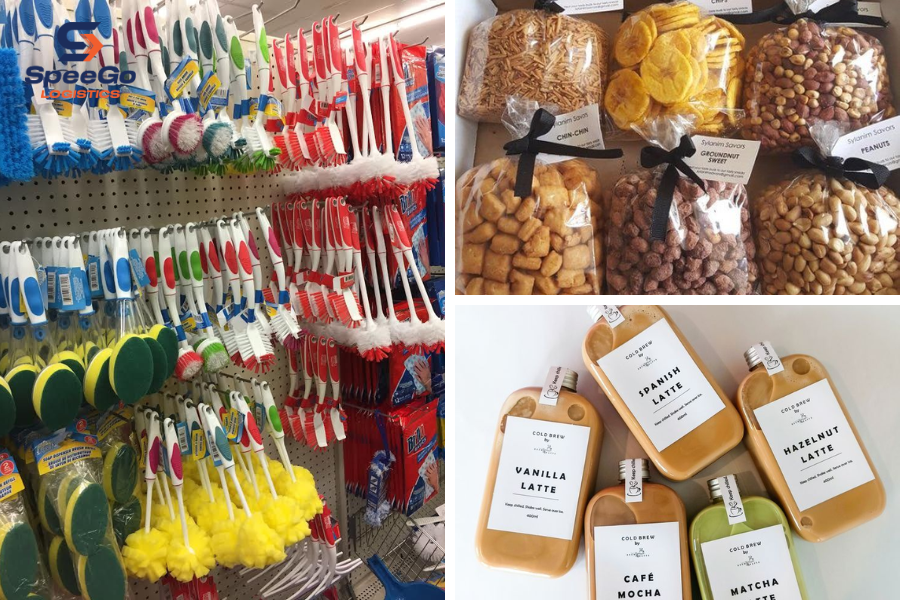
Convenience products are everyday essentials purchased frequently with minimal consideration. Consumers rarely conduct extensive comparisons or planning before buying these items.
These products typically feature low unit prices but high sales volume. Profitability depends on consistent turnover rather than high margins.
Common examples include:
- Packaged snacks
- Bottled beverages
- Personal care items (toiletries)
- Household cleaning products
Because margins are usually thin, businesses dealing in convenience products must prioritize cost efficiency, streamlined production, and competitive sourcing strategies. Even minor increases in input costs can significantly affect overall profitability.
3.2. Shopping Products
Shopping products require consumers to spend time researching, comparing, and evaluating alternatives before making a purchase. Buyers consider factors such as quality, design, brand reputation, and pricing.
These products generally fall into the mid-price range—higher than convenience goods but not necessarily luxury items. The decision-making process is more deliberate and often influenced by both rational evaluation and emotional appeal.
Typical examples include:
- Apparel and fashion items
- Furniture and home décor
- Consumer electronics
- Household appliances
For importers, sourcing shopping products often involves balancing design differentiation, supplier capability, and branding strategy.
3.3. Specialty Products
Specialty products are unique or premium items that consumers actively seek out. Customers are often brand-conscious and willing to pay a premium for superior craftsmanship, distinctive design, or strong brand identity. Vietnam has emerged as a competitive hub for sourcing from Vietnam in the specialty product segment, particularly for brands seeking handcrafted, small-batch, or customized production.
High-end lacquerware for export
- Handcrafted bamboo and wooden goods
- Exclusive niche-market designs
- Handmade leather accessories
- Traditional woven and embroidered textiles
When sourcing specialty products, differentiation and storytelling play a crucial role in market positioning.
3.4. Unsought Products
Unsought products are goods that consumers do not actively plan to purchase. Demand typically arises from emergencies, life events, or unexpected circumstances. Unlike convenience or shopping products, unsought products require proactive marketing strategies, as consumers may not recognize their importance until a risk materializes.
Common examples include:
- First-aid kits
- Fire extinguishers
- Safety equipment
- Emergency medical supplies
For importers, compliance standards and certifications are often critical factors in this category.
3.5. Industrial Products
While convenience products serve end consumers, industrial products operate behind the scenes of the production chain. These goods are not sold directly to retail customers but are used to manufacture other products or maintain operational systems.
Vietnam has become one of the fastest-growing industrial manufacturing hubs in the region. Key industrial product categories include:
- Raw wood materials and semi-finished furniture components
- Electronic components for technology and assembly industries
- Export packaging for FMCG and e-commerce
- Precision mechanical parts and metal components
For buyers and importers, sourcing industrial products requires strict quality control, technical verification, and long-term supplier partnerships.
3.6. Digital Products
Digital products are intangible goods created, distributed, and consumed entirely online. Customers do not physically possess them; instead, they access, download, or use them via the internet.
Digital product categories include:
- Software tools
- Mobile and web applications
- eBooks
- Templates
- Design assets such as fonts, icons, and brand kits
Unlike physical goods, digital products eliminate shipping and warehousing costs but require investment in hosting, platform fees, and system maintenance.
3.7. Service Products
Service products deliver value through performance, expertise, or experience rather than physical ownership. Customers purchase outcomes, solutions, or operational efficiency.
Examples include:
- Logistics services (warehousing and fulfillment)
- Sourcing agencies
- Business consulting
- Product and packaging design services
- OEM/ODM manufacturing services
Service products rely heavily on human expertise, reliability, and long-term trust.
4. Choosing the Right Product Type for Your Business
4.1 Align Product Type with Your Business Model
Your business structure significantly influences which product types are most suitable:
- Amazon Sellers (FBA/FBM): Often prioritize compact convenience products, lightweight shopping products, or digital products to minimize shipping and storage costs.
- Wholesale Distributors: Typically focus on convenience products, industrial products, or stable-demand shopping goods. Competitive pricing and consistent supply are key advantages.
- Retail Chains: Require products with strong brand recognition, steady turnover, and minimal regulatory risk.
- Manufacturers: Concentrate on raw materials, component parts, industrial products, and OEM/ODM-related services, emphasizing supply chain stability and technical standards.
4.2. Evaluate Budget and MOQ
Financial capacity must be realistically assessed before selecting any product category. Many suppliers impose high Minimum Order Quantities (MOQ), which can strain cash flow if miscalculated. Businesses should choose product types that align with both capital availability and operational sustainability.
4.3. Analyze Competitive Intensity
Each product category operates under different competitive dynamics. Companies must determine whether they will compete on price, brand positioning, innovation, or technical expertise.
- Convenience products require cost optimization.
- Shopping products demand branding and design differentiation.
- Specialty products rely on quality and storytelling.
- Industrial products depend on technical reliability and long-term partnerships.
- Digital products compete through user experience and continuous innovation.
- Entering a saturated market without a clear competitive advantage may increase risk rather than opportunity.
4.4. Calculate Logistics Costs and Taxes
Many businesses underestimate the importance of total landed cost when selecting product types. For physical goods, this includes:
- International freight
- Warehousing fees
- Import duties
- Certification costs (such as FDA, CE, CPSIA compliance)
- Mandatory inspection expenses
For digital products, cost structures differ significantly. While there are no shipping or storage fees, businesses must account for hosting, platform commissions, maintenance, and potential digital service taxes. When sourcing from Vietnam, logistics costs and import duties can vary significantly depending on product type, shipment size, and destination market.
Without accurately calculating the full landed cost, projected profits on paper may not reflect actual financial performance.
5. Common Mistakes When Choosing Product Types for Sourcing from Vietnam
Selecting the right product type is one of the most important decisions when sourcing from Vietnam. However, many businesses, especially new importers, often make critical mistakes at this stage, leading to higher costs, slow inventory turnover, and supply chain inefficiencies.
Understanding these common pitfalls can help you avoid unnecessary risks and build a more sustainable sourcing strategy.
5.1. Choosing the Wrong Product Type for Your Business Model
One of the most frequent mistakes is selecting a product category that does not align with your business model. For example, many Amazon sellers choose large or complex products such as furniture or industrial goods without considering storage costs, shipping fees, or fulfillment limitations. On the other hand, wholesale distributors may struggle if they focus too heavily on niche or specialty products with unpredictable demand.
When sourcing from Vietnam, product type should always match your sales channel, pricing strategy, and operational capacity. A mismatch can lead to slow sales cycles and unnecessary financial pressure.
5.2. Ignoring Product Size and Logistics Impact
Another common issue is underestimating how product dimensions and weight affect logistics. Bulky items such as furniture, large décor, or heavy industrial components may appear profitable based on unit price alone. However, once you factor in international freight, warehousing, and last-mile delivery, the actual landed cost can increase significantly.
Businesses that import from Vietnam often overlook this early on, resulting in reduced margins or even losses. When evaluating product types, it is essential to consider shipping methods, container optimization, and total logistics costs, not just factory pricing
5.3. Overlooking MOQ and Cash Flow Pressure
Minimum Order Quantity (MOQ) is a critical factor when working with suppliers in Vietnam. Some product categories, especially industrial goods or customized items, require large production runs. Choosing the wrong product type without understanding MOQ can tie up a large portion of your capital in inventory. This is particularly risky for new businesses or those testing a new market.
A smarter approach when sourcing from Vietnam is to start with product types that allow flexible order quantities, such as certain shopping products or handcrafted goods, before scaling up production.
5.4. Not Comparing Vietnam with Other Sourcing Markets
Another strategic mistake is failing to evaluate whether Vietnam is the best sourcing option for a specific product type. While import from Vietnam offers advantages such as craftsmanship, flexible production, and competitive labor costs, some categories may still be more suitable for sourcing from China, particularly mass-produced goods requiring high automation and large-scale manufacturing
Build a Smarter Sourcing Strategy
If you are planning sourcing from Vietnam or expanding your supplier network in Asia, choosing the right product type is only the first step. SpeeGo Logistics helps businesses not only connect with verified suppliers but also optimize sourcing strategies, manage risks, and streamline international shipping. Whether you are importing from Vietnam or exploring sourcing from China, our team ensures your supply chain is efficient, transparent, and scalable.